Ceramic Braces vs Metal Braces: Which Is Right for You?

Written by DivinHeal Editorial Contributor, Rahul Kumar, Medical Expert | Medically Reviewed by Dr Indu Priya, MBBS,MD Published on: 2026-09-25
Plan My Journey
Tell us your condition and budget - our AI matches the right destination, hospital and doctor and visa pathway
Ceramic Braces vs. Metal Braces: Which Is
Right for You?
Choosing
between ceramic braces vs metal braces usually comes down to five things. How
they look. How strong they are. How easy they are to look after. How long
treatment takes. And how much they cost. Both straighten teeth the same way.
But the differences matter for the right choice. This guide sets them out side
by side.
Ceramic Braces vs Metal Braces: How Are They
Different?
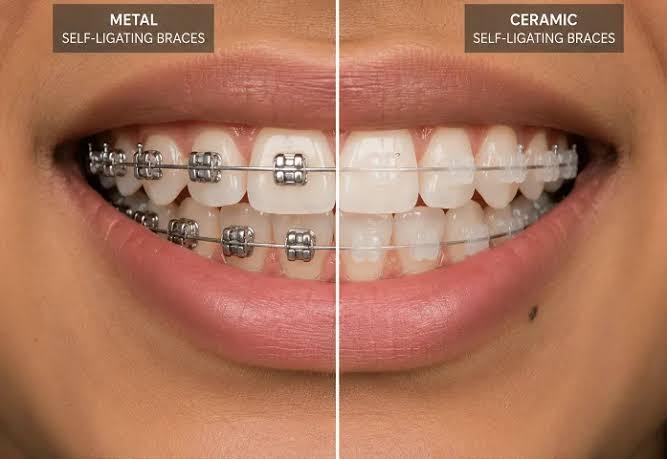
What Are Metal Braces?
Metal braces
are the classic fixed brace. Small stainless-steel brackets are bonded to the
front of each tooth. An archwire runs through them and is held in place with
tiny elastic rings called ligatures.
As the orthodontist changes the wire and tightens over months, the teeth move
into line. Metal braces are widely used, well studied, and suited to most bite
corrections, including complex ones. Modern metal brackets are also much
smaller than the older "train track" designs many adults remember.
What Are Ceramic Braces?
Ceramic braces
use the same mechanism as metal, but the brackets are made from tooth-coloured
or clear ceramic material. From
a normal social distance they blend into the teeth. The archwire and ligatures
are still there. Some clinics use tooth-coloured wires and clear ligatures to
make the whole appliance harder to spot. The British Orthodontic Society
confirms ceramic appliances can achieve tooth movement like conventional fixed
braces, while looking less obvious.
Do They Straighten Teeth in the Same Way?
Yes. Both use
brackets plus an archwire. Both need regular adjustment. Both take months to
work. The bracket material changes how visible the brace is and how it behaves
in a few practical ways (friction, chipping risk, staining of parts). It does
not change the core method. Your outcome depends on your bite, your case plan,
and how well you follow orthodontist instructions.
Ceramic Braces vs Metal Braces: Side-by-Side
Comparison
|
Factor |
Metal braces |
Ceramic braces |
|
Look |
Silver, visible |
Tooth-coloured, much less visible |
|
Strength |
Very durable, resistant to chipping |
More brittle, higher breakage risk |
|
Cost |
Lower |
Higher |
|
Staining |
Brackets do not stain. Elastics can |
Brackets resist stain. Elastics can |
|
Comfort |
Similar (both are fixed braces) |
Similar (both are fixed braces) |
|
Bracket size |
Small on modern systems |
Often slightly bulkier than modern metal |
|
Friction |
Lower |
Can be higher, may add time in some cases |
|
Suitable on lower teeth |
Yes for almost all cases |
Sometimes not advised in deep bite |
|
Handling complex bites |
Preferred in many complex plans |
Suitable for most, but case-by-case |
Appearance
This is the
main reason people choose ceramic. Tooth-coloured brackets blend into the teeth
and are much harder to spot in photos or during meetings. Metal brackets are
silver and stand out, though modern designs are smaller. If you also want the
wire less visible, ask about tooth-coloured or frosted archwires. The elastic
ligatures, in either type, come in silver-blend or bright colours.
Strength and Durability
Metal wins on
durability. Stainless steel bends but rarely chips or breaks. Ceramic material
is harder but more brittle. A bracket can crack or debond if it takes a hard
knock. Think a bite on a bone, or a sports impact. A broken bracket usually
means an unscheduled visit and a short treatment delay. This is not a reason to
rule ceramic out. But it is worth knowing if your lifestyle involves contact
sports or a lot of hard-food eating.
Comfort and Bracket Size
Both are fixed
braces. Both cause some soreness in the first few days and after adjustments.
Neither is truly painless. Ceramic brackets on some systems are slightly
bulkier than the smallest modern metal ones, though the gap has narrowed.
Comfort depends more on the system, the wire schedule and your own sensitivity
than on bracket material.
Maintenance, Staining and Everyday Life
Do Ceramic Braces Stain?
This is the
most common worry, and the answer needs a distinction. The ceramic brackets
themselves resist staining well in most modern systems. The elastic ligatures
around them are the more likely culprit. Clear or white ligatures pick up
colour between visits. Coffee, tea, red wine, curry, turmeric and tobacco are
the main culprits. So they can look yellow by the next appointment. The British
Orthodontic Society notes elastic ligatures do discolour and they are changed
at each adjustment visit. Any
yellowing you notice is usually gone after your next appointment.
Which Braces Are Easier to Clean?
Both need the
same routine: brush after meals, use interdental brushes or floss threaders
around the wires, and see a hygienist during treatment. One subtle point about
ceramic is that plaque and food debris are less obvious against tooth-coloured
brackets than against silver ones. That does not mean cleaning is harder. It
means you cannot skip a good routine just because things look clean.
Foods and Habits to Watch
The advice is
alike for both. Hard, sticky and very chewy foods can pop brackets off any
fixed brace:
• Cut hard fruits and vegetables into small pieces
(apples, carrots, corn on the cob)
• Skip or limit sticky sweets, chewing gum, hard
nuts, ice, pork crackling
• Cut down on stain-prone foods and drinks if you
have ceramic brackets with clear ligatures
• Do not chew pens, ice or fingernails
The specifics
your orthodontist gives you always overrule a general list.
What Real Patients Worry About
The recurring
worries in patient communities are honest and worth naming:
• Yellowing or staining: usually elastic
ligatures, not the brackets themselves. Solved at the next visit.
• Bulkiness: real on some ceramic systems,
minimal on newer designs. Ask what bracket brand your orthodontist uses.
• Visibility in photos: ceramic is much
less visible than metal, but not invisible up close.
• Bracket breakage: a genuine ceramic
drawback. Ask your orthodontist how often they see it and how repairs are
handled.
• Whether the extra cost is worth it: a
personal call, not a clinical one. Answer it against your own daily life.
Cost, Treatment Time and Effectiveness
Which Costs More?
Ceramic braces
cost more than metal in almost every market. In India, metal braces usually run
around Rs 20,000 to Rs 50,000. Ceramic runs around Rs 30,000 to Rs 65,000. The
final figure depends on the city, clinic and case complexity. In the UK, private fixed orthodontic
treatment usually ranges from around £2,000 to £6,000, with ceramic at the
higher end of the range. Add
possible repair costs if a ceramic bracket breaks. Always get a written quote
that covers the appliance, adjustment visits, retainers after treatment, and
repair charges.
Do Ceramic Braces Take Longer?
Sometimes, but
not always. Ceramic brackets can generate more friction against the archwire
than stainless steel, which can slow the tooth-sliding phase in some cases. The overall treatment time depends far
more on your bite, your case plan and how well the appliance stays put than on
bracket material alone. A repeatedly broken ceramic bracket can add weeks to
treatment. An uncomplicated case in careful hands often finishes within the
same window as metal.
Which Is More Effective?
Both are
effective when the right one is chosen for the case. The British Orthodontic
Society confirms ceramic appliances can achieve tooth movement like
conventional fixed braces. Metal
is often often chosen in complex bite corrections, cases needing heavy sliding
mechanics, and situations with a deep bite affecting the lower teeth. Ceramic
is a fair choice for a wide range of adult and older-teen cases where
appearance matters and the bite is suitable.
Hidden Considerations Beyond Price
Look past the
headline number:
• Repair charges if a ceramic bracket
breaks mid-treatment
• Retainers after braces come off (usually
a separate cost)
• Whether ceramic is recommended on both arches
or only upper (see below)
• Extraction or bite-fixing steps that add
cost and time in complex cases
• Removal difficulty: ceramic brackets
sometimes need more careful removal at the end
Ceramic or Metal Braces: Which Is Right for You?
Ceramic Braces May Suit You If...
• Appearance is a real priority (job, teaching,
presenting, weddings, photos)
• Your orthodontist confirms your bite is suitable
• The higher cost fits your budget
• You are ready to be careful with hard and sticky
foods
• You are willing to change habits that stain
elastic ligatures
Metal Braces May Suit You If...
• Durability matters more than looks (sports,
active lifestyle)
• Cost is a main factor
• Your bite correction is complex
• Ceramic has been ruled out on the lower arch for
your case
• You are a younger teen where wear-and-tear is
likely
Can You Combine Ceramic and Metal Braces?
Yes. A common
compromise is ceramic on the upper (more visible) teeth and metal on the lower
(less visible in most face-to-face situations). This can lower total cost and
side-step the deep-bite concern about ceramic on the lower arch. It is a plan set case-by-case by your
orthodontist, not something to demand off a template.
What Should You Ask at Your Orthodontic Consultation?
Take this list
with you:
• Are both options suitable for my bite?
• What is the price difference for my exact case?
• Is ceramic advised on my lower teeth, or would
you recommend metal there?
• What happens if a bracket breaks, and is there a
repair charge?
• What treatment length do you expect for my case
with each option?
• What bracket brand do you use, and how bulky is
it?
• What retainer options do I need after treatment,
and what does that cost?
Cost Calculator
I know my treatment - show me cost from 3 hospitals
How We Can Help: Choosing Between Ceramic
and Metal Braces
The right brace
type is the one that fits your bite, your daily life and your budget, not the
one with the best marketing. DivinHeal helps you get a straight, expert
comparison rather than the pitch you might get in a single clinic visit.
How
DivinHeal helps:
• Personalised guidance. Bite type,
alignment difficulty, lifestyle, appearance priority and budget mapped against
what actually fits.
• Clear side-by-side comparison of
visibility, strength, maintenance, staining, cost, and treatment suitability,
without the marketing spin.
• Access to skilled orthodontists for a
proper bite and alignment check, including whether ceramic, metal, or a
combination is the right call. DivinHeal works with partner hospitals in India
for patients from the Gulf, Africa, South Asia and the UK.
• Support with treatment planning. Expected
timeline, follow-up visit pattern, oral-hygiene routine, bracket care, and
total costs written down before you commit.
Why choose
DivinHeal: focus on the right treatment, not just looks. Clear comparison
of options and costs. Access to right orthodontic specialists. No pressure.
Compare your braces options with an orthodontic specialist. Speak with the DivinHeal care team to book a first visit.
Medical disclaimer
This article is for general information only and is not a substitute for advice from a qualified orthodontist. Suitability of ceramic or metal braces depends on your bite, treatment plan and personal circumstances. Costs, treatment times and outcomes vary by patient, clinic and country. DivinHeal is a medical tourism coordination company and does not provide orthodontic treatment itself. Please have a full orthodontic first visit before deciding.
Plan My Journey
Tell us your condition and budget - our AI matches the right destination, hospital and doctor and visa pathway
Cost Calculator
I know my treatment - show me cost from 3 hospitals

Written by DivinHeal Editorial Contributor, Rahul Kumar, Medical Expert | Medically Reviewed by Dr Indu Priya, MBBS,MD Published on: 2026-09-25
Plan My Journey
Tell us your condition and budget - our AI matches the right destination, hospital and doctor and visa pathway
Cost Calculator
I know my treatment - show me cost from 3 hospitals
Booking With DIVINHEAL
Get a free consultation to understand your treatment options
From Consultation to Recovery,
Step by Step
Expert Specialist Matching
Connecting you with the world's top-rated medical experts.
Accredited Hospital Network
Access to JCI & NABH certified healthcare facilities.
Complete Travel Coordination
Hassle-free visa, stay, and local transport assistance.
24/7 Personal Care
Dedicated patient advisors supporting you at every step.
Journey Guidance
Full guidance from start to end of the patient treatment journey.
Expert Specialist Matching
Connecting you with the world's top-rated medical experts.
Everything you
need to know today
Browse through these common inquiries to better understand our patient-focused medical platform.
Yes, in most cases. The British Orthodontic Society confirms ceramic fixed appliances can achieve tooth movement as effectively as conventional metal braces1. Metal is still often often chosen in complex bite corrections. Also cases needing heavy sliding mechanics. Or deep-bite cases where ceramic is not advised on the lower arch2. Your orthodontist will confirm what fits your specific case.
The ceramic brackets themselves resist staining well in most modern systems. The elastic ligatures around them are what usually discolour, and they are changed at each adjustment appointment. Coffee, tea, red wine, curry, turmeric and smoking are the main culprits. Any yellowing you see at week five usually goes at your next visit. Good brushing, staying away from stain-heavy foods when you can, and keeping to your appointment schedule handle most of it.
Sometimes, but not by a set amount. Ceramic brackets can create more friction against the archwire than stainless steel, which can slow the sliding phase in some cases. Treatment length depends much more on your bite, your case plan and whether brackets stay put than on material alone. A well-planned ceramic case often finishes in a alike window to metal.
That depends on you. If discreet appearance is a real priority for your work, studies or personal life, ceramic can be worth it. Your orthodontist has to confirm your bite is suitable first. Many people find the extra cost pays off. If your case is complex, or cost is tight, metal often makes more sense. You may also just know that a silver brace showing would not stress you. Metal gives you the same clinical result for less money and less breakage risk. There is no universal right answer. Only what fits your case and life.
Still have more questions?
Book a call with our friendly team to learn how DivineHeal simplifies your healthcare journey.