ICSI vs IVF: Which Is Better & Do You Need Both?

Written by DivinHeal Editorial Contributor, Rahul Kumar, Medical Expert | Medically Reviewed by Dr Indu Priya, MBBS,MD Published on: 2026-09-22
Plan My Journey
Tell us your condition and budget - our AI matches the right destination, hospital and doctor and visa pathway
ICSI vs IVF: Which Is Better & Do You
Need Both?
The ICSI vs IVF question comes up for almost every couple starting fertility care. The short answer: ICSI is not "better" than IVF. It is a targeted tool for one specific problem. That problem is sperm that struggles to fertilise an egg on its own. This guide covers the real difference. It shows the honest cost gap, when each is right, and why ICSI is not a standalone treatment.
What's the Difference Between ICSI and IVF?
ICSI
(intracytoplasmic sperm injection) and IVF (in vitro fertilisation) share most
of the same journey. Ovarian stimulation. Egg collection. Lab fertilisation.
Embryo transfer. Only the fertilisation step itself is different.
• In IVF, thousands of sperm are placed in
a dish with each egg. The sperm compete. One fertilises the egg on its own.
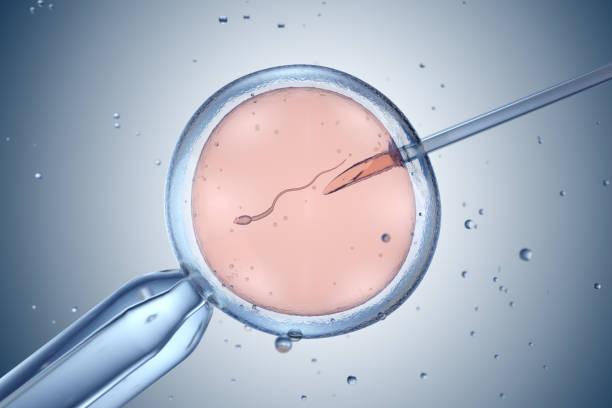
• In ICSI, a skilled embryologist picks one
sperm. That sperm is injected straight into each mature egg with a very fine
needle.
Everything
before that step is the same. Everything after it is the same too. This is why
ICSI is not a separate treatment. It is a fertilisation method used inside an
IVF cycle.
ICSI vs IVF: Side-by-Side Comparison
|
Factor |
ICSI |
IVF |
|
Fertilisation method |
Single sperm injected into the egg |
Sperm and egg placed together in a dish |
|
Best suited for |
Male-factor infertility (low count, poor motility, abnormal
shape), previous fertilisation failure |
Unexplained infertility, ovulation issues, blocked tubes,
sperm parameters within normal range |
|
Success rates |
Broadly similar to IVF once fertilisation occurs |
Broadly similar to ICSI once fertilisation occurs |
|
Relative cost |
About 25% more than conventional IVF |
Baseline cost |
|
Chromosomal risk |
About 1% above baseline. Sex chromosome abnormalities
0.8–1% vs 0.2% natural56 |
Not linked to added chromosomal risk |
The cost row is
the one dimension most UK clinic pages skip. It matters because
ICSI-when-not-needed is a real financial trade-off. It is not a clinical
upgrade.
Is ICSI Better Than IVF?
No, not on its
own. ICSI is more targeted, not more powerful. When sperm parameters are
normal, HFEA is clear. There is no proof that ICSI beats standard IVF. The British Fertility Society and ESHRE
(European Society of Human Reproduction and Embryology) both take the same view.
Two nuances
worth naming:
Chromosomal
risk. ICSI has a small extra chance of sex chromosome issues. The rate is
about 0.8% to 1%, versus roughly 0.2% in natural birth. Overall risk sits at about 1% above
baseline. This is real but
small. 95% to 97% of ICSI babies are born without major issues. New evidence suggests the extra risk may
be partly driven by the underlying male infertility itself. Not the injection
procedure.
Male
partners often feel singled out when ICSI is recommended. This is worth
naming. It is not a judgement or a reflection of anything else. It is simply a
targeted fix for a specific mechanical problem.
A note on
default use. Some clinics offer ICSI to every patient, regardless of the semen
analysis. HFEA warns this may raise treatment cost without improving success. If your clinic recommends ICSI and your
partner's sperm results are within normal range, it is fair to ask why.
Can You Have ICSI Without IVF?
No. ICSI cannot
be done as a standalone treatment. By definition, ICSI is a fertilisation
method performed inside an IVF cycle.
It still needs ovarian stimulation, egg collection, lab fertilisation, and
embryo transfer. Those are the same core IVF steps10.
There is no "ICSI-only" pathway that skips the rest of IVF.
Where the
confusion comes from. Some people search "ICSI without IVF" when they
actually mean something different. They mean "can I do standard IVF
instead of ICSI, and skip the extra step and extra cost?" That is a valid
question. The answer is yes, if sperm parameters are within normal range. That
is a decision to have with your specialist based on your semen analysis.
If the question
is instead "is there a standalone ICSI treatment I can book?" no such
treatment exists. At any clinic. Anywhere. Anyone offering "ICSI
alone" would be misrepresenting the procedure.
Which Treatment Is Right for You?
Three things
drive the decision:
1. Semen analysis results. Low sperm
count, poor motility, abnormal shape, or high DNA fragmentation all point
toward ICSI7.
2. Prior fertilisation history. If a
previous IVF cycle had low or failed fertilisation, most specialists will
suggest ICSI for the next attempt.
3. Cause of infertility. Unexplained
infertility, ovulation problems, or tubal factors with normal sperm usually fit
standard IVF.
This decision is made by a fertility specialist reading your actual test results. It is not chosen in advance by the patient. If you have been given a recommendation you do not fully get, ask the clinic to explain which specific finding drove it. That is a normal question. It is one clinics expect.
Cost Calculator
I know my treatment - show me cost from 3 hospitals
How DivinHeal Can Help
DivinHeal
connects international fertility patients with specialists at accredited
partner hospitals in India. The DivinHeal care team helps you work out whether
ICSI is actually needed for your case. Or whether standard IVF is the better
fit. That call can save you about 25% in treatment cost when ICSI is not
clinically needed.
How
DivinHeal helps:
• Personalised fertilisation-method matching.
A specialist reviews your semen test, prior cycle history and diagnosis before
booking. That way the plan fits your case.
• Honest guidance when ICSI is not needed.
DivinHeal partner clinics follow HFEA and ESHRE consensus. ICSI adds cost, not
success, for non-male-factor infertility.
You will not be upsold.
• Coordinated cross-border care. Support
with medical records, travel plans, embryo transfer scheduling and follow-up.
For patients from the Gulf, Africa, South Asia and the UK.
Share your
semen test and any prior IVF or ICSI records with the DivinHeal care team for a
plan and cost estimate.
Key Takeaways |
|---|
References
1. HFEA — Intracytoplasmic sperm injection (ICSI): mechanical difference and shared IVF cycle steps. https://www.hfea.gov.uk/treatments/explore-all-treatments/intracytoplasmic-sperm-injection-icsi/
2. HFEA — ICSI and IVF success rate parity. https://www.hfea.gov.uk/treatments/explore-all-treatments/intracytoplasmic-sperm-injection-icsi/
3. Access Fertility — ICSI cost differential (~25% more than IVF). https://accessfertility.com/
4. HFEA / British Fertility Society / ESHRE — Position on ICSI overuse and cost. https://www.hfea.gov.uk/treatments/explore-all-treatments/intracytoplasmic-sperm-injection-icsi/
5. Genetics and Fertility — Sex chromosome abnormality rates in ICSI vs natural conception. https://geneticsandfertility.com/birth-defect-risks-in-icsi-pregnancies/
6. PMC — Additional chromosomal abnormality risk in ICSI offspring (~1% above baseline). https://pmc.ncbi.nlm.nih.gov/articles/PMC2991301
7. HFEA — Clinical indications for ICSI. https://www.hfea.gov.uk/treatments/explore-all-treatments/intracytoplasmic-sperm-injection-icsi/
8. Genetics and Fertility — 95-97% of ICSI babies born without major abnormalities. https://geneticsandfertility.com/birth-defect-risks-in-icsi-pregnancies/
9. RSC Bay Area — Modern interpretation: risk may reflect underlying male infertility. https://rscbayarea.com/blog/does-icsi-cause-genetic-abnormalities
10. HFEA — ICSI as a fertilisation method within IVF (not standalone). https://www.hfea.gov.uk/treatments/explore-all-treatments/intracytoplasmic-sperm-injection-icsi/
Plan My Journey
Tell us your condition and budget - our AI matches the right destination, hospital and doctor and visa pathway
Cost Calculator
I know my treatment - show me cost from 3 hospitals

Written by DivinHeal Editorial Contributor, Rahul Kumar, Medical Expert | Medically Reviewed by Dr Indu Priya, MBBS,MD Published on: 2026-09-22
Plan My Journey
Tell us your condition and budget - our AI matches the right destination, hospital and doctor and visa pathway
Cost Calculator
I know my treatment - show me cost from 3 hospitals
Booking With DIVINHEAL
Get a free consultation to understand your treatment options
From Consultation to Recovery,
Step by Step
Expert Specialist Matching
Connecting you with the world's top-rated medical experts.
Accredited Hospital Network
Access to JCI & NABH certified healthcare facilities.
Complete Travel Coordination
Hassle-free visa, stay, and local transport assistance.
24/7 Personal Care
Dedicated patient advisors supporting you at every step.
Journey Guidance
Full guidance from start to end of the patient treatment journey.
Expert Specialist Matching
Connecting you with the world's top-rated medical experts.
Everything you
need to know today
Browse through these common inquiries to better understand our patient-focused medical platform.
Yes. ICSI usually costs about 25% more than standard IVF because of the extra lab work of hand-injecting each egg. The exact figure varies by clinic and country. HFEA flags that opting for ICSI when it is not clinically needed may raise cost without a clear success improvement4. Ask your clinic for a written breakdown of both options.
No. ICSI is a fertilisation method used inside an IVF cycle. It is not a separate procedure. It still needs the same steps: ovarian stimulation, egg collection, lab fertilisation and embryo transfer. If your search meant "can I do IVF without the extra ICSI step?" yes. If sperm parameters are normal, standard IVF works just as well.
Both are safe. The one small gap: ICSI has a slightly higher chance of chromosome issues. About 1% above baseline. Sex chromosome issues sit at about 0.8-1% versus 0.2% in natural birth. New research suggests much of this may come from the underlying male infertility, not the injection itself. 95 to 97% of ICSI babies are born without major issues.
No. Success rates for ICSI and IVF are broadly similar once fertilisation happens. HFEA does not publish separate stats for the two. The difference is not clinically meaningful for most patients. ICSI improves the fertilisation step. It does not raise the pregnancy or live-birth rate that follows.
Still have more questions?
Book a call with our friendly team to learn how DivineHeal simplifies your healthcare journey.