Is Fluoride Bad for You? Benefits, Risks & Toothpaste Facts

Written by DivinHeal Editorial Contributor, Rahul Kumar, Medical Expert | Medically Reviewed by Dr Indu Priya, MBBS,MD Published on: 2026-09-25
Plan My Journey
Tell us your condition and budget - our AI matches the right destination, hospital and doctor and visa pathway
Is Fluoride Bad for You? Benefits, Risks
& Why It's Used in Toothpaste
Is fluoride bad
for you? For most adults using it as intended, no. Fluoride is recommended by
major dental bodies for cavity prevention. The small amounts in
over-the-counter toothpaste are far below toxic levels. But dose and exposure
route matter. This guide covers what fluoride does. The proven benefits. The
real risks. What the 2024 US government review actually said about brain
development. And how to choose between fluoride and fluoride-free toothpaste
with your dentist.
|
Key Takeaways • Fluoride is seen as safe and effective at
recommended levels for cavity prevention. • Dental fluorosis is a real risk. But mainly
from excess fluoride while permanent teeth are forming. This means children
under about age 8. • The 2024 US NTP review found
moderate-confidence evidence that higher fluoride exposure may lower IQ in
children. That means drinking
water above about 1.5 mg/L. NTP explicitly said data were insufficient to
judge the US recommended 0.7 mg/L level.
The review was not about toothpaste. • Use age-right toothpaste amounts. Rice-grain
for under-3s. Pea-sized for ages 3-6. • If you are thinking about fluoride-free
toothpaste, discuss cavity risk with your dentist first. |
|---|
Is Fluoride Bad for You?
The Short Answer
Not when used
as directed in dental products at recommended doses. Cleveland Clinic states
that fluoride is seen as safe and effective at recommended levels. The low concentrations in
over-the-counter toothpaste make toxic exposure difficult under normal use.
That is different from very high or long-term excessive exposure, which is a
real concern the science does take seriously. Avoiding both "completely
harmless" and "toxic" absolute framing is the honest starting
point.
What Is Fluoride?
Fluoride is a
naturally occurring mineral. It is present in some rocks, in groundwater, in
tea, in some fish, and in trace amounts in many foods. In dentistry it is used
in toothpaste, mouthrinse, expert varnish, and sometimes in community drinking
water. Different products deliver different doses in different ways, so
treating them as one big category is misleading.
Why Is Fluoride Used in Toothpaste?
The CDC states
that fluoride helps replace minerals lost from tooth enamel and helps prevent
cavities in children and adults.
In simple terms:
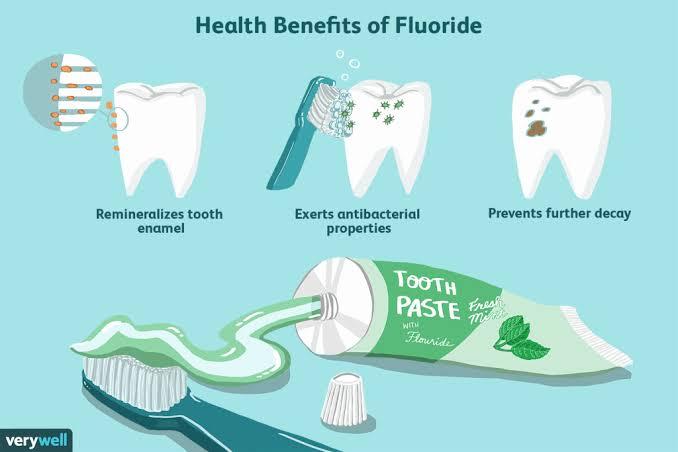
• Remineralisation. Fluoride helps repair
early enamel damage before it becomes a cavity.
• Acid resistance. Enamel that has taken up
fluoride is more resistant to acid attack from plaque bacteria.
• Cavity prevention. Regular use lowers
cavity rates.
That is why
dental organisations globally recommend fluoride toothpaste for routine
brushing.
What Are the Benefits and Risks of Fluoride?
Main Benefits for Teeth
• Cavity prevention across ages
• Enamel remineralisation of early lesions
• Slowing enamel breakdown
• Extra protection for higher-risk patients (dry
mouth, braces, crowns, previous decay)
The benefits
are strongest with regular, age-right use, not "more is better".
What Happens With Too Much Fluoride?
There are three
very different scenarios:
• Normal toothpaste use , a pea-sized
amount, spit out, twice a day. Very low whole-body exposure.
• Accidental swallowing of small amounts ,
especially in young children. Usually not harmful in one-off small amounts, but
repeated swallowing during tooth development can raise fluorosis risk.
• Long-term high-dose exposure , from
drinking water with naturally high fluoride, industrial sources, or chronic
ingestion. This is a separate issue from routine dental use.
Treating all
three as the same thing is where a lot of online confusion starts.
What Is Dental Fluorosis?
Dental
fluorosis is a change to the look of tooth enamel. It happens when excess
fluoride is taken in while permanent teeth are still forming. It is mainly a childhood issue. It
develops during tooth development, roughly ages 0-8. It cannot newly appear in
older children or adults once enamel formation is complete. The CDC notes that
most US cases are mild and cosmetic. They show as faint white lines or spots.
Not pain or damage. Severe
fluorosis is uncommon at US recommended fluoride levels.
Fluoride Toxicity: Dose Matters
A substance can
help at right exposure and harm at excessive dose. Water in normal amounts
keeps you alive; drinking litres in one sitting can be dangerous. The same
principle applies to fluoride. Swallowing a small amount of toothpaste while
brushing is not the same as ingesting a whole tube. Keep toothpaste out of the
reach of unsupervised young children.
|
Recommended fluoride use |
Excessive exposure |
|
Pea-sized toothpaste, twice daily, spit out |
Repeatedly swallowing large toothpaste amounts |
|
Drinking water at 0.7 mg/L (US) |
Long-term drinking water > 1.5 mg/L |
|
Occasional prescription toothpaste when advised |
Using prescription-strength without guidance |
|
Cavity prevention effect |
Fluorosis risk in developing teeth |
|
No adult cognitive effect in NTP review |
Real research concerns at high total exposure |
Is Fluoride Toothpaste Safe for Adults and
Children?
Fluoride Toothpaste for Adults
Yes, for
routine twice-daily use. Adults with frequent cavities, dry mouth, braces,
crowns, bridges or exposed roots may benefit more than average. Higher-strength (prescription) fluoride
toothpaste contains much more fluoride than standard toothpaste. Commonly
around 5000 ppm vs 1000-1500 ppm. It should only be used when given.
Fluoride Toothpaste for Young Children
Supervise
brushing until at least age 7. Teach your child to spit, not swallow. Use
age-right amounts:
• Under 3 years old: a smear or
rice-grain-sized amount
• Ages 3 to 6: a pea-sized amount
These amounts
are set by dental bodies directly to give the cavity-prevention benefit while
keeping ingested fluoride low.
Common Toothpaste Mistakes
• Using an adult-sized blob for a toddler
• Letting a young child swallow toothpaste
habitually
• Assuming "more fluoride" means better
• Using prescription-strength toothpaste without a
dentist's advice
• Skipping any toothpaste on the basis that
"it might be bad" without a suitable alternative
Who May Need Extra Fluoride?
Cleveland
Clinic lists cases where extra fluoride may be helpful. Dry mouth. Gum disease.
Previous history of decay. Braces, crowns and bridges. Your dentist may suggest prescription
toothpaste, in-clinic fluoride varnish, or a fluoride mouthrinse in these
cases.
Why Do Some People Avoid Fluoride?
Several
concerns are worth taking seriously, and several online claims are worth
unpicking.
Concern About Dental Fluorosis
Real risk,
mainly linked to excess ingestion during tooth development in young children. Sticking to age-right toothpaste amounts
and supervising brushing usually keeps this risk low.
Concern About "Fluoride Toxicity"
Toxicity
depends on dose. Normal on-tooth toothpaste use, applied to teeth and spat out,
delivers very little whole-body fluoride. Large ingestion, chronic high-dose
exposure, or industrial exposure is a different scenario. Mixing these together
is where a lot of confusion comes from.
Fluoride and Brain Development: What Does
Current Evidence Say?
This is the
section that deserves the most care. The honest picture:
• The 2024 US National Toxicology Program (NTP)
review concluded, with moderate confidence, that higher fluoride
exposure is linked with lower IQ in children. Higher exposure means drinking water above
about 1.5 mg/L, roughly double the US recommended level.
• The NTP explicitly stated data were insufficient
to determine whether the US recommended level of 0.7 mg/L has a negative
effect on children's IQ.
• The NTP review evaluated total fluoride
exposure from all sources and was not designed as a study of fluoride
toothpaste.
• The NTP found no evidence that fluoride
exposure had adverse effects on adult cognition.
• Association is not causation. Most of the
higher-exposure studies come from regions with naturally high water fluoride.
Nutrition, socioeconomic factors and other environmental exposures can affect
IQ measures.
• A January 2025 JAMA Pediatrics meta-analysis of
74 studies confirmed the inverse association.
It found the association persisted below 1.5 mg/L in high-quality studies.
Research is ongoing.
None of this
proves fluoride toothpaste harms children's brains. But it also means the
"totally proven safe" claim is now more nuanced than it was ten years
ago. What most dental bodies conclude: keep to recommended amounts, supervise
child brushing, and discuss each concerns with your dentist.
Why Online Claims Can Be Misleading
Common patterns
to watch for:
• Mixing high-dose water studies with normal
toothpaste use
• Confusing association with causation
• Treating every fluoride source as equivalent
• Ignoring dose entirely
Quoting the NTP review without its own caveats
about 0.7 mg/L, adults, or toothpaste
Myth:
"If fluoride can be harmful at high doses, fluoride toothpaste must be
unsafe." Reality: Risk depends on dose and exposure route.
Recommended dental use and excessive whole-body exposure are not the same
scenario.
Fluoride vs Fluoride-Free Toothpaste: Which
Should You Use?
What Fluoride Toothpaste Offers
Decades of
evidence for cavity prevention. Enamel remineralisation. Widely recommended by
major dental bodies (ADA, BDA, WHO). For most people, it remains the default
recommendation.
Why Someone Might Consider Fluoride-Free
Toothpaste
• Personal preference
• Individual reaction or irritation (rare)
• Specific advice from a healthcare expert
• Preference in very young children still learning
to spit
Fluoride
avoidance is not something dental organisations recommend as a general rule. If
you are thinking about switching, do it with your dentist, not from a social
media post.
What About Hydroxyapatite Toothpaste?
Hydroxyapatite
is a mineral form of calcium phosphate that also has enamel-remineralising
properties. Interest in it as a fluoride alternative has grown, and early
studies are encouraging. The evidence base is still developing. It is not yet established as universally
equivalent or superior to fluoride. Thinking about replacing fluoride with
hydroxyapatite? Especially if you are high cavity risk, discuss it with your
dentist first.
Who Should Be Careful About Dropping
Fluoride?
Dropping
fluoride carries more risk in some groups:
• Frequent cavities
• Dry mouth (from medication, radiation, or other
cause)
• Braces or fixed retainers
• High sugar or acid exposure
• History of enamel demineralisation
• Recent large dental restorations
For these
groups, fluoride-free is a decision to make with a dentist, not on a whim.
Questions to Ask Your Dentist
• What is my current cavity risk?
• Do I need standard or prescription fluoride?
• Am I getting fluoride from other sources (water,
mouthrinse, varnish)?
• Would fluoride-free toothpaste give me enough
protection for my case?
• Is there a specific reason to avoid a one
toothpaste for me?
Cost Calculator
I know my treatment - show me cost from 3 hospitals
How We Can Help: Understanding Whether
Fluoride Is Right for Your Dental Care
The right
toothpaste choice depends on your case, not on a general "fluoride is
fine" or "fluoride is bad" line. DivinHeal helps you understand
your actual cavity risk, current fluoride exposure, and toothpaste needs. That
way the choice is informed rather than reactive.
How
DivinHeal helps:
• Personalised fluoride guidance. Age,
cavity history, enamel condition, dry mouth, braces or restorations, and
existing fluoride exposure. All mapped against what actually fits your case.
• Clear benefits-versus-risks guidance.
Cavity prevention, fluorosis risk, excessive exposure concerns, and safe
toothpaste use explained separately rather than lumped together.
• Evidence-based toothpaste comparison.
Fluoride, fluoride-free and hydroxyapatite options weighed on current evidence
rather than marketing.
• Access to preventive dentistry. In-person
cavity risk assessment, expert cleaning, and fluoride varnish where clinically
indicated. DivinHeal works with partner hospitals in India for patients from
the Gulf, Africa, South Asia and the UK.
Why choose
DivinHeal: honest, dentist-led guidance rather than social-media
conclusions. Individual cavity-risk assessment. Clear next steps. No pressure.
Not sure whether fluoride toothpaste is right for you? Speak with the DivinHeal care team to book a preventive dentistry review.
Medical disclaimer
This article is for general information only and is not a substitute for advice from a qualified dentist. Suitability of fluoride or fluoride-free toothpaste depends on your case, cavity risk, age, dental history and other factors. DivinHeal is a medical tourism coordination company and does not provide dental treatment itself. Please have a proper dental review before making decisions about toothpaste or fluoride use, especially for young children.
Plan My Journey
Tell us your condition and budget - our AI matches the right destination, hospital and doctor and visa pathway
Cost Calculator
I know my treatment - show me cost from 3 hospitals

Written by DivinHeal Editorial Contributor, Rahul Kumar, Medical Expert | Medically Reviewed by Dr Indu Priya, MBBS,MD Published on: 2026-09-25
Plan My Journey
Tell us your condition and budget - our AI matches the right destination, hospital and doctor and visa pathway
Cost Calculator
I know my treatment - show me cost from 3 hospitals
Booking With DIVINHEAL
Get a free consultation to understand your treatment options
From Consultation to Recovery,
Step by Step
Expert Specialist Matching
Connecting you with the world's top-rated medical experts.
Accredited Hospital Network
Access to JCI & NABH certified healthcare facilities.
Complete Travel Coordination
Hassle-free visa, stay, and local transport assistance.
24/7 Personal Care
Dedicated patient advisors supporting you at every step.
Journey Guidance
Full guidance from start to end of the patient treatment journey.
Expert Specialist Matching
Connecting you with the world's top-rated medical experts.
Everything you
need to know today
Browse through these common inquiries to better understand our patient-focused medical platform.
To help prevent cavities. The CDC states that fluoride helps replace minerals lost from tooth enamel. It also helps prevent tooth decay in children and adults. It works through direct contact with the teeth (on-tooth action). It remineralises early enamel damage. And it makes the enamel surface more resistant to acid attack from plaque bacteria. Decades of evidence support fluoride toothpaste for routine brushing across ages.
Common reasons include concern about dental fluorosis (mainly a childhood risk during tooth development). Also general "fluoride toxicity" worries (which depend heavily on dose). Also each sensitivity or irritation. And misinformation online. The 2024 NTP review of higher fluoride exposure and children's IQ added new questions. But it was not a study of toothpaste. And it was unclear at the US recommended water level of 0.7 mg/L. If you are considering fluoride-free, discuss it with your dentist rather than deciding alone.
A one-off small swallow of a pea-sized amount is not usually harmful for an adult or an older child. Cleveland Clinic notes that toxic exposure is difficult under normal toothpaste use1. The bigger concern is repeated swallowing in young children whose teeth are still developing. That can raise the risk of dental fluorosis. Supervise brushing under age 7, use the right amounts (rice-grain under 3, pea-sized 3 to 63), and teach children to spit rather than swallow.
Not automatically. "Fluoride-free" does not mean safer or more effective by default. For most people, fluoride toothpaste gives stronger cavity-prevention evidence. Fluoride-free may suit personal preference, each reaction, or specific advice from a healthcare expert. Hydroxyapatite is an emerging remineralising alternative with growing but still-developing evidence. If your case has any cavity-risk factors (frequent cavities, dry mouth, braces, prior decay), talk to your dentist before switching. Suitability is personal, not universal.
Still have more questions?
Book a call with our friendly team to learn how DivineHeal simplifies your healthcare journey.