Treatments for Prolapsed Womb: Surgical & Non-Surgical

Written by DivinHeal Editorial Contributor, Rahul Kumar, Medical Expert | Medically Reviewed by Dr Indu Priya, MBBS,MD Published on: 2026-09-20
Plan My Journey
Tell us your condition and budget - our AI matches the right destination, hospital and doctor and visa pathway
Treatments for a Prolapsed Womb: Non-Surgical and Surgical Options
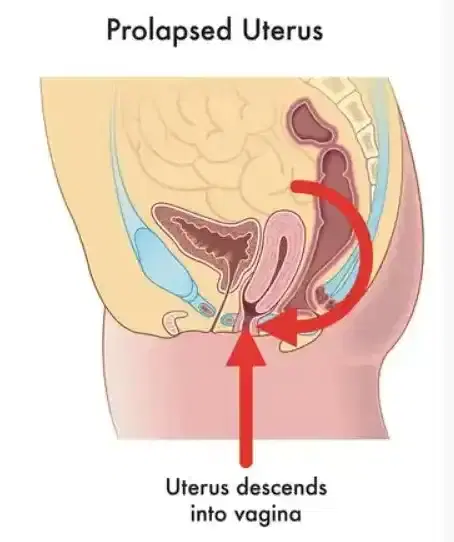
I understand you are here because of that dragging feeling. The heaviness between your legs that gets worse by evening. Maybe you've even noticed something you can actually feel at the opening of your vagina, and you're too embarrassed to bring it up, even with your GP. A prolapsed womb is when the muscles holding your womb in place weaken, and it slips downward into the vaginal canal.
Yes, that can happen - childbirth does it, or menopause does it. It's incredibly common, the NHS says roughly half of women over 50 have some degree of it, and yet barely anyone talks about it openly.
So let's talk about what you can actually do.
Do You Always Need Surgery?
No. Treatments for a prolapsed womb start with non-surgical options, and for a lot of women that's where they stay. Permanently! So, not as a temporary measure while you wait for the "real" treatment. For mild to moderate prolapse, non-surgical care is the real treatment. Surgery becomes relevant when those approaches haven't helped enough, or when the prolapse is too far along for exercises and devices to manage it.
How to Fix a Prolapse Without Surgery
Three things make up the non-surgical toolkit, and they work best together.
Pelvic floor exercises
You've probably heard of Kegels. Tighten the muscles you'd use to stop yourself peeing, hold, release, repeat. Simple concept but surprisingly easy to get wrong, which is why the NHS recommends at least 16 weeks of supervised physiotherapy before moving to anything else. Doing it properly, with a specialist guiding you, makes a genuinely different level of process compared to guesswork at home.
Pessaries
A pessary is a small silicone device your doctor fits inside the vagina to hold things up. Many women use one for years. It needs cleaning and occasional resizing, but it's manageable.
But now the question is: will it affect intimacy? Most types are removable, so you take it out beforehand and put it back after. It is worth asking your doctor which design suits your situation best, because they're not all the same.
Lifestyle adjustments
Losing weight if you need to, fixing constipation so you stop straining, managing a chronic cough, and cutting back on heavy lifting. None of these reverse a prolapse on their own. But together they stop it from worsening and give everything else a better chance of working.
If you're looking into how to fix vaginal prolapse, where the vaginal wall bulges rather than the womb dropping, the approach is essentially the same. Be it pelvic floor work, pessaries, or lifestyle changes.
Knowing how to fix vaginal prolapse early, before things progress, gives you the best shot at avoiding surgery altogether.
When Surgery Makes More Sense
Surgery enters the picture when non-surgical treatments for a prolapsed womb haven't done enough, or when the prolapse is severe and unlikely to respond to exercises and pessaries.
Now, you have two main routes:
Hysterectomy removes the womb entirely, the more common choice for women who've finished having children.
Hysteropexy lifts and stitches the womb back into position without removing it, which matters if future pregnancy is still something you want.
Sometimes additional surgery is needed too, if the bladder or bowel walls are involved. This reinforces the vaginal wall using stitches, or the body's own tissue, to hold everything where it should be.
It is worth being upfront about risks. So, bleeding, infection, and the prolapse coming back are all possibilities. That last one is real: roughly 1 in 3 women experience some recurrence over their lifetime. This means pelvic floor exercises still matter after surgery, as they're what protects the results long term.
Non-Surgical vs Surgical: Which One Is Right for You?
This is where a lot of women get stuck, unsure whether they've "earned" surgery or whether they should keep trying the non-surgical route. Here's how doctors actually think about it.
Factor | Non-Surgical | Surgical |
|---|---|---|
Best For | Mild to moderate prolapse, or if you're not ready for surgery | Moderate to severe prolapse, or when non-surgical options haven't worked |
Recovery | None; it's ongoing daily management | Several weeks, sometimes longer for complex procedures |
Future pregnancy | Fully compatible | Depends on the procedure; hysteropexy preserves the womb, hysterectomy doesn't |
How long it lasts | Requires continued effort and activity | Can be long-lasting, though recurrence is possible |
The real deciding factors are severity, your age, whether you still want children, and how much the prolapse is actually affecting your life.
A specialist weighs all of that with you. It's not a pass or fail situation; it's figuring out how to fix vaginal prolapse or womb prolapse in the way that fits your body and your plans.
What If Someone Suggested Mesh As a Solution?
If someone's mentioned mesh to you, here's the current picture. Transvaginal mesh for prolapse surgery has been restricted in England since 2018 and remains restricted in 2026. It's only available at specialist centres after a full multidisciplinary review, and only when no other option is suitable.
Cost Calculator
I know my treatment - show me cost from 3 hospitals
Why NHS Waits Matter Here?
That restriction, combined with broader NHS pressures, has real consequences for waiting times. The NHS gynaecology waiting list currently exceeds 630,000 patients. For prolapse surgery specifically, waits of 9 to 18 months are common. That's a long time when something is affecting your comfort, your confidence, and your daily routine every single day.
It's one of the reasons some women look at treatment abroad, including through DivinHeal's gynaecology team, where wait times are significantly shorter and experienced surgeons offer both mesh-free surgery and uterus-sparing procedures.
Plan My Journey
Tell us your condition and budget - our AI matches the right destination, hospital and doctor and visa pathway
Cost Calculator
I know my treatment - show me cost from 3 hospitals

Written by DivinHeal Editorial Contributor, Rahul Kumar, Medical Expert | Medically Reviewed by Dr Indu Priya, MBBS,MD Published on: 2026-09-20
Plan My Journey
Tell us your condition and budget - our AI matches the right destination, hospital and doctor and visa pathway
Cost Calculator
I know my treatment - show me cost from 3 hospitals
Booking With DIVINHEAL
Get a free consultation to understand your treatment options
From Consultation to Recovery,
Step by Step
Expert Specialist Matching
Connecting you with the world's top-rated medical experts.
Accredited Hospital Network
Access to JCI & NABH certified healthcare facilities.
Complete Travel Coordination
Hassle-free visa, stay, and local transport assistance.
24/7 Personal Care
Dedicated patient advisors supporting you at every step.
Journey Guidance
Full guidance from start to end of the patient treatment journey.
Expert Specialist Matching
Connecting you with the world's top-rated medical experts.
Everything you
need to know today
Browse through these common inquiries to better understand our patient-focused medical platform.
Yes. Many mild to moderate cases improve significantly with pelvic floor therapy, pessaries, and lifestyle changes. These are legitimate, long-term treatments for a prolapsed womb.
It can. Roughly 1 in 3 women experience some recurrence. Continuing pelvic floor exercises after surgery is one of the best ways to lower that risk.
Only under strict conditions. It's been restricted since 2018 and is offered at specialist centres when no alternative exists. But the waiting time is something that needs consideration.
Typically 9 to 18 months, depending on your area and the procedure. The overall gynaecology waiting list sits above 630,000 patients.
Still have more questions?
Book a call with our friendly team to learn how DivineHeal simplifies your healthcare journey.