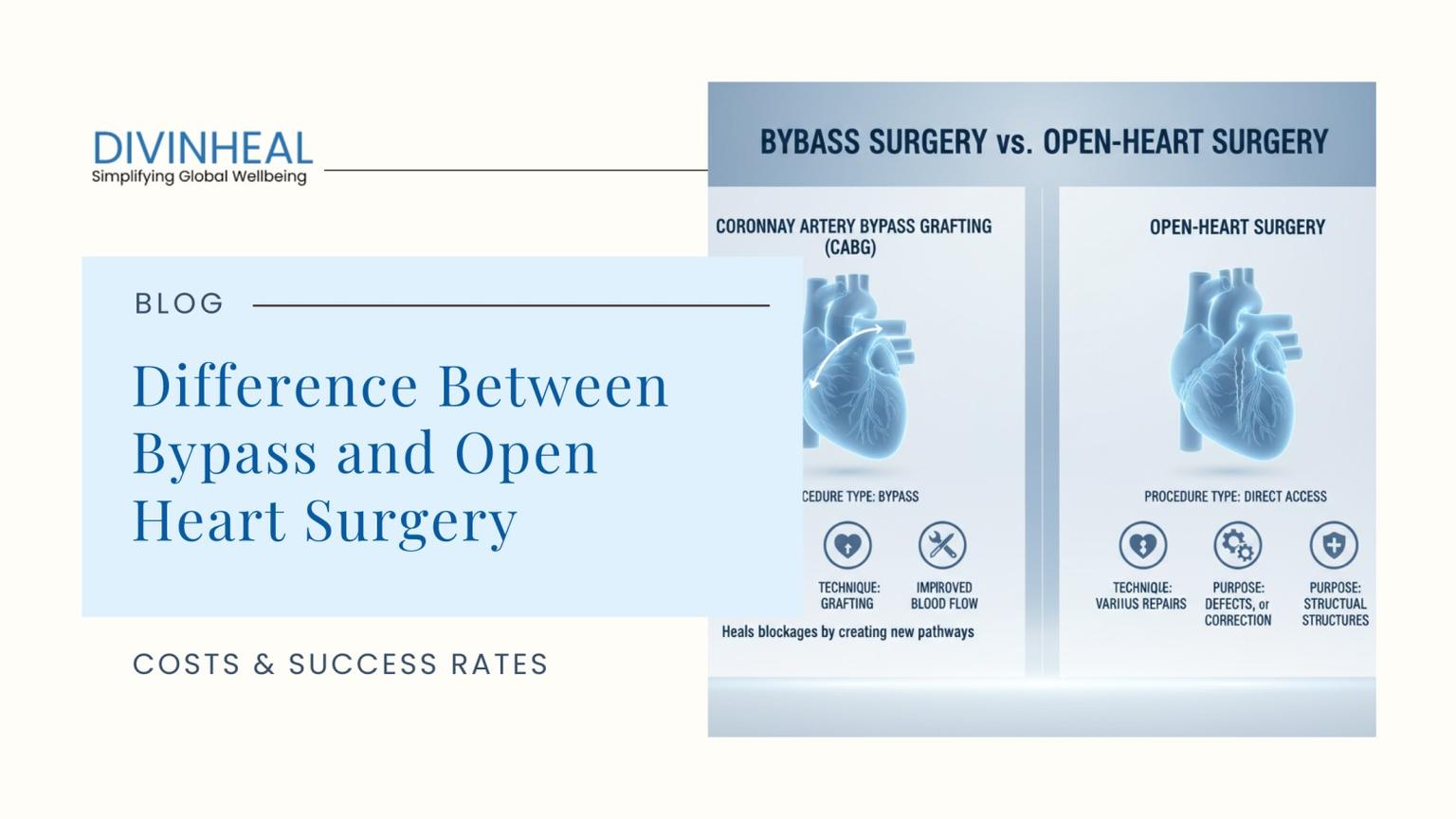
Bypass vs Open Heart Surgery: Differences, Costs, and Recovery in India
If you are trying to understand the difference between bypass surgery and open heart surgery, you are not alone. These terms are often confused but are not the same. Open heart surgery is a broad category that includes any surgical procedure where the chest is opened to operate on the heart, while bypass surgery (CABG) is a specific type of open heart surgery used to restore proper blood flow in blocked coronary arteries.
For patients from countries like Australia and the USA, understanding key aspects such as procedure type, risks, recovery time, and survival rates is essential before making a decision. India has become a trusted destination for advanced cardiac care, offering treatment at NABH and JCI-accredited hospitals with experienced surgeons and modern facilities-often at 60–80% lower cost. This guide will help you compare both procedures and plan your treatment journey with confidence.
What Is Open Heart Surgery? A Plain-Language Guide
Definition and How It Works
Open heart surgery is any procedure where a surgeon opens the chest and operates directly on the heart. It typically involves a sternotomy (a long incision down the breastbone) and connection to a heart-lung bypass machine, which temporarily takes over circulation while the surgeon works. The term 'open heart' describes how the chest is accessed - not that the heart itself is always opened.
Making Informed Decisions for Your Heart Health
Deciding on heart surgery is one of the most significant steps a patient and family will take. Medical terminology and treatment options can feel overwhelming. Understanding exactly what each procedure does - and does not - involves helps patients ask better questions and approach consultations with confidence.
Open heart surgery covers many different procedures, each tailored to a specific cardiac condition. Coronary artery bypass grafting (CABG) is one of the most common; it is, in fact, a type of open heart surgery. Valve repairs and congenital defect corrections also fall under the open heart category but do not involve grafting new vessels.
Patient story: James, 58, from Melbourne, was referred for open heart valve repair after a routine scan revealed mitral valve disease. He had assumed this was the same as bypass surgery. 'Once my coordinator at Divinheal explained the difference, I stopped panicking and started planning,' he said. His procedure at a JCI-accredited hospital in Chennai took five hours; he was discharged after 10 days and flew home six weeks later.
Why Consider Medical Tourism for Cardiac Procedures
Many patients from Australia, the USA, and the Gulf region are surprised by the quality of care available at India's top cardiac centres. Facilities such as Apollo Hospitals in Chennai and Fortis Escorts Heart Institute in New Delhi perform thousands of complex cardiac procedures annually and hold both JCI and NABH accreditation - the international and national gold standards for hospital quality.
Financial considerations drive many decisions. Procedures like CABG cost a fraction of equivalent care in Western countries. For most patients, the savings are significant enough to cover travel, accommodation, and a companion's stay with room to spare.
Understanding Open Heart Surgery: Procedures and How They Work
How Open Heart Surgery Is Performed
Open heart surgery follows a well-established protocol developed over decades of cardiac medicine. You receive general anaesthesia, the surgical team makes an incision down the centre of your chest, and the breastbone is carefully divided to expose the heart. You are connected to a heart-lung machine while the surgeon performs the repair or replacement.
Once the heart procedure is complete, the surgeon weans you off the bypass machine and allows your heart and lungs to resume function. The breastbone is closed with wires and the chest incision is sutured. The entire process typically takes 3 to 6 hours, depending on the complexity of your condition. Sternal healing requires 6–8 weeks, during which you will wear a chest support binder.
Common Conditions Treated with Open Heart Surgery
Open heart surgery treats several serious heart conditions. Coronary artery bypass grafting (CABG) diverts blood around blocked arteries to restore blood flow to the heart muscle. Heart valve repair or replacement addresses damaged mitral or aortic valves. Surgeons also use open heart techniques to correct congenital heart defects and repair aortic aneurysms (dangerous bulges in the body's main artery).
These procedures are performed routinely at JCI-certified centres across India with high success rates, supported by experienced cardiac teams and advanced monitoring technology.
Understanding Bypass Surgery: Restoring Critical Blood Flow
What Is Coronary Artery Bypass Graft (CABG) Surgery?
CABG surgery restores healthy blood flow to your heart muscle by creating new pathways around blocked sections of your coronary arteries. Surgeons achieve this by taking a healthy blood vessel - often from the leg (saphenous vein) or chest wall (internal mammary artery) - and using it as a graft. CABG is a specific type of open heart surgery, not a separate category.
How Bypass Surgery Is Performed
Most bypass procedures involve a full sternotomy - an incision down the centre of the chest to divide the breastbone. The healthy vessel graft is attached above and below the blocked section of the coronary artery, restoring blood flow. Some advanced centres in India now offer off-pump CABG (also called beating-heart surgery), which avoids connecting to the heart-lung machine entirely, and MIDCAB (minimally invasive direct coronary artery bypass), which uses smaller intercostal incisions. Your cardiac surgeon will advise which approach suits your anatomy and blockage pattern.
When Is Bypass Surgery Recommended?
Cardiologists typically recommend bypass surgery when one or more coronary arteries show severe blockages - usually 70% or greater narrowing - especially when multiple vessels are affected or the left main coronary artery is involved. It is also recommended when medication or coronary stents have not provided adequate relief. Even for patients over 70 or 80, positive outcomes are achievable; the decision is based on overall cardiac function and individual health, not age alone, in line with American Heart Association (AHA) and ICMR guidelines.
Types of Bypass Surgeries
The number of bypasses performed reflects how many coronary arteries require new blood supply. A single bypass addresses one blocked artery; double, triple, quadruple, and even quintuple bypasses tackle multiple blockages. Your surgeon determines the exact number of grafts needed during the operation based on real-time assessment. Most JCI-certified hospitals in India have patients sitting up and taking assisted steps within 24 hours post-operation.
What Is the Alternative to Heart Bypass Surgery?
For patients with less severe blockages, non-surgical options include percutaneous coronary intervention (PCI) - commonly known as angioplasty with stent placement - where a thin tube is inserted through the wrist or groin to open the blocked artery without open chest surgery. Medication management (blood thinners, statins, beta-blockers) is another route for patients with manageable disease. Your cardiologist will weigh blockage severity, location, overall heart function, and your preferences before recommending bypass over these alternatives.
Difference Between Bypass and Open Heart Surgery: Key Distinctions
Procedure Scope: What Makes Them Different?
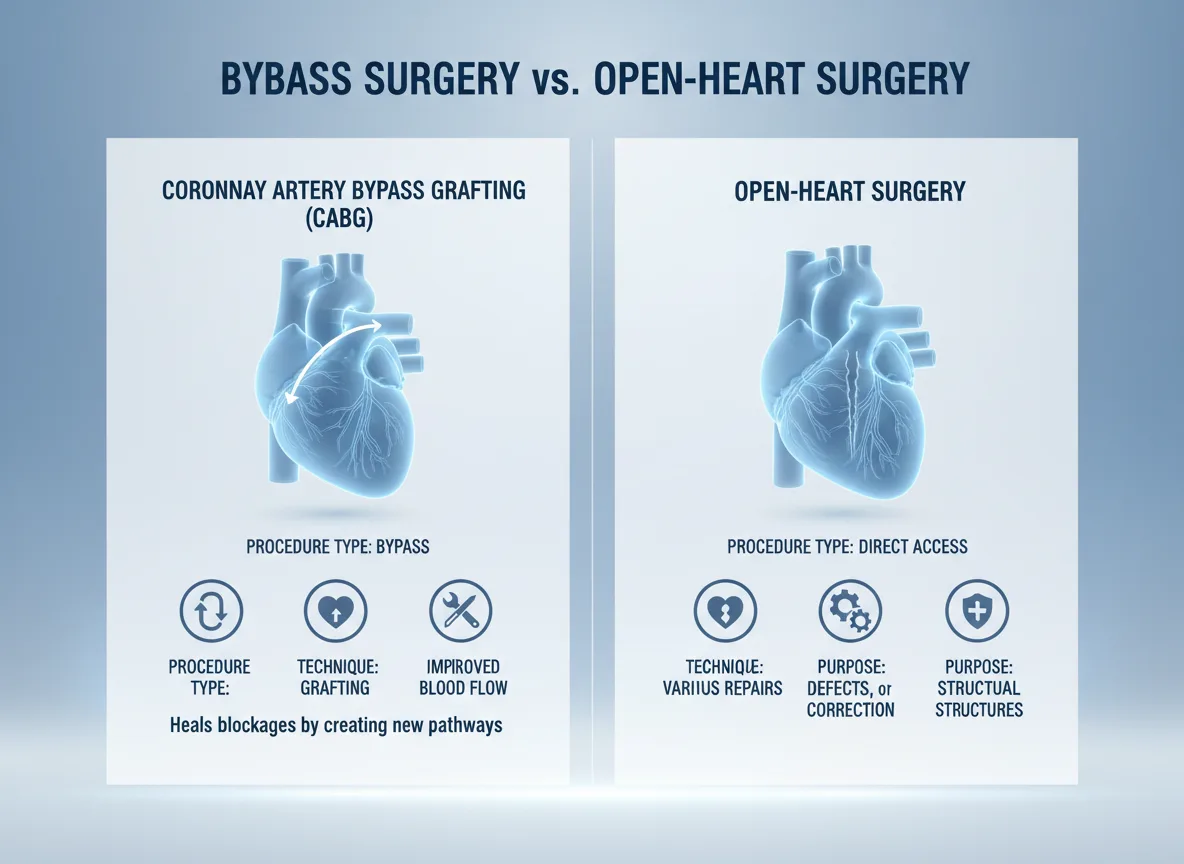
Open heart surgery is a broad category covering any operation where the chest is opened to access the heart - including valve repair, heart transplants, and congenital defect corrections. Bypass surgery (CABG) is a specific procedure within that category: it reroutes blood flow around blocked coronary arteries to restore the heart's blood supply.
Surgical Approaches: Incisions and Techniques
Traditional open heart surgery uses a sternotomy - a long central chest incision - to give the surgeon clear access to the heart. Modern bypass techniques increasingly include minimally invasive options, using smaller incisions between the ribs. Your surgeon selects the approach based on your specific diagnosis, anatomy, and overall fitness.
The Relationship Between Open Heart Surgery and Bypass Surgery
Bypass surgery usually requires an open heart approach, but not all open heart surgeries are bypass operations. Think of 'open heart' as describing the method of access, and 'bypass' as describing the specific repair performed. A triple vessel bypass is open heart surgery. A valve replacement is also open heart surgery. But they are entirely different procedures serving different purposes.
Is Open Heart Surgery the Same as Bypass Surgery?
No. One is a general access method; the other is a specific procedure. The table below summarises the primary distinctions:
Feature | Open Heart Surgery | Bypass Surgery (CABG) |
Definition | Chest opened for direct heart access | Reroutes blood past blocked coronary arteries |
Purpose | Treat various heart conditions | Improve heart muscle blood supply |
Approach | Sternotomy or minimally invasive | Sternotomy or minimally invasive |
Relationship | Access method for many procedures | A common type of open heart surgery |
Sources: Max Healthcare | Fortis Hospitals | Artemis Hospital
Which Is Better - Open Heart Surgery or Bypass Surgery?
Neither procedure is universally better. The right surgery depends entirely on your diagnosis. Bypass surgery addresses coronary artery disease; other open heart procedures address valve damage, structural defects, or congenital conditions. After bypass, long-term lifestyle changes - diet, exercise, smoking cessation - are essential for preventing recurrence. Your cardiologist makes this recommendation after full evaluation, not based on preference.
Heart Surgery Costs in India vs Australia and the USA
Average Cost Comparison for Open Heart Surgery by Country
Open heart surgery involves substantial costs in Western countries. India offers the same standard of care at a fraction of the price, making advanced cardiac treatment accessible to international patients.
Procedure Type | India (₹) | India (USD) | Australia (AUD) | USA (USD) |
Open Heart Surgery | ₹3,50,000 – ₹8,00,000 | $4,200 – $9,600 | $45,000 – $90,000 | $75,000 – $150,000 |
Sources: Max Healthcare | Apollo Hospitals | Fortis Escorts Heart Institute
Average Cost Comparison for Bypass Surgery by Country
Coronary artery bypass grafting (CABG) costs vary depending on the number of vessels bypassed and the hospital tier. India's prices are significantly lower than comparable quality care in Australia or the USA.
Procedure | India (₹) | India (USD) | Australia (AUD) | USA (USD) |
Single Bypass (CABG) | ₹2,80,000 – ₹4,50,000 | $3,300 – $5,400 | $35,000 – $60,000 | $50,000 – $90,000 |
Double / Triple Bypass | ₹4,00,000 – ₹6,50,000 | $4,800 – $7,800 | $55,000 – $90,000 | $80,000 – $130,000 |
Complex Multi-Vessel | ₹6,00,000 – ₹9,00,000 | $7,200 – $10,800 | $80,000 – $120,000 | $120,000 – $180,000 |
Sources: Apollo Hospitals | Fortis Healthcare | Narayana Health
Why India Offers Significant Cost Savings Without Compromising Quality
India's lower cost of living and hospital operations allow facilities to maintain world-class services at a fraction of Western prices. Most JCI-certified hospitals in India include pre-operative diagnostics and a week of post-operative follow-up within the quoted CABG price - preventing unexpected charges. The high volume of complex procedures performed annually at centres like Apollo and Narayana Health means surgeons continuously refine their expertise.
Patients from Australia and the USA typically save 60–80% on the total cost of cardiac care in India, including travel and accommodation expenses.
Bypass Surgery Survival Rate by Age: What the Data Shows
CABG Outcomes by Age Group
Bypass surgery significantly improves life expectancy for patients with severe coronary artery disease. The 30-day mortality rate for elective CABG at high-volume centres is below 2% across most age groups, according to data from the Society of Thoracic Surgeons (STS). Five-year survival rates exceed 90% for patients under 65 with no major comorbidities.
Age Group | 5-Year Survival (No Major Comorbidities) | 5-Year Survival (With Comorbidities) |
Under 60 | 97–98% | 88–93% |
60–70 | 93–95% | 83–88% |
70–79 | 85–90% | 75–82% |
80+ | 75–82% | 65–75% |
Sources: Society of Thoracic Surgeons (STS) Database | Journal of Thoracic and Cardiovascular Surgery, 2022 | ICMR Cardiac Registry
What Is the Life Expectancy After Bypass Surgery?
Most patients who undergo CABG and commit to post-operative lifestyle changes can expect to live 15–20 years or more after surgery, with significantly improved quality of life. A 2020 review published in the European Heart Journal found that CABG patients with multivessel disease had better 10-year survival outcomes than those treated with stents alone. The key determinants are age, the extent of disease at the time of surgery, and adherence to cardiac rehabilitation and dietary changes post-surgery.
Open Heart Surgery Mortality Rates and Contributing Factors
Mortality rates for open heart surgery vary significantly based on the specific procedure and the patient's baseline health. Routine CABG at high-volume, JCI-certified Indian hospitals carries a 30-day mortality rate comparable to top global institutions - typically under 2% for elective cases. More complex procedures such as valve replacements combined with CABG, or surgery on patients with significantly weakened heart function, carry moderately higher risk. A thorough pre-operative assessment by your cardiac team will clarify individual risk factors before you decide.
Can Survival Rates Improve with Minimally Invasive Techniques?
For suitable candidates, off-pump CABG (beating-heart surgery) and minimally invasive approaches are associated with reduced blood transfusion requirements, lower infection risk, and faster recovery. They are not appropriate for all patients - blockage location and overall heart function determine eligibility. Your surgeon will advise based on your specific anatomy.
Open Heart Surgery Recovery: What to Expect Week by Week
Immediate Post-Operative Care (Days 1–2)
Recovery begins in the Intensive Care Unit (ICU), where a dedicated nursing team monitors vital signs, fluid balance, and cardiac rhythm continuously. You will have drainage tubes, monitoring lines, and a breathing tube in place during the initial hours. Once stable - usually within 12–24 hours - the breathing tube is removed.
Patient story: Fatima, 46, from Dubai, had triple bypass surgery at a NABH-accredited hospital in Hyderabad. 'The ICU felt intimidating at first,' she recalls. 'But the nurses spoke English, explained every beep and tube, and my Divinheal coordinator checked on me twice a day. By day three I was sitting up having soup.' She returned to Dubai six weeks later.
Hospital Stay and Early Recovery (Days 3–10)
After 1–2 days in the ICU, patients transfer to a general cardiac ward. The focus shifts quickly to early mobilisation - sitting up, breathing exercises, and short walks, often guided by a cardiac physiotherapist. Leading Indian hospitals include dedicated cardiac rehabilitation teams from day one. Most international patients are discharged and ready for a local hotel or serviced apartment after 7–10 days, with the full stay in India typically running 14–21 days.
What Is the Hardest Part of Open Heart Surgery Recovery?
Most patients report that managing chest discomfort and fatigue in the first two to four weeks is the most challenging aspect - not pain at rest, which is well-controlled with prescribed medication, but the cumulative tiredness and the lifting restrictions (nothing over 5 kg for 6–8 weeks while the sternum heals). Emotional fluctuations - including low mood, irritability, or anxiety - are also common and well-documented in cardiac recovery literature. Proactively discussing these with your care team is important; NABH-accredited hospitals in India routinely include pre- and post-operative counselling as standard.
Long-Term Recovery: Milestones and What to Expect
Full recovery after CABG typically takes 3–6 months. Most patients can return to desk-based work at 6–8 weeks, driving at 4–6 weeks (subject to your cardiologist's clearance), and moderate exercise at 8–12 weeks. Your sternum requires 6–8 weeks to achieve structural fusion, during which lifting restrictions are non-negotiable.
Essential Lifestyle Changes After Heart Surgery
Long-term outcomes after bypass surgery depend as much on lifestyle as on the surgery itself. The core changes are:
Heart-healthy diet: emphasise vegetables, whole grains, legumes, oily fish, and lean protein; limit saturated fats, processed foods, and sodium
Regular physical activity: begin with walking, progress to 150 minutes per week of moderate-intensity exercise under cardiac rehabilitation guidance
Complete smoking cessation: smoking after bypass significantly accelerates re-stenosis (re-narrowing of bypassed vessels)
Medication adherence: statins, antiplatelet agents, and beta-blockers are typically lifelong prescriptions post-CABG
Annual cardiac follow-up: stress tests, echocardiograms, and blood panels to monitor graft patency and overall cardiac function
Managing Your Open Heart Surgery Scar: Care and Healing
Understanding the Scar and Healing Timeline
Most open heart surgeries, including CABG, leave a sternotomy scar - a vertical line running down the centre of the chest. The skin incision closes externally within 6–8 weeks, but the scar continues to remodel for up to 12–24 months. Initially red and raised, it gradually flattens and fades. Patients typically spend 10–14 days in India post-surgery, which allows for wound checks before travelling home.
Scar Care Best Practices
Once your surgeon approves wound care at home, clean the area gently with mild soap and water daily. Keep the scar moisturised with a fragrance-free lotion or silicone-based gel, which helps soften the tissue. Protect the scar from direct sunlight for at least 12 months - UV exposure can cause permanent darkening. If the scar becomes significantly raised, red, or grows beyond its original boundaries, it may be a hypertrophic or keloid scar (an overgrowth of scar tissue). Early treatment with silicone sheets or steroid injections is effective; discuss this with your surgeon at your first follow-up.
Does Bone Grow Over Sternal Wires?
Yes. After open heart surgery, the sternum is held together with small stainless-steel or titanium wires. These wires are inert, typically permanent, and do not need removal unless complications arise. Over weeks and months, new bone tissue grows and fuses around them - a process called sternal fusion - restoring the sternum's full structural strength. By 8–12 weeks, most patients have a fully fused sternum with no restrictions on normal daily activities.
What Can You Never Eat Again After a Heart Bypass?
There are no absolute lifelong bans, but some foods significantly raise the risk of graft re-narrowing and should be permanently minimised or eliminated. Cardiologists consistently advise against:
Trans fats (partially hydrogenated oils) - found in many packaged biscuits, fried fast food, and commercial pastries
Processed and cured meats (sausages, bacon, salami) - high in saturated fat and sodium
High-sodium foods - processed snacks, canned soups, and restaurant meals with hidden salt
Refined sugars and sugary drinks - promote inflammation and weight gain, both of which accelerate coronary disease
Planning Your Medical Trip to India with Divinheal
Expert Coordination from Diagnosis to Post-Procedure Care
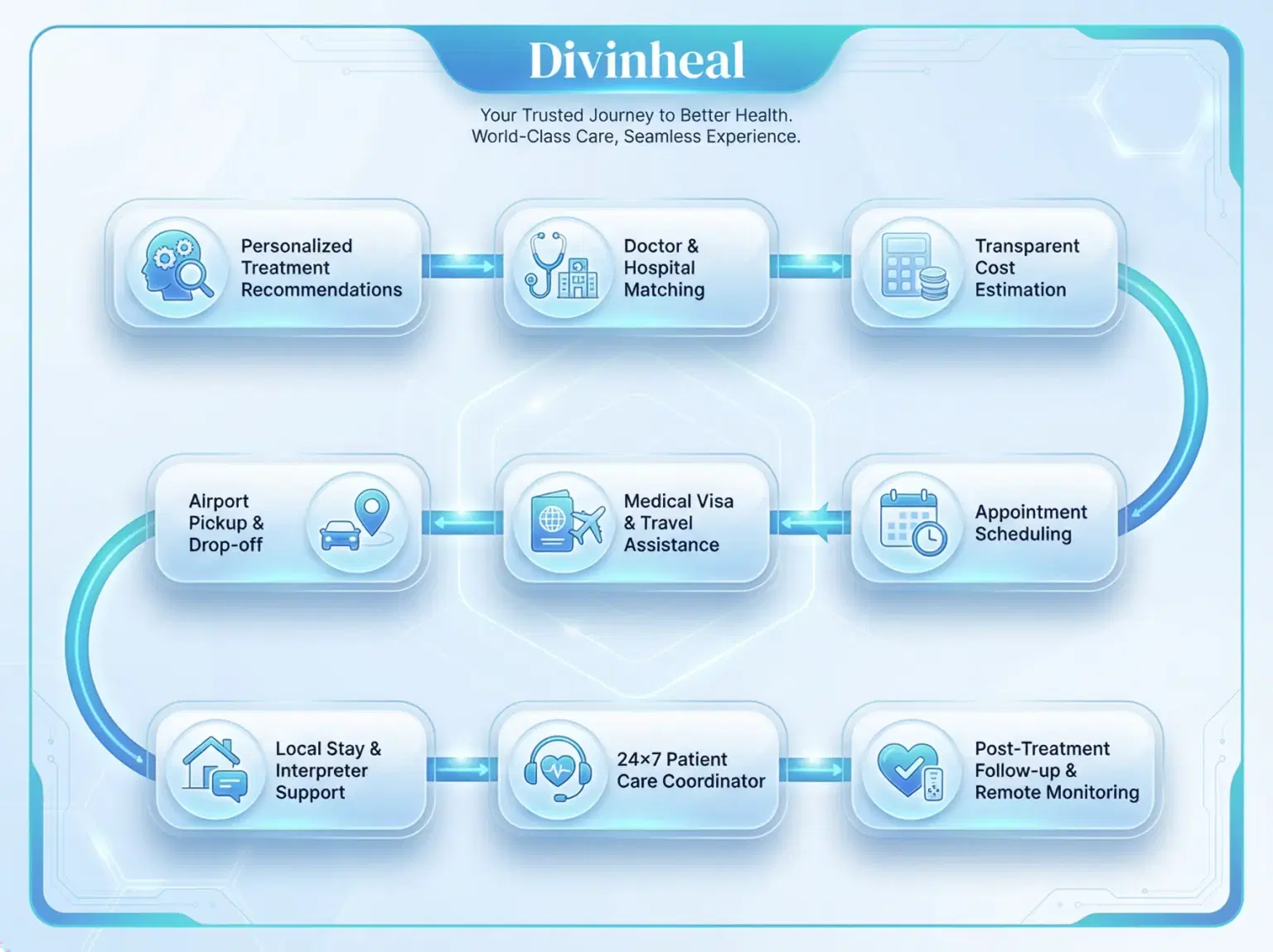
We manages your entire medical journey with end-to-end coordination, reducing your logistical burden to near zero. The team handles initial consultations, hospital admission, flight and accommodation arrangements, daily transport to appointments, and discharge planning - so you can focus entirely on your health.
One practical step patients often overlook: confirm your passport is valid for at least six months beyond your planned return date, as India's e-Medical Visa requires this. We will prompt you through this checklist well in advance.
Access to Top Cardiac Surgeons and JCI-Accredited Hospitals
Divinheal connects international patients directly with India's most respected cardiac specialists at JCI and NABH-certified hospitals. Partner facilities include hospitals in Chennai, New Delhi, Hyderabad, and Bangalore - all offering internationally recognised protocols, English-speaking staff, and dedicated international patient services departments.
Visa and Travel Requirements for Patients from Australia and the USA
Requirement | Patients from USA | Patients from Australia |
Visa Type | e-Medical Visa (preferred) or Regular Medical Visa | Regular Medical Visa or e-Medical Visa (check eligibility) |
Invitation Letter | Required from Indian hospital | Required from Indian hospital |
Processing Time | Typically 3–5 business days for e-Visa | Can be 7–15 business days for standard visa |
Local Registration | Required for stays over 180 days | Required for stays over 180 days |
Sources: Apollo Hospitals International | India Ministry of Health - Medical Visa Guidelines
Personalised Support for International Patients
Divinheal provides dedicated language support, cultural guidance, and dietary accommodation throughout your stay. This personalised service significantly reduces stress and supports a positive recovery environment. Patients also receive remote post-operative follow-up consultations and secure telemedicine sessions directly with their treating surgeon - continuing care from the comfort of home in Australia, the USA, or the Gulf.
You now have a clear picture of what separates bypass surgery from other open heart procedures, what outcomes to expect by age, what recovery involves week by week, and what your medical journey to India with Divinheal looks like in practice. For patients from Australia, the USA, or the Gulf, India offers access to internationally accredited cardiac care with savings of 60–80% - without compromising quality or safety. Contact Us today to receive a no-obligation treatment plan, cost estimate, and hospital recommendation tailored to your diagnosis.
Related Links
Booking With DIVINHEAL
Get a free consultation to understand your treatment options
Related Links
DivinHeal's Journey
Latest Articles



Hospitals Offering this treatment
India offers premium medical procedures at affordable prices. Discover our most popular treatments, delivered by the country's finest doctors.

Hisar Intercontinental Hospital
Saray Mah. Siteyolu Cad. No:7, Umraniye, 34768, Istanbul, Turkey
Hisar Intercontinental Hospital

Medical Park Group, Istanbul
Fahrettin Kerim Gokay Cad. Tıbbiye Cd., Kadikoy, Istanbul, Turkey
Medical Park Group, Istanbul

Emsey Hospital, Pendik, Istanbul
Çamlık, Selçuklu Cd. No:22, 34912 Pendik/İstanbul, Türkiye
Emsey Hospital, Pendik, Istanbul


American Hospital, Istanbul
Guzelbahce Sk. No:20, 34365, Nisantasi, Istanbul, Turkey
American Hospital, Istanbul

Memorial Hospitals Group
Burhaniye, Nagehan Sokağı No:4/A D:1, 34676 Üsküdar/İstanbul, Türkiye
Memorial Hospitals Group

Florence Nightingale Hospital Istanbul
Abide-i Hürriyet Cd No:166, 34381 Sisli, Istanbul
Florence Nightingale Hospital Istanbul

Medicana International Hospital, Istanbul
Halit Ziya Turkkani Mah. Medikal Park Cd. No:1, Beylikdüzü, İstanbul
Medicana International Hospital, Istanbul

Okan University Hospital Istanbul
Icmeler Mah. Aydınlıyolu Cd. No:2, 34947 Icmeler-Tuzla, Istanbul
Okan University Hospital Istanbul

Kolan International Hospital, Istanbul
Kaptanpasa Mah. Okmeydan Kavsagi, Darulaceze Cd. No:14, 34384 Sisli, Istanbul
Kolan International Hospital, Istanbul
Frequently Asked Questions
Get answers to common questions about medical tourism, treatment procedures, and our comprehensive healthcare services.
Ready To Start Your Healing Journey?
Get Personalized Medical Treatment Options From India's Top Hospitals. Our Medical Experts Are Ready To Assist You Every Step Of The Way.