Hysteroscopy Before IVF: Procedure, Recovery & Cost for UK, Australia & Nigeria Patients
A diagnostic hysteroscopy in India costs ₹20,000–₹50,000. That is 70–80% less than private rates in the UK or Australia.
UK patients can get it free on the NHS. But wait times run 4–12 weeks. That can delay your IVF by a full cycle. Australian patients still pay a large gap fee at private hospitals. Nigerian patients often cannot get specialist care at home. All three groups are travelling to India for the procedure. They save 60–85% on cost, then go home for IVF.
This guide explains what a hysteroscopy involves, step by step. It covers daily recovery, IVF success rates, costs by country, and how to plan your trip through Divinheal.
What Is a Hysteroscopy and Why Is It Recommended Before IVF?
Hysteroscopy: What It Is and How It Works
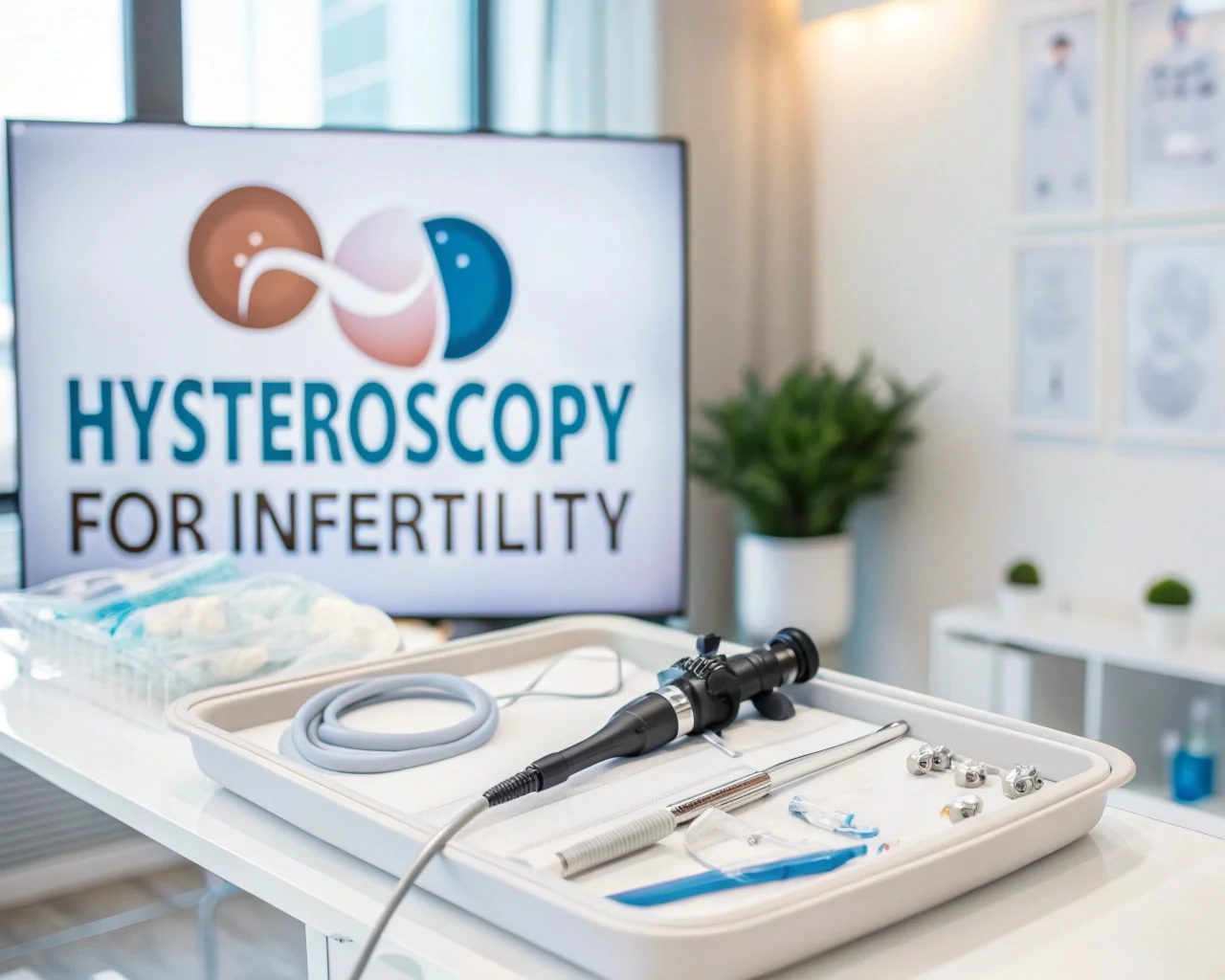
A hysteroscopy is a minor procedure. The surgeon uses a thin, lighted camera - called a hysteroscope - to look inside the womb. No skin cuts are made.
The hysteroscope goes in through the vagina and cervix (the neck of the womb). Sterile saline (saltwater) is pumped through it to open up the womb gently. This gives the surgeon a live view of the womb lining, walls, and both fallopian tube openings on a screen. A diagnostic hysteroscopy takes 10–30 minutes. If a problem is found and treated in the same session, it is called an operative hysteroscopy. That can take 30–90 minutes depending on what is removed.
Hysteroscopy replaced D&C (dilation and curettage) as the standard womb check at most NHS hospitals and top Indian centres. This is because it gives a direct view. D&C works by feel alone, so it often misses problems.
Why Doctors Recommend Hysteroscopy Before an IVF Cycle
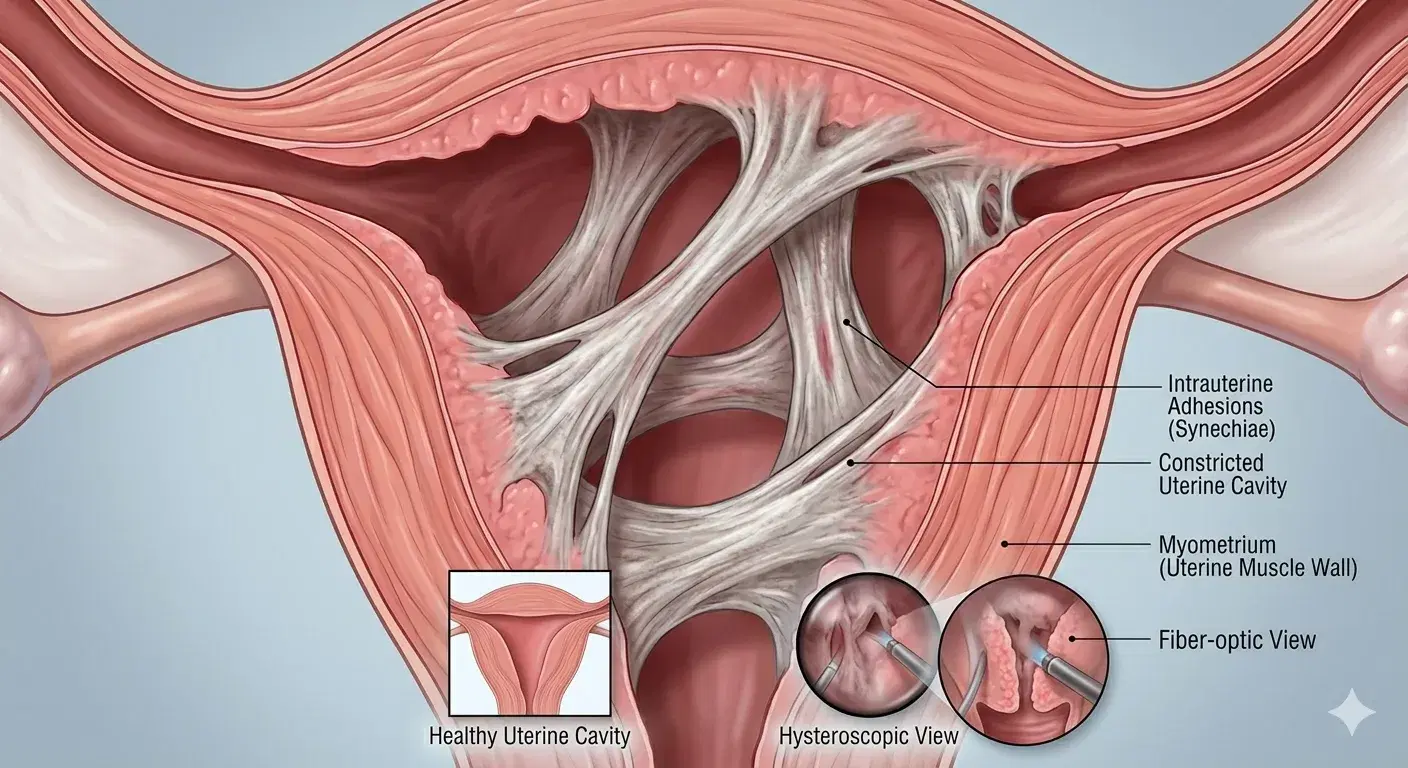
Your specialist may suggest a hysteroscopy before IVF in several cases. You may have had one or more failed embryo transfers with no clear reason. Scans may suggest a womb problem but cannot confirm it. You may have a history of repeated miscarriage. Or your womb lining may have been thin or irregular on past scans.
The reason is clear that an embryo cannot attach to a womb surface that has a polyp, scar tissue, or a septum (a wall dividing the cavity), for finding and fixing these problems before embryo transfer saves time and money, a Research shows that treating womb problems before IVF improves live birth rates by 20–40% in affected patients (Fertility and Sterility meta-analysis data, 2022–2024).
Diagnostic vs. Operative Hysteroscopy: Which Type Will You Need?
A diagnostic hysteroscopy is a look-only. The surgeon checks whether the womb cavity is normal and then ends the procedure. If the cavity is clear, IVF can start in the next cycle. An operative hysteroscopy adds treatment: removing a polyp (polypectomy), cutting a womb septum (septoplasty), releasing adhesions (adhesiolysis), or removing a fibroid (myomectomy). Most top Indian hospitals can switch from diagnostic to operative in the same session if a problem is found. This includes Apollo Hospitals, Fortis Hospitals, Medanta Gurgaon, MAX Hospitals, and Artemis Hospitals. You do not need a second trip.
What Happens During a Hysteroscopy, Step by Step?
How to Prepare for Your Hysteroscopy
Your surgeon will schedule the procedure between days 5 and 10 of your cycle. This is after your period ends but before ovulation. At this point the womb lining is at its thinnest. This gives the clearest view. You fast for 4–6 hours before the procedure if you are having general anaesthesia. Most clinics ask you to stop blood-thinning medicines (aspirin, ibuprofen) 5–7 days before. Divinheal sets up a remote pre-procedure call with your Indian hospital before you travel. Your IVF records, scan reports, and blood results are checked in advance. The schedule is confirmed before you book flights.
What the Surgeon Does During the Procedure
You lie on a procedure table with your feet supported. The surgeon uses a speculum to access the cervix. The cervical opening is gently dilated if needed. The hysteroscope - about 4–5 mm wide - is guided through the cervix into the womb. Saline flows through the scope to open the cavity and keep the view clear. The surgeon checks the entire womb lining, both tube openings, and the walls. If a problem is found, small tools alongside the hysteroscope allow immediate removal or treatment. The procedure is recorded on video. Photos are taken for your medical file.
Is Hysteroscopy Painful? What Drugs Are Used for Anaesthesia?
Most diagnostic hysteroscopies use local anaesthetic - a lidocaine block on the cervix - plus mild oral sedation. You stay awake. You may feel cramping that most patients rate 3–5 out of 10. NHS Inform suggests taking paracetamol or ibuprofen 1–2 hours before to reduce discomfort. If cramping is too intense, you can ask for the procedure to stop at any time. That is your right.
Operative hysteroscopies - especially for adhesiolysis or fibroid removal - use general anaesthesia (propofol-based induction) or spinal anaesthesia. You feel nothing during the procedure. At Apollo Hospitals, Fortis Hospitals, Medanta Gurgaon, MAX Hospitals, and Artemis Hospitals, you discuss anaesthesia options with the anaesthesiologist before the procedure. Most patients who were worried about pain say it was much easier than they expected.
Hysteroscopy Recovery: What to Expect Day by Day
Most patients return to light daily activities within 1–2 days after a diagnostic hysteroscopy. After an operative procedure, most are back to light activities within 1–2 weeks.
Recovery is faster than most patients expect. The table below draws on NHS clinical guidance from Guy’s and St Thomas’ NHS Foundation Trust, University Hospitals Sussex, and NHS Inform Scotland.
Day | Typical Symptoms | Activity Level | Key Restrictions |
Day 0 (Procedure day) | Cramping (period-like). Light spotting. Bloating. Drowsiness if general anaesthesia used. | Rest at clinic 1–2 hrs then home. Companion required. No driving. | Sanitary pads only - no tampons. Showers fine from same day. No baths yet. |
Days 1–2 | Spotting continues. Cramping usually eases. Light watery discharge possible. | Light activity at home. Many return to desk work by day 2. | No tampons. No sex. No heavy lifting. No swimming or baths. |
Days 3–7 | Discharge may continue up to 7 days (normal). Most cramping resolved by day 3. | Return to light daily activities. Most patients resume office work. | No sex until bleeding fully stops. No strenuous exercise. |
Days 8–14 | Discharge usually stops. Internal uterine healing continues. | Most normal activities. Light yoga and walking fine. | Confirm with surgeon before high-impact exercise or intercourse. |
Day 14+ | Full recovery expected. Next period in 4–6 wks. May be heavier than usual - normal. | Full normal activity. | Await specialist clearance before starting IVF preparation. |
Recovery timelines vary by procedure type and individual health. Follow your treating surgeon’s specific post-operative instructions above any general guidance.
The First 24 Hours: Symptoms and What Is Normal
Cramping right after the procedure is normal and it feels like normal period pain. Paracetamol or ibuprofen works well for most patients. Light spotting or pinkish discharge usually settles within 24–48 hours. If you had general anaesthesia, expect to feel drowsy for a few hours. You need a companion to take you home. You cannot drive until the next day. Some clinics use CO₂ gas instead of saline to open the womb. In that case, you may feel a brief ache in your shoulder tip as your body absorbs the gas. This passes within a few hours.
NHS guidance from Guy’s and St Thomas’ NHS Foundation Trust says that vaginal bleeding can continue for 7–10 days after hysteroscopy. It may be heavier than a normal period, especially after an operative procedure. Discharge may last up to 2 weeks. This is normal. Use sanitary pads throughout recovery. Tampons raise infection risk while the cervix is still partly open.
Recovery Days 2–14: Activity Restrictions and When You Can Bathe
Most patients are back to desk work and light activity within 2–3 days. For the first two weeks, follow these rules. No sex until bleeding has fully stopped - this usually takes 1–2 weeks (NHS Inform guidance). No tampons - use pads until after your next period. No swimming, hot tubs, or baths for at least 48 hours. You can shower from day 1 or day 2. If you had general anaesthesia, wait until you feel steady. No hard exercise or heavy lifting above 5 kg. No douching or vaginal products.
A heavier first period after hysteroscopy is completely normal, especially after operative procedures. The womb lining was disturbed and the next cycle rebuilds it. It goes back to normal by the second period after the procedure.
When Should You Call Your Doctor After a Hysteroscopy?
Contact your clinic, GP, or NHS 111 (UK patients) straight away if you notice any of these warning signs:
Heavy bleeding - soaking more than one sanitary pad per hour for two consecutive hours, or passing clots larger than a 10-pence coin (NHS Guy’s and St Thomas’ guidance)
Fever above 38°C (100.4°F)
Severe abdominal pain that does not respond to paracetamol or ibuprofen
Foul-smelling vaginal discharge - a possible sign of womb infection
Difficulty urinating or pain on urination
Serious complications occur in fewer than 1% of hysteroscopy procedures at experienced centres. Divinheal gives you a dedicated WhatsApp contact during your India stay. They can reach the treating hospital straight away if any of the above occur.
How Long Does It Take for the Uterus to Heal Internally?
The womb lining regrows within one full menstrual cycle after a diagnostic hysteroscopy - typically 4–6 weeks. After operative procedures: polyp removal sites heal in 4–8 weeks; myomectomy sites in 8–12 weeks; extensive adhesiolysis in 3–4 months. Your specialist confirms healing with a follow-up ultrasound scan before clearing you for IVF. This scan can be done at your home clinic in the UK or Australia. The report is shared remotely with your Indian surgeon via Divinheal.
How Hysteroscopy Affects IVF Success Rates
What the Evidence Shows About IVF After Hysteroscopy
Hysteroscopy before IVF improves live birth rates by 20–40% in patients with confirmed womb problems. It does this by fixing conditions that stop the embryo from attaching.
The evidence is strongest for patients with repeated implantation failure or a known womb problem. A peer-reviewed meta-analysis in Fertility and Sterility looked at womb problems before IVF. These include polyps, fibroids, adhesions, and a uterine septum. The study found that fixing them first improved live birth rates by 20–40% compared to not treating them. Multiple Indian fertility centres working under ICMR guidelines report better first-cycle results when pre-IVF hysteroscopy is done in patients with confirmed problems.
For patients with a confirmed normal womb and no history of implantation failure, routine pre-IVF hysteroscopy does not always add benefit. The procedure is targeted. It is advised when there is a clinical reason to suspect a problem - not for every IVF patient.
How Soon After a Hysteroscopy Can You Start IVF?
The answer depends on what was found and treated during your hysteroscopy. The table below sets out the typical IVF restart timeline by procedure type.
Hysteroscopy Type | Typical IVF Restart Timeline | Clinical Reason |
Diagnostic only - no treatment | Same or next cycle (4–6 weeks) | No tissue removed; lining recovers in one cycle |
Operative - polyp removal (polypectomy) | 1–2 menstrual cycles (4–8 weeks) | Endometrial lining must fully regenerate after resection |
Operative - fibroid removal (myomectomy) | 2–3 cycles (8–12 weeks) | Deeper myometrial repair required |
Operative - adhesion removal (Asherman's) | 2–4 cycles; confirmed by follow-up hysteroscopy | Re-adhesion risk assessed; lining thickness confirmed before embryo transfer |
Operative - uterine septum resection | 1–2 cycles (4–8 weeks) | Cavity verified by follow-up scan before IVF prep begins |
Your fertility specialist confirms IVF readiness with a follow-up ultrasound scan. UK and Australian patients can have this scan at their home clinic. The report is then shared with their Indian fertility specialist for review.
Can I Conceive Naturally After a Hysteroscopy?
Yes. Hysteroscopy does not harm fertility. By removing the problem that was blocking implantation, it often improves your chances of natural conception. Conception in the cycle right after hysteroscopy is possible but not advised. Allow one full cycle for the womb lining to regrow fully. From the second cycle onwards, natural conception attempts can resume alongside or instead of IVF, based on your specialist’s advice.
What Are the Risks and Is Hysteroscopy a Serious Procedure?
Hysteroscopy is classed as a minor gynaecological procedure. NHS guidance from EKHUFT describes it as “relatively free of problems.” Serious complications occur in fewer than 1% of cases at experienced centres. The most common minor effects - cramping, spotting, light discharge - are normal and settle within days. Rare complications include womb perforation (fewer than 1 in 1,000 procedures; usually heals without surgery), womb infection (treated with antibiotics), and fluid overload during the procedure. The anaesthesia team manages fluid overload at the time. All five Divinheal partner hospitals have clear protocols for complications, with backup surgical teams in the same facility.
Hysteroscopy Cost: India vs UK, Australia and Nigeria
A diagnostic hysteroscopy at a NABH-accredited Indian hospital costs ₹20,000–₹50,000 - roughly 75–85% below private rates in the UK or Australia.
The cost gap is large. Even after flights and accommodation, travelling to India is often cheaper than paying privately at home.
Country | Diagnostic Hysteroscopy | Operative Hysteroscopy | Key Context |
India | ₹20,000–₹50,000 (~£185–£465 | AUD $340–$850) | ₹50,000–₹1,20,000 (~£465–£1,115 | AUD $850–$2,050) | NABH-accredited hospitals. Includes surgeon fee, theatre, anaesthesia, post-procedure monitoring. |
United Kingdom | FREE via NHS (4–8 wk wait) Private: £1,200–£2,500 | FREE via NHS (8–16 wk wait) Private: £2,000–£4,000 | NHS access via GP referral. Private costs exclude medication and pre-op tests. |
Australia | AUD $800–$2,200 (~£465–£1,280) | AUD $1,500–$4,000 (~£875–£2,330) | Medicare rebate ~AUD $200–$400. Private health insurance may cover gap. Public wait: 4–12 weeks. |
Nigeria | ₦600,000–₦1,200,000 (~£310–£625) | ₦1,200,000–₦2,500,000 (~£625–£1,300) | Limited specialist availability. Quality varies significantly by facility. Complex cases often require international referral. |
All figures are approximate 2025–2026 private-healthcare ranges. NHS hysteroscopy is free for eligible UK patients via GP referral. Australian Medicare rebate applies to eligible procedures performed in Australia. India costs are for NABH-accredited partner hospitals. Verify current package costs with Divinheal before booking.
What Does Hysteroscopy Cost in India?
At Divinheal’s NABH-accredited partner hospitals - Apollo Hospitals, Fortis Hospitals, Medanta – The Medicity Gurgaon, MAX Hospitals, and Artemis Hospitals Gurgaon - a diagnostic hysteroscopy costs ₹20,000–₹50,000 ($235–$590; £185–£465). This covers the surgeon’s fee, theatre, nursing, anaesthesia, and 1–2 hours of monitoring. If the procedure becomes operative in the same session, the total typically rises to ₹50,000–₹1,20,000 ($590–$1,415; £465–£1,115). That is still 60–75% below UK or Australian private prices.
Why UK and Australian Patients Travel to India Rather Than Wait
A patient can undergo hysteroscopy free on the NHS. The average waiting period is about 4-8 weeks for diagnostic procedures and 8-16 weeks for operative hysteroscopies, delaying the process of undergoing IVF by 2-4 months. This delay becomes significant clinically in case of patients above the age of 35 years. For a private hysteroscopy in the United Kingdom, the cost is approximately £1,200 to £2,500 for diagnostic procedures and £2,000 to £4,000 for operative hysteroscopy. The Medicare rebate in Australia for these procedures is $200 to $400, where the cost is $800 to $4,000 privately.
What’s Included in an Indian Hysteroscopy Package?
Standard packages at partner hospitals include: pre-procedure womb scan and consultation, surgeon’s fee, theatre and equipment, anaesthesia, 1–2 hours of monitoring, and a detailed report for your home specialist. Not typically included: flights and accommodation, pre-operative blood tests (₹3,000–₹8,000), follow-up ultrasound scan (₹2,000–₹5,000), and extra consultations outside the procedure day. Divinheal provides a full itemised quote before you confirm any booking.
Hysteroscopy vs. D&C: Which Is Better Before IVF?
For pre-IVF womb assessment, they prefer hysteroscopy over D&C. It gives a direct view, allows treatment in the same session, and finds problems that D&C often misses.
Both procedures access the womb cavity, but they work very differently. If you are told you need “a womb procedure” before IVF, it helps to know which one you are being offered and why.
Factor | Hysteroscopy | D&C (Dilation & Curettage) |
Visualisation | Direct, real-time view on monitor | No direct view - surgeon works by feel only |
Diagnostic accuracy | High - detects polyps, fibroids, adhesions, septa | Lower - small polyps and adhesions frequently missed |
Treat in same session | Yes - operative hysteroscopy removes tissue immediately | Blind removal only; targeted treatment not possible |
Anaesthesia | Local, sedation, or general - based on complexity | Usually general or regional anaesthesia |
Recovery | 1–2 days diagnostic; up to 2 weeks operative | Similar; slightly more cramping commonly reported |
Preferred for pre-IVF | Yes - NICE CG156 and NABH-accredited Indian centres favour hysteroscopy | Only if hysteroscopy is unavailable or for post-miscarriage clearance |
D&C is still right in certain cases. These include clearing the womb after a miscarriage, collecting tissue for biopsy when a direct view is not needed, or when hysteroscopy equipment is not available. For pre-IVF womb assessment, NICE guideline CG156 recommends hysteroscopy over D&C because it gives a confirmed diagnosis and treatment in one session. All five Divinheal partner hospitals follow this as their standard practice.
Why Patients from the UK, Australia and Nigeria Choose India for Hysteroscopy
NHS, Medicare, and Access Context by Country
UK patients face two problems. GP referrals can take weeks. Then NHS waiting lists classify pre-IVF hysteroscopy as non-urgent in many areas. A 9–16 week wait delays IVF by 2–4 months. For women in their late 30s, that matters clinically. The cost gap vs. India is also large. Many patients find that India works out cheaper than a London private clinic, even after flights and accommodation. Australian patients face Medicare gap payments and 4–12 week public waits. Patients in regional areas face even bigger access challenges. Nigerian patients often have no specialist operative hysteroscopy at home. Divinheal works with Nigerian referring doctors. They make sure records and post-procedure reports are shared smoothly between the Indian hospital and the Nigerian fertility clinic.
Partner Hospitals: Credentials and Specialist Access
Divinheal collaborates with five hospitals that have been accredited by the National Accreditation Board for Hospitals (NABH) for performing hysteroscopy surgeries. The Apollo Hospitals in Delhi and Chennai specializes in treating fertility patients through a specialized unit with gynecologists trained abroad. Fortis Hospitals in Noida and Gurgaon perform over 500 hysteroscopy surgeries every year. Medanta – The Medicity Gurgaon features a laboratory that has been accredited by the National Accreditation Board for Testing and Calibration Laboratories (NABL). It also has a minimally invasive gynecology program. MAX Hospitals in Delhi has patient coordinators speaking English, French, and Spanish.
Travel and Logistics for UK, Australian, and Nigerian Patients
Direct flights from London Heathrow to New Delhi will take 8-9 hours. One stop flights from either Sydney or Melbourne to Delhi will be 12-15 hours depending on whether you choose to fly via either Singapore or Dubai. Direct flights from Lagos to Delhi via either Addis Ababa or Dubai will take 11-14 hours. The average duration for most hysteroscopy patients is between 7-10 days. You will require 1-2 days for scans and consultation prior to your procedure. 1 day will be spent on the procedure and another 5-6 days will be required for your recovery. Divinheal will arrange your airport transfers, hotel bookings near the hospital, provide e-medical visa support letters and make all your appointments.
What to Do Next
A hysteroscopy procedure is simple with rapid recovery. Timing plays a vital role when planning for IVF. Having your uterus checked to rule out implantation failure will ensure that you address the most treatable factor..
Patients from the UK, Australia and Nigeria are completing hysteroscopy at NABH-accredited hospitals in India. These include Apollo Hospitals, Fortis Hospitals, Medanta Gurgaon, MAX Hospitals, and Artemis Hospitals. They go home to continue their IVF journey and typically save 70–85% on the procedure cost, even after flights and accommodation.
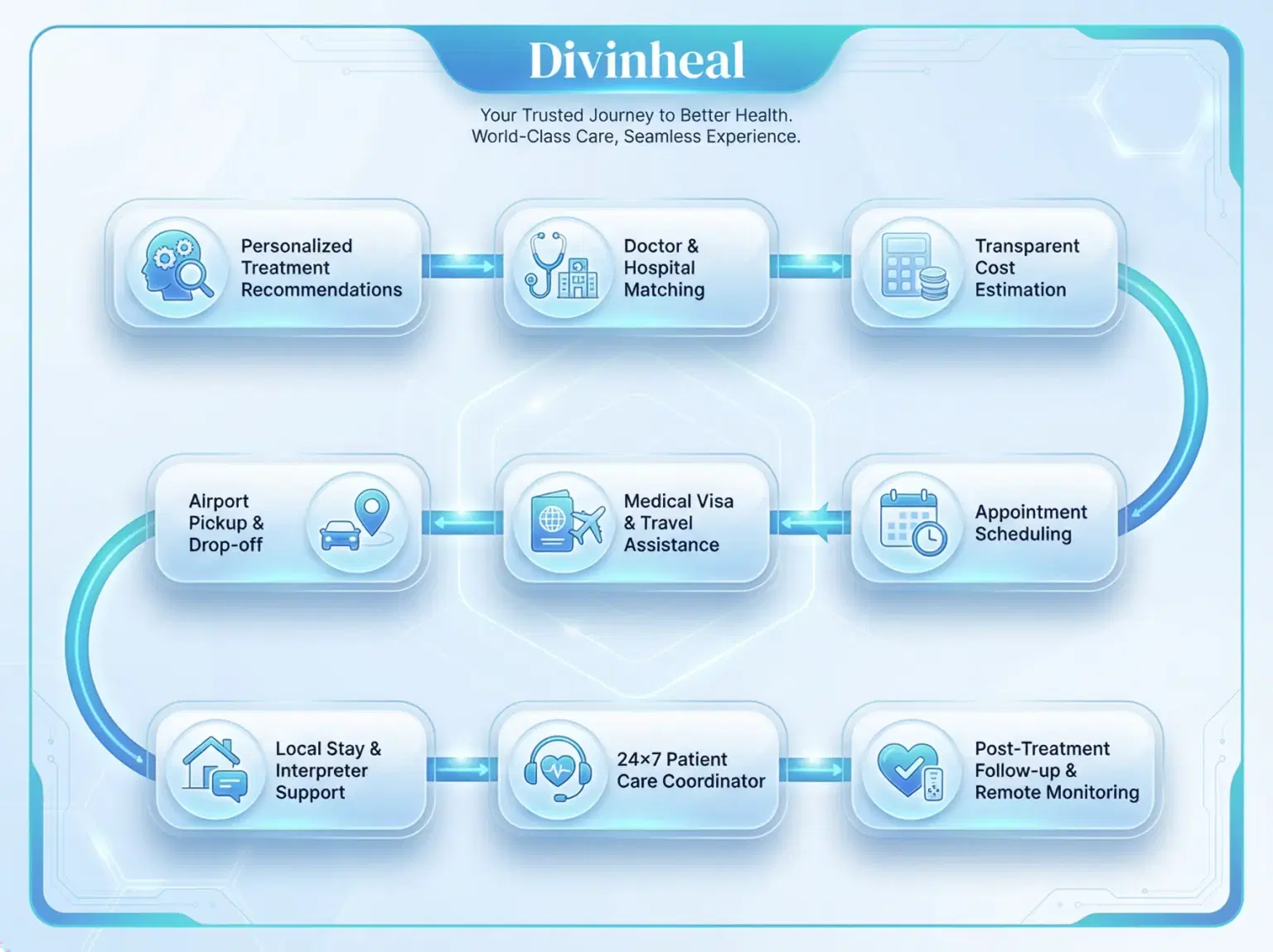
Divinheal handles everything for you. It includes the selection of the hospital, remote pre-operative consultation, appointment scheduling, visa arrangement, airport transportation, accommodations, and reporting back to your domestic doctor after the procedure. Your initial consultation is free.Related Links
Booking With DIVINHEAL
Get a free consultation to understand your treatment options
Related Links
DivinHeal's Journey
Latest Articles
Frequently Asked Questions
Get answers to common questions about medical tourism, treatment procedures, and our comprehensive healthcare services.
Ready To Start Your Healing Journey?
Get Personalized Medical Treatment Options From India's Top Hospitals. Our Medical Experts Are Ready To Assist You Every Step Of The Way.