
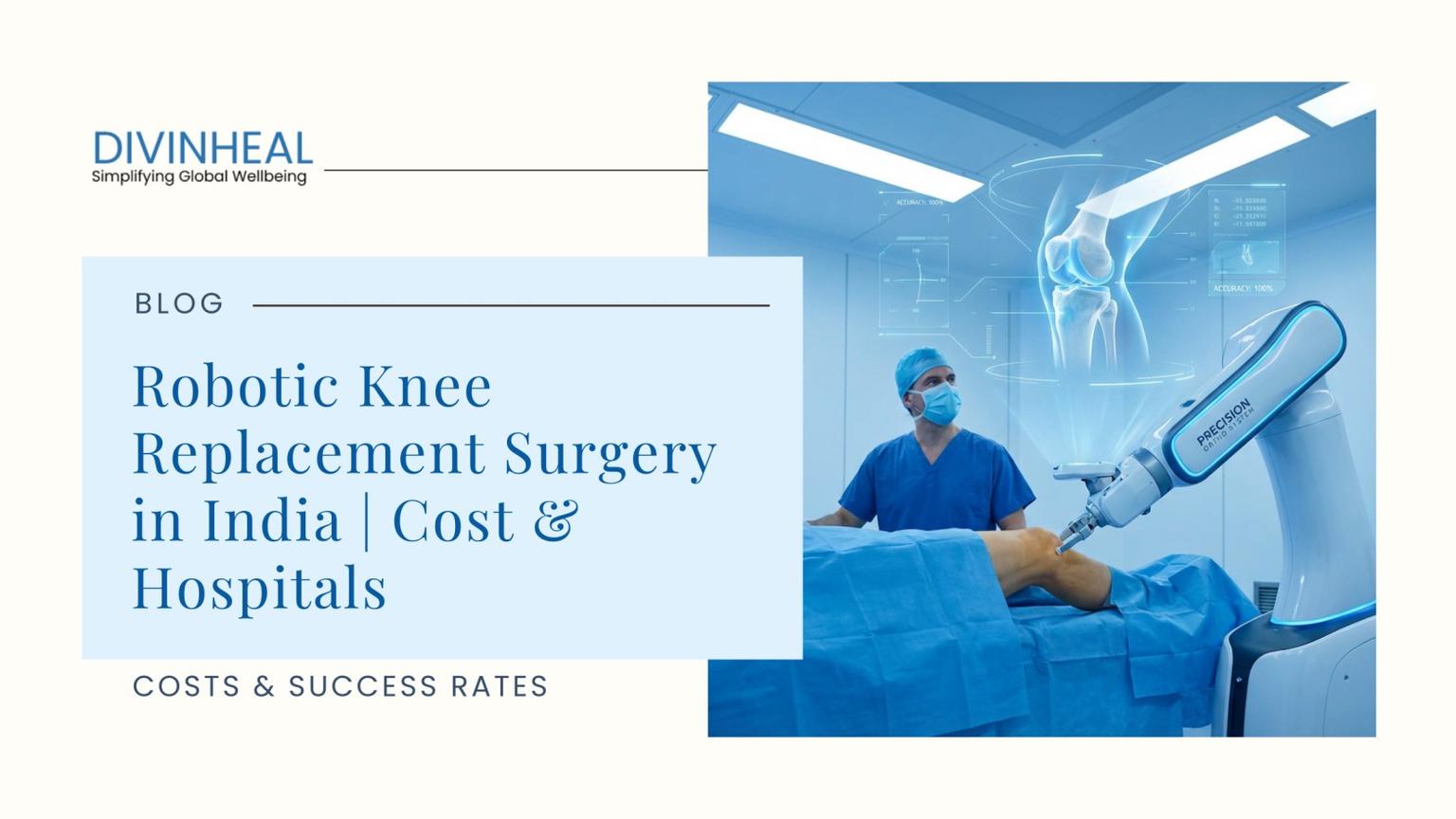
Robotic Knee Replacement Surgery Cost in India 2026: Complete Guide for Australian & UK Patients

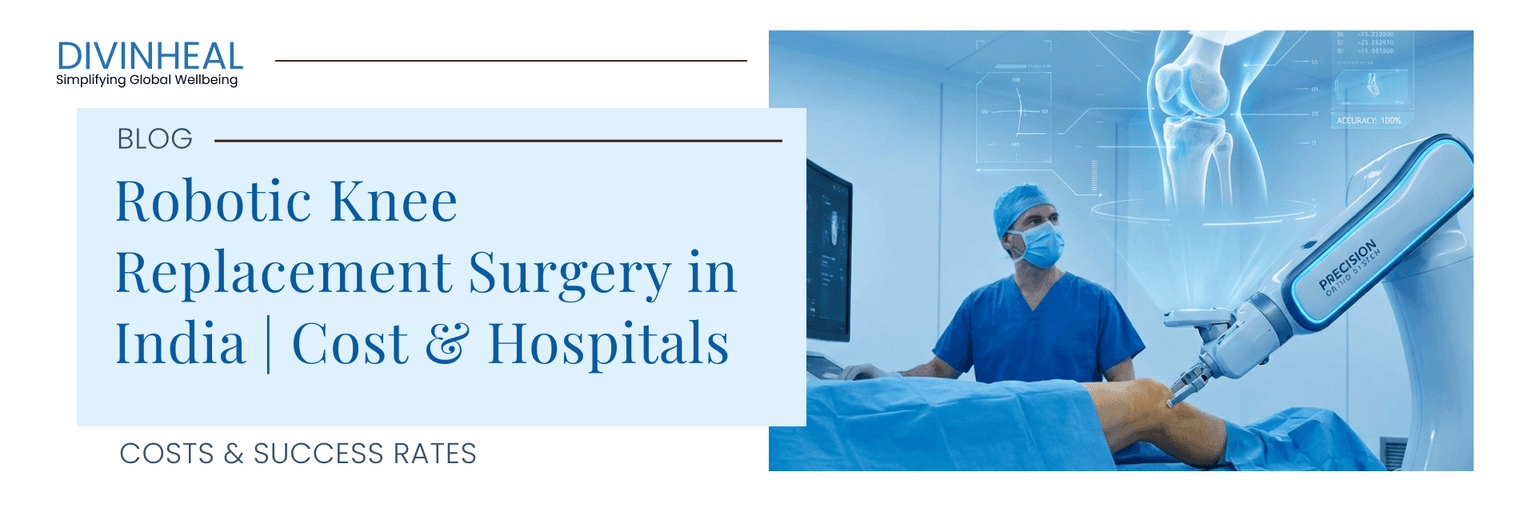
Robotic Knee Replacement Surgery Cost in India 2026: Complete Guide for Australian & UK Patients
Robotic Knee Replacement Surgery Cost in India 2026: Complete Guide for Australian & UK Patients
Medically reviewed by: [Name, MS Orthopaedics / DNB / FRCS — to be completed by Divinheal medical team before publish]
Last updated: April 2026
Robotics-assisted knee replacement surgery at partnering hospitals in India is done for ₹3,50,000 to ₹6,50,000 ($4,200 to $7,800; AUD 6,400 to 11,900; £3,300 to £6,200) per knee. In Australia, it will cost you AUD 25,000 to 40,000. In the United Kingdom, it will be priced between £14,000 to £22,000. Therefore, you will save here.
This guide explains how robotic knee replacement works. It covers full costs in AUD and GBP. It compares robotic and standard surgery. It shows which partner hospitals have robotic systems. And it covers recovery and travel steps for Australian and UK patients.
Plan My Journey
Tell us your condition and budget — our AI matches the right destination, hospital and doctor and visa pathway
What Is Robotic Knee Replacement Surgery? How It Works
The Robotic Advantage: How Mako, ROSA, and VELYS Systems Work
A robot does not perform this surgery on its own. The surgeon stays in control at all times. The robotic system is a high-precision tool — nothing more. Three robotic platforms are used most at India’s top orthopaedic hospitals:
• Mako SmartRobotics (Stryker) — builds a 3D model of your knee from a CT scan before surgery. The surgeon plans the exact bone cuts before the first incision. During surgery, the robotic arm pushes back if the surgeon moves outside the planned area. This prevents unwanted bone removal. Available at Medanta Gurgaon and Fortis Noida.
• VELYS Robotic-Assisted Solution (DePuy Synthes / J&J) — a compact robotic system. It reads your bone shape during surgery. It adjusts in real time. No CT scan is needed before surgery. Available at MAX Hospitals.
• ROSA Knee System (Zimmer Biomet) — uses optical tracking and AI mapping to guide bone cuts. It places the implant with millimetre accuracy. Available at select partner hospitals; confirm at consultation.
All three systems share the same key benefit. They cut bone and place the implant with sub-millimetre precision. This does not depend on the surgeon’s eye alone. Better placement means better knee alignment. It also means a more natural feel in the knee. And the implant may last longer.
Robotic vs Conventional Knee Replacement: Key Differences
Robotic and standard knee replacement (TKR) differ in one main way: how well the surgery is planned and guided. Standard TKR uses manual tools and the surgeon’s judgement. Robotic systems build a digital plan before surgery. They also give the surgeon live feedback during the operation. This keeps the surgeon within the planned limits.
Feature | Robotic-Assisted TKR | Conventional TKR |
Implant accuracy | Sub-millimetre precision using 3D pre-operative planning and intraoperative tracking | Surgeon-dependent; manual alignment guides and intraoperative judgement |
Soft tissue impact | Generally lower; robotic boundary system prevents unintended bone or tissue removal | Variable; depends on surgical technique and case complexity |
Typical hospital stay | 3–4 days at most partner hospitals | 3–5 days |
Early post-op pain | Typically lower due to reduced soft tissue trauma and more precise preparation | Variable; depends on individual pain tolerance and technique |
Published satisfaction rate | >95% in most published series | >90% in most published series |
Cost in India (single knee) | ₹3,50,000–₹6,50,000 ($4,200–$7,800; AUD 6,400–11,900; £3,300–£6,200 | ₹2,50,000–₹4,50,000 ($3,000–$5,400; AUD 4,625–8,325; £2,381–£4,286) |
References: Apollo Hospitals, Chennai; Fortis, Noida; Medanta, Gurgaon; MAX Hospitals; Artemis, Gurgaon (partner hospital reference data). Patient satisfaction statistics are quoted from meta-analyses that compared outcomes of robot-assisted vs. traditional total knee replacement procedures (see citation references list). The above prices are estimated private pay cost figures. Each patient cost figure varies based on the prosthesis brand used and other factors.
Why Australian & UK Patients Choose India for Robotic Knee Replacement
Why Australian & UK Patients Choose India for Robotic Knee Replacement
NABH/JCI-Accredited Hospitals and Internationally Trained Surgeons
India’s top orthopaedic hospitals use the same robotic systems as leading hospitals in Australia and the UK. These are Mako, ROSA, and VELYS. Many senior surgeons at partner hospitals are trained in India. They also hold fellowships from the UK, USA, or Australia. All consultations and records at partner hospitals are in English.
JCI (Joint Commission International) is a top global quality badge for hospitals. Medanta Gurgaon, Artemis Gurgaon, and Apollo Hospitals Chennai all hold JCI certification. American Hospital Dubai and Cleveland Clinic Abu Dhabi use the same standard. All partner hospitals also hold NABH accreditation — India’s independent hospital quality check. This means yearly audits of surgical safety, infection control, and anaesthesia standards.
60–80% Cost Savings Without Compromising Clinical Standards
India’s prices are lower because hospital running costs are lower and surgery volumes are high. Technology and surgical quality are not lower. A Mako robotic knee replacement at Medanta Gurgaon costs ₹4,00,000–₹7,00,000 (AUD 7,400–13,000; £3,810–£6,667). The same surgery with the same Mako system at an Australian private hospital costs AUD 25,000–40,000.
Australian patients often wait 6–18 months on public hospital lists. UK patients often wait 12–24 months on the NHS. In India, you can get an appointment within 1–2 weeks. Surgery usually happens within 2–4 weeks of your enquiry. Even with return flights and 10–14 days in Delhi or Chennai, the total India trip stays 50–70% less than private surgery costs in Australia or the UK.
Access Speed: No Waiting List for Private International Patients
UK NHS patients waiting for knee replacement usually wait 12–24 months. In most Australian states, public hospital waits run 6–18 months. Private Australian patients pay AUD 25,000–40,000 to skip that wait. Divinheal’s NABH/JCI-accredited partner hospitals in India have no waiting list for international patients. You can book an appointment within 1–2 weeks of enquiry.
Robotic Knee Replacement Cost in India vs Australia vs UK (2026)
The table below shows costs for robotic TKR, bilateral robotic TKR, partial knee replacement, and standard TKR. Prices are shown in AUD and GBP.
Procedure | India (partner hospitals) | Australia (AUD) | UK (GBP) |
Robotic TKR — single knee | ₹3,50,000–₹6,50,000 ($4,200–$7,800; AUD 6,400–11,900; £3,300–£6,200 | AUD 25,000–35,000 | £14,000–£20,000 |
Robotic TKR — bilateral (both knees) | ₹4,50,000–₹9,00,000 ($4,730–$9,452; AUD 6,600–13,182; £3,500–£6984) | AUD 40,000–50,000 | £22,000–£40,000 |
Robotic PKR — partial (unicompartmental) | ₹3,50,000–₹6,00,000 ($4,200–$7,200; AUD 6,500–11,100; £3,333–£5,714) | AUD 20,000–35,000 | £12,000–£18,000 |
Conventional TKR — single knee (for comparison) | ₹1,50,000–₹4,50,000 ($2,000–$7,500; AUD 3,000–11,500; £1,600–£6,000) | AUD 20,000–35,000 | £11,000–£16,000 |
References: Apollo Hospitals, Chennai; Fortis Noida; Medanta Gurgaon; MAX Hospitals; Artemis Gurgaon; Paras Hospitals (partner hospital India direct pricing). Australia: Medibank and Bupa private hospital total joint replacement costs for 2025. UK: Spire Healthcare and BMI Healthcare TKR private fees 2024-2025. Exchange rate calculations based on Q1 2026 exchange rates (1AUD = 54.5 INR; 1GBP = 105 INR).
What Factors Affect Robotic Knee Replacement Cost in India?
Key cost drivers:
• Robotic system used — Mako, ROSA, and VELYS cost about the same at partner hospitals. The system chosen depends on your surgeon and your case, not on price.
• Implant brand — premium brands (Stryker, DePuy, Zimmer Biomet) cost more than generic implants. All Divinheal partner hospitals use implants from the world’s top makers.
• Single vs bilateral — having both knees done in one session costs less than two separate surgeries. You only need one anaesthetic and one hospital stay. But the surgery is more complex and takes longer.
• Hospital tier — JCI-certified hospitals (Medanta, Artemis, Apollo Chennai) cost more than NABH-only hospitals. Both quality standards are checked by independent auditors.
• Pre-op workup — CT scan for Mako planning (₹3,000–₹8,000 if not in the package); X-rays; a pre-surgery check with the anaesthetist.
• Post-op physio — most packages include 3–5 sessions. Extra daily sessions cost more.
What Is Typically Included in an India Robotic Knee Replacement Package?
A standard robotic TKR package at Divinheal partner hospitals includes:
• All pre-op tests: blood tests, ECG, X-rays, and CT scan for Mako planning
• Surgeon’s fee and anaesthesia
• The robotic system fee
• Your implant from a major manufacturer
• Hospital stay (3–5 days)
• Medications during your stay
• Initial physio sessions (3–5 sessions in hospital)
• One or two follow-up visits after discharge
These items are not usually in the base package: extra physio after discharge, other medications or bracing, accommodation, and airport transfers. Divinheal gives you a written, itemised cost in AUD or GBP before you commit to travel. There are no hidden charges.
Is Robotic Knee Replacement Worth It? Outcomes and Long-Term Results
What Is the Success Rate of Robotic Knee Replacement in India?
Published studies show satisfaction rates above 95% for robotic TKR. Standard TKR scores about 90%. The biggest gain with robotic surgery is how natural the knee feels and how well it works day to day. For pain relief alone, both approaches work at a similar level.
Partner hospitals in India get results that match global published data. They use the same implant systems and robotic platforms as top UK and Australian hospitals. They follow the same physio programmes. Divinheal partner hospitals report implant survival data to their hospital quality teams.
How Painful Is Robotic Knee Surgery?
The surgery is done under spinal anaesthesia with sedation, or general anaesthesia. You feel no pain during the operation. After surgery, most patients feel moderate discomfort at the wound site for the first 3–7 days. Pain is managed with a combined approach. You get a nerve block at surgery that lasts 12–24 hours, pain-relief tablets, ice therapy, and a compression bandage. Most patients rate pain at 4–6 out of 10 in the first 2–3 days. By day 5–7, this drops to 2–4. Robotic TKR causes less damage to soft tissue than standard surgery. So pain scores are lower and you need less strong pain medicine.
What Happens 20 Years After Knee Replacement?
Modern knee implants (Stryker, DePuy, Zimmer Biomet) have data showing they can last 20+ years. The National Joint Registry (UK) and the Australian Orthopaedic Association National Joint Replacement Registry both show implant survival rates of 85–95% at 20 years for well-aligned TKR. Robotic surgery’s precise alignment may reduce uneven wear and extend implant life beyond standard TKR. Long-term 20-year data for robotic systems is still building up, as the technology is relatively new. Most patients with 20-year-old knee implants report good mobility and quality of life. Some need revision surgery for liner wear rather than implant failure.
Divinheal’s Partner Hospitals for Robotic Knee Replacement in India
Divinheal’s partner hospitals are all in Delhi NCR (Noida, Gurgaon) and Chennai. These are India’s busiest knee replacement centres. All meet NABH standards — India’s independent hospital quality check. Three also hold JCI certification, a global hospital quality mark.
Hospital | City | Accreditation | Robotic Knee Replacement Capabilities |
Apollo Hospitals Chennai | Chennai | JCI, NABH | Robotic and conventional TKR; dedicated orthopaedic surgery unit; high-volume arthroplasty programme; Arabic and English-speaking international patient centre |
Fortis Hospital Noida | Delhi NCR | NABH | Robotic-assisted TKR using Mako and ROSA platforms; high procedure volume; physiotherapy and rehabilitation unit integrated with orthopaedics |
Medanta Gurgaon | Gurgaon (Delhi NCR) | JCI, NABH | Robotic TKR and PKR; Mako robotic system; advanced joint replacement programme; post-operative rehabilitation within the hospital campus |
MAX Hospitals | Delhi NCR | NABH | Robotic knee replacement; orthopaedic surgery; VELYS robotic guidance platform; dedicated rehabilitation team for arthroplasty recovery |
Artemis Gurgaon | Gurgaon (Delhi NCR) | JCI, NABH | Robotic joint replacement surgery; bilateral TKR in single session; dedicated physio and rehab ward; international patient coordination |
Paras Hospitals | Gurgaon (Delhi NCR) | NABH | Orthopaedic surgery and joint replacement; robotic-assisted procedures; NABH-accredited; accessible pricing for international patients |
Before you travel, confirm which robotic system your hospital has. Platform availability (Mako vs VELYS vs ROSA) can change. The Divinheal medical team checks each surgeon’s robotic surgery volumes before matching you. Contact Divinheal for the latest details on surgeons and systems.
What Is the Cost of a Robotic Knee Replacement Machine in India?
Robotic systems cost about $1–2 million USD ($1.5–3 million AUD; £800,000–£1.6 million) to buy and install. There are also yearly maintenance and technician costs. This is why robotic TKR costs 20–30% more per surgery than standard TKR at the same hospital. The system cost is shared across every surgery performed. High-volume partner hospitals can share this cost more efficiently. That is one reason NABH/JCI-accredited partner hospitals in Delhi NCR can price robotic TKR well, even with premium systems.
Recovery After Robotic Knee Replacement: Timeline and Expectations
Immediate Post-Operative Care and Pain Management
Recovery starts on the same day as surgery. A physiotherapist works with you within 12–24 hours. You start with ankle pumping and gentle knee bending while still in bed. Most patients stand and take their first steps on the day of surgery or the day after. This early movement prevents deep vein thrombosis (DVT — blood clots) and reduces stiffness.
Pain is managed with several treatments combined. You get a spinal block at surgery, a local anaesthetic injection into the joint, pain-relief tablets from day 1, ice therapy, and a compression bandage. Strong opioid painkillers can be used in the first 3–5 days if needed, but they are not the main approach. The goal is to keep your pain below 5/10 at rest by day 3 after surgery.
Your Robotic Knee Replacement Recovery Timeline
Recovery follows clear stages for most patients:
• Day 1–3 (in hospital): First steps with a physiotherapist. You progress from a walking frame to crutches. Wound care and DVT prevention have started. Pain control is adjusted to your needs.
• Day 3–5 (hospital discharge): You can walk 20–50 metres with crutches on your own. Staff teach you to manage stairs. You leave on oral medications and DVT prevention. You get a referral for outpatient physiotherapy.
• Week 1–2 (near-hospital accommodation): Daily outpatient physiotherapy. Wound check at day 7–10. Most patients walk with one crutch or cane. Knee bending target is 90° by week 2.
• Week 3–4 (travel clearance): Most patients are cleared for long-haul flights with DVT prevention — compression stockings and aspirin or a blood-thinning tablet for the flight. You can walk with a cane or without one.
• Month 1–3 (at home): Continue physio with a local physio using the programme from India. You progress from a cane to walking without support. You return to light daily activities.
• Month 3–6: Full walking without support; return to driving; cleared for swimming, cycling, and low-impact activities
• Month 6–12: Return to golf, hiking, and most recreational activities; full knee strength development continues for 12 months
Helen, a 67-year-old from Melbourne (illustrative composite, name changed), had been on Victoria’s public orthopaedic waiting list for 14 months. She contacted Divinheal and had bilateral robotic TKR at Medanta Gurgaon 19 days later. Her total India cost — both knees in one session, 12 days in a nearby serviced apartment, physiotherapy, and return flights — was AUD 22,000. A Melbourne private hospital had quoted AUD 55,000 for the same surgery. She went home with a physio plan for her local therapist. A telemedicine follow-up with her Indian surgeon was already booked.
This story is based on typical patient journeys. It is not about one specific person. Name changed for privacy. All costs are approximate.
Planning Your India Robotic Knee Replacement Trip: Visa & Logistics
The table below shows the key travel steps for Australian and UK patients.
Aspect | Australia | UK |
Visa type | Indian Medical e-Visa or Medical Visa | Indian Medical e-Visa or Medical Visa |
Processing time | e-Visa: 5–10 working days; apply at least 3 weeks before travel | e-Visa: 5–10 working days; via VFS Global: 10–15 working days |
Key document | Hospital invitation letter from NABH-accredited partner hospital | Hospital invitation letter from NABH-accredited partner hospital |
Typical stay | 10–14 days (surgery + initial rehab); 1 return visit for bilateral cases | 10–14 days (surgery + initial rehab); 1 return visit for bilateral cases |
Flight time | Sydney/Melbourne to Delhi: approximately 12–13 hours | London Heathrow to Delhi: approximately 8.5 hours |
Divinheal gives every patient the hospital letter they need to apply for the Medical Visa.
Accommodation and Local Support
Divinheal arranges accommodation near the partner hospital. Serviced apartments are 1–2 km away and cost ₹3,000–₹7,000 per night (AUD 55–130; £29–£67). Airport transfers are arranged on arrival and departure. A patient coordinator is on WhatsApp throughout your stay. Local transport for hospital visits and physio sessions is also sorted.
After surgery, your accommodation must have ground floor access or a lift, bathroom handrails, and non-slip floors. Divinheal checks every property meets these needs before booking.
How Divinheal Supports Australian & UK Robotic Knee Replacement Patients
Divinheal manages your full robotic knee replacement journey. It starts before you travel — you upload your imaging for a specialist review. It ends when you are home — with a video follow-up with your surgeon. Divinheal only refers patients to NABH/JCI-accredited partner hospitals with verified robotic surgery teams.
• Pre-travel orthopaedic review — upload your X-rays and knee imaging. A named orthopaedic surgeon at the partner hospital gives a written assessment. They recommend the right surgery (total vs partial vs bilateral) and give a cost estimate in AUD or GBP.
• Hospital and surgeon matching based on robotic platform needed, procedure type, and budget
• Appointment booking within 1–2 weeks
• Indian Medical Visa invitation letter
• Accessible accommodation near the hospital (1–2 km, with lift access and bathroom handrails)
• Airport transfers and all in-city transport
• A WhatsApp-accessible patient coordinator throughout the stay
• A physio guide in English for your physiotherapist back home
• Post-return telemedicine follow-up with the treating surgeon
Divinheal does not charge a fee to patients. Partner hospital rates are direct patient prices. Written cost estimates in AUD or GBP are given before any commitment to travel.
Cost Calculator
I know my treatment — show me cost from 3 hospitals
Final Thoughts
Robotic knee replacement at Divinheal’s NABH/JCI-accredited partner hospitals — Apollo Hospitals Chennai, Fortis Noida, Medanta Gurgaon, MAX Hospitals, Artemis Gurgaon, and Paras Hospitals — costs₹3,50,000–₹6,50,000 ($4,200–$7,800; AUD 6,400–11,900; £3,300–£6,200 per knee. That is 60–80% less than private robotic TKR in Australia or the UK. You get the same Mako, VELYS, and ROSA platforms, the same major implant brands, and surgeons with international fellowship training and high surgery volumes.
Australians often wait 6–18 months on public hospital lists. UK patients often face 12–24 month NHS waits. India can get you a robotic TKR within 1–2 weeks of enquiry. Contact Divinheal for a free consultation. You get a pre-travel orthopaedic review, a written cost estimate in AUD or GBP, and a named surgeon match at the right partner hospital — all before you commit to travel.
Disclaimer: Cost estimates based on 2025-2026 projections of private medical care in NABH/JCI accredited partner hospitals. Exchange rates based on Q1 2026. Patient-specific costs will vary based on procedure category (total/partial/bilateral), implant manufacturer, hospital grade, and post-operative treatment needs. Success rate and survival statistics based on studies conducted in international registries (NJR, UK; AOANJRR, Australia; CIBMTR equivalent orthopaedics statistics) and published meta-analysis; individual results may differ. Story illustration based on actual patient case study; patient’s name altered for confidentiality.
Plan My Journey
Tell us your condition and budget — our AI matches the right destination, hospital and doctor and visa pathway
Cost Calculator
I know my treatment — show me cost from 3 hospitals
Recommended Article

Best In Vitro Fertilization (IVF) Doctors in Hyderabad
Doctors for Nephrology: Find Kidney Care Specialists
Doctors in Chennai: Find Medical Specialists in India
Best Embryo Freezing Hospitals in Hyderabad: Care Guide
Hospitals for reproductive surgery: Compare options
Hospitals in Gurugram: Guide to Quality Facilities
IVF Treatment in Haryana | Cost, Hospitals & Doctors
TAVR (Transcatheter Aortic Valve Replacement) cost in New Delhi
Tonsillectomy & Adenoidectomy Success Rate in Mumbai
Facelift & Anti-Aging Procedures in Chennai for Ethiopia Patients | Cost, Hospitals
Plan My Journey
Tell us your condition and budget — our AI matches the right destination, hospital and doctor and visa pathway
Cost Calculator
I know my treatment — show me cost from 3 hospitals
Booking With DIVINHEAL
Get a free consultation to understand your treatment options
Recommended Article
Best In Vitro Fertilization (IVF) Doctors in Hyderabad
Doctors for Nephrology: Find Kidney Care Specialists
Doctors in Chennai: Find Medical Specialists in India
Best Embryo Freezing Hospitals in Hyderabad: Care Guide
Hospitals for reproductive surgery: Compare options
Hospitals in Gurugram: Guide to Quality Facilities
IVF Treatment in Haryana | Cost, Hospitals & Doctors
TAVR (Transcatheter Aortic Valve Replacement) cost in New Delhi
Tonsillectomy & Adenoidectomy Success Rate in Mumbai
Facelift & Anti-Aging Procedures in Chennai for Ethiopia Patients | Cost, Hospitals
From Consultation to Recovery,
Step by Step
Expert Specialist Matching
Connecting you with the world's top-rated medical experts.
Accredited Hospital Network
Access to JCI & NABH certified healthcare facilities.
Complete Travel Coordination
Hassle-free visa, stay, and local transport assistance.
24/7 Personal Care
Dedicated patient advisors supporting you at every step.
Journey Guidance
Full guidance from start to end of the patient treatment journey.
Expert Specialist Matching
Connecting you with the world's top-rated medical experts.
Everything you
need to know today
Browse through these common inquiries to better understand our patient-focused medical platform.
The surgery is done under anaesthesia — you feel no pain during the operation. After surgery, most patients rate discomfort at 4–6 out of 10 in the first 2–3 days. Pain is managed with a combined approach: nerve block, pain-relief tablets, ice, and compression. Robotic TKR causes less soft tissue damage than standard surgery, so pain scores are lower. Pain drops to 2–4 out of 10 by day 5–7 for most patients. Most are walking without strong painkillers by day 7–10.
A single-knee robotic TKR usually takes 60–90 minutes of surgery time. Anaesthesia and recovery time add more. The pre-op digital planning adds precision but does not extend surgery time by much. Bilateral robotic TKR (both knees in one session) usually takes 2.5–3.5 hours. The CT scan for Mako planning is done on a separate day before surgery.
Yes — you begin standing and taking first steps with physio help within 12–24 hours of surgery. You progress from a walking frame to crutches within day 1–3. Most patients walk with a single crutch or cane by day 7–10. Most walk without any aid by week 4–6. By month 3–4, most walk without a limp and at a normal pace. Robotic TKR causes less soft tissue damage, which helps you return to walking on your own faster.
Robotic TKR (single knee) at Divinheal’s NABH/JCI-accredited partner hospitals costs₹3,50,000–₹6,50,000 ($4,200–$7,800; AUD 6,400–11,900; £3,300–£6,200. Bilateral robotic TKR (both knees in one session) costs ₹4,50,000–₹10,00,000 (AUD 6,600–15,000; £3,500–£7,800). Robotic partial knee replacement costs ₹3,50,000–₹6,00,000 (AUD 6,500–11,100; £3,333–£5,714). Standard TKR costs ₹1,50,000–₹4,50,000 (AUD 2,200–8,325; £1,160–£3,500) — this is a lower-cost option without robotic assistance.
For most patients with complex knee anatomy — or those who are younger and active — robotic TKR has real advantages. These include better implant alignment, less soft tissue damage, and higher satisfaction rates. Published studies show rates above 95% for robotic TKR vs about 90% for standard TKR. The benefit is greatest where precise alignment matters most: unusual anatomy, partial knee replacement, and younger active patients who want the implant to last as long as possible. For older, less active patients with a simple case, standard TKR by a high-volume surgeon gets excellent results at lower cost.
The published outcomes from Divinheal's partner hospitals, which are certified by NABH and JCI, show that the success rate of robotic TKR procedures is over 95%. This figure is consistent with global figures on robotic knee replacement surgery. The success is determined by pain relief, functionality, and natural movement. Implant survival after 10 years will be more than 97%, provided that the implant alignment is perfect and of premium quality. Your results will depend on various factors.
The best surgeon for your case depends on their experience with your specific surgery, which robotic system they use, and the hospital’s overall knee replacement programme. Divinheal’s medical team checks each named surgeon’s annual robotic TKR volumes, implant survival data, and fellowship training before matching you. Contact Divinheal for a recommendation tailored to your case. The right surgeon depends on whether you need total, partial, or bilateral robotic replacement and your diagnosis.
Divinheal partner hospitals include: • Medanta Gurgaon (Mako system, JCI/NABH) • Fortis Noida (Mako and ROSA, NABH) • MAX Hospitals Delhi NCR (VELYS, NABH) • Artemis Gurgaon (robotic TKR, JCI/NABH) • Apollo Hospitals Chennai (robotic orthopaedics, JCI/NABH) • Paras Hospitals Gurgaon (robotic-assisted, NABH) Many other hospitals in India also offer robotic TKR. But Divinheal only refers to verified partner hospitals where quality, pricing, and international patient support are confirmed.
Robotic systems cost about $1–2 million USD to buy. Mako, ROSA, and VELYS are all in this range. There are also yearly maintenance and technician costs. This is why robotic TKR costs 20–30% more per surgery than standard TKR at the same hospital. The system cost is shared across every surgery performed. Partner hospitals that do 200+ robotic surgeries per year can share this cost more efficiently. That is one reason NABH/JCI-accredited hospitals in Delhi NCR can price robotic TKR well while using premium systems.
Published registry data — from the National Joint Registry (UK) and the Australian Orthopaedic Association National Joint Replacement Registry — shows implant survival rates of 85–95% at 20 years for well-aligned TKR with modern implants. Most patients with 20-year-old implants have excellent mobility. If revision is needed — usually for liner wear, instability, or infection — it is a more complex surgery but can be done at high-volume revision centres. Robotic alignment may reduce uneven wear and extend implant life beyond standard TKR. 20-year data specific to robotic systems is still building up.
Yes — for both standard and robotic knee replacement. India’s NABH/JCI-accredited hospitals offer the same robotic systems (Mako, ROSA, VELYS), the same implant brands (Stryker, DePuy, Zimmer Biomet), and internationally trained high-volume surgeons. And you pay 60–80% less than in Australia or the UK. No waiting list, high-quality care, and big cost savings make India one of the most practical choices for Australians and UK patients who need knee replacement.
Coverage differs greatly between different health policies and service providers. The Australian Medicare scheme does not provide coverage for overseas treatment, which includes treatment in India. There are some Australian private health schemes that cover surgery performed abroad. Refer to your individual health policy for information about treatment overseas and any pre-existing conditions that may affect coverage. Coverage of the UK National Health Service (NHS) is only applicable within the NHS. UK private health insurance schemes vary. Regular private health schemes generally do not cover robotic total knee replacement surgery overseas.
Still have more questions?
Book a call with our friendly team to learn how DivineHeal simplifies your healthcare journey.








