



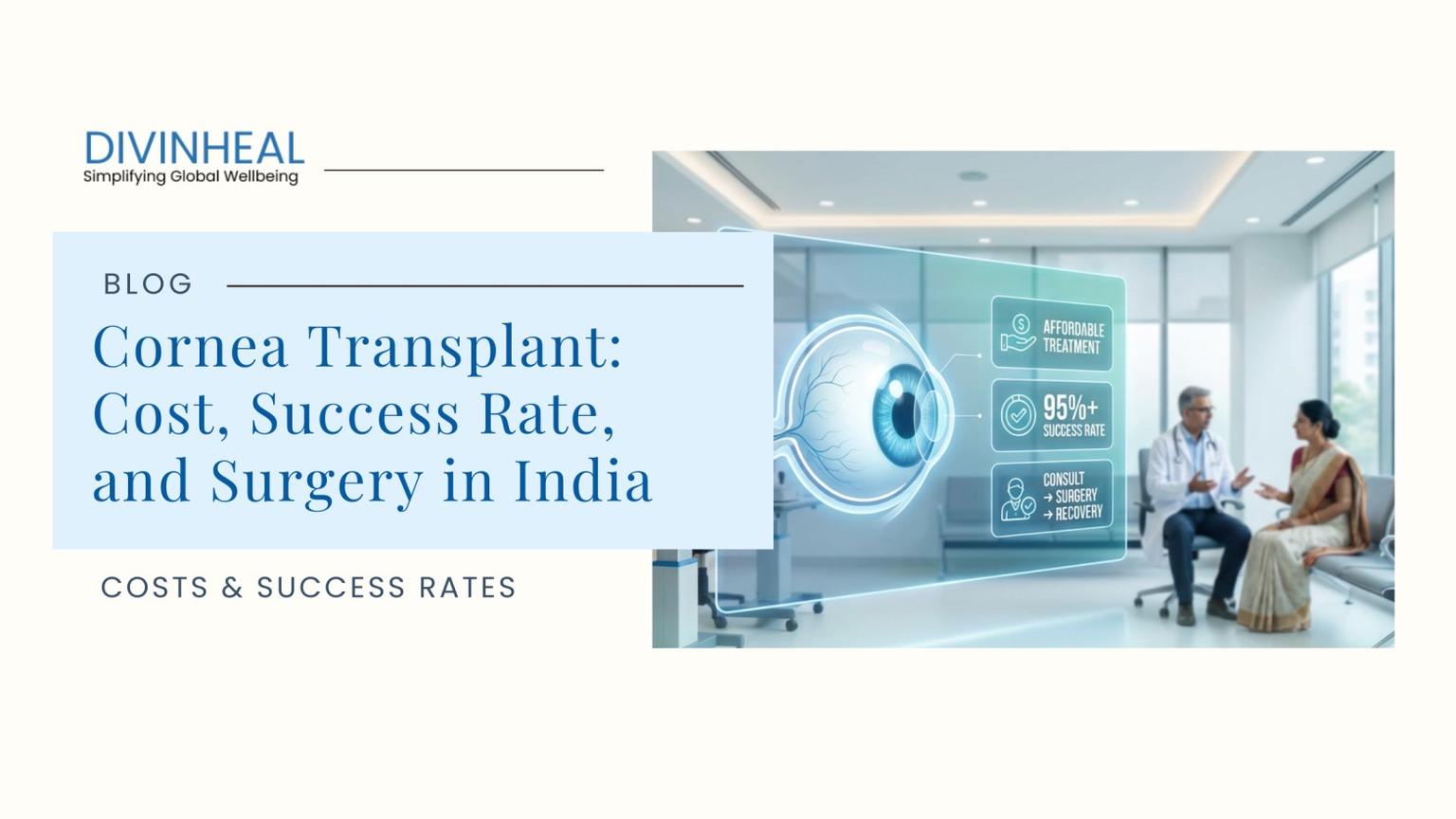
कॉर्निया ट्रांसप्लांट: भारत में लागत, सफलता दर और सर्जरी
Written by DivinHeal Editorial Contributor, Rahul Kumar, Embryologist | Medically Reviewed by Dr Indu Priya, Gynecologist(MD) Published on: 2025-03-09
मेरी यात्रा की योजना बनाएं
हमें अपनी स्थिति और बजट बताएं — हमारा AI सही गंतव्य, अस्पताल, डॉक्टर और वीज़ा मार्ग से मिलान करता है
लागत कैलकुलेटर
मुझे अपना इलाज पता है — मुझे 3 अस्पतालों की लागत दिखाएं
Recommended Article

Written by DivinHeal Editorial Contributor, Rahul Kumar, Embryologist | Medically Reviewed by Dr Indu Priya, Gynecologist(MD) Published on: 2025-03-09
मेरी यात्रा की योजना बनाएं
हमें अपनी स्थिति और बजट बताएं — हमारा AI सही गंतव्य, अस्पताल, डॉक्टर और वीज़ा मार्ग से मिलान करता है
लागत कैलकुलेटर
मुझे अपना इलाज पता है — मुझे 3 अस्पतालों की लागत दिखाएं
डिविनहील के साथ बुकिंग
अपने उपचार विकल्पों को समझने के लिए निःशुल्क परामर्श प्राप्त करें
Recommended Article
परामर्श से लेकर पूर्ण स्वस्थ होने तक,
कदम दर कदम
विशेषज्ञ मिलान
आपको दुनिया के शीर्ष रेटेड चिकित्सा विशेषज्ञों से जोड़ना।
मान्यता प्राप्त अस्पताल नेटवर्क
JCI और NABH प्रमाणित स्वास्थ्य सुविधाओं तक पहुंच।
पूर्ण यात्रा समन्वय
वीज़ा, ठहराव और स्थानीय परिवहन में परेशानी मुक्त सहायता।
24/7 व्यक्तिगत देखभाल
समर्पित रोगी सलाहकार हर कदम पर आपका साथ देते हैं।
यात्रा मार्गदर्शन
रोगी के उपचार की यात्रा की शुरुआत से अंत तक पूर्ण मार्गदर्शन।
विशेषज्ञ मिलान
आपको दुनिया के शीर्ष रेटेड चिकित्सा विशेषज्ञों से जोड़ना।
आज आपको
जो कुछ जानना चाहिए
हमारे मरीज-केंद्रित मेडिकल प्लेटफ़ॉर्म को बेहतर ढंग से समझने के लिए इन सामान्य प्रश्नों को देखें।
Plan for 10–14 days. This covers pre-operative assessment (1–2 days), surgery with 1–2 nights in hospital and initial recovery with at least one follow-up visit before you're cleared to fly. We coordinate the full schedule to minimise your time away from home.
No. Corneas can only be harvested from deceased donors, typically within 6–12 hours of death to preserve tissue quality. Unlike organs such as kidneys, corneal tissue doesn't require blood-type matching, which means a wider pool of potential donors and shorter wait times.
The surgery itself is painless performed under local anaesthesia with a mild sedative. During recovery, most patients report mild discomfort, a gritty or foreign-body sensation and light sensitivity for the first week. These symptoms are well-managed with prescribed eye drops and over-the-counter pain relief.
Yes, but rejection rates are lower than for most organ transplants because the cornea has no blood vessels. Warning signs include redness, pain, light sensitivity and decreased vision. Prevention relies on steroid eye drops (used for months to years after surgery) and regular monitoring. When caught early, most rejection episodes are reversed with medication adjustment.
Yes. Specialised centres like L.V. Prasad Eye Institute and Centre for Sight offer keratoprosthesis for patients who aren't candidates for donor tissue typically after multiple failed grafts or in severe autoimmune conditions. We can connect you with the right specialist for this advanced procedure.
Yes and it's encouraged. We arrange accommodation for companions, include them in ground transport and keep them updated throughout your hospital stay. Having a trusted person with you during recovery—especially for practical tasks like administering eye drops—makes a meaningful difference.
Your surgeon recommends the procedure based on which corneal layers are damaged. If only the front layers are affected (e.g., keratoconus), DALK preserves your healthy inner layer and reduces rejection risk. If the endothelium is the problem (e.g., Fuchs' dystrophy), DMEK or DSEK replaces just that layer with faster recovery. Full-thickness PK is reserved for cases where all layers are compromised.
Steroid and immunosuppressant eye drops are needed for 6–12 months minimum, sometimes longer. In India, these cost ₹500–₹1,500/month ($6–$18). Back home, the same medications may cost more depending on your country's pharmacy pricing. Follow-up visits with your local ophthalmologist are typically covered by standard health insurance.
A repeat transplant (re-graft) is possible and is performed at the same centres. Success rates for re-grafts are somewhat lower than first-time transplants but still favourable. We support patients through repeat procedures with no additional coordination fees.
Every hospital in the Divinheal network holds NABH or JCI accreditation. Divinheal verifies surgeon credentials (fellowship training, procedure volume, published outcomes), collects patient feedback after every case, and conducts regular quality reviews. If a hospital’s standards decline, they’re removed from the network.
क्या आपके पास अभी भी कोई प्रश्न है?
हमारी मित्रवत टीम के साथ एक कॉल बुक करें और जानें कि DivineHeal आपकी स्वास्थ्य यात्रा को कैसे सरल बनाता है।