Smoker's Lungs vs Normal Lungs: What Actually Changes Inside

Written by DivinHeal Editorial Contributor, Rahul Kumar, Embryologist | Medically Reviewed by Dr Indu Priya, Gynecologist(MD) Published on: 2026-10-02
Plan My Journey
Tell us your condition and budget - our AI matches the right destination, hospital and doctor and visa pathway
Cost Calculator
I know my treatment - show me cost from 3 hospitals
Recommended Article

Written by DivinHeal Editorial Contributor, Rahul Kumar, Embryologist | Medically Reviewed by Dr Indu Priya, Gynecologist(MD) Published on: 2026-10-02
Plan My Journey
Tell us your condition and budget - our AI matches the right destination, hospital and doctor and visa pathway
Cost Calculator
I know my treatment - show me cost from 3 hospitals
Booking With DIVINHEAL
Get a free consultation to understand your treatment options
Recommended Article
From Consultation to Recovery,
Step by Step
Expert Specialist Matching
Connecting you with the world's top-rated medical experts.
Accredited Hospital Network
Access to JCI & NABH certified healthcare facilities.
Complete Travel Coordination
Hassle-free visa, stay, and local transport assistance.
24/7 Personal Care
Dedicated patient advisors supporting you at every step.
Journey Guidance
Full guidance from start to end of the patient treatment journey.
Expert Specialist Matching
Connecting you with the world's top-rated medical experts.
Everything you
need to know today
Browse through these common inquiries to better understand our patient-focused medical platform.
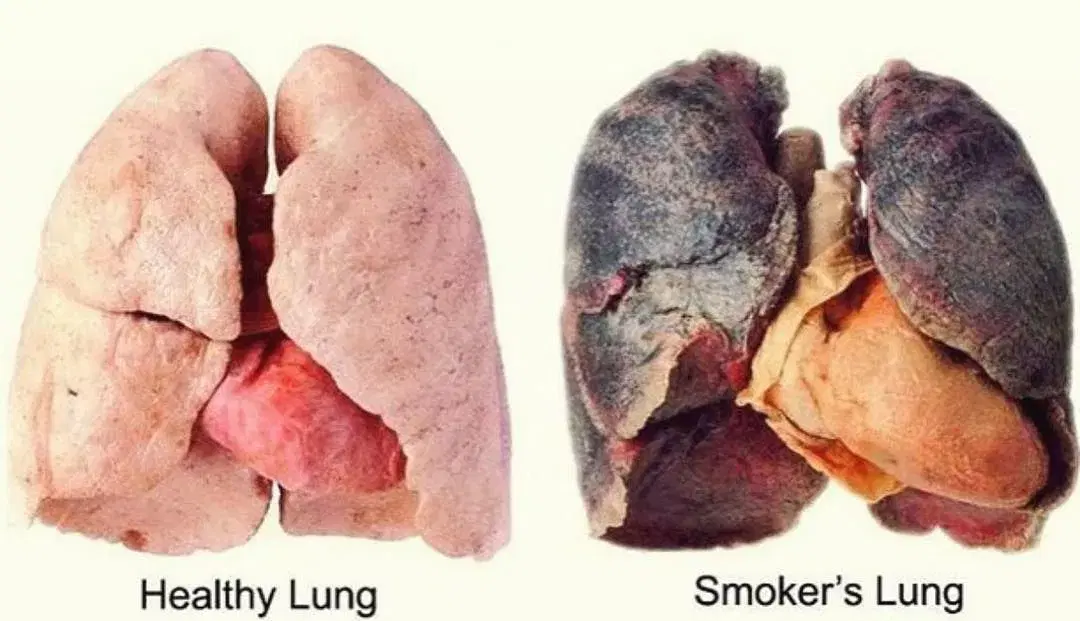
Typically grey to black from tar staining, less elastic, with visibly broken-down alveoli on imaging or post-mortem. The exact appearance varies with cigarettes per day and duration. The pattern (tar + alveolar destruction + airway inflammation) is consistent.
Not fully. Many changes reverse: cilia function returns within months, lung capacity improves, cardiovascular risk falls to non-smoker levels over 15 years. But alveolar destruction (emphysema) does not reverse. Quitting at any point greatly reduces future risk, even if it does not undo everything.
No. A standard chest X-ray is not a reliable test for early lung damage. A BJGP 2006 study found roughly 23% of lung cancer patients had a normal chest X-ray reported in the year before diagnosis. Low-dose CT is the recommended screening tool for high-risk current and former smokers per USPSTF 2021 guidance.
Chronic cough with mucus, new or worsening breathlessness, and reduced exercise tolerance are common signs. But early damage is often symptomless. A pulmonologist can assess with spirometry, low-dose CT (for high-risk smokers meeting USPSTF criteria), and clinical history.
Still have more questions?
Book a call with our friendly team to learn how DivineHeal simplifies your healthcare journey.