All on 6 Dental Implants: How It Works, How Long It Lasts

Written by DivinHeal Editorial Contributor, Rahul Kumar, Medical Expert | Medically Reviewed by Dr Indu Priya, MBBS,MD Published on: 2026-09-24
Plan My Journey
Tell us your condition and budget - our AI matches the right destination, hospital and doctor and visa pathway
All-on-6 Dental Implants: How It Works and
How Long It Lasts
All on 6 dental
implants use six titanium implants to support a full fixed arch of teeth. The
implants themselves can last 20-30+ years, often a lifetime. The teeth on top
usually need replacing every 10-15 years due to normal wear. Peer-reviewed
10-year survival sits around 96% at the implant level. This guide covers how
the method works, what actually picks longevity, and how All-on-6 differs from
the often-confused 3-on-6 method.
|
Key Takeaways • All-on-6 uses six titanium implants under a
single fixed arch. All-in-six is a common spelling variant for the same
treatment. • Peer-reviewed 10-year implant survival is
96.4% (95% CI 95.2-97.5%) in the pooled pooled study, and 93.2% after
adjusting for loss to follow-up. • Implants themselves last 20-30+ years. The
teeth on top on top need replacing at 10-15 years. • 3-on-6 is a different method: three separate
bridges on six implants, not one continuous arch.
Fewer patients qualify for 3-on-6. • Smoking increases the risk of implant loss in
the upper jaw by about 5.6x.
It is the single biggest modifiable risk factor. |
|---|
What Is All-on-6 and How Long
Does It Last?
All-on-6
replaces a full arch of teeth using six titanium implants and one continuous
fixed bridge. Same-day temporary teeth are usually possible. The final false
teeth is fitted 3-6 months later once the implants have integrated with the
bone. Some clinics and patients
use "all in six dental implants" as a spelling variant for the same
treatment.
How long it
lasts depends on what you count. The titanium implants themselves
usually last 20-30+ years, often a lifetime with good care. The bridge on
top on top usually needs swap or refitting at 10-15 years due to normal
wear. Peer-reviewed 10-year
implant-level survival across pooled studies is 96.4% (95% CI 95.2-97.5%), or
93.2% once adjusted for loss to follow-up.
Both are strong numbers by any surgical standard.
How All-on-6 Dental Implants Work
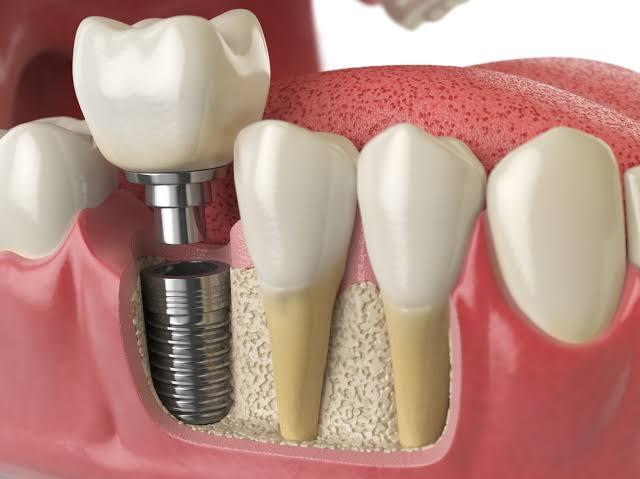
Six implants
replace the roots of a full arch of teeth. A single fixed false teeth (bridge)
is then attached to those implants. The result functions and feels like natural
teeth, without the removability of a denture.
The Six-Implant Placement Strategy
Six implants
distribute bite force across more anchors than the four-implant All-on-4
approach. Two implants are usually placed straight at the front of the jaw.
Four are placed toward the back, sometimes angled to maximise bone contact and
avoid the sinus cavity or nerve canal.
This spread of load can really help patients with high bite force or grinding
(bruxism). With fewer implants, per-implant stress rises over time.
Osseointegration: How Implants Fuse with the
Jawbone
Osseointegration
is the biological process where the titanium surface fuses directly with the
surrounding bone. It usually
takes 2-6 months to complete. During this window, the implants become
physically integrated with the jaw, giving them the strength to support a full
bridge without shifting. Osseointegration is why implants outlast dentures.
Dentures sit on the gums. Integrated implants become part of the jaw structure
itself.
How Long Do All-on-6 Implants Last?
Long enough for
most patients to consider them a lifetime solution. The caveat: the bridge on
top on top will need replacing at least once. The table below separates the two
components.
|
Factor |
Implant posts |
Prosthetic teeth (bridge) |
|
Typical lifespan |
20-30+ years, often a lifetime |
10-15 years |
|
Main failure risk |
Peri-implantitis, poor bone integration |
Normal wear, chipping, staining |
|
What extends it |
Good cleaning, no smoking, regular checkups |
Avoiding grinding, routine maintenance |
|
Replacement cost |
Rare; usually only if a specific implant fails |
£2,000-£5,000 per arch for full swap |
Peer-reviewed
10-year survival across the wider dental-implant evidence base is 96.4% at the
implant level (95% CI 95.2-97.5%) in the pooled pooled study. That drops to 93.2% (95% CI 90.1-95.8%)
in the adjusted analysis adjusted for loss to follow-up. All-on-4 concept 10-year cohort data
reports 94.1% patient-level and 96.2% implant-level survival. All-on-6 applies the same clinical
concept with more implants, so real-world outcomes track close to these
figures.
What Actually Affects Longevity
Five factors
decide whether your implants sit at the top or bottom of that range:
• Oral cleaning. Peri-implantitis (gum
infection around implants) is the leading long-term failure driver. Water
flossers, interdental brushes, and cleaning visits every 3-6 months matter.
• Smoking. Smokers face about 5.6x higher
hazard of implant loss in the upper jaw.
Quitting before surgery and staying quit through healing lowers this
substantially.
• Bone density. Adequate bone volume is
needed for stable placement. CBCT scanning identifies this pre-surgery.
• Bite force and grinding. Bruxism (night
grinding) puts continuous load on implants and bridges. A nightguard is often
prescribed.
• Systemic health. Uncontrolled diabetes
and untreated periodontitis both reduce success rates. Both are handled with proper care.
All-on-6 vs. 3-on-6 Dental Implants: What's
the Difference?
This is the
most-blurred distinction in full-arch dentistry. They are not variants of the
same method.
• All-on-6: six implants supporting one
continuous fixed bridge across the entire arch.
Standard configuration for most full-arch patients.
• 3-on-6: six implants supporting three
separate fixed bridges (one anterior, one left posterior, one right
posterior), with each bridge anchored by two implants.
3-on-6 usually
requires taller, denser jawbone than either All-on-4 or All-on-6. Fewer patients qualify. The main
advantages promoted for 3-on-6 are looks and practical. Aesthetically: no pink
acrylic gum line, gums are the patient's own. Practically: a failed bridge
section can sometimes be replaced without disturbing the whole arch. The main
disadvantages are stricter being a good fit, longer healing before final teeth
are attached, and more hard cleaning between bridge sections.
Why This Distinction Matters for Cleaning,
Feel, and Repairability
• Cleaning. All-on-6 is a single bridge
with one under-surface to keep clean. 3-on-6 has three separate bridges with
more spaces between them, which some patients find harder to maintain.
• Feel. 3-on-6 replaces only the teeth, not
the gums. The finished result can look closer to natural teeth with the
patient's own gum line visible. All-on-6 usually includes a pink acrylic or
zirconia flange that replaces some gum tissue.
• Repairability. If one bridge section in
3-on-6 wears or fails, that section alone can often be replaced without
disturbing the other two. With All-on-6, damage to the single continuous bridge
means a full-arch swap.
Neither is
universally better. Bone quality and personal priorities decide the fit.
All-on-6 Before and After: What Real Results
Look Like
Real all on 6
dental implants before and after results build in phases, not overnight:
• Day of surgery: six implants placed,
temporary fixed bridge often fitted the same day. Swelling and bruising for 1-2
weeks.
• Weeks 1-2: soft diet, careful cleaning.
Discomfort managed with standard pain relief.
• Weeks 2-12: healing continues. Temporary
bridge in place. Gradual return to normal diet.
• Months 3-6: final false teeth fitted once
osseointegration is complete.
• 6 months onwards: the final looks and
working result is what patients see in the "after" photos.
Before-and-after
imagery that shows the day-of-surgery result is misleading. Swelling has not
settled and the temporary bridge is not the final one. Ask any clinic to see
6-month and 12-month post-op photos, ideally from cases whose starting point
looks like yours. Facial
fullness and jaw structure often improve visibly at 6-12 months as bone
remodels around integrated implants.
Common Mistakes & Myths About All-on-6
Implants
Myth: Implants Never Fail Once Placed
Implants fail
at roughly 4-7% over 10 years even in well-run practices. Failure is uncommon but not zero. The
main drivers are peri-implantitis (gum infection around implants from poor
cleaning), smoking, uncontrolled diabetes, and cases with in enough bone volume
that were treated anyway. Good pre-surgical planning and honest being a good
fit assessment matter more than any specific implant brand.
Myth: All-on-6 and All-on-4 Are Basically
the Same
Same clinical
concept, different implant counts. All-on-6 spreads bite force across two more
anchors. This can really help patients with high bite force, bruxism, or
slightly better bone volume in specific positions.
All-on-4 uses angled posterior implants to make the most of limited bone. A
skilled specialist may recommend either based on your specific anatomy. Anyone
saying one is universally better than the other is making it too simple.
Mistake: Choosing Based on Price Alone
A £2,000 saving
between quotes usually means one clinic is cutting corners you cannot see. What
actually varies: specialist skill with full-arch cases, implant brand and
quality, false teeth material, lab work, and diagnostics (CBCT scan and 3D
planning). The single most important cost driver worth paying more for is a
surgeon with high full-arch case volume. Implant failure rates track directly
with surgeon skill.
What Real Patients Ask (Community Insights)
"How
painful is the recovery, really?" Manageable with standard pain relief
for most patients. The first 3-5 days are the toughest. Swelling peaks around
day 2-3 then eases. Most patients return to light work within a week.
"Can I
eat normally right after, or is there a long soft-food period?" Soft
diet for the first 2 weeks. Gradual return to normal foods over 2-3 months.
Hard nuts, tough meats, and sticky foods should be avoided during healing to
protect the temporary bridge and integrating implants.
"What
happens if one implant fails — do I lose the whole arch?" No. With
All-on-6, losing one implant is often handled because the remaining five
continue to support the bridge. A specialist can either replace the failed
implant or, in some cases, adjust the false teeth. This built-in backup is one
of All-on-6's practical advantages over All-on-4.
"Is
All-on-6 worth the extra cost over All-on-4?" Depends on your case.
For patients with high bite force, bruxism, or bone volume that allows for six
implants without grafting, All-on-6 offers extra load spread and backup. For
patients with limited bone where the angled 4-implant approach avoids grafting,
All-on-4 may be the better fit. A qualified specialist picks based on your CBCT
scan, not on which sounds more thorough.
What to Expect: Process, Recovery & Cost
Factors
Consultation and Candidacy Assessment
Every case
starts with a CBCT (3D) scan to assess bone volume and jaw anatomy. Health
history is reviewed for smoking, diabetes, medications (mainly
bisphosphonates), and any history of periodontitis. A well-run consultation
should end with a written itemised treatment plan, not just a price.
Surgery and Healing Timeline
Surgery is done
under local anaesthesia with sedation or occasionally general anaesthesia. Six
implants placed in one session, temporary bridge fitted the same day for most
patients. Osseointegration
usually takes 2-6 months. Final
false teeth is fitted after full integration. Total treatment window is 3-6
months from surgery to final teeth.
What Drives Cost Differences
UK All-on-6
usually costs around £14,000-£22,000 per arch.
That is roughly 15-25% more than All-on-4 for the extra two implants and extra
surgical time. India at
accredited urban clinics runs about ₹3,00,000-₹7,00,000 per arch
(~£3,000-£7,000) for the same clinical standard.
Cost drivers are the same as All-on-4: specialist skill (biggest single
factor), prosthetic material (acrylic vs zirconia), diagnostics, lab quality,
and location. Any bone grafting or extractions add to the base quote.
Cost Calculator
I know my treatment - show me cost from 3 hospitals
How DivinHeal Can Help
Choosing
between All-on-6, All-on-4, and 3-on-6 without pressure.
DivinHeal helps
you make the full-arch decision based on your case, not a package. Six-implant,
four-implant, and 3-on-6 methods all have real-world merits. Only a proper
assessment against your bone volume and bite force picks which fits your case
best.
How
DivinHeal helps:
• Personalised full-arch guidance. Your
bone volume and bite force decide All-on-6 vs All-on-4 vs 3-on-6, not a default
package.
• Access to specialists with real full-arch
case volume. Full-arch is a specialist treatment. General dentists offering
it as an add-on carry higher failure risk.
• Transparent cost breakdowns. UK vs India
pricing on the same clinical standard, itemised against the real drivers
(specialist skill, materials, diagnostics, lab quality).
• Coordinated follow-up. DivinHeal partners
with hospitals in India for patients from the Gulf, Africa, South Asia and the
UK. That coordination is what makes dental tourism safe for full-arch cases.
Share your CBCT scan and case details with the DivinHeal care team for a tailored plan and transparent cost estimate.
Medical disclaimer
This article is for general information only and is not medical advice. Please talk to a qualified dentist about your own case before you make any treatment decision. Costs, success rates and recovery times differ from person to person and from clinic to clinic. DivinHeal is a medical tourism coordination company. It does not provide dental treatment itself.
Plan My Journey
Tell us your condition and budget - our AI matches the right destination, hospital and doctor and visa pathway
Cost Calculator
I know my treatment - show me cost from 3 hospitals

Written by DivinHeal Editorial Contributor, Rahul Kumar, Medical Expert | Medically Reviewed by Dr Indu Priya, MBBS,MD Published on: 2026-09-24
Plan My Journey
Tell us your condition and budget - our AI matches the right destination, hospital and doctor and visa pathway
Cost Calculator
I know my treatment - show me cost from 3 hospitals
Booking With DIVINHEAL
Get a free consultation to understand your treatment options
From Consultation to Recovery,
Step by Step
Expert Specialist Matching
Connecting you with the world's top-rated medical experts.
Accredited Hospital Network
Access to JCI & NABH certified healthcare facilities.
Complete Travel Coordination
Hassle-free visa, stay, and local transport assistance.
24/7 Personal Care
Dedicated patient advisors supporting you at every step.
Journey Guidance
Full guidance from start to end of the patient treatment journey.
Expert Specialist Matching
Connecting you with the world's top-rated medical experts.
Everything you
need to know today
Browse through these common inquiries to better understand our patient-focused medical platform.
Titanium implants themselves last 20-30+ years, often a lifetime with good cleaning and no smoking. The bridge on top on top usually needs swap at 10-15 years due to normal wear4. Peer-reviewed 10-year implant survival is around 96% pooled, or 93% adjusted for loss to follow-up. Smoking increases failure risk about 5.6x in the upper jaw. Peri-implantitis from poor cleaning is the leading long-term failure driver.
All-on-6 uses six implants under one continuous fixed bridge. 3-on-6 uses six implants under three separate fixed bridges (one anterior, two posterior), with each bridge anchored by two implants. 3-on-6 requires better bone density, fewer patients qualify, and it takes longer to reach the final result. But it offers a more natural looks (no pink gum flange) and can allow one bridge section to be replaced without disturbing the others.
Same-day surgery gives most patients a temporary fixed bridge and working teeth right away. Swelling settles over 1-2 weeks. The final false teeth is fitted at 3-6 months once osseointegration completes. The most representative "after" photos are at 6-12 months, when facial fullness and jaw structure have stabilised. Any before-and-after that shows the day-of-surgery photo as the "after" is misleading.
Not universally. All-on-6 spreads bite force across two more implants. This helps for high bite force, bruxism, or when bone volume allows for six implants without grafting. All-on-4's angled placement makes the most of limited bone and can avoid grafting. A qualified specialist picks based on your CBCT scan and bite pattern, not on which sounds more thorough. Both have strong long-term survival data.
Still have more questions?
Book a call with our friendly team to learn how DivineHeal simplifies your healthcare journey.