Breast Reconstruction After Mastectomy: Your Choices


Written by DivinHeal Editorial Contributor, Rahul Kumar, Medical Expert | Medically Reviewed by Dr Indu Priya, MBBS,MD Published on: 2026-11-20
Plan My Journey
Tell us your condition and budget - our AI matches the right destination, hospital and doctor and visa pathway
Breast Reconstruction After Mastectomy: A Complete Guide
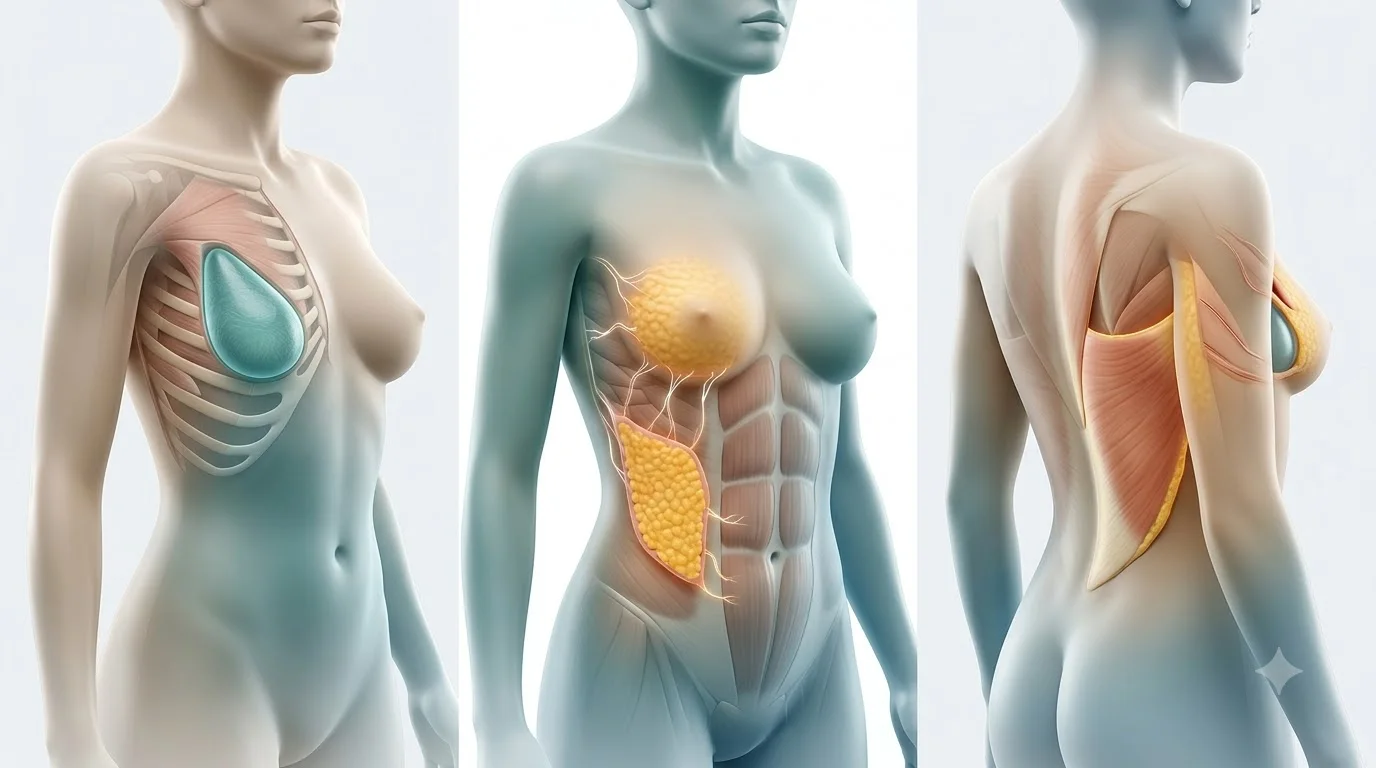
Quick answer: What Are the Choices After Mastectomy? After a mastectomy, breast reconstruction may be done using implants, tissue from another part of the body (flap reconstruction), or a combination of both. Reconstruction can take place during the mastectomy or at a later stage. Other options include using an external breast prosthesis or choosing to go flat. The most suitable option depends on individual health, cancer treatment plans, the possibility of radiotherapy and personal preferences. |
|---|
Introduction
A mastectomy can bring important decisions about physical recovery and life after breast cancer treatment. Breast reconstruction after mastectomy offers several options, but the choice involves more than deciding how the breast will look. The timing of surgery, the possibility of radiotherapy, recovery and the risk of further procedures also need consideration.
This guide explains the available reconstruction options, compares implant and flap procedures, and discusses recovery, costs in India and questions to consider before choosing a treatment plan.
Key Takeaways
|
|---|
Is Breast Reconstruction Necessary After Mastectomy?
Breast reconstruction is a personal choice, not a requirement after mastectomy. Some women choose reconstruction, while others prefer an external breast prosthesis or an aesthetic flat closure. Each option is valid, and the decision should reflect individual preferences, health and treatment plans.
Breast Reconstruction, External Prosthesis or Going Flat: What Are the Options?
An external breast prosthesis, also called a breast form, is worn inside a bra or attached to the body to create the appearance of a breast. It can be an option for women who do not want reconstruction or are waiting to have it. The healthcare team can advise when the surgical area has healed enough for fitting.
Going flat means choosing not to have breast reconstruction or wear an external breast form. Some women also choose an aesthetic flat closure, a procedure in which the surgeon removes excess skin and tissue and smooths the chest area to create a flatter appearance.
It is helpful to discuss the preferred outcome with the surgeon before mastectomy so that the surgical plan can take those wishes into account.
Factors That Can Affect Breast Reconstruction After Mastectomy
Some health and treatment factors can affect the timing of breast reconstruction and the risk of complications.
Radiation therapy: Previous or planned radiotherapy can affect tissue healing and increase the risk of complications, particularly with implant-based reconstruction. The surgical and oncology teams consider the radiation plan when deciding the timing and type of reconstruction.
Smoking: Smoking reduces blood supply to tissues and can delay wound healing. It also increases the risk of infection and reconstructive complications. Stopping smoking before surgery can help reduce these risks.
Diabetes: Poorly controlled diabetes can affect wound healing and increase the risk of complications. Blood glucose management should be discussed with the treating team before surgery.
Body weight and available tissue: A higher body mass index may increase the risk of complications. The amount and location of available body tissue can also influence whether a particular flap procedure is suitable.
These factors do not automatically rule out reconstruction. The surgeon assesses overall health, treatment history and individual surgical risks before recommending a suitable approach.
Immediate vs Delayed Breast Reconstruction After Mastectomy
Breast reconstruction can be performed during the mastectomy or at a later stage. The choice depends on the cancer treatment plan, overall health, available reconstruction options and personal preferences.
What Is the Difference Between Immediate and Delayed Reconstruction?
Factor | Immediate reconstruction | Delayed reconstruction |
|---|---|---|
Timing | Begins during the mastectomy operation | Takes place after mastectomy, once the patient has recovered and completed other planned treatments |
Breast shape | A breast shape is restored during the mastectomy | There is a period without a reconstructed breast |
Treatment planning | Requires coordination between the breast cancer and reconstructive surgery teams | Allows more time to focus on cancer treatment before reconstruction |
Surgical procedures | May require additional procedures to complete reconstruction | Requires a separate reconstruction operation and may involve further procedures |
Radiotherapy | Radiation may affect the appearance and results of reconstruction | Reconstruction can be planned after radiotherapy and tissue healing |
Both approaches have benefits and limitations. Immediate reconstruction can preserve more of the breast skin and avoid a period without a breast shape. Delayed reconstruction gives more time to consider the options and complete cancer treatment before another major operation. Neither approach is suitable for everyone.
What Is Delayed-Immediate Breast Reconstruction?
Delayed-immediate reconstruction is a staged approach. A temporary tissue expander may be placed during the mastectomy to preserve the breast skin. If radiotherapy is needed, the final reconstruction is planned after treatment and an appropriate healing period.
The timing of the next operation depends on tissue recovery, the treatment plan and the surgeon's assessment. It is not always fixed at six to twelve months.
The breast cancer and reconstructive surgery teams should discuss the benefits and risks of each approach before mastectomy.
Implant vs Flap Breast Reconstruction: What Is the Difference?
Breast reconstruction after mastectomy can use implants, the patient's own tissue (flap reconstruction), or a combination of both. The choice depends on factors such as overall health, body tissue availability, previous surgeries, radiotherapy and personal preferences.
Factor | Implant reconstruction | Flap reconstruction |
|---|---|---|
Material used | Silicone or saline implant | Skin, fat and sometimes muscle from another part of the body |
Common procedures | Tissue expander followed by an implant, or direct-to-implant reconstruction | DIEP flap, latissimus dorsi (LD) flap or TRAM flap |
Surgery | Usually a shorter operation | Usually a longer and more complex operation |
Recovery | Often involves a shorter initial recovery | Usually involves a longer recovery because tissue is taken from another part of the body |
Appearance and feel | May feel firmer and less natural than the patient's own tissue | May provide a softer, more natural feel |
Long-term considerations | Implants are not lifetime devices and may need replacement or removal | The transferred tissue can change with weight fluctuations and ageing; further procedures may still be needed |
Neither option is suitable for everyone. Implant reconstruction generally involves a shorter operation, while flap reconstruction uses the patient's own tissue but requires surgery at both the breast and donor site.
Estimated Cost of Breast Reconstruction in India
The following figures are approximate costs per breast reported by Asian Heart Institute, Mumbai. Actual costs vary depending on the hospital, surgeon, procedure and individual treatment requirements.
Reconstruction type | Approximate cost per breast |
|---|---|
Tissue expander and implant | ₹2,50,000–₹4,50,000 |
Direct-to-implant | ₹1,50,000–₹3,25,000 |
DIEP flap | ₹4,00,000–₹7,00,000 |
Latissimus dorsi (LD) flap | ₹2,50,000–₹5,00,000 |
These are indicative figures, not standard prices across India or confirmed treatment quotes. Patients should request an itemised estimate from the hospital before making a decision.
Implant Breast Reconstruction: Tissue Expander or Direct-to-Implant?
Implant reconstruction uses a saline- or silicone-filled implant to restore breast shape after mastectomy. It can be performed in one or two stages, depending on the patient's condition and surgical plan.
Two-stage reconstruction (tissue expander followed by implant): In the first operation, the surgeon places a temporary tissue expander under the chest skin or muscle. It is gradually filled with saline during follow-up visits to stretch the surrounding tissue. Once the area has healed and enough space has been created, the expander is replaced with a permanent implant.
Direct-to-implant reconstruction: In this approach, the permanent implant is placed during the mastectomy operation, without using a temporary tissue expander. It may be suitable for selected patients depending on breast shape, skin quality, cancer treatment requirements and the surgeon's assessment.
The choice between these approaches depends on the amount of healthy tissue available, the possibility of radiotherapy and the expected surgical outcome.
Flap Breast Reconstruction: DIEP and Latissimus Dorsi Procedures
Flap reconstruction, also called autologous tissue reconstruction, uses tissue from another part of the body to rebuild the breast. The tissue usually includes skin, fat and blood vessels, and sometimes muscle. Common donor areas include the abdomen and back.
DIEP flap: A deep inferior epigastric perforator (DIEP) flap uses skin, fat and blood vessels from the lower abdomen to reconstruct the breast. It preserves the abdominal muscles, although it is a complex operation that requires microsurgery to connect blood vessels. It may be suitable for patients who have enough abdominal tissue and are fit for this type of surgery.
Latissimus dorsi (LD) flap: This procedure uses skin, fat and the latissimus dorsi muscle from the upper back. The tissue is moved to the chest while maintaining its original blood supply. An implant may also be needed to achieve the desired breast volume.
TRAM flap: A transverse rectus abdominis myocutaneous (TRAM) flap uses skin, fat and part of the abdominal muscle to reconstruct the breast. Depending on the technique, the tissue may remain attached to its original blood supply or be transferred using microsurgery.
The most suitable flap procedure depends on available donor tissue, previous surgeries, health conditions and the surgeon's experience.
Fat Grafting and Nipple Reconstruction After Mastectomy
Fat grafting and nipple reconstruction may be considered as additional procedures to improve the appearance of a reconstructed breast. Both are optional and can be planned according to the patient's preferences and surgical outcome.
Fat Grafting to Improve Breast Shape
Fat grafting, also called fat transfer, involves taking fat from another part of the body, such as the abdomen or thighs, using liposuction. The collected fat is processed and injected into the reconstructed breast.
It may be used to:
Improve breast shape and contour.
Fill small dents or uneven areas.
Improve the appearance of the reconstructed breast.
Refine the results of implant or flap reconstruction.
More than one fat grafting session may be needed to achieve the desired result. Some transferred fat may not survive, and complications such as fat necrosis can occur.
Nipple and Areola Reconstruction
Nipple and areola reconstruction is usually considered after the reconstructed breast has healed and its shape and position have stabilised. It is an optional final step in breast reconstruction.
There are different ways to recreate the nipple and areola:
Surgical nipple reconstruction: The surgeon uses skin from the reconstructed breast to create a raised nipple.
Medical tattooing: Pigment is used to recreate the colour and appearance of the nipple and areola. Three-dimensional tattooing can create the visual effect of a raised nipple, although the tattoo remains flat to the touch.
Combination approach: Surgical nipple reconstruction can be followed by tattooing to recreate the areola and add colour.
A reconstructed nipple generally does not have the same sensation as a natural nipple. The timing of these procedures varies depending on healing, previous treatments and the surgeon's assessment.
How DivinHeal Can Help With Breast Reconstruction in India
Exploring breast reconstruction options in another country can involve several decisions, from choosing a hospital and surgeon to understanding treatment costs and travel arrangements. DivinHeal helps international patients connect with healthcare providers in India and coordinate their medical journey.
The support may include:
Hospital and surgeon connections: Helping patients explore breast cancer treatment and reconstruction options at partner hospitals in India.
Medical consultations: Coordinating consultations with healthcare professionals to discuss available treatment options.
Cost estimates: Helping patients obtain written, itemised treatment estimates from hospitals.
Medical travel coordination: Assisting with travel arrangements and planning accommodation around the treatment schedule.
Recovery planning: Helping coordinate practical arrangements for the patient's stay and recovery in India.
DivinHeal provides medical tourism coordination and does not perform medical procedures or make treatment decisions. The treating surgeon and healthcare team determine the most suitable reconstruction approach after reviewing the patient's medical history and clinical needs.
Medical disclaimer This article is for general information only and is not medical advice. Please talk to a qualified doctor about your own health before you make any treatment decision. Costs, success rates and recovery times differ from person to person and from hospital to hospital. Divinheal is a medical tourism coordination company. It does not provide medical treatment itself. |
|---|
Cost Calculator
I know my treatment - show me cost from 3 hospitals
References
National Cancer Institute (NCI) — Breast Reconstruction After Mastectomy.
https://www.cancer.gov/types/breast/treatment/surgery/breast-reconstructionOntario Health (Cancer Care Ontario) — Postmastectomy Breast Reconstruction in Patients with Non-Metastatic Breast Cancer: A Clinical Practice Guideline (2025).
https://pmc.ncbi.nlm.nih.gov/articles/PMC12191886/Better Health Channel, Victoria — Breast Reconstruction and Mastectomy (reviewed 7 November 2024).
https://www.betterhealth.vic.gov.au/health/conditionsandtreatments/breast-reconstruction-and-mastectomyUS Food and Drug Administration (FDA) — Things to Consider Before Getting Breast Implants.
https://www.fda.gov/medical-devices/breast-implants/things-consider-getting-breast-implants
Exploring Breast Reconstruction Options in India? Connect with DivinHeal for assistance in exploring hospitals, specialist consultations and medical travel arrangements for breast reconstruction in India. |
|---|
Plan My Journey
Tell us your condition and budget - our AI matches the right destination, hospital and doctor and visa pathway
Cost Calculator
I know my treatment - show me cost from 3 hospitals

Written by DivinHeal Editorial Contributor, Rahul Kumar, Medical Expert | Medically Reviewed by Dr Indu Priya, MBBS,MD Published on: 2026-11-20
Plan My Journey
Tell us your condition and budget - our AI matches the right destination, hospital and doctor and visa pathway
Cost Calculator
I know my treatment - show me cost from 3 hospitals
Booking With DIVINHEAL
Get a free consultation to understand your treatment options
From Consultation to Recovery,
Step by Step
Expert Specialist Matching
Connecting you with the world's top-rated medical experts.
Accredited Hospital Network
Access to JCI & NABH certified healthcare facilities.
Complete Travel Coordination
Hassle-free visa, stay, and local transport assistance.
24/7 Personal Care
Dedicated patient advisors supporting you at every step.
Journey Guidance
Full guidance from start to end of the patient treatment journey.
Expert Specialist Matching
Connecting you with the world's top-rated medical experts.
Everything you
need to know today
Browse through these common inquiries to better understand our patient-focused medical platform.
Breast reconstruction can be performed during mastectomy or at a later stage, sometimes months or years after surgery. The timing depends on the cancer treatment plan, recovery and individual health. Radiotherapy may influence when reconstruction is recommended.
Neither option is better for everyone. Implant reconstruction uses silicone or saline implants, while flap reconstruction uses tissue from another part of the body. The choice depends on overall health, available tissue, radiotherapy plans and personal preferences.
Breast reconstruction does not prevent cancer follow-up, but the monitoring approach may differ. Mammograms are generally not performed on a reconstructed breast. The healthcare team may use physical examinations and other tests when needed. The remaining natural breast continues to require recommended screening.
Breast implants are not lifetime devices, and there is no fixed replacement timeline. The possibility of complications, implant damage or changes in breast shape may lead to further surgery. Regular follow-up with the treating surgeon is important.
Still have more questions?
Book a call with our friendly team to learn how DivineHeal simplifies your healthcare journey.