Disadvantages of Flexible Dentures: What to Know


Written by DivinHeal Editorial Contributor, Rahul Kumar, Medical Expert | Medically Reviewed by Dr Indu Priya, MBBS,MD Published on: 2026-11-18
Plan My Journey
Tell us your condition and budget - our AI matches the right destination, hospital and doctor and visa pathway
Disadvantages of Flexible Dentures: What Patients Should Know
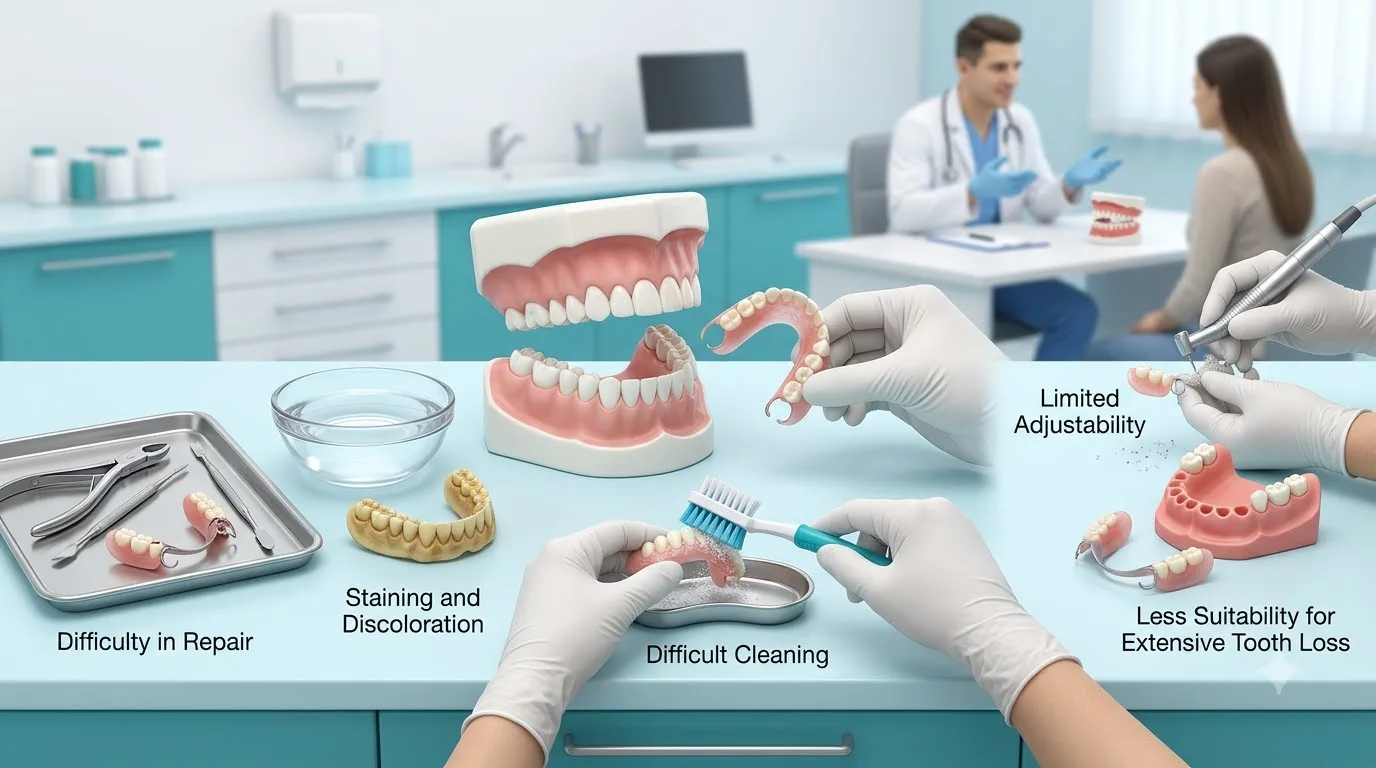
Quick answer: what are the downsides of flexible dentures? The main disadvantages of flexible dentures include difficulty with repairs and relining, possible retention issues, and susceptibility to staining and plaque buildup. They may also cost more than some traditional denture options. However, their suitability depends on the patient's oral condition and treatment needs. |
|---|
Introduction
Flexible dentures can be a comfortable and discreet option for replacing missing teeth, but they also have certain limitations. Understanding the disadvantages of flexible dentures can help patients make an informed decision before choosing this treatment. This guide explains their common drawbacks, including repair difficulties, retention, staining and cost. It also looks at when flexible dentures may not be suitable and what to discuss with a dentist before treatment.
Key Takeaways
|
|---|
Difficulty Repairing or Relining Flexible Dentures
One of the main disadvantages of flexible dentures is that they can be difficult to repair or reline when their fit changes.
Many flexible dentures are made from polyamide (nylon) resin, which can make bonding new material to the denture more challenging. Relining involves adding material to the inner surface of a denture to improve how it fits against the gums. This procedure may be more difficult with flexible materials than with conventional acrylic dentures.
The fit of a denture can change over time as the gums and jawbone shrink. NHS Wales explains that dentures may become loose as these changes occur. A denture fitted soon after tooth extractions may also become loose within a few months.
For example, if another tooth needs to be removed after a flexible partial denture has been made, the existing denture may need modification or replacement. The available options depend on the material and the dental laboratory's capabilities. Before choosing this type of denture, discuss the possibilities for future repairs, additions and relining with your dentist.
Other Disadvantages of Flexible Dentures
Flexible dentures have other limitations that patients should consider before choosing them. The available research on these drawbacks is limited, so individual experiences may vary.
Retention of Flexible Dentures
Retention refers to how securely a denture stays in place during activities such as speaking and eating. Some research suggests that conventional denture materials may offer better retention in certain situations.
A review reported that acrylic dentures had better retention than flexible dentures in one study involving complete upper dentures. Another study involving partial dentures found that Valplast had the lowest retention among the materials tested.
However, these findings come from different studies involving different types of dentures. They do not establish that all flexible dentures have lower retention than conventional options. A dentist or prosthodontist can assess which denture design is likely to provide a suitable fit and level of stability.
Staining and Plaque Buildup
Flexible denture materials, particularly nylon-based materials, may become rougher and more prone to staining over time. The 2020 review reports that thermoplastic materials can absorb more fluids and develop surface changes that affect their appearance.
Rough surfaces may also encourage biofilm (a layer of bacteria) to accumulate. Dentures of all types can collect plaque and stains, so regular cleaning is important. Follow your dentist's instructions and use a suitable denture cleanser.
Cost of Flexible Dentures Compared With Acrylic Dentures
The cost of flexible dentures depends on the material, dental laboratory and treatment provider. A 2020 review reports that nonmetal clasp dentures may involve higher laboratory costs than conventional removable partial dentures. However, this does not establish that every patient will pay more for a flexible denture.
Prices can also vary depending on the country and treatment provider. Patients should request written estimates for flexible, acrylic and metal-framework dentures, including possible repair and maintenance costs.
Limited Evidence for Complete Flexible Dentures
Flexible dentures are mainly discussed as an option for replacing some missing teeth. The available research on their use as complete dentures is more limited.
The 2024 Cureus review discusses research involving complete dentures and reports better retention with PMMA (acrylic) than flexible materials in one study. However, this finding does not establish that flexible materials are unsuitable for every complete-denture case. A dentist or prosthodontist should assess the patient's oral condition before recommending a denture material.
When Are Flexible Dentures Not Suitable?
Flexible dentures may not be suitable for patients with few remaining supporting teeth or large gaps between missing teeth. These situations can place additional stress on the denture clasps and supporting tissues.
They may also be unsuitable for people with poor oral hygiene or those who cannot attend regular dental follow-ups. Plaque buildup around the supporting teeth can increase the risk of tooth decay and gum problems.
Flexible dentures may be considered as temporary options after tooth extractions or implant placement. However, their use as a long-term replacement requires careful assessment.
They may also be considered for patients with metal allergies, restricted mouth opening or concerns about visible metal clasps. The dentist should assess the patient's oral condition and denture design before recommending this option.
Flexible vs. Acrylic Dentures: Key Differences
Flexible vs acrylic dentures is a trade. Flexible dentures offer comfort and looks, but lose on adjustability, retention and evidence.
Factor | Flexible Dentures | Acrylic Dentures | Metal-Framework Dentures |
|---|---|---|---|
Material | Usually made from flexible thermoplastic materials such as nylon | Usually made from PMMA (acrylic resin) | Made with a metal framework, commonly cobalt-chromium |
Appearance | Tooth-coloured clasps can provide a more discreet appearance | Appearance depends on the denture design and clasp material | Metal clasps may be visible |
Retention | May offer lower retention in some cases | Retention depends on the fit and design | Framework and clasps help provide support and stability |
Repair and relining | Can be more difficult and may require specialised procedures | Generally easier to repair and reline | Depends on the framework and denture design |
Suitability | May be considered when flexibility or discreet clasps are preferred | Used for both partial and complete dentures | May be considered when a stronger supporting framework is needed |
How DivinHeal Helps Patients Explore Denture Options
DivinHeal is a healthcare facilitation and medical tourism coordination platform that helps international patients connect with healthcare providers in India. It coordinates access to dental consultations and treatment options but does not provide dental treatment directly.
For patients exploring denture options, the team can help with:
Exploring treatment options: Coordinate consultations to help patients understand available dental treatment options.
Sharing dental records: Help arrange the sharing of dental reports and X-rays with healthcare providers for review.
Treatment planning: Coordinate communication about recommended treatment plans and estimated costs.
Care coordination: Assist with appointments and other arrangements related to treatment in India.
The dentist or prosthodontist makes the final decision about the most suitable denture after evaluating the patient's oral condition.
If you are considering flexible dentures, you can share your dental reports and X-rays with DivinHeal's care team to explore the available consultation and treatment options.
Exploring denture treatment options in India? Share your dental reports and X-rays with DivinHeal's care team. They can help coordinate consultations with specialists at partner hospitals and provide information about suitable treatment options and estimated costs.
Cost CalculatorI know my treatment - show me cost from 3 hospitals References
|
|---|
Plan My Journey
Tell us your condition and budget - our AI matches the right destination, hospital and doctor and visa pathway
Cost Calculator
I know my treatment - show me cost from 3 hospitals

Written by DivinHeal Editorial Contributor, Rahul Kumar, Medical Expert | Medically Reviewed by Dr Indu Priya, MBBS,MD Published on: 2026-11-18
Plan My Journey
Tell us your condition and budget - our AI matches the right destination, hospital and doctor and visa pathway
Cost Calculator
I know my treatment - show me cost from 3 hospitals
Booking With DIVINHEAL
Get a free consultation to understand your treatment options
From Consultation to Recovery,
Step by Step
Expert Specialist Matching
Connecting you with the world's top-rated medical experts.
Accredited Hospital Network
Access to JCI & NABH certified healthcare facilities.
Complete Travel Coordination
Hassle-free visa, stay, and local transport assistance.
24/7 Personal Care
Dedicated patient advisors supporting you at every step.
Journey Guidance
Full guidance from start to end of the patient treatment journey.
Expert Specialist Matching
Connecting you with the world's top-rated medical experts.
Everything you
need to know today
Browse through these common inquiries to better understand our patient-focused medical platform.
Flexible dentures can be difficult to reline or repair when their fit changes. As the gums and jawbone change over time, the denture may become loose. Ask your dentist whether your denture can be adjusted or needs replacement.
Flexible dentures may involve higher laboratory costs than conventional removable partial dentures. However, the final price varies by material, dental laboratory and treatment provider. Request written estimates for both options before making a decision.
Flexible denture materials may have lower colour stability than acrylic materials. The 2024 Cureus review reports differences in discoloration between the materials. Regular cleaning and proper care can help prevent permanent stains.
Flexible dentures are removable, not fixed replacements for missing teeth. They may last several years with proper care, but their fit and condition can change over time. Regular dental check-ups help determine when adjustment or replacement is needed.
Still have more questions?
Book a call with our friendly team to learn how DivineHeal simplifies your healthcare journey.