
Does Hair Grafting Actually Work? The Honest Answer
Does Hair Grafting Actually Work? What to
Know Before You Decide
Does hair
grafting actually work? The honest answer: yes, with real, sourced numbers
behind it. Graft survival rates of 85 to 95% or higher are commonly reported in
experienced hands. Modern
techniques produce natural-looking results that bear no resemblance to the old
"hair plug" horror stories that still shape public perception. But "does it work" is a
slightly different question from "what does success actually
measure". Getting that distinction right is what separates real
understanding from marketing claims.
Plan My Journey
Tell us your condition and budget - our AI matches the right destination, hospital and doctor and visa pathway
Quick Answer: Does Hair Grafting Actually
Work?
Does hair
grafting actually work? Yes. In
experienced hands, 85 to 95% or more of transplanted follicles take root and
continue growing hair long-term. Hair transplantation is one of the
fastest-growing cosmetic procedures worldwide.
Demand has grown meaningfully over the last decade per the International
Society of Hair Restoration Surgery Practice Census.
Two things to
correct before reading further. First, no responsible clinic can promise a
perfect result, that is not how graft survival works. Second, the old
"hair plug" reputation from decades ago no longer reflects modern FUE
and FUT technique. Somewhere
between those two extremes sits the honest answer.
What "Success" Actually Means:
Graft Survival Explained
Graft Survival Rate Defined
Graft survival
rate is the percentage of transplanted follicles that take root in the
recipient area. They establish a
new blood supply and continue producing hair long-term. It is a technical
outcome measure. If most transplanted grafts take root and grow, that is a
strong survival rate. Published survival rates from experienced surgeons are
commonly in the 85 to 95%+ range.
Why Survival Rate Does Not Equal Visual
Density
Here is the
nuance most marketing content skips. A high survival rate does not by itself
tell you how full or natural the finished result will look. Visual density and natural appearance
depend on separate factors:
• How many grafts were placed (a
full-density result on a large bald area needs many more grafts than the same
on a small area)
• Hairline design (a natural,
age-appropriate hairline, not a straight line drawn too low)
• Angle and direction of graft placement
(matching how surrounding hair grows)
• Blending with existing hair (so the
transplanted area does not stand out from what is native)
Two people can
have identical graft survival and very different visual outcomes if the number
of grafts, hairline design, and placement technique differ. That is why
"success" needs both measures: technical graft survival +
aesthetic outcome design. A good surgeon plans for both.
The Hair Grafting Timeline: What to Expect
at Each Stage
|
Stage |
Timeframe |
What's Happening |
|
Shock loss / shedding |
Weeks 2 to 8 |
Transplanted hairs shed temporarily; follicles remain
healthy underneath |
|
Dormancy |
Months 2 to 3 |
Follicles rest before entering new growth cycle |
|
New growth begins |
Months 3 to 4 |
Visible new hair starts appearing |
|
Density builds |
Months 6 to 12 |
Increasing thickness and coverage |
|
Final results |
Months 12 to 18 |
Full density and final appearance can be assessed |
Weeks 2 to 8: The Shedding Phase
This is the
stage that panics most new patients, and it is entirely normal. Transplanted
hairs usually shed between roughly 2 and 8 weeks after the procedure. The follicles themselves are alive and
well underneath. They are simply entering a dormant phase before their next
growth cycle.
If your hair
falls out at week 3 or 4, the transplant has not failed. This is the
expected pattern.
Months 3 to 4: New Growth Becomes Visible
New visible
growth from transplanted follicles usually begins around 3 to 4 months after
the procedure. Early growth is
often fine and lighter in colour; it thickens and pigments up over the next
several months. Density visibly builds through months 6 to 12.
Months 12 to 18: Final Results
Judging a hair
transplant before 12 months is judging it before the film has finished
processing. Final, true results are assessed at 12 to 18 months. That is when the full growth cycle has
completed and the surgeon and patient can honestly evaluate outcome.
FUE vs FUT: Does One Work Better Than the
Other?
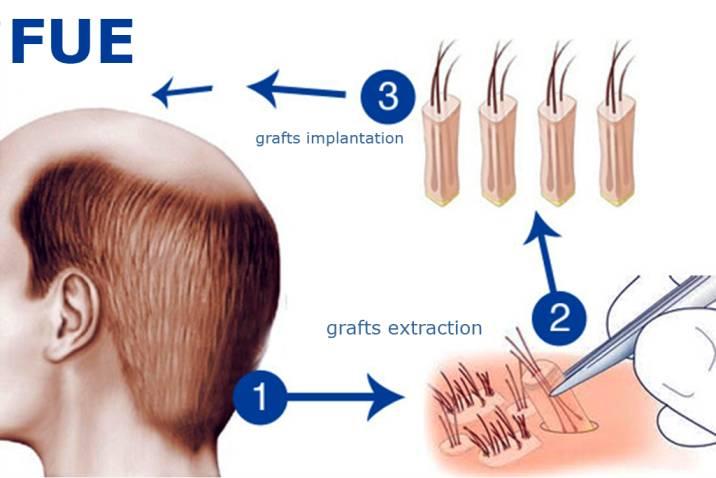
FUE (Follicular Unit Extraction)
FUE extracts
each follicular units from the donor area one at a time using a small punch. Recovery is often faster because there is
no linear wound. Scarring is small dot-like marks that are usually not visible
with short hair.
FUT (Follicular Unit Transplantation)
FUT (the
"strip" method) removes a linear strip of donor tissue, from which
each follicular units are then prepared under a microscope for placement. It leaves a single linear scar that is
usually hidden by surrounding hair when the hair is worn at moderate length.
Which Actually Works Better?
In the hands of
experienced surgeons, both FUE and FUT can deliver equally high graft
survival and equally natural-looking results.
The choice between them is driven by the case (donor supply, extent of loss,
hairstyle preference, scar visibility priorities) and the each surgeon's
expertise. It is not driven by inherent superiority of one technique.
Anyone claiming
their preferred technique is universally better than the other is usually
selling that technique, not evaluating your case.
What Determines Whether Grafting Works for
You
Surgeon Experience and Technique
Surgeon
experience is the single biggest factor in graft survival, hairline
design, angle and depth of graft placement, and overall aesthetic outcome. Consistent published outcomes across a
range of patients matter more than a single impressive before-and-after image.
Look for board-certified dermatologists or plastic surgeons with dedicated hair
restoration practice, ISHRS membership, and transparent long-term outcome
galleries.
Candidate Selection
Whether hair
grafting will work well for your specific case depends on:
• Donor area quality and quantity (the
"supply" for the transplant)
• Extent and pattern of hair loss (Norwood
scale for men, Ludwig scale for women)
• Scalp condition (health of the skin, any
active dermatological conditions)
• General health (uncontrolled diabetes,
bleeding disorders, immune issues can affect healing)
• Age relative to hair-loss stability (very
young patients with rapidly progressive loss may need staged planning)
• Conditions that affect donor durability
(DUPA and similar)
Not everyone is
a good candidate for hair grafting. A responsible surgeon will tell you if you
are not.
Post-Procedure Care
Graft survival
depends partly on what you do after the procedure:
• Protect the scalp from direct sun for the
initial period
• Avoid strenuous exercise or activities
that raise blood pressure or cause sweating, per your surgeon's specific
timeframe
• Follow washing instructions precisely for
the first week or two
• Avoid smoking, which impairs graft
survival
• Attend follow-up appointments as
scheduled
Skipping
post-op instructions is one way to convert an experienced surgeon's excellent
technical work into a disappointing outcome.
Common Mistakes and Myths About Hair
Grafting
Myth: If Hair Falls Out in the First Few
Weeks, the Transplant Failed
It has not
failed. Shock loss between weeks 2 and 8 is a normal, expected part of the
growth cycle. The follicles
remain healthy underneath and enter dormancy before regrowing from month 3 to 4. This single misconception is responsible
for a lot of unnecessary panic in the first month or two after surgery.
Myth: All Hair Transplants Look Like Old
Hair Plugs
The unnatural
"doll's-hair" appearance most people picture is from 1970s and 1980s
techniques that placed large multi-hair grafts.
Modern FUE and FUT techniques transplant single follicular units of 1 to 4
hairs each, mimicking the natural distribution and angle of surrounding hair.
Well-done modern transplants are usually undetectable to casual observers,
including in close conversation and normal daylight.
Mistake: Judging Results Too Early
Judging outcome
before month 12 is judging incomplete regrowth.
The urge is strong at months 4 to 6 when growth is visible but density is still
building. Sitting with that discomfort and waiting for the 12-to-18-month
assessment window is what protects you from a premature, inaccurate verdict.
What Real Patients Say (Community Insights)
"My
hair fell out a month after the transplant, did it fail?" Almost
certainly not. Shock loss at
weeks 2 to 8 is the standard growth cycle. Real regrowth starts at month 3 to
4. If you are still not seeing any growth at month 5 or later, contact your
surgeon, but weeks 2 to 8 is expected.
"How do
I know if my surgeon is actually experienced?" Look for board
certification in dermatology or plastic surgery.
Look for ISHRS membership and transparent long-term outcome galleries (not just
year-1 photos). Look for consistent outcomes across many patients, and honest
consultations that turn some patients away rather than accept everyone. High
volume alone is not the same as high quality.
"Is FUE
definitely better than FUT, or does it depend on my case?" It depends
on your case, not on some universal ranking of the techniques. Both can deliver equally high graft
survival and natural results in experienced hands. Someone who wears their hair
very short may prefer FUE for scar visibility. Someone who needs many grafts in
one session may benefit from FUT. The surgeon's honest recommendation based on
your case is more useful than a general FUE-vs-FUT verdict.
"How
many grafts do I actually need for noticeable coverage?" Highly each,
based on your loss pattern (Norwood or Ludwig), donor supply and target density. Broad ranges exist, but a specific graft
count should come from an in-person consultation with a qualified surgeon after
donor-area and recipient-area assessment. Beware clinics that quote graft
numbers before evaluating you.
Cost Calculator
I know my treatment - show me cost from 3 hospitals
How DivinHeal Can Help
Hair grafting
decisions get better when the "does it work" question is answered
with data instead of marketing. DivinHeal helps patients approach the decision
honestly.
• Realistic outcome framing. 85 to 95%
graft survival in experienced hands, with the graft-survival-vs-visual-density
distinction spelled out.
• Honest candidate assessment. Donor area,
hair-loss pattern, scalp condition and any conditions that would affect
suitability.
• Technique matching. FUE, FUT, or DHI,
based on your case rather than a one-size-fits-all preference.
• Surgeon vetting. Board certification,
ISHRS membership, and consistent long-term outcome galleries.
• Realistic timeline setting. No panic at
month 2, no verdict before month 12.
• Access to qualified specialists.
Dermatologists and hair restoration surgeons in partner hospitals in India, for
patients from the Gulf, Africa, South Asia and the UK.
Why choose
DivinHeal: honest information rather than the marketing pitch. Realistic
expectations. Specialist access for complex cases. No pressure.
If you are
considering hair grafting and want a proper honest consultation, speak with the
DivinHeal care team. See also the companion guide, is a hair transplant permanent, for what
actually lasts long-term.
Plan My Journey
Tell us your condition and budget - our AI matches the right destination, hospital and doctor and visa pathway
Cost Calculator
I know my treatment - show me cost from 3 hospitals
Recommended Article

Plan My Journey
Tell us your condition and budget - our AI matches the right destination, hospital and doctor and visa pathway
Cost Calculator
I know my treatment - show me cost from 3 hospitals
Booking With DIVINHEAL
Get a free consultation to understand your treatment options
Recommended Article
From Consultation to Recovery,
Step by Step
Expert Specialist Matching
Connecting you with the world's top-rated medical experts.
Accredited Hospital Network
Access to JCI & NABH certified healthcare facilities.
Complete Travel Coordination
Hassle-free visa, stay, and local transport assistance.
24/7 Personal Care
Dedicated patient advisors supporting you at every step.
Journey Guidance
Full guidance from start to end of the patient treatment journey.
Expert Specialist Matching
Connecting you with the world's top-rated medical experts.
Everything you
need to know today
Browse through these common inquiries to better understand our patient-focused medical platform.
Yes. Graft survival rates in experienced hands are commonly 85 to 95% or higher. The transplanted follicles integrate, establish a new blood supply and continue growing hair long-term. The key nuance: graft survival is the technical measure of success. The visual density of the finished result depends separately on the number of grafts, hairline design, angle of placement, and blending with existing hair. A good surgeon plans for both technical survival and aesthetic outcome.
Yes, and it is one of the most common sources of unnecessary panic. Shock loss (temporary shedding of transplanted hairs) commonly occurs between roughly 2 and 8 weeks after the procedure. This is a normal part of the growth cycle. The follicles themselves remain healthy underneath. New visible growth usually begins around 3 to 4 months. Visible density builds through 6 to 12 months, with final results at 12 to 18 months.
In experienced hands, both FUE and FUT can deliver equally high graft survival and natural-looking results. The choice between them is driven by your specific case (donor supply, extent of loss, hairstyle preference, scar visibility priorities) and the each surgeon's expertise. Neither technique is inherently superior to the other. FUE leaves small dot-like scars from each follicle extraction; FUT leaves a single linear scar from strip harvesting. Both are usually well concealed with appropriate hair length.
Transplanted hairs usually shed at weeks 2 to 8, followed by dormancy through months 2 to 3, then new growth from month 3 to 4. Visible density builds through months 6 to 12. Final, true results are assessed at 12 to 18 months once the full growth cycle has completed. Judging outcome before month 12 is judging incomplete regrowth, which is the single most common cause of premature dissatisfaction.
Still have more questions?
Book a call with our friendly team to learn how DivineHeal simplifies your healthcare journey.