

Written by DivinHeal Editorial Contributor, Rahul Kumar, Embryologist | Medically Reviewed by Dr Indu Priya, Gynecologist(MD) Published on: 2026-05-25
hCG Beta Levels for Twins: What’s Normal After IVF and Egg
Retrieval?
At 4 weeks after a successful IVF
cycle, twin pregnancies typically show hCG levels between 100 and 1,200 mIU/mL
— well above the singleton range of 5 to 426 mIU/mL. But a single number tells
you less than you think. Your doctor cares more about how fast the number goes
up. The starting point matters less.
Had egg retrieval in India? Are you
tracking your beta hCG from Dubai, London, or Sydney? This guide tells you what
levels to expect — for singletons and twins. It also covers how costs compare
globally, and what to do if your results suggest a multiple pregnancy.
Results vary for each person. Always talk
to your fertility specialist for personal advice.
Plan My Journey
Tell us your condition and budget — our AI matches the right destination, hospital and doctor and visa pathway
What Is
hCG and Why Does It Matter After Egg Retrieval?
hCG (human chorionic gonadotropin) is the hormone your placenta
produces after a fertilised egg implants. It’s the marker both home pregnancy
tests and blood tests detect. After egg retrieval and embryo transfer, your
clinic checks your hCG levels closely. This usually happens on what’s called
‘beta day’ — roughly 9–14 days post-transfer. These tests confirm pregnancy and
show how it’s progressing.
How does hCG work in the
body?
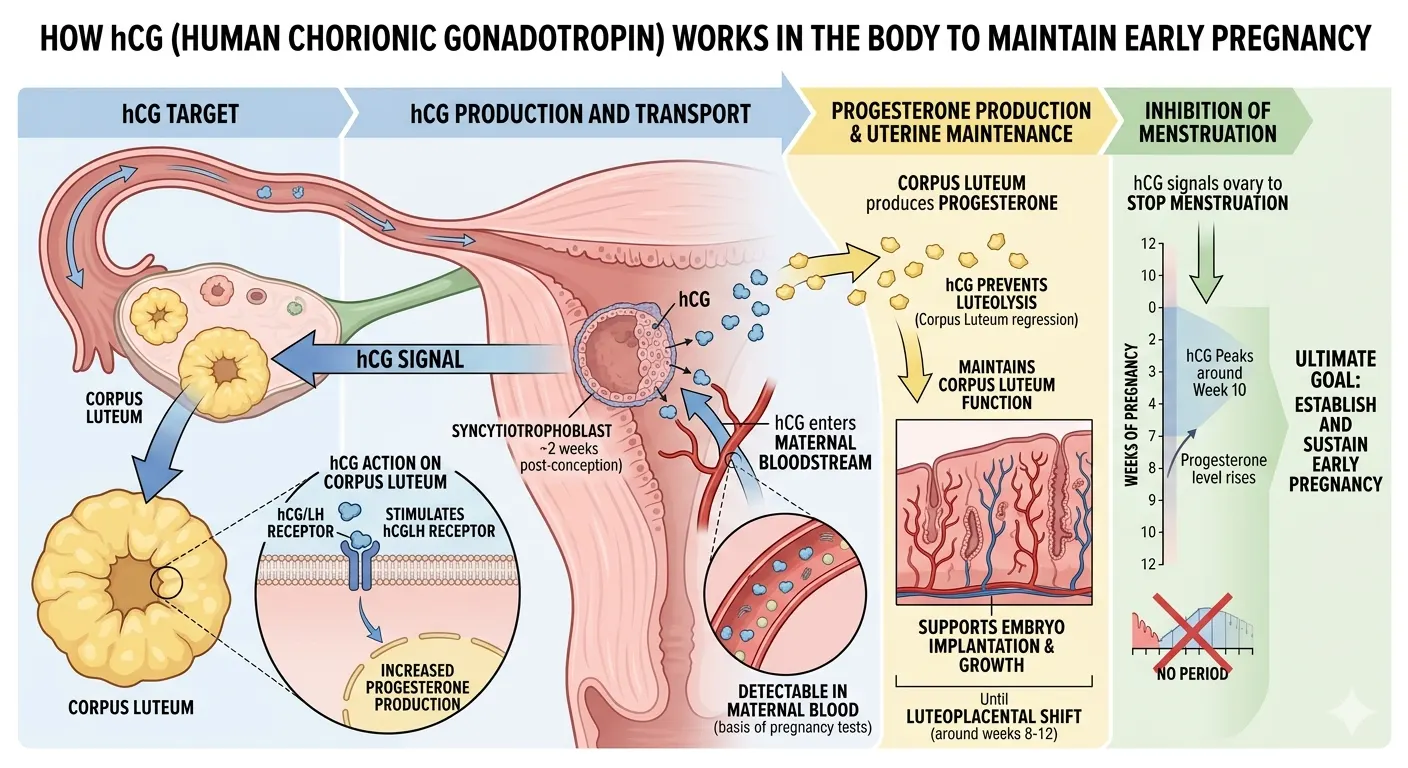
After an
embryo implants — usually 6–12 days after fertilisation — the placenta starts
making hCG. hCG signals a small gland in your ovary called the corpus luteum.
This gland forms after egg retrieval. Its job is to keep making progesterone.
Progesterone holds the uterine lining in place. This stops your period from
starting — which is vital for a healthy pregnancy.
In early pregnancy, hCG levels
normally rise quite fast, usually doubling every 48 to 72 hours. Doctors pay
close attention to this pattern because it gives an idea of how the pregnancy
is progressing. For example, if the level increases from 200 mIU/mL to about
400 in two days, that is usually seen as a positive sign. But if it stays
around 200 and does not rise, it can be a sign that the pregnancy may not be
developing normally.
hCG Blood Test
vs. Home Pregnancy Test: Which Is More Accurate?
Home
pregnancy tests detect hCG in urine. They need levels above 20–25 mIU/mL
to show a positive result. They’re easy to use and private. But they can’t tell
you how much hCG you have or whether it’s rising.
A quantitative
beta hCG blood test measures the exact level of hCG in your blood. It’s
sensitive enough to detect very early pregnancy, sometimes even before a missed
period, with levels as low as 1–5 mIU/mL. In India, most accredited labs
usually deliver results within 4–8 hours. Larger hospitals like Apollo
Hospitals and Fortis Healthcare also often provide same-day reports, especially
for international patients.
hCG
Ranges in Pregnancy: A Week-by-Week Guide
During early pregnancy, hCG
levels increase rapidly and usually begin to slow down around 10–12 weeks. The
ranges below are based on dating from the first day of the last menstrual
period (LMP), which is the standard method most labs and fertility clinics use.
hCG Levels by Week:
Singleton vs. Twin
The table below
shows typical hCG levels in single and twin pregnancies. In many twin
pregnancies, levels tend to be higher than in singleton pregnancies, but that’s
not always the case. They often fall toward the higher end of the normal range,
and sometimes a bit above it.
|
Week (LMP) |
Singleton hCG (mIU/mL) |
Twin hCG (Typical — mIU/mL) |
|
3 Weeks |
5 – 50 |
10 – 100 |
|
4 Weeks |
5 – 426 |
100 – 1,200 |
|
5 Weeks |
18 – 7,340 |
500 – 20,000+ |
|
6 Weeks |
1,080 – 56,500 |
1,500 – 100,000+ |
|
7 – 8 Weeks |
7,650 – 229,000 |
15,000 – 500,000+ |
Source: These ranges are based on guidance from the American Pregnancy Association, reference data from the Royal College of Obstetricians and Gynaecologists, and commonly used benchmarks in fertility clinics. hCG levels can vary a lot from person to person, so these figures are only meant as a general guide and not a diagnosis.
What hCG Level Confirms
Pregnancy?
A beta
hCG above 25 mIU/mL is usually considered a positive pregnancy result. Levels
between 6 and 24 mIU/mL are a grey zone, so doctors typically repeat the test
after about 48 hours to see how things are changing. A single high reading can
be reassuring, but what really matters is the pattern over time—whether the hCG
keeps rising the way it should.
After
IVF, a beta above 100 mIU/mL on day 9 post-5-day-transfer (9dp5dt) is a strong
sign the pregnancy is continuing. A result above 300 mIU/mL at that point may
suggest twins. But only an ultrasound at 6–7 weeks can confirm this.
hCG Beta
Levels for Twins: Typical Ranges by Week
Yes — hCG beta levels for twins are often higher than in singleton
pregnancies. But the ranges overlap a lot. Twins don’t guarantee a dramatically
higher number. A twin pregnancy can show hCG in the singleton range. And a
singleton pregnancy can show unusually high hCG, too.
According to reference data
from the RCOG hCG levels in twin pregnancies are often higher than in single
pregnancies at the same stage, sometimes by around 30–50%. But doctors focus
more on how the levels rise over time rather than on one number alone. In a
healthy early pregnancy, hCG usually increases steadily, often doubling every
48–72 hours. Fertility clinics also normally schedule an ultrasound around 6–7
weeks to confirm the pregnancy and check the heartbeat.
hCG at 4 Weeks
with Twins: What’s Typical?
At
4 weeks, twin pregnancies often produce hCG between 100 and 1,200 mIU/mL. The
singleton range at this stage is 5 to 426 mIU/mL. Real IVF patients have
reported levels like 854 mIU/mL at 4 weeks. Two days later, that rose to 1,855
mIU/mL — a healthy doubling pattern.
If
your 4-week beta is unusually high and keeps doubling, your fertility
specialist will act. At a JCI-accredited centre like Apollo Hospitals, Chennai,
or Fortis Memorial Research Institute, Gurgaon, they will arrange an ultrasound
at 6–7 weeks. This scan counts gestational sacs.
hCG at 6 Weeks
with Twins: What to Expect
By around 6 weeks,
hCG levels in twin pregnancies can vary a lot—roughly from 1,500 to over
100,000 mIU/mL. It’s such a wide range because hCG rises quickly in early
pregnancy, and there’s also plenty of overlap with single pregnancies, which
can sometimes show high levels too. At this point, doctors don’t rely on blood
numbers alone. An early ultrasound is usually done to confirm how many embryos
there are and to check for heartbeats.
Don’t
fixate on the number. Two sacs on ultrasound — not a high hCG level — is what
confirms twins.
Factors That Can
Raise hCG Levels (Besides Twins)
Several
factors other than a twin pregnancy can push hCG above the expected range:
• Gestational age miscalculation
— even a 2-day error changes the expected reference range significantly
• Molar pregnancy — a rare
condition where abnormal tissue forms in the uterus, causing extremely high hCG
• Ectopic pregnancy — where the
embryo implants outside the uterus. hCG rises more slowly and often comes with
abdominal pain. Seek emergency medical review right away if you have sharp
one-sided pain with a positive hCG
• Natural body differences — some
women naturally produce higher or lower hCG, regardless of the number of
embryos
Does hCG
Double Every 48 Hours with Twins?
Yes — for both singleton and twin pregnancies, hCG typically doubles
every 48 to 72 hours in the first trimester. Twin pregnancies don’t
reliably double faster than singletons. The doubling pattern is the health
indicator; the absolute number is only a supporting data point.
Doctors focus on the rate of rise. A stalled or slow-rising hCG can
signal a failing pregnancy. This is true even if the starting level was high —
and it applies to both singleton and twin pregnancies. A beta that rises by
less than 53% in 48 hours warrants close monitoring.
For IVF patients, most
fertility centres in India usually do two hCG blood tests about 48 hours apart.
Doctors use these results to see if the levels are rising as expected before
planning the first ultrasound scan. Hospitals like Max Healthcare in Delhi and
Apollo Hospitals in Chennai commonly follow this approach, especially for
international patients.
hCG After
Egg Retrieval and IVF: What to Expect
If you’ve had IVF with egg retrieval in India, here’s a typical hCG
monitoring timeline:
• Egg retrieval: An hCG trigger injection is usually
given around 34–36 hours before egg retrieval. Since this medicine can
temporarily raise hCG levels, doctors advise against testing too early during
this time.
• Embryo transfer: A fresh or frozen embryo is usually
transferred about 3–5 days after retrieval.
• First beta hCG test: Around 9–14 days after the transfer,
your first beta hCG blood test is done to check for pregnancy.
• Second beta hCG test: The test is normally repeated 48
hours later to make sure the hCG levels are rising properly.
• Confirmatory ultrasound: at 6–7
weeks gestational age, to count sacs and confirm heartbeat(s)
What counts as a ‘good’ first beta depends on the day you test. At
9dp5dt (9 days after a 5-day blastocyst transfer), a result above 50 mIU/mL
is generally promising. Above 200 mIU/mL is strongly positive. A result
above 300–400 mIU/mL may prompt your doctor to mention twins. But only
an ultrasound confirms this.
Patients from the UAE, UK, or Australia who have egg retrieval in
India usually complete both serial beta tests before flying home. Divinheal
coordinates the digital release of your lab reports to your home doctor within
24 hours of results.
hCG Test
Costs: India vs UAE, UK, and Australia (2026)
Beta
hCG blood tests in India are usually much more affordable than in many other
countries, whether they’re done for early pregnancy checks or after IVF
treatment. Even so, accredited labs still follow strict quality standards, so
the results remain accurate and reliable.
What Does an hCG Blood
Test Cost?
|
Location |
Avg
hCG Test Cost (Private) |
USD
Equivalent |
Saving
vs India |
|
India |
₹500 –
₹1,500 |
$5 –
$16 |
— |
|
UAE
(Dubai) |
AED
150 – AED 400 |
$41 –
$109 |
50 –
80% more expensive |
|
Australia
(Private) |
AUD 50
– AUD 100 |
$36 –
$72 |
75 –
90% more expensive |
|
UK
(Private) |
GBP 40
– GBP 120 |
$54 –
$162 |
80 –
90% more expensive |
These are
approximate private healthcare costs for 2025–2026, based on pricing across
different labs. The actual cost can vary depending on the clinic, location, and
whether it’s a qualitative or quantitative beta hCG test.
IVF Cycle Costs:
India vs Source Countries
If egg retrieval is being done as part
of a full IVF cycle, the difference in overall treatment cost can be even more
noticeable:
|
Country |
IVF Cycle Cost (Private) |
USD Approx |
Saving vs India |
|
India |
₹1,20,000 – ₹3,50,000 |
$1,260 – $3,674 |
— |
|
UAE (Dubai) |
AED 25,000 – AED 60,000 |
$6,807 – $16,337 |
~65 – 75% saving |
|
Australia (Private) |
AUD 10,000 – AUD 15,000 |
$7,172 – $10,758 |
~60 – 70% saving |
|
UK (Private) |
GBP 5,000 – GBP 12,000 |
$6,751 – $16,203 |
~55 – 65% saving |
These are estimated private healthcare
price ranges. The actual cost can vary based on the hospital, the doctor’s
experience, and the complexity of the treatment.
Early Pregnancy
Monitoring Costs
Serial
beta hCG tests and early obstetric services are also substantially more
affordable in India:
|
Service |
India
(INR) |
UAE
(AED) |
Australia
(AUD) |
UK
(GBP) |
|
Obstetric
Consultation |
₹1,000
– ₹4,000 |
AED 38
– 154 |
AUD 15
– 59 |
£8 – £31 |
|
Early
Pregnancy Ultrasound |
₹1,000
– ₹5,000 |
AED 38
– 193 |
AUD 15
– 73 |
£40 –
£39 |
|
Serial
Beta hCG (x2 tests) |
₹1,000
– ₹2,000 |
AED 38
– 77 |
AUD 15
– 29 |
£40 –
£15 |
What Affects hCG Test
Pricing?
The main
cost factors are:
• Type — qualitative
(positive/negative urine test: cheaper) vs quantitative beta hCG (blood test:
required for IVF monitoring)
• Turnaround time — standard (24
hours) vs express (4–8 hours); JCI-accredited labs in India typically offer
same-day results
•\ Clinic tier — a JCI-accredited
hospital diagnostic lab costs slightly more than a standalone diagnostic
centre, but provides results that meet international standards
• Package inclusion — many IVF
packages at Indian fertility centres include serial hCG testing within the
cycle cost
How to
Choose a Reliable hCG Testing Lab in India
Getting accurate hCG
results depends on the quality of the lab, including how well the equipment is
calibrated, how samples are handled, and the standards used for testing. If you
are choosing a lab in India for IVF-related hCG monitoring, it’s worth looking
for a diagnostic centre with reliable quality and experience in fertility
testing:
JCI or NABL accreditation — NABL stands for National Accreditation
Board for Testing and Calibration Laboratories. It is India’s benchmark for
diagnostic lab quality, similar to CAP accreditation in the US.
• Quantitative testing: Make
sure the lab offers a quantitative beta hCG blood test, not just a simple
positive/negative result. For IVF monitoring, doctors need the exact number to
track how the levels are rising over time.
• Quick turnaround: Major
hospital labs like Apollo Hospitals, Fortis Healthcare, and Max Healthcare
usually provide results within 4–8 hours, and same-day reporting is often
available for international patients.
• Digital report delivery: choose a facility that sends results via encrypted email or patient portal, so
you can share them with your home doctor in Dubai, London, or Sydney
immediately
Qualitative
vs. Quantitative Beta hCG: Which Do You Need?
A qualitative hCG
test is usually a urine test, and it simply tells you whether hCG is present or
not. It’s the same kind of test used in home pregnancy kits. A quantitative
beta hCG blood test, however, measures the exact amount of hCG in your blood.
If you’re following an IVF cycle or checking for a possible twin pregnancy,
doctors usually go for this test because it gives actual numbers, not just a
yes or no result.
The quantitative test is also far more
sensitive. It can detect hCG levels as low as 1–2 mIU/mL, often several days
before a urine test would turn positive. After IVF, this early information can
be very important because it helps your fertility team see how the pregnancy is
progressing right from the start.
How Divinheal Ensures
Lab Quality
divinheal.com works with NABL-certified and JCI-accredited diagnostic
labs across India. All partner labs are selected for reliable quantitative beta
hCG testing, quick same-day results, and digital report delivery. Reports are
normally provided in English, and selected labs in Delhi and Mumbai also offer
Arabic-language support for patients from the UAE. Appointments are arranged in
advance, so patients usually do not have to wait long on the day of testing.
What to
Do If Your hCG Levels Suggest Twins While Abroad
A higher-than-expected beta
hCG level does not give a definite diagnosis on its own. It usually means your
doctor will recommend an ultrasound around 6–7 weeks to confirm the pregnancy,
check how many gestational sacs are present, and look for heartbeats.
Immediate Steps
After Receiving Results
If your beta hCG levels are unusually
high, or if the numbers are rising strongly on repeat testing, your doctor will
usually advise a few follow-up steps to check how the pregnancy is progressing:
• Stay calm — Higher hCG levels are often just a normal difference between
pregnancies and do not always mean twins.
• Request a follow-up appointment
for an early transvaginal ultrasound (available at all JCI-accredited fertility
centres in India)
• Share your results with your
home doctor — Divinheal provides digital reports in English within 24 hours
•Monitor for abdominal pain.
Sharp, one-sided pain with a positive hCG needs immediate emergency evaluation
to rule out ectopic pregnancy
For patients from
the UAE, UK, or Australia, hospitals like Apollo Hospitals and Max Healthcare
usually have dedicated international patient teams. Arabic-speaking
coordinators are also available in places like Delhi and Mumbai to help with
communication and coordination. Medical records are prepared in internationally
accepted formats, so they can be easily shared with your doctor or hospital
back home for follow-up care.
Planning Ongoing
Twin Pregnancy Care
Twin pregnancies
usually need closer monitoring than single pregnancies. From the second
trimester, scans are often done every 2–4 weeks, while single pregnancies are
usually checked every 4–6 weeks, based on guidance from the National Institute
for Health and Care Excellence. In India, many major hospitals have dedicated
high-risk pregnancy teams. Centres like Fortis Memorial Research Institute and
Apollo Hospitals in Chennai have specialists who regularly manage twin and
other complex pregnancies.
For international
patients, care is usually structured around their needs — UK patients can
continue follow-up through NHS-compatible records, Australian patients are
often treated by internationally trained surgeons, and UAE patients can access
services like Arabic interpretation and halal meals at selected hospitals.
Are hCG Reader Apps
Reliable?
No — hCG reader apps are not medically validated and should not be
used to make clinical decisions. They claim to analyse a photo of your home
pregnancy test strip and estimate hCG levels. But the accuracy problems are
significant.
Why hCG Reader Apps Fall
Short
These apps
use photo analysis to estimate hCG. But results are affected by lighting,
camera quality, how long the test strip was left to develop, and the angle of
the photo. None of these factors is controlled. The algorithms are also private
— they have not gone through the same approval process as medical diagnostic
equipment.
A lab-grade
quantitative beta hCG blood test can pick up very small levels of hCG,
sometimes as low as 1–2 mIU/mL, and it’s calibrated against certified standards
for accuracy. On the other hand, apps that analyse a photo of a urine test
strip can’t offer the same level of precision or reliability. After egg
retrieval or in early pregnancy—especially when twins are a possibility—these
exact numbers matter. Doctors use them to decide things like when to book an
ultrasound, whether any medication needs adjusting, and how to plan the next
steps in care.
If you’re
in Dubai, Manchester, or Melbourne and want a quick answer, a private
quantitative beta hCG blood test is a better option. It’s available same-day at
private labs in all three cities. It’s also cheaper if arranged during your
India visit.
Planning
Your hCG Testing and Fertility Care with Divinheal
divinheal.com helps patients
from the UAE, UK, and Australia access JCI-accredited fertility centres and
diagnostic labs in India. We take care of the coordination, including: Pre-trip
consultation to review your results and plan your testing schedule
• Booking appointments at NABL-certified
labs that provide same-day quantitative beta hCG testing
• Sending digital reports directly to
your doctor, usually within 24 hours
• Coordinating with maternal-fetal
medicine specialists if early results suggest twins or a more complex
• Providing Arabic-language support and
interpreter services for UAE patients
• Assisting with visa and travel
arrangements for IVF or egg retrieval in India
A full IVF cycle including, egg retrieval at a JCI-accredited Indian
hospital, costs ₹1,20,000 – ₹3,50,000 ($1,260 – $3,674 / AED 4,624– 13,486/ AUD
1,757– 13,486 / GBP 933 – 2,721). That is about 60–70% less than private care
in Dubai, Sydney, or London. Clinical standards are not compromised.
Costs are approximate and depend on hospital tier, surgeon
seniority, and individual case complexity.
Cost Calculator
I know my treatment — show me cost from 3 hospitals
Quick Answer — At a Glance
Skim this if you’re short on time.
|
hCG beta levels
for twins |
Typically 30–50%
higher than singletons at the same week; at 4 weeks, often 100–1,200 mIU/mL
vs 5–426 mIU/mL for singletons |
|
Doubling rule |
Same for twins and singletons: hCG doubles
every 48–72 hours in healthy early pregnancy |
|
Confirmation |
Only an ultrasound at 6–7 weeks confirms
twin pregnancy — high hCG alone is not diagnostic |
|
After egg retrieval (IVF) |
First beta test at 9–14 days post-transfer;
result above 100 mIU/mL at 9dp5dt is a strong positive |
|
hCG test cost in India |
₹500–₹1,500 ($5–$16) at JCI-accredited
hospitals — 80–90% less than private clinics in the UAE, UK, or Australia |
|
hCG test cost in UAE |
AED 150–400 ($41–$109) at private Dubai
clinics |
|
hCG test cost in Australia |
AUD 50–100 ($36–$72) at private clinics |
|
hCG test cost in UK |
GBP 40–120 ($54–$162) at private clinics |
|
IVF full cycle in India |
₹1,20,000–₹3,50,000 ($1,260–$3,674) —
approx 60–70% saving vs Dubai, London, or Sydney |
These are approximate private healthcare costs for
2025–2026. For advice specific to your situation, it’s best to speak with your
fertility specialist. hCG levels are just reference ranges, and results can
vary from person to person.
Written by DivinHeal Editorial Contributor, Rahul Kumar, Embryologist | Medically Reviewed by Dr Indu Priya, Gynecologist(MD) Published on: 2026-05-25
Plan My Journey
Tell us your condition and budget — our AI matches the right destination, hospital and doctor and visa pathway
Cost Calculator
I know my treatment — show me cost from 3 hospitals
Booking With DIVINHEAL
Get a free consultation to understand your treatment options
From Consultation to Recovery,
Step by Step
Expert Specialist Matching
Connecting you with the world's top-rated medical experts.
Accredited Hospital Network
Access to JCI & NABH certified healthcare facilities.
Complete Travel Coordination
Hassle-free visa, stay, and local transport assistance.
24/7 Personal Care
Dedicated patient advisors supporting you at every step.
Journey Guidance
Full guidance from start to end of the patient treatment journey.
Expert Specialist Matching
Connecting you with the world's top-rated medical experts.
Everything you
need to know today
Browse through these common inquiries to better understand our patient-focused medical platform.
No single hCG level can confirm twins on its own — the ranges between singletons and twins overlap considerably. Twin pregnancies tend to produce hCG levels 30–50% higher than singletons at the same gestational stage. At 4 weeks, a level above 600–1,000 mIU/mL might prompt your doctor to mention the possibility of twins. But only an ultrasound at 6–7 weeks can confirm a multiple pregnancy.
At around 4 weeks LMP, hCG levels in twin pregnancies are often in the range of about 100 to 1,200 mIU/mL, while in single pregnancies they can range roughly from 5 to 426 mIU/mL. But there’s a lot of overlap, so some twin pregnancies can still fall within the usual singleton range, and some single pregnancies can be on the higher side too. What matters more than a single reading is the pattern over time. A steady rise—usually doubling every 48–72 hours—is a much better sign of how the pregnancy is progressing.
Yes — hCG should double every 48 to 72 hours in both singleton and twin pregnancies during the first trimester. Twin pregnancies don’t necessarily double faster than singletons. A rise of less than 53% in 48 hours needs close monitoring. This is true at any starting level. Follow up with your fertility specialist right away.
A quantitative beta hCG blood test can detect pregnancy as early as 6–8 days after conception. This is often before a missed period. Levels as low as 1–5 mIU/mL are measurable. Most fertility clinics — including those partnered with Divinheal in Delhi and Chennai — schedule the first beta test 9–14 days after embryo transfer. This gives reliable results.
Yes. A ‘beta hCG test’ and a ‘regular hCG blood test’ are the same thing — they both measure the beta subunit of the hCG hormone. The term ‘beta’ distinguishes it from the alpha subunit, which is shared with other hormones. When your doctor orders an hCG blood test for pregnancy or IVF monitoring, they’re ordering a beta hCG test.
Yes, that’s right. A high hCG level can happen for a few different reasons. Sometimes it’s just a small error in dating—being even a couple of days off can change what’s considered “normal.” In rarer cases, it can be linked to conditions like a molar pregnancy, which causes very high hCG levels. But most of the time, it’s simply normal variation. Some women naturally have higher hCG levels in early pregnancy, even with just one baby. That’s why hCG alone can’t tell the full story. An ultrasound is the only way to clearly confirm how many gestational sacs there are.
A beta hCG level above 25 mIU/mL is usually considered a positive pregnancy result. After IVF with a 5-day blastocyst transfer, a level above 100 mIU/mL around day 9 is generally a strong early sign, while anything above 50 mIU/mL is still positive. But the real clarity comes from the next test. A repeat beta hCG after 48 hours shows whether the levels are rising the way they should.
In the UAE, a private quantitative beta hCG test usually costs around AED 150 to AED 400 (about $41–$109). In India, the same test at a NABL-certified lab is much more affordable, typically around ₹500 to ₹1,500 (about $5–$16). Because of this difference, many patients choose to do serial beta hCG testing while they’re in India and then carry the digital reports back for follow-up with their doctor
No. Home pregnancy tests only confirm the presence of hCG, not the quantity or the number of embryos. They can’t tell you whether levels are within the twin range. A darkening line on a home test is a normal sign that there too, pregnancy is continuing. But it can’t tell you if there’s one embryo or two. An ultrasound at 6–7 weeks is the only accurate twin pregnancy test.
Most fertility centres in India plan two serial beta hCG tests 48 hours apart. These are typically on days 9 and 11 post-embryo transfer. For testing alone, you need a minimum stay of about 2 days. If you’re completing the embryo transfer there too, plan for 12–16 days. Divinheal can help plan your stay to include both tests and a virtual follow-up from your home country.
Divinheal works only with hospitals holding JCI accreditation or NABH certification. Diagnostic labs must have NABL accreditation — India’s highest lab quality standard. Before listing any facility, the Divinheal team conducts direct clinical audits and patient feedback reviews. Our partner facilities include Apollo Hospitals, Fortis Healthcare, and Max Healthcare, all with dedicated international patient departments.
Yes. Major JCI-accredited hospitals in Delhi, Mumbai, and Chennai — including Apollo Hospitals and Fortis Healthcare — have Arabic-speaking patient coordinators. They can also arrange Arabic-language medical interpreters. Divinheal assigns a bilingual coordinator to every UAE patient. They are with you from first consultation through discharge, covering appointments, lab reports, and travel logistics.
Still have more questions?
Book a call with our friendly team to learn how DivineHeal simplifies your healthcare journey.








