LASIK Eye Surgery Cost: What You Need to Know
Introduction
For millions of people across the UK, Australia, and India, the prospect of waking up each morning with clear, unaided vision is no longer just a dream. LASIK eye surgery — one of the most commonly performed elective surgical procedures in the world — has made glasses-free living a reality for an estimated 40 million patients globally. Yet for many considering the procedure, one question dominates the decision-making process: how much does it cost?
Understanding the cost of LASIK is not straightforward. Prices vary significantly depending on the country, the city, the technology used, the surgeon's level of expertise, and the specific type of procedure recommended. This guide cuts through the confusion to give you a clear, factual breakdown of what to expect — from average prices in India, Australia, and the UK to what is actually included in a quoted fee, and how to evaluate whether the investment is right for you.
What is LASIK Eye Surgery?
LASIK — which stands for laser assisted in situ keratomileusis — is a type of refractive eye surgery that uses a laser to reshape the cornea, the transparent front part of the eye, to correct common vision problems. These include nearsightedness (myopia), farsightedness (hyperopia), and astigmatism. The procedure typically takes less than 15 minutes per eye and produces rapid visual improvement, often within 24 hours.
During the procedure, a surgeon creates a thin flap in the corneal tissue, folds it back, and applies an excimer laser to reshape the underlying cornea with precision. The flap is then repositioned, adhering naturally without sutures. The entire process is guided by advanced eye tracking laser technology and corneal mapping systems that ensure accuracy down to fractions of a millimetre.
Modern LASIK has evolved far beyond its early iterations, with multiple technique variations now available to suit different corneal profiles, prescriptions, and lifestyle needs.
Types of LASIK and Refractive Surgery
Conventional (Standard) LASIK: The original form of laser vision correction, standard LASIK uses a microkeratome blade to create the corneal flap and a standard excimer laser for reshaping. It is effective for straightforward prescriptions and is typically the most affordable option.
Bladeless (Femtosecond) LASIK: Also known as all-laser or femtosecond LASIK, this technique replaces the microkeratome blade with a femtosecond laser for flap creation. The result is ultra-fast laser flap creation with greater precision and a reduced risk of flap complications. This is now the most widely used technique globally.
Contoura LASIK (Topography-Guided LASIK): Contoura uses topography-guided laser technology to map the unique surface of your cornea in exceptional detail — recording thousands of data points — before customising the laser treatment accordingly. This approach is particularly beneficial for patients with irregular corneal surfaces or those seeking sharper night vision outcomes.
Custom LASIK (Wavefront Technology): Custom LASIK uses wavefront analysis to measure how light travels through the entire optical system of the eye, not just its surface. This creates a highly individualised treatment map, making it suited for patients with higher-order aberrations such as glare or halos.
SMILE (Small Incision Lenticule Extraction): SMILE is a minimally invasive laser eye surgery that does not require the creation of a corneal flap at all. Instead, the femtosecond laser creates a small lens-shaped disc of tissue (lenticule) within the cornea, which is then removed through a small keyhole incision. SMILE is associated with less post-operative dryness and is an excellent option for active individuals.
PRK (Photorefractive Keratectomy): PRK is the predecessor to LASIK and an alternative laser eye surgery for patients with thin corneas or other anatomical factors that make flap-based procedures unsuitable. Instead of creating a flap, the surgeon removes the outer layer of the cornea (epithelium) before applying the laser. Recovery is longer than LASIK, but outcomes are comparable.
ICL (Implantable Contact Lens Surgery): ICL is not a laser procedure. Instead, a thin biocompatible lens is surgically implanted between the iris and the natural lens of the eye. It is ideal for patients who are not candidates for LASIK due to high prescriptions, thin corneas, or dry eye conditions. ICL costs are generally higher than standard laser procedures.
Factors Influencing LASIK Costs
The price you are quoted for vision correction surgery is rarely a single, universal figure. Several variables converge to determine the final cost, and understanding each of them helps you compare quotes more accurately.
Technology Used
The equipment used in your procedure has a direct bearing on cost. Clinics investing in advanced FDA-approved eye equipment — such as the latest femtosecond laser platforms, intraoperative imaging technology, and eye tracking systems — typically charge more than those operating older machinery. Contoura and wavefront-guided systems, for instance, require more sophisticated hardware and software licensing, which is reflected in patient fees.
State-of-the-art ophthalmology technology not only improves surgical precision but also broadens the range of patients who can be safely treated. When assessing cost, consider whether the clinic uses a precision laser eye surgery device that is FDA-cleared or CE-marked, as this signals adherence to international safety standards.
Surgeon's Expertise
An experienced LASIK ophthalmologist commands a higher fee, and for good reason. Surgeons with a substantial case volume, subspecialty fellowship training, and a proven track record tend to achieve better outcomes — particularly in complex cases involving high prescriptions, thin corneas, or astigmatism. High-volume LASIK centres often have surgeons who have performed tens of thousands of procedures, which translates to refined technique and sound clinical judgement.
When evaluating a provider, look beyond the headline price. The surgeon's qualification, years of experience, specialisation in refractive surgery, and complication management capability are all worth investigating.
Pre- and Post-Operative Care
A comprehensive LASIK package should include the full clinical pathway — not just the time you spend in the laser suite. Pre-operative diagnostic tests such as corneal thickness measurement, eye pressure testing, wavefront analysis, and topographic mapping are essential for safe patient selection and personalised treatment planning. These tests should be included in any reputable quote.
Post-operative care is equally important. Follow-up appointments after LASIK, typically scheduled at 24 hours, one week, one month, and three months post-surgery, allow the surgeon to monitor healing and detect any early complications. Enhancement procedures, if required, should be covered or clearly priced separately.
Location and Clinic Infrastructure
Geography plays a significant role in pricing. LASIK in a metropolitan centre such as Mumbai, London, or Sydney costs more than the same procedure in a smaller city, reflecting higher overheads including rent, staffing, and regulatory compliance costs. Clinic reputation also plays a role — internationally accredited facilities with Joint Commission International (JCI) certification or equivalent standards generally price at a premium.
Hospital or clinic infrastructure, including sterile surgical environments, advanced monitoring equipment, and dedicated recovery facilities, contributes to overall operational costs that feed into patient pricing.
Type of LASIK Procedure
As outlined above, the specific refractive procedure recommended significantly affects cost. Standard blade LASIK using a microkeratome is the most economical entry point. Bladeless femtosecond LASIK sits mid-tier. Topography-guided Contoura, wavefront custom LASIK, and SMILE procedures occupy the higher price range. ICL surgery is typically the most expensive of all options.
Average LASIK Costs
India: City-Wise Comparison
India has become a significant destination for laser vision correction, attracting both domestic patients and international medical tourists. LASIK Surgery Cost in India is considerably lower than in Western countries, yet the quality of care at leading centres is internationally competitive.
City | Standard LASIK (per eye) | Femtosecond LASIK (per eye) | Contoura / SMILE (per eye) |
Mumbai | ₹18,000 – ₹25,000 | ₹25,000 – ₹45,000 | ₹45,000 – ₹90,000 |
Delhi / NCR | ₹15,000 – ₹22,000 | ₹22,000 – ₹40,000 | ₹40,000 – ₹85,000 |
Bangalore | ₹16,000 – ₹24,000 | ₹24,000 – ₹42,000 | ₹42,000 – ₹88,000 |
Hyderabad | ₹14,000 – ₹20,000 | ₹20,000 – ₹38,000 | ₹38,000 – ₹80,000 |
Chennai | ₹15,000 – ₹22,000 | ₹22,000 – ₹40,000 | ₹40,000 – ₹82,000 |
Pune | ₹14,000 – ₹21,000 | ₹21,000 – ₹38,000 | ₹38,000 – ₹78,000 |
Cost Source: Click Here
Note: Prices are per eye and approximate. Total bilateral cost will be roughly double. ICL surgery in India typically ranges from ₹80,000 to ₹1,20,000 per eye.
The LASIK Surgery Cost in India reflects the country's competitive healthcare economy, lower infrastructure costs, and the presence of world-class ophthalmology centres that invest in cutting-edge eye care technology. Patients from the UK and Australia regularly travel to Indian cities — particularly Mumbai, Delhi, and Hyderabad — for premium procedures at a fraction of the cost they would incur at home.
United Kingdom: Average Costs
In the UK, LASIK costs are considerably higher, primarily driven by operational overheads, regulatory requirements, and surgeon remuneration structures. Below are approximate price ranges per eye:
• Standard LASIK (blade): £600 – £1,000 per eye
• Femtosecond (bladeless) LASIK: £1,200 – £1,800 per eye
• Wavefront / Custom LASIK: £1,500 – £2,200 per eye
• SMILE procedure: £1,800 – £2,500 per eye
• ICL surgery: £2,500 – £4,000 per eye
Most UK providers price on a per-eye basis, with bilateral treatment (both eyes) typically quoted together. Some clinics offer inclusive packages covering consultation, surgery, and follow-up appointments. The NHS does not fund LASIK as it is considered an elective eye surgery procedure.
Australia: Average Costs
Australian LASIK costs are broadly comparable to UK prices, with some variation between major cities and regional centres:
• Standard LASIK: AUD $1,200 – $1,800 per eye
• Bladeless femtosecond LASIK: AUD $1,800 – $2,500 per eye
• Contoura / Wavefront LASIK: AUD $2,200 – $3,000 per eye
• SMILE: AUD $2,500 – $3,500 per eye
• ICL: AUD $3,500 – $5,500 per eye
Sydney, Melbourne, and Brisbane tend to have higher price points than Adelaide or Perth. As with the UK, Australian government healthcare (Medicare) does not cover LASIK as it is classified as an elective procedure.
What is Included in the LASIK Fee
Not all LASIK quotes are created equal. When comparing prices, it is essential to establish exactly what is and is not included. A genuinely comprehensive LASIK package should cover:
• Initial LASIK surgery consultation and comprehensive eye examination
• All pre-operative diagnostic tests (corneal mapping, wavefront analysis, eye pressure testing, corneal thickness measurement)
• The surgical procedure itself (both eyes)
• Post-operative medications (antibiotic and anti-inflammatory eye drops)
• All scheduled follow-up appointments after LASIK (typically for 6–12 months)
• Enhancement procedures within a defined period, if required
Quotes that appear unusually low may exclude diagnostic tests, post-operative medications, or enhancement coverage. Always ask the clinic for a complete written breakdown to avoid hidden costs LASIK patients sometimes encounter after the fact.
LASIK vs Other Vision Correction Options
Glasses and Contact Lenses: Long-Term Costs
One of the most compelling arguments in favour of refractive surgery is the long-term cost comparison against glasses and contact lenses. The recurring cost of glasses and contacts accumulates substantially over time. A conservative estimate for glasses in the UK — factoring in frames, lenses, and occasional replacements — runs to £300–£600 every two to three years. Contact lens solutions and monthly or daily disposable lenses can cost £200–£600 annually.
Over a 10-year period, ongoing vision correction expenses from glasses and contacts may total £3,000–£8,000 or more. By contrast, a one-time LASIK surgery investment — even at UK pricing — often falls within the same range and eliminates recurring costs entirely. For patients making the switch to freedom from glasses and contact lenses, LASIK frequently pays for itself within five to eight years.
PRK, CLEAR, and ICL
PRK (photorefractive keratectomy) is typically priced similarly to standard LASIK or slightly lower, but the longer recovery time — up to a week of discomfort and three to six months for full stabilisation — means it is generally reserved for patients who are not LASIK candidates. It remains a highly effective alternative laser eye surgery procedures option.
CLEAR (Corneal Lenticule Extraction for Advanced Refractive Correction) is a newer evolution of SMILE, offering comparable precision with enhanced lenticule extraction technique. It is available at select advanced centres and is priced similarly to SMILE.
ICL (implantable contact lens surgery) is the gold standard for patients outside the LASIK eligibility range — typically those with very high prescriptions, thin corneas, or severe dry eye. It costs more than laser procedures but delivers outstanding outcomes, particularly for younger patients with stable prescriptions.
Financing Options and Insurance Coverage
EMI and Payment Plans
Many reputable LASIK clinics — particularly in India, the UK, and Australia — now offer flexible payment plans LASIK patients can use to spread the cost of treatment over time. In India, EMI plans LASIK providers offer often start from as low as ₹1,500–₹2,500 per month with zero-cost or interest-free finance plans LASIK centres provide in partnership with banking institutions.
In the UK and Australia, major providers such as Optical Express, Laser Vision, and others typically offer 0% finance over 12–24 months, subject to credit approval. These LASIK payment options make treatment accessible without requiring full upfront payment, and can significantly reduce the perceived barrier of cost.
When evaluating LASIK financing options, confirm the total repayable amount, the duration of the plan, and whether there are any administration fees. Transparent LASIK pricing should make all of these figures available before you commit to treatment.
Private Health Insurance Coverage
LASIK surgery coverage under private health insurance varies considerably by policy and provider. In most cases, standard LASIK is not covered by private health insurance because it is classified as a cosmetic or elective procedure rather than a medically necessary intervention. However, some higher-tier private health insurance plans in Australia offer partial health insurance rebates LASIK patients can claim, particularly for medically indicated procedures such as LASIK for patients with extreme prescriptions.
In the UK, private medical insurance (PMI) policies from providers such as Bupa or AXA Health rarely cover LASIK. In India, most health insurance policies similarly exclude elective laser eye surgery. It is always worth contacting your insurer directly to ask about LASIK procedure coverage health insurance terms, as individual policy wordings differ.
Affordable LASIK Options
Patients seeking affordable LASIK options India-wide have a wider range of choices than those in Western markets. The lower overhead costs and competitive market between top LASIK technology India providers mean that high-quality femtosecond surgery is available at price points that remain accessible to middle-income patients.
A free LASIK consultation — offered by many leading Indian and international providers — allows patients to determine their eligibility for LASIK surgery and receive a personalised vision correction plan without initial financial commitment. Taking advantage of these consultations at multiple clinics enables direct price comparison and a clearer sense of what each provider includes.
Is LASIK Worth the Cost?
Benefits and Risks
For eligible patients, LASIK represents a life-changing vision correction procedure with high success rates and durable outcomes. Clinical data consistently shows that over 95% of patients achieve 20/40 vision or better following treatment, and the majority achieve 20/20 or better. The procedure offers improved quality of life after LASIK across several domains — professional convenience, sporting performance, travel, and daily comfort.
The benefits of an active lifestyle after LASIK are significant: no more glasses fogging during exercise, no contact lens discomfort in dusty or aquatic environments, and greater confidence in social and professional settings. Improved self-confidence after LASIK is frequently cited in patient satisfaction surveys as one of the most valued non-visual outcomes.
From a safety standpoint, LASIK is one of the best-studied elective surgical procedures in medicine. Serious complications such as infection or significant corneal ectasia are rare — occurring in less than 1% of cases at experienced centres. More common transient side effects include dry eye, glare, halos, and starbursts, most of which resolve within three to six months.
Candidates must meet specific eligibility criteria: stable prescription for at least two years, adequate corneal thickness, no significant corneal disease, and no active autoimmune conditions. A thorough pre-surgery eye examination at any reputable clinic will establish whether LASIK is appropriate for your eyes.
Patient Testimonials and Success Stories
Satisfaction rates following LASIK consistently rank among the highest of any elective surgical procedure. Multiple large-scale studies, including a 2016 meta-analysis published in the Journal of Cataract and Refractive Surgery, found patient satisfaction rates exceeding 95% across thousands of cases globally.
Patients consistently report that rapid recovery LASIK surgery and the immediacy of results — many notice improved clarity the morning after their procedure — rank among the most surprising and welcome aspects of the experience. The freedom from optical aids that follows is frequently described as transformative, particularly for those who have worn corrective lenses since childhood.
How to Choose the Right LASIK Provider
Tips for Evaluating Clinics and Surgeons
Choosing where to have LASIK is as important as the decision to have it at all. The following criteria provide a practical framework for evaluation:
Surgeon credentials: Verify that your surgeon is a qualified ophthalmologist with specific fellowship training or subspecialty certification in refractive surgery. Look for membership of the Royal College of Ophthalmologists (UK), the Royal Australian and New Zealand College of Ophthalmologists (RANZCO), or equivalent bodies in India.
Technology: Confirm that the clinic uses modern, CE-marked or FDA-approved laser platforms. Ask specifically about the laser system used for both flap creation and corneal reshaping.
Patient selection rigour: A reputable clinic will decline to treat patients who are not suitable candidates rather than simply accepting every referral. Thorough diagnostic eye scans and a transparent conversation about eligibility are hallmarks of a responsible provider.
Aftercare commitment: Ask about the post-operative care LASIK pathway — how many follow-up appointments are included, who conducts them (the surgeon or a technician), and what happens if you require an enhancement.
Transparent pricing: The best LASIK clinics in India, the UK, and Australia provide written, itemised quotes that clearly distinguish what is included in the package versus what is billed separately. Be cautious of unusually low advertised prices that may exclude essential components.
Clinic volume and outcomes data: High-volume LASIK centres typically have more refined protocols and better complication management systems. Ask about the clinic's annual procedure volume and patient outcome data.
Get Expert Guidance with DivinHeal
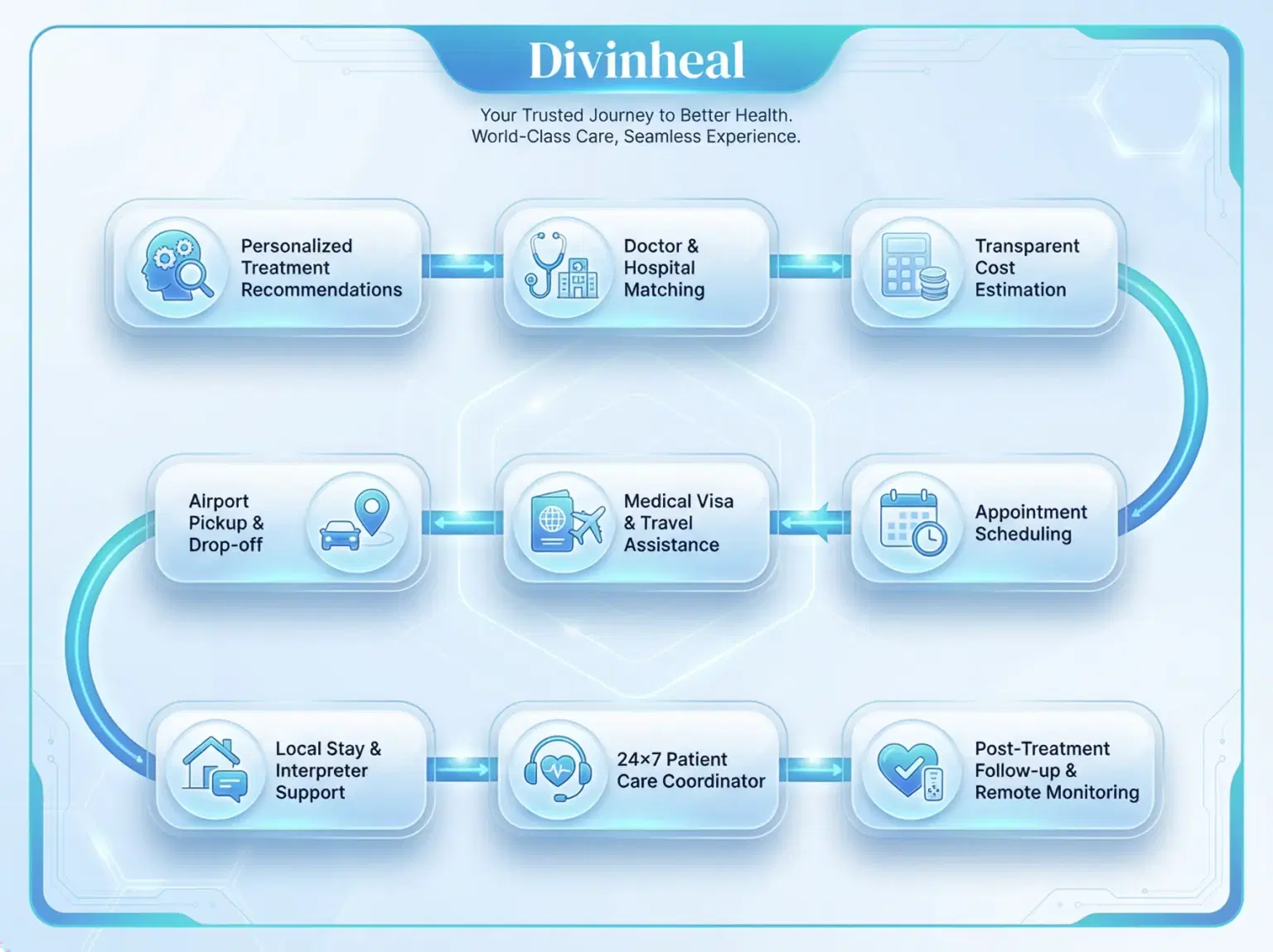
DivinHeal connects you with trusted eye centers and experienced surgeons across India. Get honest cost breakdowns, compare your options, and plan your treatment whether you're going government or private. Book a consultation to understand which procedure fits your eyes and budget, verify credentials, and avoid surprise charges. Make an informed choice with proper guidance.
Book Your Consultation
The first step towards clearer vision is a comprehensive pre-surgery eye examination with a qualified refractive surgeon. Most leading centres offer a free LASIK consultation that includes an initial consultation appointment, corneal mapping, and a preliminary assessment of your suitability for the procedure.
During this appointment, you will receive a personalised eye treatment recommendation based on your prescription, corneal profile, and lifestyle requirements. You will also receive a full cost breakdown and be able to ask questions about the procedure, recovery, and expected outcomes before making any commitment.
Whether you are based in the UK, Australia, or considering LASIK eye surgery cost India options as a medical tourist, scheduling a consultation is the most important first step. It costs nothing, carries no obligation, and gives you the clinical information you need to make an informed decision.
Conclusion
LASIK eye surgery represents a clinically proven, highly effective solution to the daily inconvenience of glasses and contact lenses. While cost is understandably a primary consideration, it is only one element of a multi-factor decision. The technology platform, surgeon expertise, comprehensiveness of care, and long-term cost comparison with ongoing optical aids all contribute to the true value calculation.
For patients in India, the LASIK Surgery Cost in India is highly competitive, with world-class outcomes available at a fraction of what the same procedure would cost in the UK or Australia. For UK and Australian patients, flexible LASIK financing options make treatment financially accessible, and private providers continue to innovate in both technology and patient care.
Above all, LASIK is a long-term investment in your vision and quality of life — one that, for the right candidate, delivers measurable improvements that compound in value over decades. Speak to a qualified ophthalmologist, undergo a comprehensive assessment, and make your decision with complete information.
Related Links
Booking With DIVINHEAL
Get a free consultation to understand your treatment options
Related Links
DivinHeal's Journey
Latest Articles
Frequently Asked Questions
Get answers to common questions about medical tourism, treatment procedures, and our comprehensive healthcare services.
Ready To Start Your Healing Journey?
Get Personalized Medical Treatment Options From India's Top Hospitals. Our Medical Experts Are Ready To Assist You Every Step Of The Way.