How to Donate Eggs — Process, Eligibility & Pain Guide

Written by DivinHeal Editorial Contributor, Rahul Kumar, Medical Expert | Medically Reviewed by Dr Indu Priya, MBBS,MD Published on: 2026-09-22
Plan My Journey
Tell us your condition and budget - our AI matches the right destination, hospital and doctor and visa pathway
How to Donate Eggs: Process, Eligibility
& Is It Painful?
Wondering how to donate eggs? This guide covers what donation involves start to finish, who can donate under HFEA rules, and an honest answer on whether it is painful. It is written for UK women thinking about donating for the first time, and for fertility patients exploring donor-egg IVF.
What Is Egg Donation?
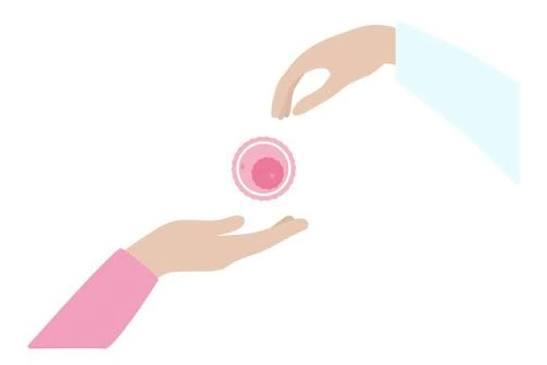
Egg donation is
when one woman's eggs are collected and given to another for IVF, or used for
research. It helps people who cannot conceive with their own eggs — after
cancer treatment, early menopause, or repeated failed IVF. In the UK, all egg
donation happens through clinics licensed by the Human Fertilisation and
Embryology Authority (HFEA).
Two paths
exist. You can donate to someone you know (a family member or friend). Or you
can donate through a clinic, where your eggs are matched to a recipient you
have not met. Both are altruistic in the UK, meaning it is illegal to sell
eggs. Donors receive up to £985 per donation cycle plus reasonable expenses.
Who Can Donate Eggs? Eligibility Explained
UK egg donation
eligibility is set by HFEA and the individual clinic. Most donors need to meet
five criteria at a glance:
|
Criterion |
Standard |
|
Age |
18 to 35 (some clinics up to 36) |
|
BMI |
19 to 35 (some clinics require under 30) |
|
Smoking |
Non-smoker or stopped 3+ months (vapes count) |
|
Genetic history |
No serious hereditary or genetic conditions |
|
Screening |
Clear for HIV, hepatitis B and C, syphilis, chlamydia,
gonorrhoea, cystic fibrosis |
Age Requirement
Egg quality
declines after 35, so HFEA sets the general upper limit at your 36th birthday. Some clinics make exceptions for directed
donation to a family member. You must be 18 or over to give informed consent.
Health & Genetic Screening Requirements
Every donor has
blood tests to check for infections.
The clinic also looks at your medical and family history for genetic risks. A
counselling session is standard. Donation has long-term effects that are worth
thinking through before you start.
BMI and Lifestyle Criteria
Most UK clinics
ask for a BMI between 19 and 35, though many prefer under 30 for better egg
quality and lower OHSS risk. You
need to be a non-smoker (or stopped for at least 3 months, and vapes count)7. Alcohol should be moderate.
Donating to Someone You Know vs.
Clinic-Matched Donors
Someone you
know: you and the recipient agree to it. You both go through the same
screening. Clinic-matched: you donate to a stranger. The clinic picks
the recipient. Both give you the same legal status. You have no parental rights
and no financial duty to the child.
The Egg Donation Procedure, Step by Step
The whole
process usually takes 4 to 6 weeks from screening to recovery.
Initial Consultation & Screening
Fertility
check, blood tests, ultrasound, medical and family history, plus counselling.
This step takes a few weeks and confirms whether you are eligible. Donors get
their fertility check for free.
Hormone Stimulation Phase
Once cleared,
you give yourself daily hormone injections for about 10 to 14 days. These prompt your ovaries to grow several
eggs at once instead of one. The shots go into the fatty tissue, like insulin
injections. The needle is very thin.
Monitoring Appointments
Three to five
appointments during the stimulation phase. Blood tests check hormone levels.
Transvaginal ultrasound scans track how the follicles are growing. This is when
the clinic adjusts your dose if needed.
Egg Collection Procedure
A short
outpatient procedure lasting about 30 minutes, under sedation. The doctor uses a thin needle guided by
ultrasound to collect eggs from your ovaries through the vaginal wall. No cuts
or stitches. You go home the same day, usually within 2 hours.
Aftercare and Recovery
Most donors
rest for 1 to 2 days. Mild bloating and cramping are normal for a few days. You
can usually go back to work within 24 to 48 hours.
Heavy exercise should wait about a week.
Is Egg Donation Painful? What to Really
Expect
For most
donors, egg donation is uncomfortable rather than painful. The two stages feel
different:
What the Stimulation Phase Feels Like
The daily
injections use a very thin needle and are not painful for most people. As your
ovaries respond, you may feel bloated, tender in the lower belly, and slightly
emotional. Think of it as an amplified premenstrual feeling. It is not sharp
pain.
What Egg Collection Feels Like
You are sedated
for the procedure itself, so you do not feel it. Afterwards, expect period-like
cramping and bloating for 1 to 3 days. Paracetamol is usually enough. Some
donors have very little discomfort. Others feel more sore. Both are normal.
Real Risk to Flag Honestly: OHSS
Ovarian
hyperstimulation syndrome (OHSS) is the main medical risk. Your ovaries
over-respond to the stimulation and can swell and leak fluid. In modern IVF
practice, mild OHSS happens in less than 5% of cycles, and severe OHSS in less
than 1%. Moderate to severe
forms sit at 3% to 8% overall.
Symptoms include worsening bloating, nausea, quick weight gain, and shortness
of breath. Contact your clinic straight away if any of these happen. Severe
OHSS is rare but can be life-threatening if ignored.
Egg Donation vs IVF with Donor Eggs: What's
the Difference?
This guide
covers the donor side. The recipient path (IVF with egg donation) is a
different process.
|
Aspect |
Donor path |
Recipient path |
|
What is involved |
Hormone injections, monitoring, 30-min egg collection |
IVF cycle using donated eggs fertilised with partner or
donor sperm |
|
Who it is for |
Healthy women aged 18–35 who want to help others |
People who cannot conceive with their own eggs |
|
Timeline |
4 to 6 weeks |
Varies. Fresh cycle: aligned with donor. Frozen: flexible |
|
Cost |
Free, with £985 compensation |
Paid privately or (rarely) via NHS |
|
Success rate |
N/A |
UK birth rates over 30% across all ages using donor eggs |
|
Next step |
Contact an HFEA-licensed clinic to enquire |
Book a fertility consultation with a donor-egg specialist |
Myths & Misconceptions About Donating
Eggs
Myth:
"Donating eggs uses up your future egg supply." False. Every
menstrual cycle your body recruits multiple follicles but usually only releases
one. Stimulation just rescues eggs that would have been reabsorbed anyway.
Donation does not bring menopause forward.
Myth:
"It's major surgery." False. Egg collection is a 30-minute
sedated procedure with no cuts or stitches.
It is closer to a dental filling in scale than to surgery.
Myth:
"You can donate anonymously in the UK." False. Since 2005, all
donors must agree to be identifiable. Donor-conceived people can request
non-identifying information at 16, and identifying details (name, date of
birth, last known address) at 18.
Cost Calculator
I know my treatment - show me cost from 3 hospitals
Real Questions People Ask
"Will
donating eggs hurt my own fertility later?" No solid evidence links
standard donation to reduced future fertility. Donation uses eggs your body
would have discarded that cycle, not a savings account of eggs. The only
medical risk that could affect fertility is severe OHSS, which is rare.
"Can I
back out after starting the process?" Yes. Under UK law, you can
withdraw or change your consent at any time until your eggs are used in
treatment. This is true even
after egg collection, if the eggs have not yet been fertilised for a specific
recipient.
"How do I know if I meet the criteria before contacting a clinic?" Check the table in the eligibility section above. If your age, BMI and general health fit, most clinics will accept an initial enquiry and confirm through their screening process.
Key Takeaways |
|---|
References
1. HFEA — Donating your eggs. https://www.hfea.gov.uk/donation/donors
2. Care Fertility — 10-family limit and UK donation rules. https://carefertility.com/blog/everything-you-need-to-know-about-donating-your-eggs
3. HFEA / Care Fertility — UK anonymity rules for donor-conceived people. https://www.hfea.gov.uk/donation/donors
4. Care Fertility / HFEA — UK egg donor compensation (£985 per cycle). https://carefertility.com/blog/everything-you-need-to-know-about-donating-your-eggs
5. Coparents (citing HFEA) — Standard UK donor screening panel. https://www.coparents.co.uk/blog-uk/egg-donor-uk/egg-donation-uk/
6. Egg Donors UK — BMI eligibility range. https://www.eggdonorsuk.co.uk/faqs/
7. Egg Donors UK — Smoking eligibility rule. https://www.eggdonorsuk.co.uk/faqs/
8. Egg Donors UK — Stimulation phase duration. https://www.eggdonorsuk.co.uk/faqs/
9. Care Fertility — Egg collection procedure (30 min, sedation). https://carefertility.com/blog/everything-you-need-to-know-about-donating-your-eggs
10. Cleveland Clinic — Ovarian hyperstimulation syndrome (OHSS) modern rates. https://my.clevelandclinic.org/health/diseases/17972-ovarian-hyperstimulation-syndrome-ohss
11. Healthline — Moderate-to-severe OHSS 3-8%. https://www.healthline.com/health/infertility/ohss
12. Coparents (citing HFE Act 1990) — Consent withdrawal rights. https://www.coparents.co.uk/blog-uk/egg-donor-uk/egg-donation-uk/
13. Amilis (citing HFEA) — UK donor-egg IVF success rates. https://www.amilis.co.uk/blog/what-is-oocyte-donation
14. Care Fertility — Free fertility assessment for donors. https://carefertility.com/blog/everything-you-need-to-know-about-donating-your-eggs
15. Care Fertility — Total egg donation cycle duration (4-6 weeks). https://carefertility.com/blog/everything-you-need-to-know-about-donating-your-eggs
16. Care Fertility — Pre-stimulation screening duration (2-4 weeks). https://carefertility.com/blog/everything-you-need-to-know-about-donating-your-eggs
17. Egg Donors UK — Post-collection recovery timeline. https://www.eggdonorsuk.co.uk/faqs/
18. MedlinePlus — Post-retrieval exercise restrictions. https://medlineplus.gov/ency/article/007294.htm
Plan My Journey
Tell us your condition and budget - our AI matches the right destination, hospital and doctor and visa pathway
Cost Calculator
I know my treatment - show me cost from 3 hospitals

Written by DivinHeal Editorial Contributor, Rahul Kumar, Medical Expert | Medically Reviewed by Dr Indu Priya, MBBS,MD Published on: 2026-09-22
Plan My Journey
Tell us your condition and budget - our AI matches the right destination, hospital and doctor and visa pathway
Cost Calculator
I know my treatment - show me cost from 3 hospitals
Booking With DIVINHEAL
Get a free consultation to understand your treatment options
From Consultation to Recovery,
Step by Step
Expert Specialist Matching
Connecting you with the world's top-rated medical experts.
Accredited Hospital Network
Access to JCI & NABH certified healthcare facilities.
Complete Travel Coordination
Hassle-free visa, stay, and local transport assistance.
24/7 Personal Care
Dedicated patient advisors supporting you at every step.
Journey Guidance
Full guidance from start to end of the patient treatment journey.
Expert Specialist Matching
Connecting you with the world's top-rated medical experts.
Everything you
need to know today
Browse through these common inquiries to better understand our patient-focused medical platform.
Not for most donors. The daily stimulation injections use a very thin needle. What most people notice is bloating and tenderness as the ovaries respond, similar to strong premenstrual symptoms. The egg collection itself is done under sedation, so you do not feel it. Afterwards, expect period-like cramping for 1 to 3 days that paracetamol usually handles.
The full process takes about 4 to 6 weeks. Initial screening and consultation take 2 to 4 weeks. The hormone stimulation phase is 10 to 14 days8. Egg collection is a single 30-minute procedure under sedation. Recovery is 1 to 2 days for most donors, with normal activity back within a week.
Not in the UK. Since 2005, all egg donors must agree to be identifiable3. Any child conceived from your eggs can request non-identifying information about you at age 16. Identifying details (name, date of birth, last known address) become available at 18. You have no parental rights or financial responsibility. Countries like Spain still allow anonymous donation, but UK law does not.
Donating eggs is the donor's side of the process: hormone stimulation and a short egg collection procedure. IVF with egg donation is the recipient's side: using donated eggs to try to conceive through IVF. Both are legally regulated by HFEA. UK birth rates using donor eggs are over 30% across all ages.
Still have more questions?
Book a call with our friendly team to learn how DivineHeal simplifies your healthcare journey.