How to Get Rid of Jowls: Best Treatment Options

Written by DivinHeal Editorial Contributor, Rahul Kumar, Medical Expert | Medically Reviewed by Dr Indu Priya, MBBS,MD Published on: 2026-09-23
Plan My Journey
Tell us your condition and budget - our AI matches the right destination, hospital and doctor and visa pathway
How to Get Rid of Jowls: Best Treatment
Options Explained
How to get rid
of jowls depends less on the newest treatment and more on how far the sagging
has gone. Mild jowling responds to non-surgical options. Advanced jowling needs
surgery. Choose the wrong tier and you either waste money or accept a smaller
result than you wanted. This guide matches treatment options to your stage of
jowling, so you can identify the right tier before booking a first appointment.
What Causes Jowls? (The Real Anatomy Behind
It)
Jowls are not
simply "loose skin". They form because five things change together
with age. Skin loses elasticity. Fat compartments in the mid-face descend. The
SMAS layer loosens. Retaining ligaments weaken. And the underlying jawbone
slowly resorbs. Cheek tissue
that once sat high slides down and gets caught at the mandibular ligament,
a fibrous anchor near the front of the jaw. Peer-reviewed cadaver studies
confirm this is where the jowl builds up.
The tissue piles behind that anchor like leaves against a fence.
This matters
for treatment choice. If your jowls are mostly volume loss, fillers restore the
missing scaffold. If they are mostly descent, only a treatment that physically
moves tissue will help. Most people have a mix, which is why one-size-fits-all
recommendations often disappoint.
Which Jowl Treatment Matches Your Stage of
Sagging?
Use this table
as a rough guide to your treatment tier. Only a specialist can give a proper
assessment, but this narrows the shortlist.
|
Stage of jowling |
Typical age band |
Recommended treatment tier |
Downtime |
|
Mild (softening at rest, visible only when you look down) |
Late 30s to mid-40s |
Skincare, filler, HIFU/Ultherapy, RF, thread lift |
None to 3 days |
|
Moderate (visible at rest, tracks along jawline) |
Mid-40s to mid-50s |
Combination approach (energy + filler), thread lift, mini
facelift |
3 days to 2 weeks |
|
Advanced (deep hangs below jaw, loose neck skin) |
50s+ |
Full or lower facelift, sometimes with neck lift |
2 to 3 weeks |
One myth
worth naming: face exercises. Evidence on their impact on visible jowls is
mixed and disputed. Some studies show small changes in facial muscle tone. Very
few show visible jowl reduction. Exercises are cheap and safe, so they may help
early, but they will not reverse established jowling. Do not skip a proper
first appointment on the promise of an exercise routine alone.
Non-Surgical Treatment Options
Non-surgical
options work best on mild to moderate jowling. They can delay the need for
surgery, sometimes by years, but they cannot move tissue that has already fully
descended.
Dermal Fillers
Hyaluronic acid
fillers placed along the jawline restore the sharp bony edge lost to bone
resorption. They also fill the "pre-jowl sulcus" (the dip in front of
the jowl) so the face reads as smoother. Results are visible immediately and
last 12 to 18 months. Warning: filler placed by an inexperienced injector can
make the lower face look heavier, not lighter, if the underlying descent is not
read correctly.
Radiofrequency Treatments (Thermage,
Morpheus8)
RF energy heats
the skin's dermis at 0.5 to 4mm depth to trigger new collagen. Thermage is a single-session monopolar
RF device. Morpheus8 combines microneedling with RF for slightly deeper
penetration. Best for mild skin laxity and texture. Results take 2 to 3 months
to appear. Downtime is minimal.
Ultrasound Skin Tightening (Ultherapy,
Sofwave)
HIFU devices
like Ultherapy reach the SMAS layer at 4.5mm depth, the same layer surgeons
address in a facelift.
Ultrasound raises tissue temperature to 60 to 70°C at focal points to trigger
collagen remodeling. Results
take 2 to 3 months and last 6 to 18 months.
This is the strongest non-surgical lift available, and the one most often
positioned as a "surgery alternative" for the right good fit.
Thread Lifts
Thread lifts
use dissolvable barbed sutures placed under the skin to physically lift and
move tissue. Results are immediate but partial, lasting 12 to 18 months. Best for mild to moderate cases where
the tissue needs a nudge upward but full surgery is not yet warranted.
Fat-Reduction Options (CoolSculpting,
Injectable Fat Dissolvers)
Some jowling is
fat-based rather than pure skin laxity. Below-the-chin CoolSculpting
(cryolipolysis) and Kybella (deoxycholic acid injections) can reduce a heavy
jaw or double-chin component. They do not tighten skin, so they work best in
younger patients with good skin quality. Results are permanent for the fat
cells removed, though remaining fat cells can still enlarge with weight gain.
Surgical Treatment Options
Surgery is the
final answer for moderate-to-advanced jowling. It is the only category that
physically moves the SMAS layer and retaining ligaments to where they used to
sit.
Mini Facelift
A mini facelift
(also called short-scar or S-lift) addresses mild to moderate jowl sagging with
smaller incisions in front of the ear.
Recovery is 7 to 10 days for social downtime. Results last 5 to 8 years. Best
for patients in their 40s to early 50s who want a lift but not the recovery of
a full procedure.
Full/Lower Facelift (Jowl Lift)
The full or
lower facelift lifts the SMAS layer along with the skin, moving deep tissue
rather than pulling skin alone.
This is the gold standard for advanced jowling. Recovery is 2 to 3 weeks with
residual swelling for 2 to 3 months. Results last 10 to 15 years.
Neck Lift
Advanced
jowling almost always comes with loose neck skin (a "turkey neck"). A
neck lift is often combined with a facelift because separating the jawline from
the neck below it rarely gives a natural result. Ask about combination pricing.
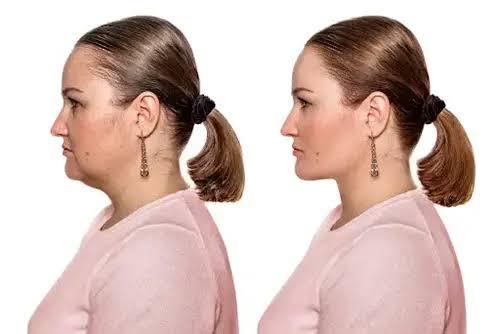
Sagging Jowls: Before and After by Treatment
Type
Realistic
sagging jowls before and after results depend heavily on the tier chosen:
• Filler results are immediate. Jawline
looks sharper and more defined the same day. The pre-jowl dip fills. Expect
subtle rather than dramatic changes.
• HIFU/Ultherapy and RF results build over
2 to 3 months as collagen rebuilds.
Photographs at month 3 vs day-before show visible skin firming. Results last 6
to 18 months.
• Thread lift results show partial
immediate lift plus continued improvement over 4 to 6 weeks as new collagen
forms around the threads. Peak at 6 to 8 weeks.
• Facelift results are visible at 4 to 6
weeks once major swelling settles, with final results at 3 to 6 months.
Photographs pre-op and month 6 show the biggest change of any option, because
deep tissue is moveed rather than just tightened.
Marketing
before-and-afters often show the best-case result. Ask any clinic to see photos
of patients whose starting point matches yours, not just their most dramatic
transformation.
Cost Calculator
I know my treatment - show me cost from 3 hospitals
How We Can Help
Getting real
answers before you choose a jowl treatment.
DivinHeal helps
you understand exactly which jowl treatment actually fits your case. Fillers,
HIFU, thread lifts, radiofrequency, or surgery. All assessed against your
specific skin laxity, age, budget, and downtime limits, before you commit to a
clinic. The "best treatment for jowls" does not have one universal
answer. It depends on your specific pattern of aging. What you need is an
honest assessment, not a curated before-and-after photo.
How
DivinHeal solves it:
• Personalised treatment matching. A
recommendation based on your actual skin laxity, age, and goals. Not a default
"everyone should get X" answer.
• Honest comparison of real trade-offs.
Clear guidance on when a non-surgical option delivers enough improvement,
versus when surgery is the only route to the result you actually want.
• Full-journey support either way.
Coordinated care from first appointment through treatment and recovery.
Including logistics if you are treating abroad, at partner hospitals in India,
from the Gulf, Africa, South Asia or the UK.
Why choose
DivinHeal: backed by qualified dermatology and cosmetic specialists who
assess your case before recommending a treatment path. Committed to telling you
when a cheaper non-surgical option will get you the result you want. No
upselling surgery you do not need.
Share your concern and a photo with the DivinHeal care team for a personalised plan and cost estimate.
References
1. Acibadem International — Anatomical "traffic jam" mechanism of jowl formation. https://acibademinternational.com/blog/sagging-jowls-why-they-form-and-the-full-range-of-treatment-options/
2. PMC — The Surgical Anatomy of the Jowl and the Mandibular Ligament Reassessed (cadaver study). https://www.ncbi.nlm.nih.gov/pmc/articles/PMC9944027/
3. The Naderi Center / Virginia Facial Plastic Surgery — Typical age band for jowl onset. https://www.virginiafacialplasticsurgery.com/blog/what-causes-jowls-and-how-to-treat-them
4. Cosmetic Skin Clinic London — Energy-based treatments for early jowling. https://www.cosmeticskinclinic.com/blog/ultherapy-vs-hifu/
5. Centre for Surgery London — Mini facelift positioning. https://centreforsurgery.com/sagging-jowls/
6. Dr Scott Turner — SMAS lift for moderate-to-advanced jowling. https://drturner.com.au/blogs/lower-facelift-addressing-jowls-sagging-skin-and-the-effects-of-ageing/
7. Dr Scott Turner — Non-surgical limits vs descended tissue. https://drturner.com.au/blogs/lower-facelift-addressing-jowls-sagging-skin-and-the-effects-of-ageing/
8. Dr Scott Turner / Cascade Eye & Skin Centers — Five anatomical layers of jowl formation. https://cascadeeyeskin.com/blog/jowls-when-skin-starts-to-sag-and-what-you-can-do-about-it/
9. Virginia Facial Plastic Surgery — Filler misuse warning. https://www.virginiafacialplasticsurgery.com/blog/what-causes-jowls-and-how-to-treat-them
10. Allen Medical Aesthetics — RF microneedling depth range. https://allenmedicalaesthetics.com/blog/ultherapy-vs-rf-microneedling
11. Allen Medical Aesthetics — Ultherapy targets SMAS at 4.5mm, same as facelift. https://allenmedicalaesthetics.com/blog/ultherapy-vs-rf-microneedling
12. Cosmetic Skin Clinic — Ultherapy operating temperature. https://www.cosmeticskinclinic.com/blog/ultherapy-vs-hifu/
13. Cosmetic Skin Clinic — HIFU/Ultherapy result timeline and duration. https://www.cosmeticskinclinic.com/blog/ultherapy-vs-hifu/
14. Acibadem International — Thread lift mechanism and duration. https://acibademinternational.com/blog/sagging-jowls-why-they-form-and-the-full-range-of-treatment-options/
Plan My Journey
Tell us your condition and budget - our AI matches the right destination, hospital and doctor and visa pathway
Cost Calculator
I know my treatment - show me cost from 3 hospitals

Written by DivinHeal Editorial Contributor, Rahul Kumar, Medical Expert | Medically Reviewed by Dr Indu Priya, MBBS,MD Published on: 2026-09-23
Plan My Journey
Tell us your condition and budget - our AI matches the right destination, hospital and doctor and visa pathway
Cost Calculator
I know my treatment - show me cost from 3 hospitals
Booking With DIVINHEAL
Get a free consultation to understand your treatment options
From Consultation to Recovery,
Step by Step
Expert Specialist Matching
Connecting you with the world's top-rated medical experts.
Accredited Hospital Network
Access to JCI & NABH certified healthcare facilities.
Complete Travel Coordination
Hassle-free visa, stay, and local transport assistance.
24/7 Personal Care
Dedicated patient advisors supporting you at every step.
Journey Guidance
Full guidance from start to end of the patient treatment journey.
Expert Specialist Matching
Connecting you with the world's top-rated medical experts.
Everything you
need to know today
Browse through these common inquiries to better understand our patient-focused medical platform.
For mild jowls, HIFU/Ultherapy is the strongest single option because it reaches the SMAS layer, the same deep tissue a surgical facelift addresses. Fillers along the jawline are the best pair well with, restoring the sharp bony edge. RF treatments like Morpheus add surface smoothing. Many specialists combine two or three for the best result. Skincare with retinoids and daily SPF supports all of them.
Evidence is mixed. Some small studies show improvements in facial muscle tone. Very few show visible jowl reduction. Facial exercises are cheap and low-risk, so they may help early skin quality. But they cannot move tissue that has already descended. Do not skip a proper first appointment on the promise of an exercise routine alone.
Jowls often start subtly in the late 30s to early 40s, based on genetics, skin quality, and skeletal structure. Sun exposure, smoking or vaping, and significant weight fluctuation can bring them on earlier. If jowling appears in your 20s or early 30s, it is worth a proper assessment. The cause is usually different (genetics or weight loss) and the treatment matches that cause, not general "aging".
Three signs suggest surgery is the right route. First, a visible jowl at rest (not just when looking down). Second, a hang below the jawline itself. Third, loose neck skin ("turkey neck") that travels with the jowl. Non-surgical energy devices soften early changes but cannot lift descended tissue. If you have tried HIFU or thread lifts and the result did not last or was too subtle, that also points to surgery.
Still have more questions?
Book a call with our friendly team to learn how DivineHeal simplifies your healthcare journey.