
Written by DivinHeal Editorial Contributor, Rahul Kumar, Embryologist | Medically Reviewed by Dr Indu Priya, Gynecologist(MD) Published on: 2026-05-28
How to Increase Sperm Count: Proven Methods That Work
About
1 in 20 men has a low sperm count, and male factors contribute to nearly half
of infertility cases worldwide (WHO, 2024). If your semen test shows a concern,
it doesn’t automatically mean something serious or permanent. It just means
it’s worth understanding the result properly and looking at next steps. This
guide breaks things down in a simple way—so whether you’re preparing for a
doctor visit or just trying to understand your report, you know what it means
and what to do next.
You will find out how to test your sperm
and what your results mean. You will learn which lifestyle changes and medical
treatments can raise sperm count. We explain what salmon sperm injection is —
and what it is not. We cover sperm donor rules in the UAE, Australia, and the
UK. We also compare costs between India and private clinics back home. All
costs are checked against 2025–2026 private-healthcare rates.
Every case is different, so your doctor is the best person to guide you
based on your situation. Costs are only rough estimates and can vary depending
on the hospital, the doctor’s experience, and how complex the treatment is.
What Is Low Sperm Count? Signs That Warrant a Test
Low sperm count is medically called
oligospermia. It means fewer than 15 million sperm per millilitre of semen
(WHO, 2021). The World Health Organization says male factors cause about 50% of
all infertility cases globally. Oligospermia is the most common single cause.
Many men have no symptoms until they try
to conceive. The most reliable sign is not getting pregnant after 12 months of
regular, unprotected sex. But some earlier signs are worth knowing:
• Difficulty conceiving after 12
months of trying (6 months if the female partner is over 35)
• Low sex drive or trouble
keeping an erection. These can point to low testosterone, which also slows
sperm production
• Pain, swelling, or a lump near
the testicles. This may be a varicocele — one of the most common and treatable
causes of low sperm count
• Reduced facial or body hair.
This may signal a hormone problem that affects sperm production
• Previous testicular injury,
mumps (orchitis), or scrotal surgery. These are known risk factors for lower
sperm output
None of these symptoms confirms a
diagnosis. Only a semen analysis does that. At JCI-accredited labs in India, it
costs as little as Rs 800 ($8 / AED 31 / AUD 12 / £6). Results come back in
24–48 hours.
How to Test Your Sperm: Semen Analysis
in India vs UAE, Australia and the UK
A semen analysis is the standard test for
sperm count. It measures sperm concentration (count), motility (movement), and
morphology (shape). It also checks semen volume and vitality. JCI-accredited
labs in India give you results within 24–48 hours. The cost is a fraction of
what private clinics charge at home.
|
Test / Service |
India (INR) |
India (USD) |
UAE (AED) |
Australia (AUD) |
UK (GBP) |
|
Semen Analysis (JCI lab) |
Rs 800 – 2,000 |
$8 – $21 |
AED 250– 500 |
AUD 200 – 300 |
£100 – £220 |
|
Semen Analysis (local private) |
— |
— |
AED 100 – 500 |
AUD 100 – 250 |
£100 – £250 |
|
Hormone Panel (FSH/LH/T) |
Rs 1,000 – 3,000 |
$10 – $31 |
AED 250 – 1,000 |
AUD 120 – 200 |
£100 – £250 |
|
Genetic Screening (Karyotype) |
Rs 5,000 – 20,000 |
$52 – $209 |
AED 2,000 – 4,000 |
AUD 200 – 700 |
£300 – £1,000 |
Costs are approximate private-healthcare ranges for 2025–2026. NHS and Medicare may cover diagnostic testing in the UK and Australia, but waiting times can run 3–12+ months.
WHO Reference Values: What Do the
Numbers Mean?
Your semen analysis report will show
numbers for each of the items below. Results outside these ranges may point to
fertility challenges. But they do not make conception impossible — especially
with the right treatment.
|
Test Parameter |
WHO Reference
Value (2021) |
What It Means |
|
Sperm Concentration |
≥ 15 million/mL |
Below this = oligospermia |
|
Total Motility |
≥ 40% |
% of sperm that move |
|
Normal Morphology |
≥ 4% |
% of sperm with normal shape |
|
Semen Volume |
≥ 1.5 mL |
Adequate for transport |
|
Vitality (live sperm) |
≥ 58% |
Live vs dead sperm ratio |
Is 4% Morphology a Normal Result?
Yes — 4% normal morphology is exactly at
the WHO lower reference limit. This is a borderline normal result. Studies show
normal morphology can range from 4% to 48%. Values above 8% are more common. A
result of 4% means most sperm have abnormal shapes. But ICSI can get
fertilisation using one sperm with a normal shape. So this does not rule out
treatment.
Why Wait 2–7 Days Before the Test?
Doctors recommend not ejaculating for 2–7
days before a semen analysis. Fewer than 2 days gives an artificially low
count. More than 7 days reduces motility and vitality. This is standard
guidance from UCSF, NHS, and every major fertility body worldwide. Your clinic
will give you specific instructions.
At-Home Sperm Tests — Are They
Reliable?
At-home kits such as SpermCheck measure
sperm count only. They do not check motility or morphology. Both are equally
critical for conception. A clinical semen analysis at a JCI-accredited Indian
lab (Rs 800–2,000) gives a complete picture. A doctor reviews the results. It
also costs less than most at-home kits bought in the UK or Australia.
Is the Sperm Test Covered by Medicare
or the NHS?
In Australia, Medicare may cover semen
analysis if medically needed. But public fertility services involve long wait
times. In the UK, the NHS covers sperm testing. But specialist referrals and
treatment waits often run 6–12 months. Many patients from both countries choose
to get tested and start treatment in India. This avoids the delays entirely.
What Foods and Drinks Actually Boost
Sperm Count?
Diet
is one of the easiest things you can work on when it comes to sperm health.
Studies suggest that men who eat more antioxidants, zinc, folate, and omega-3
fats often have better sperm count, motility, and morphology (NICE 2017; WHO
2022). It’s not a quick fix, but it does play an important role as part of a
long-term approach to improving sperm health.
Foods Shown to Support Sperm
Production
• Walnuts and almonds — rich in
omega-3 fats, which improve sperm motility and membrane health
• Leafy greens such as spinach
and kale — high in folate, which helps sperm DNA stay healthy
• Eggs — provide selenium and
zinc, both key to sperm formation and testosterone production
• Tomatoes and cooked carrots —
contain lycopene, linked to improved sperm shape in multiple studies
• Oysters and lean red meat —
among the highest food sources of zinc, which directly supports sperm
production
• Dark chocolate in moderation —
contains L-arginine, linked to modest increases in sperm count in small trials
Drinks That Support Sperm Health
• Pomegranate juice — animal
studies show improved sperm motility; early human data are consistent with this
• Green tea — rich in
antioxidants; early evidence suggests it may reduce cell damage to sperm DNA
• Water — staying well hydrated
supports semen volume and sperm transport; dehydration lowers semen quality
Foods to Limit or Avoid
• Processed meats have been linked in some studies with lower sperm count
(ICMR data).
• Drinking more than 14 units of alcohol a week is also associated with
poorer sperm quality and lower testosterone levels (WHO, 2022)
• Trans fats found in fast food
and packaged snacks — linked to reduced sperm motility
• Soy in very high quantities —
plant oestrogens may affect testosterone at excessive intake levels; normal
amounts are fine
Can I Increase My Sperm Count in 7
Days?
There’s
no quick fix that can improve sperm count in a week. Sperm take around 74 days
to develop fully, so any real improvement usually shows up after about 2–3
months. That’s why lifestyle changes don’t give immediate results, but they do
start making a difference over time—usually reflected in a repeat semen test
after at least 3 months. In the short term, the focus is mainly on protecting
what’s already being produced: stopping smoking, cutting down alcohol, and
avoiding heat exposure like hot baths, saunas, or very tight underwear. If
there’s an underlying issue, a specialist can also guide whether treatments
like hormone therapy or varicocele surgery could improve things more
effectively.
Medical and Surgical Treatments for
Low Sperm Count
Sometimes lifestyle changes are not
enough. Or a structural or hormonal cause is found. In these cases, targeted
medical or surgical treatment addresses the problem directly. India’s
JCI-accredited hospitals offer these procedures at 60–80% lower cost than
equivalent private facilities in the UAE, UK, and Australia.
Hormone Therapy
Hormonal imbalances — such as low FSH,
LH, or testosterone — slow sperm production. A specialist doctor can prescribe
targeted therapy once blood tests confirm the cause. Hormone treatment in India
starts from Rs 2,000–7,000 ($21–$73) per month. Regular check-ups make sure the
dose works without side effects.
Varicocelectomy: The Most Common
Correctable Cause
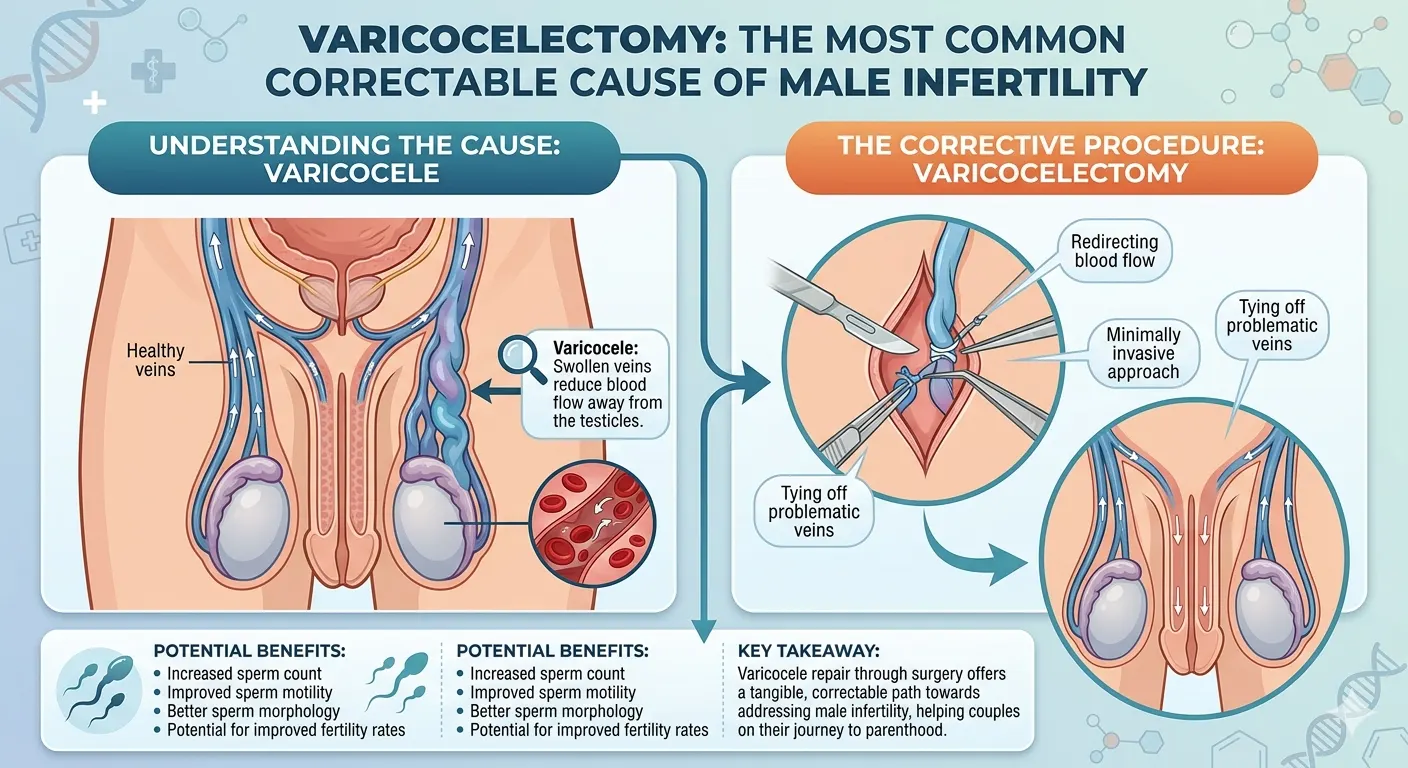
A varicocele is an enlargement of the
veins inside the scrotum. It is present in around 15% of all men. It is also
the most common reversible cause of low sperm count. Enlarged veins raise
scrotal temperature. This damages ongoing sperm production — like a computer
that overheats and slows down. Left untreated, varicoceles tend to get worse
over time.
Varicocelectomy is a minimally invasive
procedure to close off these veins. It improves sperm results in 60–70% of
cases (NICE, 2022). It is done by keyhole surgery at hospitals such as Apollo
Hospitals, Chennai, and Manipal Hospital, Delhi. Surgeons hold MCh and FRCS
qualifications.
|
Procedure |
India (INR) |
India (USD) |
UAE (AED) |
Australia (AUD) |
UK (GBP) |
|
Varicocelectomy |
Rs 50,000 – 1,50,000 |
$522 – $1,566 |
AED 12,000 – 30,000 |
AUD 3000 – 7,000 |
£3,500– £8,000 |
Costs are approximate. India figures
are for laparoscopic varicocelectomy at a JCI-accredited facility.
Patient Story: Hana and Ahmed from Dubai
Ahmed, 36, had been trying to conceive for two years before consulting Divinheal. His semen analysis in Dubai showed a sperm count of 8 million/mL with poor motility. An ultrasound confirmed a Grade 2 varicocele. He had a laparoscopic varicocelectomy at Apollo Hospitals, Chennai. The cost was far below the AED 15,000+ quote he had received in Dubai. A follow-up semen analysis three months later showed 22 million/mL with much better motility. Hana conceived naturally within four months of the procedure.
The story is an illustrative composite based on typical patient journeys. Names changed for privacy.
Advanced ART: IVF and ICSI for Severe
Male Infertility
When sperm count is very low — or when
natural conception and less invasive treatments have not worked — Advanced
Reproductive Technology (ART) offers a reliable path to parenthood. India’s
fertility centres report success rates on par with top private clinics in the
UK and Australia. The cost is 75–85% lower.
ICSI: Intracytoplasmic Sperm Injection
ICSI
is one of the most common treatments for male factor infertility. In this
procedure, an embryologist selects a single healthy sperm under a microscope
and injects it directly into a mature egg. Fertilisation usually happens in
about 70–85% of eggs per cycle. In well-established fertility centres in India,
pregnancy rates are around 40–50% per cycle for women under 35 (ICMR, 2023).
Micro-TESE: Sperm Retrieval for
Azoospermia
Micro-TESE
(microsurgical testicular sperm extraction) is usually used when no sperm are
found in the semen, a condition called azoospermia. In this procedure, a
surgeon uses a high-powered microscope to carefully look through the testicular
tissue and take tiny samples where sperm may still be present. In
non-obstructive azoospermia, sperm retrieval rates are around 60–70% in
accredited centres in India (ICMR, 2022). It’s available at major fertility
centres such as Apollo Hospitals and Fortis Healthcare, usually performed by
specialists trained in male infertility and microsurgery.
Anonymous Donor Sperm in India
When no sperm can be retrieved, and the
couple chooses donor sperm, the process is regulated by the Indian Council of
Medical Research (ICMR). All donors are screened for genetic conditions —
including cystic fibrosis and thalassaemia. They are also tested for infectious
diseases (HIV, Hepatitis B and C) and go through a psychological assessment.
Recipients choose from donor profiles matched by physical characteristics.
|
Procedure |
India (INR) |
India (USD) |
UAE (AED) |
Australia (AUD) |
UK (GBP) |
|
IVF (standard cycle) |
Rs 1,20,000 – 3,50,000 |
$1,251 – $3,651 |
AED 25,000 – 60,000 |
AUD 10,000 – 15,000 |
£5,000 – £12,000 |
|
IVF with donor sperm |
Rs 1,50,000 – 3,50,000 |
$1,564 – $3,651 |
Not permitted |
AUD 10,000 – 18,000 |
£7,000 – £15,000 |
|
ICSI |
Rs 1,20,000 – 2,50,000 |
$1,251 – $2,608 |
AED 25,000 – 50,000 |
AUD 10,000 – 15,000 |
£5,000 – £10,000 |
|
Micro-TESE + ICSI |
Rs 2,00,000 – 3,50,000 |
$2,086 – $3,651 |
AED 35,000 – 60,000 |
AUD 18,000 – 25,000 |
£10,000 – £18,000 |
|
IUI (single cycle) |
Rs 10,000 – 25,000 |
$104– $260 |
AED 2,500 – 7,000 |
AUD 1,500 – 4,000 |
£800 – £2,000 |
All costs are approximate
private-healthcare ranges for 2025–2026. ART costs vary based on the number of
cycles needed.
Salmon Sperm Injection (Polynucleotide
Therapy): What It Is and What It Is Not
Salmon sperm injection is a skin
treatment — not a fertility procedure. This is an important distinction.
Polynucleotide (PDRN) therapy does not treat low sperm count. It does not
improve male fertility. And it is not injected anywhere near the reproductive
system. People get confused because the word ‘sperm’ appears in the name.
What Salmon Sperm Injection Actually
Does
Polynucleotide
therapy uses purified DNA fragments, often derived from salmon sperm cells,
which are injected into the skin. It’s mainly used to support skin repair,
improve hydration, and stimulate collagen production. Some studies and reviews
(including Scimeca et al., 202, and PubMed literature) suggest it may help
improve skin texture, fine lines, and overall skin quality. It’s now offered in
many aesthetic clinics across India, the UK, and Australia as a skin
rejuvenation treatment.
Is It Better Than Botox?
Botox and polynucleotide therapy do
different things. Botox relaxes specific facial muscles to smooth wrinkles —
such as frown lines and crow’s feet. Polynucleotide therapy improves skin
quality: hydration, elasticity, and radiance. It does not affect muscle
movement. They are not direct alternatives — many patients use both. For skin
texture without muscle effects, PDRN therapy is often preferred. For wrinkle
reduction from muscle movement, Botox is more targeted.
How Long Do Results Last?
A
typical course is usually 3–4 sessions, spaced about 2–4 weeks apart. Reviews
in aesthetic medicine (Women’s Health, 2024) suggest results tend to last
around 3–6 months. After that, maintenance sessions every few months help
maintain the results. Most people notice smoother, more hydrated skin after the
second session.
Side Effects: What to Expect
Most
side effects are mild and short-lived, like redness, swelling, or slight
bruising at the injection site, usually settling within 24–72 hours. Less
commonly, there may be a mild allergic reaction. Rarely, issues like
pigmentation changes or infection can happen, usually linked to technique or
hygiene. Going to a qualified practitioner at an accredited clinic helps lower
these risks, such as JCI-accredited centres in India or clinics regulated by
the Care Quality Commission in the UK.
|
Treatment |
India (INR) |
UAE (AED) |
Australia (AUD) |
UK (GBP) |
|
Polynucleotide (PDRN) therapy — per session |
Rs 20,000 –50,000 |
AED 2,000 – 4,500 |
AUD 1,000 – 1,500 |
£300 – £1,000 |
|
Full course (3–4 sessions) |
Rs 70,000 – 2,00,000 |
AED 7,000 – 15,000 |
AUD 2,500 – 4,000 |
£1,500 – £2,500 |
India costs are for JCI-accredited or
equivalent accredited aesthetic clinics. Package pricing for full courses (3–4
sessions) shown in the second row.
Can I Still Get Pregnant with a Low
Sperm Count?
Yes — and the outcome depends on how low
the count is and what the other fertility factors are. Low sperm count does not
mean zero fertility. Many couples achieve a natural pregnancy with counts below
the WHO threshold. This is especially true with timed intercourse and lifestyle
changes.
For UK patients: Motility and morphology matter as
much as count. A man with 10 million/mL but excellent motility may have better
odds than one with 20 million/mL and very poor movement. A full semen analysis
— available in India within
24–48 hours for Rs 800 — gives your specialist the full picture to recommend
the right path.
Sperm Donor Rules in the UAE,
Australia and the UK
Sperm donation rules differ a lot across Divinheal’s target
countries. The rules in your home country affect which treatment options are
available. In some cases, they affect where you will need to receive treatment.
|
Country |
Legal? |
Donor ID at 18? |
Donor Payment |
IVF with Donor
Sperm (approx.) |
|
India |
Yes (ICMR regulated) |
No (anonymous) |
Rs 5,000 – 10,000 reimbursement |
Rs 1,50,000 – 3,50,000 |
|
UAE |
No (Sharia law) |
N/A |
N/A |
Not available |
|
Australia |
Yes (regulated) |
Yes (mandatory) |
Expense reimbursement only |
AUD 10,000 – 18,000 |
|
UK |
Yes (HFEA regulated) |
Yes (mandatory) |
Up to £45/visit (HFEA) |
£7,000 – £15,000 |
UAE: Sperm Donation Is Not Permitted
In the UAE, anonymous sperm donation for
fertility treatment is not allowed under Islamic Sharia law. Bringing in
third-party genetic material into a pregnancy is considered haram (forbidden)
in all major schools of Islamic law. This is confirmed in peer-reviewed
literature on Islamic bioethics (PubMed, 2002; referenced in legal reviews to
date). Couples in the UAE who need donor sperm often travel to countries where
it is legal — Georgia, Cyprus, or Spain. For UAE patients with severe male
infertility, Divinheal focuses on using the couple’s own genetic material. This
includes advanced Micro-TESE to retrieve sperm that may not appear in a
standard semen analysis.
Australia: Legal, Donor Must Be
Identifiable at Age 18
Sperm donation is legal across all
Australian states under the Assisted Reproductive Technology Act. Donors must
agree to being identified to any child born from their donation once that child
turns 18. Australian donors receive expense reimbursement only — no payment.
Access through public fertility services involves waiting lists of 12–24+
months in many states. Many Australian patients complete IVF with donor sperm
in India. This avoids the wait and cuts costs.
UK: HFEA-Regulated, Donor Identifiable
at 18
The Human Fertilisation and Embryology
Authority (HFEA) regulates all UK sperm donation. Donors must be identifiable
to donor-conceived children at age 18. UK donors receive up to £45 per clinic
visit in expense reimbursement — not payment for sperm. Private IVF with donor
sperm in the UK costs £7,000–£15,000 per cycle. The same full cycle in India
costs Rs 1,50,000–3,50,000 ($1,564–$3,651), saving 65–75%.
How Much Are Sperm Donors Paid in
India?
In India, sperm donors are not paid for
their donation. ICMR guidelines allow reimbursement of Rs 5,000–10,000 ($52–$104)
for time and travel only. This is an ethical, non-commercial model — in line
with Australian and UK practice. The high compensation figures ($100–$200 per
sample) sometimes cited in press coverage refer to the US market. That legal
framework does not apply to India, the UK, or Australia.
Cost Comparison: Sperm Count Tests and
Treatments in India vs UAE, Australia and the UK
India’s cost advantage for male fertility
treatment is significant at every stage — from first tests through to advanced
ART. Savings of 60–85% compared to private-healthcare rates in the UAE,
Australia, and the UK are typical at JCI-accredited facilities. The figures
below are 2025–2026 private-healthcare ranges. NHS and Medicare costs (where
applicable) are noted separately.
|
Procedure |
India (INR) |
India (USD) |
UAE (AED) |
Australia (AUD) |
UK (GBP) |
|
IVF (standard cycle) |
Rs 1,20,000 – 3,50,000 |
$1,251 – $3,651 |
AED 25,000 – 60,000 |
AUD 10,000 – 15,000 |
£5,000 – £12,000 |
|
IVF with donor sperm |
Rs 1,50,000 – 3,50,000 |
$3,000 – $3,651 |
Not permitted |
AUD 10,000 – 18,000 |
£7,000 – £15,000 |
|
ICSI |
Rs 1,20,000 – 2,50,000 |
$1,251 – $2,608 |
AED 25,000 – 50,000 |
AUD 10,000 – 15,000 |
£5,000 – £10,000 |
|
Micro-TESE + ICSI |
Rs 2,00,000 – 3,50,000 |
$2,086 – $3,651 |
AED 35,000 – 60,000 |
AUD 18,000 – 25,000 |
£10,000 – £18,000 |
|
IUI (single cycle) |
Rs 10,000 – 25,000 |
$104 – $260 |
AED 2,500 – 7,000 |
AUD 1,500 – 4,000 |
£800 – £2,000 |
|
Test / Service |
India (INR) |
India (USD) |
UAE (AED) |
Australia (AUD) |
UK (GBP) |
|
Semen Analysis (JCI lab) |
Rs 800 – 2,000 |
$8 – $21 |
AED 250 – 500 |
AUD 200 – 300 |
£100– £220 |
|
Semen Analysis (local private) |
— |
— |
AED 100 – 500 |
AUD 100 – 250 |
£100 – £250 |
|
Hormone Panel (FSH/LH/T) |
Rs 1,000 – 3,000 |
$11 – $31 |
AED 250 – 1,000 |
AUD 120 – 200 |
£100 – £250 |
|
Genetic Screening (Karyotype) |
Rs 5,000 – 20,000 |
$52 – $209 |
AED 2,000 – 4,000 |
AUD 200 – 700 |
£300 – £1,000 |
For Australian patients: Medicare covers
some diagnostic fertility tests when medically indicated. But public fertility
services — including donor sperm IVF — have waiting lists of 1–3 years in most
states. Private treatment in Australia runs AUD 10,000–15,000 per IVF cycle.
The same full cycle in India (including JCI-accredited hospital, FRCS-qualified
embryologist, and Divinheal coordination) costs Rs 1,20,000–3,50,000. That is a
saving of AUD 8,000–13,000 on the procedure alone.
For
UK patients, National Health Service fertility treatment is available, but
eligibility criteria are strict and IVF waiting times are often around 12–24
months. In private clinics, IVF usually costs about £5,000–£8,000 per cycle,
excluding add-ons. In India, the same level of care at accredited centres is
generally much more affordable, often saving around £5,000–£12,000 per cycle,
with many specialists holding FRCS or equivalent international qualifications.
For
patients in the UAE, fertility treatment in Dubai and Abu Dhabi is high
quality, but it can be expensive. An IVF cycle typically costs around AED
25,000–60,000 ($6,800–$16,300). In India, the same treatment usually costs
about ₹1,20,000–₹3,50,000 ($1,250–$3,650), which can mean savings of roughly
AED 25,000–40,000 per cycle. Many patients choose India for accredited clinics,
multilingual support, and more affordable care overall.
Male Fertility: 4 Common Myths and the
Facts
Myth 1: Male fertility is not affected
by age
Fact:
Male fertility does decline with age. After 40, sperm quality and DNA integrity
tend to gradually reduce, and DNA fragmentation can increase. Testosterone
levels also slowly decline over time (WHO, 2021). The change is usually gradual
compared to women, but it is still real and can make conception more difficult
for couples trying later in life.
Myth 2: Tight underwear or hot baths
cause permanent infertility
Fact:
Too much heat around the scrotum can temporarily affect sperm production, but
it’s rarely the main cause of long-term infertility. The body naturally keeps
scrotal temperature about 2–3°C lower than core body temperature to support
sperm production. When that balance is disrupted for a long time, it can have
some impact. Simple changes like wearing looser underwear and avoiding repeated
heat exposure—like frequent saunas or keeping a laptop on the lap—can help. But
in most cases, heat is just one contributing factor, not the main cause.
Myth 3: Lifestyle changes alone are
enough to fix low sperm count
Fact: Lifestyle improvements are valuable
— and necessary — but they often cannot fix structural or hormonal causes. A
varicocele, a hormonal deficiency, or a blockage in the reproductive tract
needs medical or surgical treatment. Lifestyle changes improve the results of
any treatment, but cannot replace diagnosis.
Myth 4: If you have fathered children
before, you are always fertile
Fact:
Fertility can change over time. Sperm count may decrease due to factors like
new health conditions, medications, infections, environmental exposure, or age.
Even if a couple has had a successful pregnancy before, it doesn’t rule out
fertility issues developing later. If conception is taking longer than
expected, it’s still worth getting it checked rather than assuming everything
is the same as before.
Patient Story: Mark, 42, from Sydney
Mark already had two children in his early 30s, so he didn’t think fertility would be an issue again. But after he and his new partner struggled to conceive for around 18 months, his GP advised a semen analysis. It showed his sperm count had dropped to about 9 million/mL, lower than before. He was referred for specialist care and later diagnosed with a bilateral varicocele after further evaluation in Bangalore. He underwent laparoscopic varicocelectomy, and over the next six months, his sperm count improved to around 28 million/mL. A few months later, his partner conceived naturally.
This is a realistic example based on common patient experiences. Names and details have been changed to protect privacy.
Skim this if you are short on time.
How to increase sperm count depends on
the cause — from diet and lifestyle changes to surgical varicocele correction
or IVF/ICSI at a JCI-accredited hospital in India. Here is how treatment costs
compare across India, Australia, the UK, and the UAE:
|
Treatment |
India |
Australia |
UK |
UAE |
Typical Saving |
|
Semen Analysis |
Rs 800 – 2,000 |
AUD 200 – 300 |
£100 – £220 |
AED 250 – 500 |
Up to 90% |
|
Varicocelectomy |
Rs 50K – 1.5L |
AUD 3,000 – 7,000 |
£3,500 – £8,000 |
AED 12,000 – 30,000 |
60 – 75% |
|
IVF (standard) |
Rs 1.2L – 3.5L |
AUD 10,000 – 15,000 |
£5,000 – £12,000 |
AED 25,000 – 60,000 |
75 – 85% |
|
ICSI / Micro-TESE |
Rs 2L – 3.5L |
AUD 18,000 – 25,000 |
£10,000 – £18,000 |
AED 35,000 – 60,000 |
70 – 80% |
|
Salmon Sperm Injection |
Rs 20K – 50K |
AUD 1,000 – 1,500 |
£300 – £1,000 |
AED 2,000– 4,500 |
70 – 80% |
All figures are approximate 2025–2026
private healthcare ranges. Actual costs depend on hospital tier, surgeon
seniority, and individual case complexity. JCI-accredited Indian hospitals —
including Apollo Hospitals, Chennai, and Fortis Healthcare, Bengaluru — offer
internationally benchmarked outcomes at a fraction of home-country private
costs. Contact Divinheal for a free, no-obligation consultation.
Stories mentioned are illustrative composites based on typical patient journeys. Names changed for privacy. Individual outcomes vary. Consult your specialist for personalised advice.
Plan My Journey
Tell us your condition and budget — our AI matches the right destination, hospital and doctor and visa pathway
Cost Calculator
I know my treatment — show me cost from 3 hospitals
Written by DivinHeal Editorial Contributor, Rahul Kumar, Embryologist | Medically Reviewed by Dr Indu Priya, Gynecologist(MD) Published on: 2026-05-28
Plan My Journey
Tell us your condition and budget — our AI matches the right destination, hospital and doctor and visa pathway
Cost Calculator
I know my treatment — show me cost from 3 hospitals
Booking With DIVINHEAL
Get a free consultation to understand your treatment options
From Consultation to Recovery,
Step by Step
Expert Specialist Matching
Connecting you with the world's top-rated medical experts.
Accredited Hospital Network
Access to JCI & NABH certified healthcare facilities.
Complete Travel Coordination
Hassle-free visa, stay, and local transport assistance.
24/7 Personal Care
Dedicated patient advisors supporting you at every step.
Journey Guidance
Full guidance from start to end of the patient treatment journey.
Expert Specialist Matching
Connecting you with the world's top-rated medical experts.
Everything you
need to know today
Browse through these common inquiries to better understand our patient-focused medical platform.
The best results usually come from a combination of lifestyle changes and medical treatment, depending on what’s causing the issue. Eating well, staying active, quitting smoking, and cutting down alcohol can all support better sperm health over 3–6 months (WHO, 2022). If a varicocele is found, surgery can help in many cases. For more severe problems, ICSI can still achieve fertilisation using just a single healthy sperm. A semen test at a good clinic is usually the first step to get a clear picture of what’s going on.
Yes — many couples conceive with a sperm count below 15 million/mL. Even with counts below 5 million/mL, ICSI can achieve pregnancy rates of 40–50% per cycle for women under 35 at Indian fertility centres. As the Mayo Clinic notes, sperm motility matters as much as count. A specialist will show you which treatment path — timed intercourse, IUI, or ICSI — gives the best chance for your situation.
There’s no treatment that can reliably improve sperm count in just a week. Sperm take about 74 days to fully develop, so real changes usually show up after at least 3 months. What can help immediately is preventing further damage—like stopping smoking, cutting down alcohol, and avoiding excess heat around the scrotum. If needed, a specialist can also look for underlying causes and suggest treatments like hormone therapy or varicocele surgery.
Foods that support sperm production include walnuts, leafy greens such as spinach and kale, eggs, tomatoes, oysters, and lean red meat. For drinks, pomegranate juice and green tea contain antioxidants that reduce cell damage to sperm DNA. Avoiding processed meats, too much alcohol, and trans fats from fast food is just as important. Dietary changes take around 3 months to show a measurable effect in semen analysis results.
4% normal morphology sits exactly at the WHO lower reference limit. This is technically within normal range. Normal results range from 4% to 48%. A result of 4% means most sperm have irregular shapes. But ICSI can achieve fertilisation by selecting one sperm with a normal shape. It does not rule out parenthood. Discuss the result with a fertility specialist rather than drawing conclusions from the number alone.
At-home kits such as SpermCheck (available online and at pharmacies) measure sperm count only. They do not check motility or morphology — both critical for fertility. For a clinical semen analysis that covers all factors, a JCI-accredited Indian lab charges Rs 800–2,500 ($10–$30), with results in 24–48 hours. This is more complete, more accurate, and in many cases cheaper than at-home kits bought in the UK or Australia.
Sperm donation for fertility treatment is not permitted in the UAE. Under Islamic Sharia law, introducing third-party genetic material into a pregnancy is considered haram (forbidden) in all major schools of Islamic jurisprudence. This is confirmed in peer-reviewed bioethics literature (PubMed, 2002). UAE couples who need donor sperm often travel to countries where it is legally permitted. For UAE patients with male infertility, Divinheal focuses on advanced procedures — such as Micro-TESE — to work with the couple’s own genetic material wherever possible.
Neither Australia nor the UK pays sperm donors for their sperm. In Australia, donors receive expense reimbursement only. No fixed amount is set nationally. In the UK, the HFEA allows up to £45 per clinic visit in reimbursement. The high donor payment figures ($100–$200+ per sample) in press coverage are specific to the US market. In India, ICMR guidelines allow Rs 5,000–10,000 reimbursement for time and travel only — not payment for sperm.
They treat different concerns and are not direct substitutes. Botox targets dynamic wrinkles caused by specific muscle movements — frown lines, crow’s feet, and forehead lines. Polynucleotide (PDRN) therapy improves overall skin quality: hydration, elasticity, texture, and radiance, without affecting muscle movement. Many patients use both together for the best results. Neither is universally ‘better’ — the right choice depends on what skin concern you are addressing.
A full course of 3–4 sessions spaced 2–4 weeks apart produces results lasting 3–6 months. This is based on clinical aesthetic medicine data (Women’s Health Mag clinical summary, 2024). Common temporary side effects are redness, swelling, and bruising at injection sites. These clear within 24–72 hours. Rare side effects — skin pigmentation changes or localised infection — are linked to poor injection technique. They are much less likely when treatment is done by a qualified practitioner at an accredited clinic.
In Australia, Medicare may cover semen analysis when it’s medically necessary, but in the public system, there are often long waits to see a fertility specialist—sometimes 12–36 months. In the UK, the National Health Service also provides semen testing, but referral and treatment through the public system can take around 12–24+ months. Because of these delays, some people choose private testing or travel abroad for faster results. In India, semen analysis is widely available at low cost (around ₹800–₹2,000 / $8–$21) at accredited labs, with results usually available within 24–48 hours.
Azoospermia (when no sperm are found in the semen) doesn’t always mean fatherhood isn’t possible. If it’s caused by a blockage, sperm can often be retrieved or the blockage treated, and ICSI can still help with fertilisation. If it’s due to reduced sperm production, procedures like Micro-TESE may be able to find sperm directly from the testicular tissue. In suitable cases, sperm can be found in about 60–70% of men in India (ICMR, 2022). And if no sperm are retrieved, donor sperm with ICSI is another option. A specialist can help figure out which path actually applies to your case.
Still have more questions?
Book a call with our friendly team to learn how DivineHeal simplifies your healthcare journey.