Is Thyroid Cancer Curable? Types, Odds and Treatment


Written by DivinHeal Editorial Contributor, Rahul Kumar, Medical Expert | Medically Reviewed by Dr Indu Priya, MBBS,MD Published on: 2026-11-20
Plan My Journey
Tell us your condition and budget - our AI matches the right destination, hospital and doctor and visa pathway
Is Thyroid Cancer Curable? Types, Survival Rates and Treatment
Quick answer: is thyroid cancer curable? Thyroid cancer is treatable, and many people with the disease have a very good outlook. The chances of successful treatment depend on the type of cancer, its stage and how it responds to treatment. Five-year relative survival rates are over 99% for papillary thyroid cancer, 98% for follicular, 93% for medullary and 10% for anaplastic thyroid cancer. These figures are based on groups of patients and cannot predict an individual's outcome. |
|---|
Introduction
A thyroid cancer diagnosis can raise many questions about treatment, recovery and long-term health. However, the outlook is not the same for everyone. It depends on the type of thyroid cancer, its stage and other individual factors.
Thyroid cancer is almost three times more common in women than in men, according to US cancer statistics.
Some types respond well to treatment, while others can be more aggressive and require a different approach.
Understanding the type of thyroid cancer and the available treatment options can help patients make informed decisions with their medical team.
Key Takeaways
|
|---|
Types of Thyroid Cancer
Thyroid cancer has four main types: papillary, follicular, medullary and anaplastic. Each type behaves differently and has a different outlook. The table below compares how common these cancers are and their five-year relative survival rates, based on US data from people diagnosed between 2015 and 2021. These figures are estimates for groups of patients and cannot predict an individual's outcome.
Papillary thyroid cancer is the most common type and generally has the most favourable outlook. Anaplastic thyroid cancer is rare, grows quickly and is more difficult to treat.
Type | How common | Typical treatment | 5-year survival |
|---|---|---|---|
Papillary thyroid | About 80% | Surgery; radioactive iodine in selected cases | More than 99% |
Follicular thyroid | About 10% | Surgery; radioactive iodine in selected cases | 98% |
Medullary thyroid | Less than 5% | Surgery; other treatments depending on the disease | 93% |
Anaplastic thyroid | About 2% | Surgery in selected cases, radiation and systemic therapy | 10% |
How the Different Types Behave
Papillary thyroid cancer: This is the most common type. It usually grows slowly and often develops in one lobe of the thyroid. It can spread to lymph nodes in the neck, but treatment is often successful.
Follicular thyroid cancer: This type is less common and is more likely to spread through the bloodstream to distant organs, particularly the lungs and bones.
Medullary thyroid cancer: This type develops from the C cells of the thyroid gland, which produce the hormone calcitonin. It can spread to lymph nodes, the lungs or the liver.
Anaplastic thyroid cancer: This is a rare and aggressive type that can grow and spread quickly, making treatment more challenging.
How the Stage Affects Survival
The stage of thyroid cancer also affects the outlook. According to the American Cancer Society, the five-year relative survival rate for papillary thyroid cancer is 71% when it has spread to distant parts of the body. For anaplastic thyroid cancer, the rate is 45% when the cancer is localised and 5% when it has spread to distant organs.
These figures apply to the stage of cancer at diagnosis. Age, overall health, tumour characteristics and response to treatment can also influence an individual's outlook.
RET Genetic Testing for Medullary Thyroid Cancer
Everyone diagnosed with medullary thyroid cancer should be offered genetic testing for changes in the RET gene. This test helps determine whether the cancer is hereditary or has developed without an inherited genetic change. Around 25% of medullary thyroid cancer cases are hereditary, meaning the genetic change can be passed from parents to children.
If an inherited RET gene change is identified, close family members, particularly parents, siblings and children, may be offered genetic counselling and testing. Children who carry certain RET changes may need preventive thyroid surgery to reduce the risk of developing medullary thyroid cancer. Hereditary cases can also be associated with other endocrine tumours as part of a condition called multiple endocrine neoplasia type 2 (MEN2).
How Thyroid Cancer Is Treated
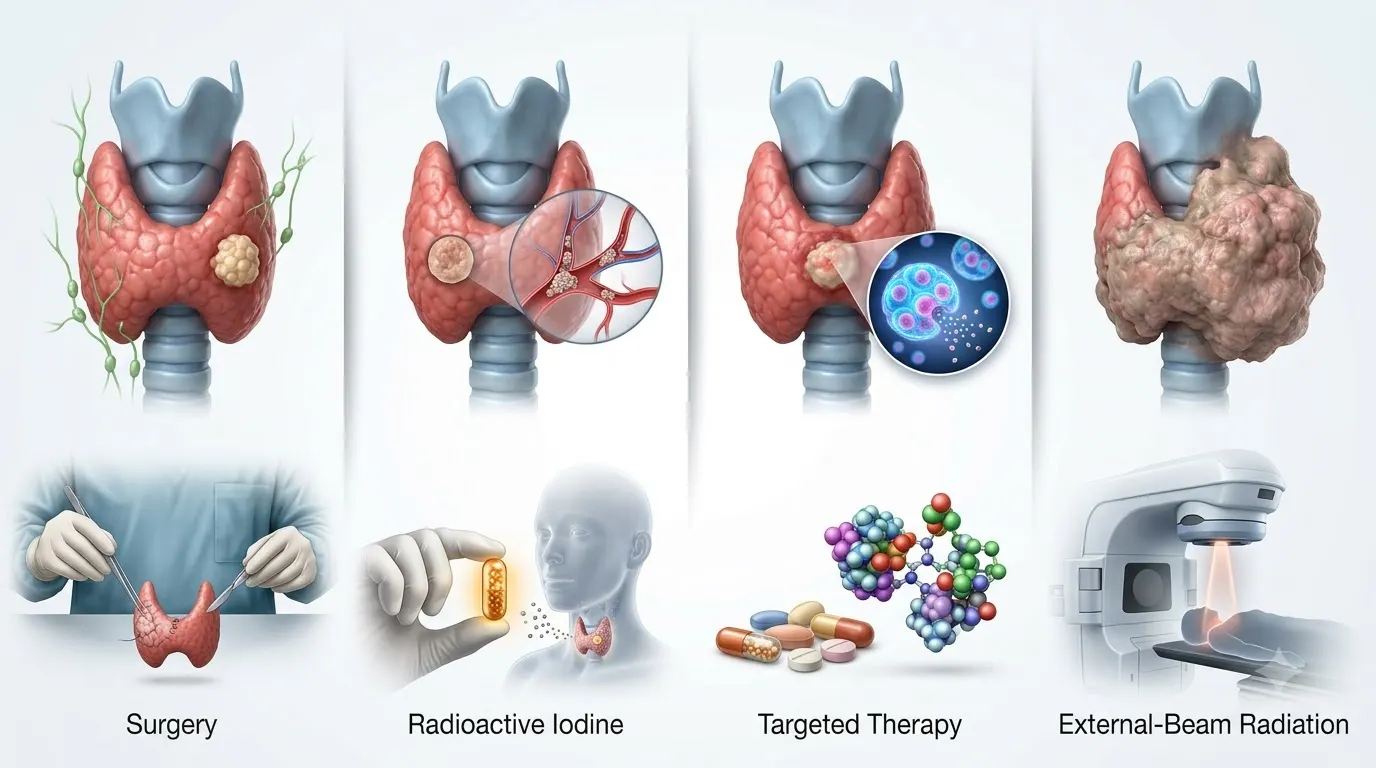
Surgery is the main treatment for many types of thyroid cancer. However, the treatment plan depends on the type and stage of cancer, tumour size and whether it has spread beyond the thyroid. Depending on these factors, treatment may also include radioactive iodine, radiation therapy or targeted medicines.
Lobectomy vs Total Thyroidectomy
A lobectomy removes the part (lobe) of the thyroid gland containing the cancer, while a total thyroidectomy removes the entire gland. The 2025 American Thyroid Association (ATA) guidelines recommend different surgical approaches depending on the size and spread of the cancer:
Lobectomy: Recommended for cancers measuring 2 cm or smaller that are limited to one side of the thyroid, with no evidence of spread or other reasons to remove the remaining lobe.
Lobectomy or total thyroidectomy: Both may be considered for low-risk cancers larger than 2 cm and up to 4 cm. The decision depends on the cancer's features, findings in the other thyroid lobe and the patient's preferences.
Total thyroidectomy: Recommended for cancers larger than 4 cm, those that have grown beyond the thyroid, or those with clinically apparent spread to lymph nodes or distant organs.
For patients with low-risk cancers measuring more than 2 cm and up to 4 cm, there may be around a 20% chance of needing conversion to total thyroidectomy during surgery or a second operation later to remove the remaining thyroid tissue. The final surgical approach should be decided through a discussion between the patient and the treating surgeon.
Radioactive Iodine: Who Needs It and the Low-Iodine Diet
Radioactive iodine (RAI) therapy is used for some papillary and follicular thyroid cancers to destroy remaining thyroid tissue or cancer cells. It is not effective for medullary or anaplastic thyroid cancer. It may not be needed for small, low-risk cancers that have been completely removed through surgery.
Before treatment, patients are usually advised to follow a low-iodine diet for 1–2 weeks. This involves avoiding iodised salt, dairy products, seafood, soy and foods containing iodine-based additives, as advised by the treating team.
TSH levels must also be raised before treatment. This can be done by temporarily stopping thyroid hormone medication or through Thyrogen injections. Pregnancy should be avoided for at least six months after RAI treatment. RAI is not given during pregnancy or breastfeeding.
Active Surveillance for Very Small Papillary Cancers
Some small, low-risk papillary thyroid cancers can be monitored through regular ultrasound examinations instead of immediate surgery. This approach is called active surveillance. Surgery may be recommended if the cancer grows or shows other concerning changes.
A Japanese study followed 5,646 people with papillary thyroid cancers smaller than 1 cm. Among those who chose active surveillance, 12.2% eventually underwent surgery. No thyroid cancer-related deaths occurred in either group during the average follow-up of 7.3 years.
Active surveillance is suitable only for selected patients and requires regular monitoring under specialist care.
Life After Thyroid Cancer Treatment
Life after thyroid cancer treatment may involve daily medication, regular check-ups and monitoring for recurrence. The follow-up plan depends on the type of cancer, treatment received and individual health needs.
Daily Thyroid Tablets, Voice and Calcium Risks
After a total or near-total thyroidectomy, patients usually need lifelong thyroid hormone replacement with levothyroxine.
Thyroid surgery can also affect the nerves that control the voice, causing temporary or permanent hoarseness. Damage to the parathyroid glands may lead to low calcium levels, causing symptoms such as numbness, tingling or muscle spasms. These symptoms should be reported to the treating medical team.
Follow-Up Tests: Thyroglobulin and Neck Ultrasound
After treatment for differentiated thyroid cancer, follow-up may include thyroglobulin blood tests and neck ultrasounds to check for signs of remaining or recurring cancer. Thyroglobulin is a protein produced by thyroid cells.
For medullary thyroid cancer, follow-up usually includes blood tests for calcitonin and carcinoembryonic antigen (CEA).
Cost Calculator
I know my treatment - show me cost from 3 hospitals
How DivinHeal Can Help
Finding the right hospital and specialist for thyroid cancer treatment can be challenging, especially when considering treatment in another country. DivinHeal helps international patients connect with hospitals and healthcare specialists in India and coordinates support throughout their medical journey.
The support may include:
Hospital and specialist connections: Helping patients explore suitable hospitals and specialists.
Appointment coordination: Assisting with doctor consultations and medical opinions.
Travel assistance: Coordinating medical visa guidance, accommodation and local transport.
Follow-up support: Helping arrange follow-up appointments and post-treatment coordination.
DivinHeal does not provide medical treatment or make clinical decisions. The treating doctor and hospital are responsible for diagnosis, treatment recommendations and medical care.
Preparing for radioactive iodine treatment? Connect with DivinHeal for support in coordinating your treatment journey in India. |
|---|
Medical disclaimer This article is for general information only and is not medical advice. Please talk to a qualified doctor about your own health before you make any treatment decision. Costs, success rates and recovery times differ from person to person and from hospital to hospital. Divinheal is a medical tourism coordination company. It does not provide medical treatment itself. |
|---|
References
American Cancer Society – Survival Rates for Thyroid Cancer (diagnoses 2015–2021).
https://www.cancer.org/cancer/types/thyroid-cancer/detection-diagnosis-staging/survival-rates.htmlAmerican Cancer Society – Key Statistics for Thyroid Cancer.
https://www.cancer.org/cancer/types/thyroid-cancer/about/key-statistics.htmlAmerican Cancer Society – What Is Thyroid Cancer?
https://www.cancer.org/cancer/types/thyroid-cancer/about/what-is-thyroid-cancer.htmlAmerican Thyroid Association – Medullary Thyroid Cancer.
https://www.thyroid.org/medullary-thyroid-cancer/
Plan My Journey
Tell us your condition and budget - our AI matches the right destination, hospital and doctor and visa pathway
Cost Calculator
I know my treatment - show me cost from 3 hospitals

Written by DivinHeal Editorial Contributor, Rahul Kumar, Medical Expert | Medically Reviewed by Dr Indu Priya, MBBS,MD Published on: 2026-11-20
Plan My Journey
Tell us your condition and budget - our AI matches the right destination, hospital and doctor and visa pathway
Cost Calculator
I know my treatment - show me cost from 3 hospitals
Booking With DIVINHEAL
Get a free consultation to understand your treatment options
From Consultation to Recovery,
Step by Step
Expert Specialist Matching
Connecting you with the world's top-rated medical experts.
Accredited Hospital Network
Access to JCI & NABH certified healthcare facilities.
Complete Travel Coordination
Hassle-free visa, stay, and local transport assistance.
24/7 Personal Care
Dedicated patient advisors supporting you at every step.
Journey Guidance
Full guidance from start to end of the patient treatment journey.
Expert Specialist Matching
Connecting you with the world's top-rated medical experts.
Everything you
need to know today
Browse through these common inquiries to better understand our patient-focused medical platform.
Yes. Thyroid cancer can return even 10–20 years after treatment. The risk depends on the cancer type, stage and response to treatment. Regular follow-up helps detect possible recurrence early.
No. Radioactive iodine is used for selected papillary and follicular thyroid cancers. It is not effective for medullary or anaplastic thyroid cancer. The decision depends on the patient's cancer type and risk of recurrence.
After a total thyroidectomy, lifelong thyroid hormone replacement is usually necessary. After a lobectomy, some patients can produce enough thyroid hormone with the remaining gland, while others may need medication.
Most thyroid cancers are not inherited. However, around 25% of medullary thyroid cancer cases are hereditary. RET genetic testing is recommended for everyone diagnosed with medullary thyroid cancer. Close relatives may also be offered testing if an inherited gene change is identified.
Still have more questions?
Book a call with our friendly team to learn how DivineHeal simplifies your healthcare journey.