Smoker's Lungs vs Normal Lungs: What Actually Changes Inside
Smoker's Lungs vs Normal Lungs: What
Actually Changes Inside
Smoker's lungs
vs normal lungs is more than a before-and-after image. Real changes happen
inside: cilia stop working, mucus builds up, alveoli break down, and tar stains
the tissue grey to black over years.
Some reverse after quitting. Some do not. This piece gives a side-by-side
comparison, honest answers on what recovers, and a real next step.
Plan My Journey
Tell us your condition and budget - our AI matches the right destination, hospital and doctor and visa pathway
How Healthy Lungs Normally Work
The Path Air Takes
Air enters
through the trachea, splits into the two main bronchi, and branches into
smaller bronchioles. It ends in
alveoli, tiny air sacs where oxygen crosses into the blood and carbon dioxide
leaves.
The Role of Cilia
The airways are
lined with cilia, microscopic hair-like structures that beat continuously. They
sweep mucus, dust, and particles up and out, the lungs' main self-cleaning
mechanism.
What Healthy Lung Tissue Looks Like
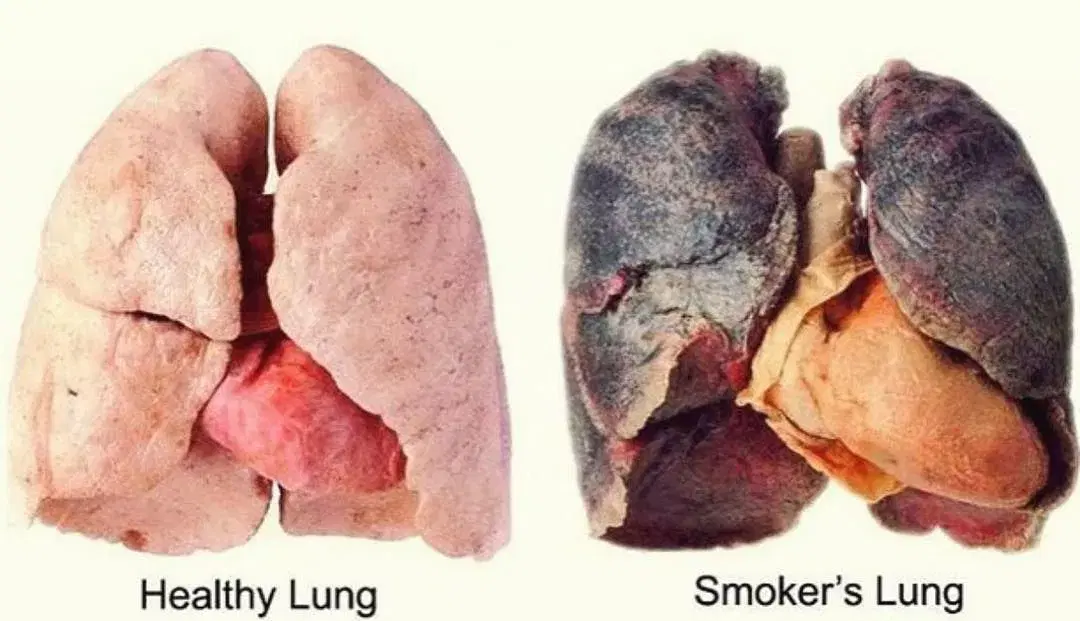
Healthy lung
tissue is soft, elastic, and pink, with a sponge-like texture. The elasticity lets the lungs expand and
recoil with every breath.
What Smoking Actually Does Inside Your Lungs
Chemical Exposure
Tobacco smoke
contains more than 7,000 chemicals, with 70+ known carcinogens
per CDC. Each puff delivers tar,
carbon monoxide, nicotine, formaldehyde, benzene, and arsenic into the airways.
Cilia Paralysis and Mucus Buildup
Cigarette smoke
paralyses and destroys the cilia.
The lungs lose their self-cleaning mechanism. Mucus builds up. Chronic cough
(smoker's cough) and recurrent chest infections follow.
Alveoli Breakdown
Long-term
smoking breaks down the walls of the alveoli.
Small, elastic air sacs merge into fewer, larger, less elastic spaces. Surface
area for oxygen exchange falls. This is the structural basis of emphysema,
and it is permanent.
Tar Buildup and Colour Change
Tar deposits
accumulate in the tissue and airways over years. The grey-to-black appearance
of long-term smokers' lungs reflects deposited tar and particulate matter,
distinct from healthy pink lungs.
Smoker's Lungs vs Normal Lungs: Side-by-Side
Comparison
|
Attribute |
Normal Lungs |
Smoker's Lungs |
|
Colour |
Pink |
Grey to black (tar staining) |
|
Texture / elasticity |
Soft, elastic, sponge-like |
Stiffer, less elastic, scarred |
|
Mucus production |
Normal, cleared by cilia |
Excess, poorly cleared |
|
Cilia function |
Active, continuously sweeping airways |
Paralysed or destroyed |
|
Alveoli condition |
Many small, intact sacs |
Walls broken down; fewer, larger spaces (emphysema) |
|
Oxygen exchange |
Full surface area available |
Reduced surface area; lower capacity |
|
Appearance after 10-20 years |
Pink, elastic |
Grey-black, stiff, visibly damaged |
Conditions Smokers Are at Higher Risk For
Chronic Bronchitis
Persistent
inflammation of the bronchial tubes with chronic cough and mucus.
Emphysema
Destruction of
the alveoli, leading to reduced oxygen exchange and progressive breathlessness.
COPD
Chronic
obstructive pulmonary disease, usually a combination of chronic bronchitis and
emphysema.
Lung Cancer
Smoking causes
roughly 80-90% of lung cancer deaths per CDC. Smokers are 15-30 times more likely to develop
or die from lung cancer than never-smokers.
Pulmonary Hypertension
High blood
pressure in the arteries of the lungs, a long-term consequence of COPD and
reduced lung capacity.
Myths About Smoker's Lungs
"Occasional
or social smoking doesn't really damage your lungs." False. A landmark
study found smoking 1-5 cigarettes per day increased lung cancer incidence by more
than 9 times compared with never-smokers.
The hazard ratio was approximately 9.2. There is no safe level.
"Vaping
is safe for your lungs since it's not tobacco." Not true. The CDC
identified e-cigarette or vaping product use-associated lung injury (EVALI) as
a distinct condition during the 2019-2020 outbreak.
Vaping is not safe, particularly for young people and non-smokers, even if it
may expose users to fewer total toxins than combustible cigarettes.
"Lung
damage from smoking always shows up as a cough." False. Early damage
is often symptomless. By the time cough or breathlessness becomes noticeable,
significant underlying damage may already be present.
"Once
you quit, your lungs go back to normal." Partially true, and this
needs honest framing. Cilia function recovers. Lung capacity improves. But
alveolar destruction (emphysema) does not reverse.
The next section covers what does and does not come back.
Can Smoker's Lungs Recover After Quitting?
The Recovery Timeline
Per CDC,
American Cancer Society, and the US Surgeon General:
• 20 minutes: heart rate drops
• 12 hours: carbon monoxide in blood
returns to normal
• 2 weeks to 3 months: circulation and lung
function improve
• 1-9 months: coughing and shortness of
breath decrease as cilia regenerate
• 1 year: excess risk of coronary heart
disease is half that of a smoker
• 10 years: risk of dying from lung cancer
is about half that of a smoker
• 15 years: risk of coronary heart disease
returns to that of a non-smoker
What Reverses and What Does Not
Reverses:
carbon monoxide and oxygen balance (hours), cilia function and mucus clearance
(months), lung capacity and exercise tolerance, cardiovascular risk (years).
Does not
reverse: alveolar destruction from emphysema is permanent. Any scarring already laid down in the
airways is permanent. DNA damage already caused by past exposure cannot be
undone, though the risk of further damage stops when exposure stops10.
The honest
summary: quitting at any point meaningfully reduces future risk. It does not
reset the lungs to zero.
Real Questions People Ask
Can you tell
if someone's a smoker just from a lung scan? Often yes, after years of
smoking. Low-dose CT shows emphysematous changes, airway thickening, and
nodules more common in smokers. A chest X-ray is less sensitive.
I quit years
ago, are my lungs still damaged? Partially. Reversible changes have
improved. Any emphysema that developed is still there. Lung cancer risk falls for 10-15 years
after quitting but does not return to never-smoker baseline.
Does vaping
cause the same lung changes as smoking? Not identical. Vaping avoids
combustion and most tar, but it is not harmless.
The EVALI outbreak confirmed vaping can cause severe lung injury. Long-term
data is still emerging.
How many years of smoking before real damage starts? No safe threshold. Lung-tissue changes begin within weeks of regular smoking.
Cost Calculator
I know my treatment - show me cost from 3 hospitals
Next Steps
If you are a
current or former smoker and want a clearer picture of your own lung condition,
speak with a pulmonologist. Ask
about low-dose CT screening (if you meet USPSTF criteria) or spirometry.
A proper assessment beats guessing from an online image. DivinHeal connects
patients with pulmonology specialists at accredited partner hospitals in India.
For patients from the Gulf, Africa, South Asia and the UK, services include
diagnostic workup, lung function testing, and cessation support.
Medical disclaimer
This article is for general information only and is not a substitute for advice from a qualified doctor. If you have persistent cough, worsening breathlessness, chest pain, or are coughing up blood, please speak with your GP or a pulmonologist rather than reaching conclusions from an online article. DivinHeal is a medical tourism coordination service and does not provide medical treatment itself.
Plan My Journey
Tell us your condition and budget - our AI matches the right destination, hospital and doctor and visa pathway
Cost Calculator
I know my treatment - show me cost from 3 hospitals
Recommended Article

Plan My Journey
Tell us your condition and budget - our AI matches the right destination, hospital and doctor and visa pathway
Cost Calculator
I know my treatment - show me cost from 3 hospitals
Booking With DIVINHEAL
Get a free consultation to understand your treatment options
Recommended Article
From Consultation to Recovery,
Step by Step
Expert Specialist Matching
Connecting you with the world's top-rated medical experts.
Accredited Hospital Network
Access to JCI & NABH certified healthcare facilities.
Complete Travel Coordination
Hassle-free visa, stay, and local transport assistance.
24/7 Personal Care
Dedicated patient advisors supporting you at every step.
Journey Guidance
Full guidance from start to end of the patient treatment journey.
Expert Specialist Matching
Connecting you with the world's top-rated medical experts.
Everything you
need to know today
Browse through these common inquiries to better understand our patient-focused medical platform.
Typically grey to black from tar staining, less elastic, with visibly broken-down alveoli on imaging or post-mortem. The exact appearance varies with cigarettes per day and duration. The pattern (tar + alveolar destruction + airway inflammation) is consistent.
Not fully. Many changes reverse: cilia function returns within months, lung capacity improves, cardiovascular risk falls to non-smoker levels over 15 years. But alveolar destruction (emphysema) does not reverse. Quitting at any point greatly reduces future risk, even if it does not undo everything.
No. A standard chest X-ray is not a reliable test for early lung damage. A BJGP 2006 study found roughly 23% of lung cancer patients had a normal chest X-ray reported in the year before diagnosis. Low-dose CT is the recommended screening tool for high-risk current and former smokers per USPSTF 2021 guidance.
Chronic cough with mucus, new or worsening breathlessness, and reduced exercise tolerance are common signs. But early damage is often symptomless. A pulmonologist can assess with spirometry, low-dose CT (for high-risk smokers meeting USPSTF criteria), and clinical history.
Still have more questions?
Book a call with our friendly team to learn how DivineHeal simplifies your healthcare journey.