Types of Dental Crowns: Which One Fits Your Tooth?

Written by DivinHeal Editorial Contributor, Rahul Kumar, Medical Expert | Medically Reviewed by Dr Indu Priya, MBBS,MD Published on: 2026-11-18
Plan My Journey
Tell us your condition and budget - our AI matches the right destination, hospital and doctor and visa pathway
6 Types of Dental Crowns: Benefits, Materials and Uses
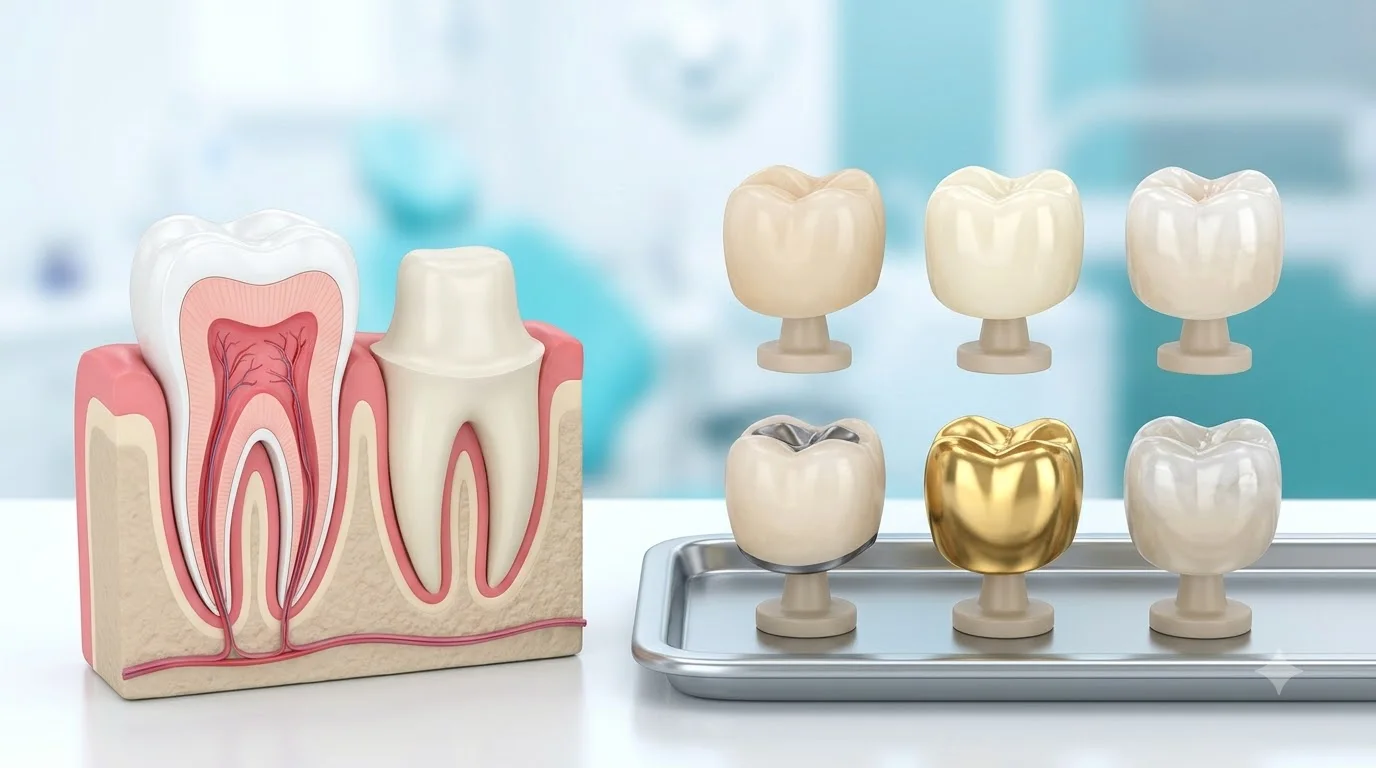
Quick answer: What Are the Different Types of Dental Crowns? The main types of dental crowns include porcelain-fused-to-metal (PFM), all-ceramic, zirconia, E-max, metal and stainless steel crowns. No single material is suitable for every tooth. The choice depends on the tooth's position, bite force, appearance and overall dental condition. |
|---|
Introduction
Choosing a dental crown involves more than selecting a material that looks natural or offers strength. Different crown materials have different properties, advantages and limitations. If your dentist has recommended a crown, understanding these differences can help you discuss your options. This guide explains six commonly used types of dental crowns, their uses and what to consider before choosing one.
Key Takeaways
|
|---|
The 6 Types of Dental Crowns
Dental crowns are made from different materials, each with its own properties, advantages and limitations. The table below compares six commonly used options based on their construction, durability and appearance. The most suitable choice depends on the tooth being restored and the patient's dental needs.
Crown Type | Best For | Durability | Appearance |
|---|---|---|---|
PFM | Front or back teeth | Strong metal base; porcelain layer may chip | Tooth-coloured and shade-matched |
All-porcelain / ceramic | Often used for visible teeth; suitability depends on the ceramic and bite | Varies by ceramic material; some types can chip or fracture | Tooth-coloured, with a natural appearance |
Zirconia | Front or back teeth, depending on the type and clinical needs | High strength and resistance to fracture | White; translucency varies by type |
E-max (lithium disilicate) | Often considered for single-tooth restorations, including front teeth | Strong glass-ceramic, but suitability depends on bite and restoration design | Tooth-coloured with good translucency |
Metal (gold and base metal alloys) | Often used for back molars | Highly durable and resistant to chipping | Metallic appearance |
Stainless steel | Children's primary molars; sometimes temporary adult crowns | Durable for its intended use | Silver-coloured metal |
The table draws on Cleveland Clinic, Leeds Teaching Hospitals NHS Trust, the NHS, Bupa and a 14-year e-max study. Cost is not in the table, because no reliable source ranks these 6 types by price. The cost section below explains what is known.
Porcelain-Fused-to-Metal (PFM) Crowns
A porcelain-fused-to-metal (PFM) crown has a metal core covered with a layer of tooth-coloured porcelain. This combination provides the strength of metal with an appearance that can be matched to natural teeth.
PFM crowns can be used on both front and back teeth, depending on the patient's dental needs. However, the porcelain layer may chip over time, exposing the metal underneath. These crowns may also contribute to wear on opposing teeth.
All-Porcelain and All-Ceramic Crowns
All-ceramic crowns are made without a metal base and are available in different ceramic materials. They offer a tooth-coloured appearance, making them an option when the restoration is visible while speaking or smiling. Some types may also be considered for patients with metal allergies.
Their strength and resistance to chipping depend on the ceramic material and crown design. Patients who grind or clench their teeth should discuss this with their dentist, as these habits can affect the choice of crown material.
Zirconia
Zirconia crowns are made from a strong, white ceramic material. They are commonly used for back teeth because they can withstand strong biting forces. However, some types may look less translucent than natural teeth.
E-Max Crowns (Lithium Disilicate)
An e-max crown is made of lithium disilicate, a strong, glass-like ceramic that is pressed into E-max crowns made from lithium disilicate, a glass-ceramic material known for its strength and natural appearance. They are often considered for visible teeth because of their translucency. However, they may be more prone to fractures under heavy biting forces than zirconia.
Metal (Gold and Base Metal Alloys)
Metal crowns are made from gold alloys or base metal alloys, such as nickel-chromium and cobalt-chromium. They are known for their durability and resistance to chipping or breaking. They may also require less removal of natural tooth structure than some other crown materials.
These crowns are often considered for back molars, where appearance may be less important than durability. Their main limitation is their metallic colour, which makes them less suitable for patients who prefer a tooth-coloured restoration.
Stainless Steel Crowns
Stainless steel crowns are mainly used to restore badly decayed or damaged primary teeth, also known as baby teeth. They are commonly placed on children's back teeth and can also be used as temporary restorations in adults.
A clinical trial involving children with a high risk of tooth decay described stainless steel crowns as a reliable option for treating decay affecting multiple surfaces of primary molars. However, their use in adults is generally limited to temporary protection rather than permanent restoration.
How to Choose the Right Dental Crown for Your Tooth
Choosing a dental crown involves considering the tooth's location, bite force, appearance and treatment budget. A dentist evaluates these factors before recommending a suitable material.
Tooth Position: Front teeth are more visible when speaking or smiling, so appearance may be an important consideration. Back teeth handle greater chewing forces, making strength an important factor.
Bite Force: People who clench or grind their teeth may put extra pressure on dental crowns. The dentist should consider these habits when selecting a material.
Budget: Crown costs vary depending on the material, dental clinic and treatment requirements. Ask for a cost estimate that explains what is included in the treatment.
Appearance: Metal crowns have a metallic finish, while ceramic options offer tooth-coloured restorations. Their appearance varies depending on the material used.
How Long Does A Crown Last?
Dental crowns generally last between 5 and 15 years with proper care, according to Cleveland Clinic. Leeds Teaching Hospitals NHS Trust estimates their lifespan at around 8 to 10 years. Some crowns may last longer, depending on oral hygiene and regular dental care.
Brushing twice daily, flossing regularly and attending dental check-ups can help maintain the crown and the natural tooth underneath.
How DivinHeal Helps Patients Explore Dental Crown Options
DivinHeal is a medical tourism coordination company that helps international patients explore dental treatment options in India. The clinical decision about crown material is made by the treating dentist.
The DivinHeal team helps patients understand available treatment options, coordinate with partner hospitals and specialists, and organise the treatment journey, including travel and follow-up arrangements.
Need help exploring dental crown options in India? Connect with the DivinHeal team and share your dental reports and X-rays to get treatment guidance from dentists at partner hospitals. |
|---|
Medical disclaimer This article is for general information only and is not medical advice. Please talk to a qualified doctor about your own health before you make any treatment decision. Costs, success rates and recovery times differ from person to person and from hospital to hospital. Divinheal is a medical tourism coordination company. It does not provide medical treatment itself. |
|---|
Cost Calculator
I know my treatment - show me cost from 3 hospitals
References
Cleveland Clinic – Dental Crowns: Types, Procedure and Care (Updated 14 April 2023).
https://my.clevelandclinic.org/health/treatments/10923-dental-crownsLeeds Teaching Hospitals NHS Trust – Crowns (Reviewed 4 June 2025).
https://www.leedsth.nhs.uk/patients/resources/crowns/American Dental Association – Materials for Indirect Restorations.
https://www.ada.org/resources/ada-library/oral-health-topics/materials-for-indirect-restorationsMargvelashvili-Malament M et al. – Over 14-year survival of pressed e.max lithium disilicate glass-ceramic complete and partial coverage restorations in patients with severe wear: A prospective clinical study. Journal of Prosthetic Dentistry, 2025.
https://pubmed.ncbi.nlm.nih.gov/39084921/
Plan My Journey
Tell us your condition and budget - our AI matches the right destination, hospital and doctor and visa pathway
Cost Calculator
I know my treatment - show me cost from 3 hospitals

Written by DivinHeal Editorial Contributor, Rahul Kumar, Medical Expert | Medically Reviewed by Dr Indu Priya, MBBS,MD Published on: 2026-11-18
Plan My Journey
Tell us your condition and budget - our AI matches the right destination, hospital and doctor and visa pathway
Cost Calculator
I know my treatment - show me cost from 3 hospitals
Booking With DIVINHEAL
Get a free consultation to understand your treatment options
From Consultation to Recovery,
Step by Step
Expert Specialist Matching
Connecting you with the world's top-rated medical experts.
Accredited Hospital Network
Access to JCI & NABH certified healthcare facilities.
Complete Travel Coordination
Hassle-free visa, stay, and local transport assistance.
24/7 Personal Care
Dedicated patient advisors supporting you at every step.
Journey Guidance
Full guidance from start to end of the patient treatment journey.
Expert Specialist Matching
Connecting you with the world's top-rated medical experts.
Everything you
need to know today
Browse through these common inquiries to better understand our patient-focused medical platform.
A dentist may recommend a crown when a tooth is badly decayed, cracked, broken or weakened, or after certain root canal treatments. It covers the tooth to help restore its shape, strength and function.
Local anaesthesia is usually used during tooth preparation to reduce pain. Some sensitivity or soreness may occur afterwards. Inform your dentist if you feel pain during the procedure or discomfort continues.
Yes. The crown itself cannot decay, but the natural tooth underneath or around its edges can. Good oral hygiene and regular dental check-ups help reduce the risk of decay.
Brush twice daily with fluoride toothpaste and clean between your teeth using floss or interdental brushes. Limit sugary foods and drinks, and attend regular dental check-ups to protect the crown and underlying tooth.
Still have more questions?
Book a call with our friendly team to learn how DivineHeal simplifies your healthcare journey.