What Causes Jowls? Understanding Why They Form

Written by DivinHeal Editorial Contributor, Rahul Kumar, Medical Expert | Medically Reviewed by Dr Indu Priya, MBBS,MD Published on: 2026-09-24
Plan My Journey
Tell us your condition and budget - our AI matches the right destination, hospital and doctor and visa pathway
What Causes Jowls? Understanding Why They
Form
What causes jowls is a question most people ask after noticing their jawline looks softer in a recent photo or video call. The short answer: five things change together with age, and only some of them are within your control. This guide covers the real anatomy, the main contributing factors, and the myths (like chewing gum) that get most of the blame in casual conversation.
What Are Jowls, Exactly?
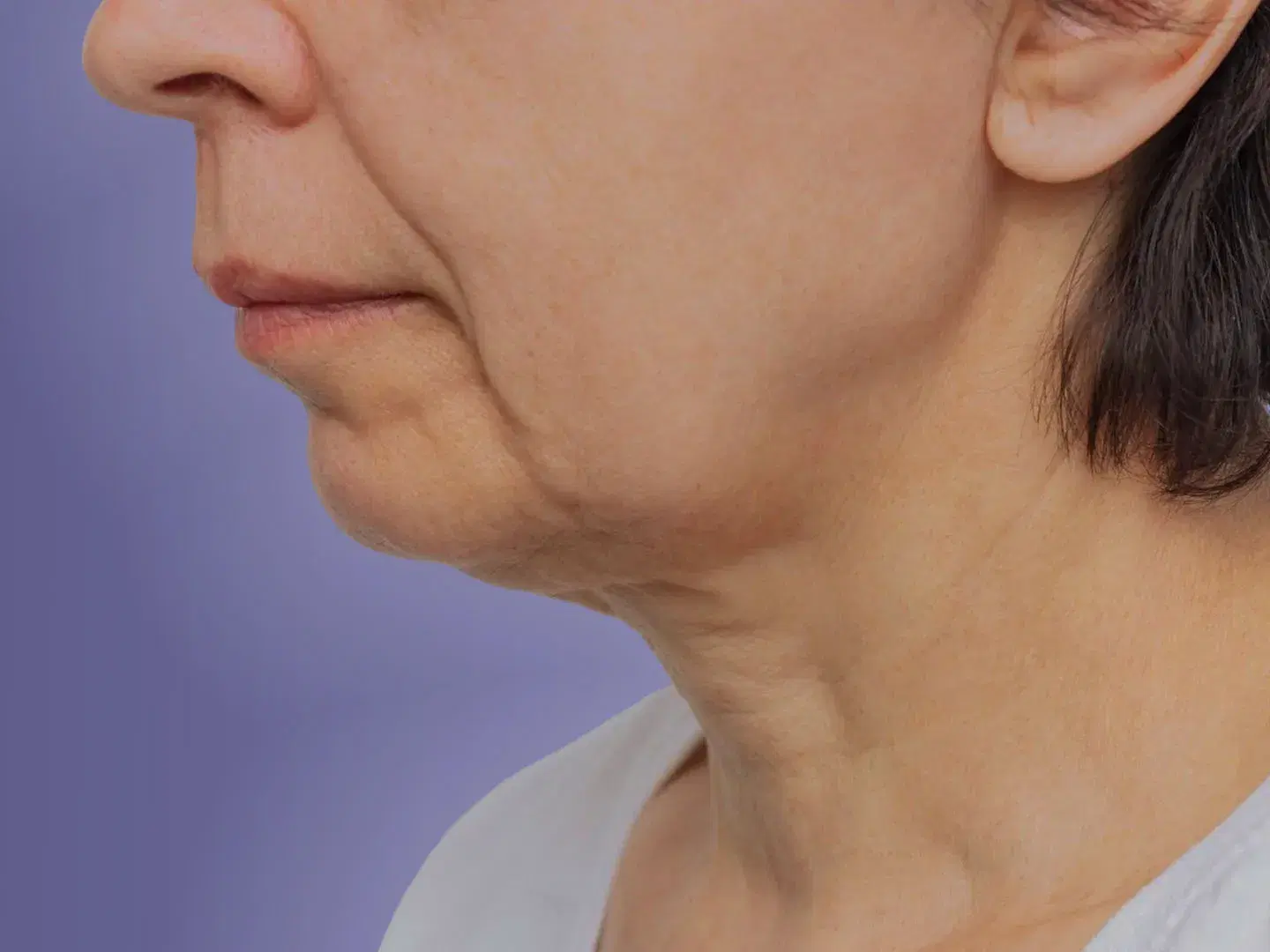
Jowls are the
sagging of skin and soft tissue along the lower jawline and cheek area. They
form as a soft pouch just in front of the jaw, on either side. Two things often
get confused with jowls:
• A double chin is fat under the chin
(submental fat). It is a volume issue, not a descent issue.
• Neck sagging or "turkey neck"
is loose skin and separated platysma muscle in the neck itself. It travels with jowls but is a separate
change.
Getting the distinction right matters because each has different causes and different treatments. A double chin responds to fat reduction. Jowls respond to lifting or repositioning. Neck laxity often needs both.
The Real Anatomy Behind Jowl Formation
Jowls are not
just "loose skin". They form because facial tissue is anchored in
place by fibrous ligaments. One of these, the mandibular ligament, sits
near the front of the jaw and does not move much through life. The tissue above
it does. As cheek fat and skin gradually slide downward with age, they collide
with that fixed anchor. They pile up just behind it, like leaves against a
fence. Peer-reviewed cadaver
studies confirm this is where the jowl builds up.
This mechanism
matters. It explains why the jowl appears at that specific spot rather than
anywhere along the jawline. It also explains why treatments that only tighten
surface skin can disappoint. If the underlying descent is not addressed, the
pile-up stays.
What Causes Jowls? (Main Contributing
Factors)
Five factors
contribute, and each has a different level of control. The table below shows
which you can influence and which you cannot.
|
Cause |
How it contributes |
Can it be slowed? |
|
Natural ageing (collagen/elastin loss) |
Skin loses about 1% of its collagen per year after 20, so
it does not spring back as it once did |
Partly (retinoids, sun protection) |
|
Genetics |
Inherited skin thickness, fat distribution, and jaw shape
all influence when and how heavily jowls form |
No |
|
Sun damage (photoaging) |
UV breaks down collagen and elastin. Up to 80-90% of
visible facial ageing is UV-driven, not chronological |
Yes (daily SPF 30+) |
|
Weight fluctuation |
Losing more than 20 pounds (about 9 kg) commonly reveals or
worsens jowling because skin does not fully retract to match new facial
volume |
Yes (stable weight) |
|
Bone density changes |
The jawbone slowly loses volume with age, removing the
underlying scaffold that supported the soft tissue above |
Partly (bone-health basics, hormone therapy in some cases) |
Natural Aging & Collagen/Elastin Loss
Collagen is the
structural protein that keeps skin firm. Elastin lets it snap back. Both
decline from around age 20, at roughly 1% per year on average. Women see a sharper drop after menopause.
By the late 30s and 40s, this decline becomes visible. Skin descent begins. The
jowl area is where it collects first, because of the mandibular ligament
anchor.
Genetics
If a parent
developed noticeable jowls in their 40s, you have a higher chance of the same
pattern. Inherited factors include skin thickness, how much and where facial
fat sits, jaw and cheekbone shape, and the strength of the retaining ligaments
themselves. Genetics does not decide the outcome. But it sets the starting
point.
Sun Damage (Photoaging)
This is the
single biggest modifiable factor. The American Academy of Dermatology
attributes up to 80-90% of visible facial ageing to UV exposure, not
chronological age. UV breaks
down collagen fibres faster than the body rebuilds them. Daily broad-spectrum
SPF 30 or higher matters most through the 20s and 30s. It does more to delay
jowl onset than any product you can buy later in life. If you already have
visible photoaging, sun protection still slows further damage.
Weight Fluctuation
Rapid or
repeated weight loss commonly reveals jowling. Skin has finite elastic
recovery. When facial fat leaves, the skin that housed it does not always
retract fully. This is why some
people notice jowls appearing after a significant diet, GLP-1 medication
course, or post-partum weight change. The jowls were partly there before, just
cushioned by facial volume.
Bone Density Changes
Often
overlooked. The jawbone itself resorbs (loses volume) with age, especially
after menopause and with tooth loss.
Because the overlying soft tissue depends on that bone for structure, the loss
shows up as sag rather than the bone thinning itself. Good general bone-health
basics (adequate calcium, vitamin D, resistance training, addressing tooth loss
with implants when appropriate) support the underlying scaffold.
Common Jowl Myths, Debunked
"Chewing
gum causes jowls." No, not in the anatomical sense. Jowls are skin and
soft tissue descent, not muscle bulking. Excessive gum chewing can bulk the
masseter muscle at the side of the jaw, which creates a squarer or wider jaw
shape. But that is a different change from jowling, and it takes far more
chewing than typical daily use.
Boston dermatologist Ranella Hirsch has publicly said you would need to chew a
lot of gum for any effect. Dental concerns from that much sugar would matter
first.
"Only
overweight people get jowls." No. Weight can worsen or reveal jowls,
but the underlying tissue descent affects everyone eventually. Lean people can
have visible jowls from photoaging, genetics, or bone loss.
"Jowls
mean you have not looked after your skin." No. Good skincare slows
visible ageing, but it does not stop the mandibular ligament anchor, the fat
compartment descent, or the bone resorption underneath. The best skincare in
the world will not prevent all jowling forever. Not having them later in life
is more often about genetics than about your routine.
"Sleep
position or facial expression causes jowls." No solid evidence.
Sleeping on your side may create temporary lines, not jowls. Habitual facial
expressions do not lift or drop soft tissue enough to cause structural descent.
Are Jowls Preventable or Treatable?
Some causes are
within your control (sun protection, stable weight). Others are not (genetics,
natural ageing). Prevention can genuinely delay onset. It cannot stop the
underlying anatomical shift over decades.
If you have
visible jowls and want to explore options, treatments exist across three tiers.
At-home skincare. Non-surgical in-office (fillers, HIFU, RF, threads). And
surgical (facelift). Which fits your case depends on how far the sagging has
gone. Our companion guide, How to Get Rid of Jowls: Best Treatment Options
Explained, matches treatment tiers to jowling stage.
Cost Calculator
I know my treatment - show me cost from 3 hospitals
How We Can Help
Understanding
your jowls, then deciding what (if anything) to do.
At DivinHeal,
understanding why jowls form is the right first step before considering any
treatment. Not every case of sagging needs the same fix. Some do not need
treatment at all if it does not bother you. Noticing changes to your jawline
and want to know whether it is simply ageing, genetics, or something worth
addressing? DivinHeal can connect you with a specialist who can assess your
specific case and explain your realistic options. No pressure either way.
How
DivinHeal helps:
• Clear, honest explanation of what is
happening with your skin. No exaggerated urgency to "fix"
something that is a normal part of ageing.
• A proper assessment if you do want to explore
treatment. Matched to your actual cause and severity. Not a generic
recommendation.
• A straightforward next step. Whether that
is simply monitoring changes over time or exploring treatment options when you
are ready.
Why choose DivinHeal: backed by qualified dermatology and cosmetic specialists who explain the "why" clearly, not just the "what to buy". Committed to letting you decide on your own timeline. Never pressuring treatment for something that is a normal sign of ageing.
Medical disclaimer
This article is for general information only and is not medical advice. Please talk to a qualified doctor about your own health before you make any treatment decision. Costs, success rates and recovery times differ from person to person and from hospital to hospital. DivinHeal is a medical tourism coordination company. It does not provide medical treatment itself.
Plan My Journey
Tell us your condition and budget - our AI matches the right destination, hospital and doctor and visa pathway
Cost Calculator
I know my treatment - show me cost from 3 hospitals

Written by DivinHeal Editorial Contributor, Rahul Kumar, Medical Expert | Medically Reviewed by Dr Indu Priya, MBBS,MD Published on: 2026-09-24
Plan My Journey
Tell us your condition and budget - our AI matches the right destination, hospital and doctor and visa pathway
Cost Calculator
I know my treatment - show me cost from 3 hospitals
Booking With DIVINHEAL
Get a free consultation to understand your treatment options
From Consultation to Recovery,
Step by Step
Expert Specialist Matching
Connecting you with the world's top-rated medical experts.
Accredited Hospital Network
Access to JCI & NABH certified healthcare facilities.
Complete Travel Coordination
Hassle-free visa, stay, and local transport assistance.
24/7 Personal Care
Dedicated patient advisors supporting you at every step.
Journey Guidance
Full guidance from start to end of the patient treatment journey.
Expert Specialist Matching
Connecting you with the world's top-rated medical experts.
Everything you
need to know today
Browse through these common inquiries to better understand our patient-focused medical platform.
No. Jowls are skin and tissue descent at the mandibular ligament anchor, not a result of muscle activity. Excessive gum chewing can bulk the masseter muscle at the side of the jaw, which may create a squarer jaw shape. But that is a different anatomical change. Typical daily gum use does not cause jowls at any age.
They usually start subtly in the late 30s to 40s4, but can appear earlier. Common causes of early jowls (in the 20s or early 30s) include genetics, significant weight loss, and early photoaging from sun exposure. If jowls appear early and neither weight nor sun exposure explains them, genetics is usually the answer.
Both, in a sense. Weight loss above roughly 20 pounds (9 kg) commonly reveals jowls that were partly there but cushioned by facial fat. It also worsens jowling because facial skin has finite ability to retract. This is why rapid weight loss (crash diets, GLP-1 medications, post-partum) often produces visible jowling that people did not notice before.
Partly. Inherited factors include skin thickness, facial fat distribution, jaw and cheekbone shape, and the strength of retaining ligaments. If a parent developed jowls in their 40s, you have a higher chance of a similar pattern. Genetics does not decide the outcome outright, but it sets the starting point that ageing, sun damage, and weight then build on.
Still have more questions?
Book a call with our friendly team to learn how DivineHeal simplifies your healthcare journey.