Left Atrial Appendage Closure (LAAC)
5K+ International Patients Treated
40+ Source Countries Served
500+ Accredited Partner Hospitals
98% Patient Satisfaction
80% Average Savings vs USA
10K+ Doctors
NABH, JCI Accredited Hospitals
Free Treatment Plan
Free Consultation with Doctor
5+ Destinations Covered
About Left Atrial Appendage Closure (LAAC)
Left Atrial Appendage Closure (LAAC) Treatment: Procedures, Cost & Recovery
Understanding Left Atrial Appendage Closure (LAAC)
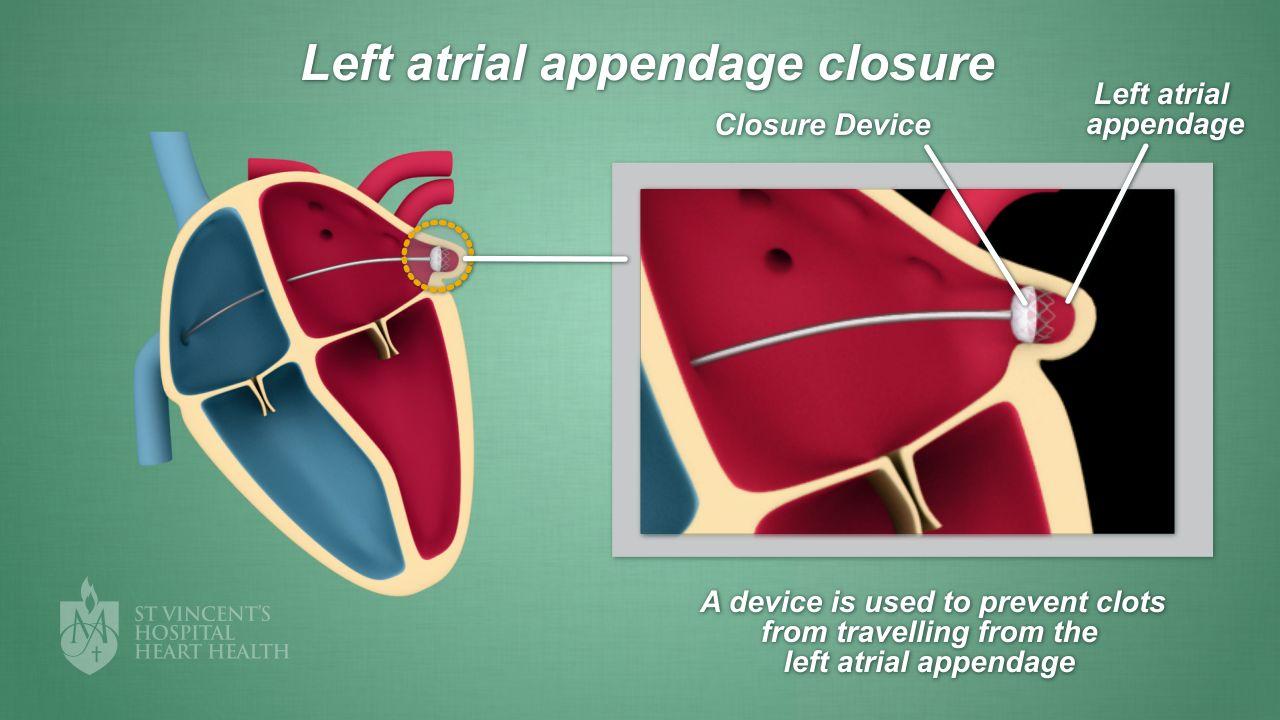
Left Atrial Appendage Closure (LAAC) is a cutting-edge, minimally invasive procedure designed to reduce stroke risk in patients with atrial fibrillation (AFib) who cannot safely take blood-thinning medications long-term. In AFib, blood can pool in the left atrial appendage (LAA), a small pouch in the heart, leading to clot formation and potential stroke. LAAC seals off this pouch. DivinHeal connects you to accredited cardiac hospitals in India, offering advanced LAAC treatment using state-of-the-art devices like Watchman™ and Amulet™, performed by expert interventional cardiologists.
Types of Left Atrial Appendage Closure (LAAC) Procedures
Transcatheter Device Implantation
The most common and preferred approach for LAAC treatment is transcatheter device implantation. This minimally invasive procedure involves guiding a catheter through a blood vessel, typically in the groin, to the heart. A specialized device, such as the Watchman™ or Amulet™ device, is then deployed to seal off the LAA, preventing blood clots from forming and escaping. This technique avoids open-heart surgery, leading to faster recovery and less discomfort. DivinHeal ensures access to hospitals equipped with the latest generation of these LAAC treatment devices.
Surgical Left Atrial Appendage Exclusion
In some cases, especially when a patient is already undergoing other open-heart surgery (e.g., coronary artery bypass grafting or valve repair), the surgeon may surgically remove or ligate (tie off) the left atrial appendage. This approach is more invasive and is not typically performed as a standalone LAAC treatment.
Cost Comparison: Why Patients Choose India for LAAC Treatment
India stands out as a global leader in providing high-quality, affordable Left Atrial Appendage Closure (LAAC) treatment without compromising on patient safety or medical outcomes. Patients from around the world choose India for significant cost savings, often up to 70% less than in Western countries, while receiving care from internationally trained interventional cardiologists using advanced technology. DivinHeal ensures transparent pricing for LAAC treatment cost and comprehensive care packages, making life-saving procedures accessible.
| Country | Average LAAC Treatment Cost (USD) |
|---|---|
| India | $12,000 - $22,000 |
| United States | $45,000 - $70,000 |
| United Kingdom | $35,000 - $60,000 |
| Singapore | $30,000 - $50,000 |
| UAE | $25,000 - $45,000 |
DivinHeal’s Comprehensive Support for Your LAAC Journey
DivinHeal offers unparalleled, AI-driven end-to-end care coordination for your Left Atrial Appendage Closure (LAAC) treatment. From the moment you connect with us, we facilitate everything: precise hospital and specialist matching based on your needs, transparent LAAC treatment cost breakdowns, assistance with medical visas and travel logistics, and dedicated local support. Our care coordinators ensure a seamless experience from your initial consultation through your recovery, providing peace of mind and allowing you to focus solely on your health. We prioritize your safety, comfort, and access to the best LAAC treatment.
Recovery and Life After Left Atrial Appendage Closure (LAAC) Treatment
Recovery after Left Atrial Appendage Closure (LAAC) treatment is generally quick due to its minimally invasive nature. Most patients have a hospital stay of 1-3 days. You may be prescribed a short course of blood thinners and antiplatelet medication, typically for 45 days to 6 months, to allow tissue to grow over the implanted device. Regular follow-up appointments, including transesophageal echocardiograms, are essential to confirm complete LAA closure. Patients can usually resume normal light activities within a week and full activities within 4-6 weeks. Long-term wellness involves maintaining a heart-healthy lifestyle, and with the reduced risk of stroke, many patients experience a significant improvement in their quality of life, free from the daily concerns of blood thinner therapy. DivinHeal provides resources for ongoing support and wellness tips.
Booking With DIVINHEAL
Get a free consultation to understand your treatment options
Cost Calculator
I know my treatment — show me cost from 3 hospitals
Plan My Journey
Tell us your condition and budget — our AI matches the right destination, hospital and doctor and visa pathway
Recommended Article

Best In Vitro Fertilization (IVF) Doctors in Hyderabad
Doctors for Nephrology: Find Kidney Care Specialists
Doctors in Chennai: Find Medical Specialists in India
Best Embryo Freezing Hospitals in Hyderabad: Care Guide
Hospitals for reproductive surgery: Compare options
Hospitals in Gurugram: Guide to Quality Facilities
IVF Treatment in Haryana | Cost, Hospitals & Doctors
TAVR (Transcatheter Aortic Valve Replacement) cost in New Delhi
Tonsillectomy & Adenoidectomy Success Rate in Mumbai
Facelift & Anti-Aging Procedures in Chennai for Ethiopia Patients | Cost, Hospitals
Booking With DIVINHEAL
Get a free consultation to understand your treatment options
Cost Calculator
I know my treatment — show me cost from 3 hospitals
Plan My Journey
Tell us your condition and budget — our AI matches the right destination, hospital and doctor and visa pathway
Recommended Article
Best In Vitro Fertilization (IVF) Doctors in Hyderabad
Doctors for Nephrology: Find Kidney Care Specialists
Doctors in Chennai: Find Medical Specialists in India
Best Embryo Freezing Hospitals in Hyderabad: Care Guide
Hospitals for reproductive surgery: Compare options
Hospitals in Gurugram: Guide to Quality Facilities
IVF Treatment in Haryana | Cost, Hospitals & Doctors
TAVR (Transcatheter Aortic Valve Replacement) cost in New Delhi
Tonsillectomy & Adenoidectomy Success Rate in Mumbai
Facelift & Anti-Aging Procedures in Chennai for Ethiopia Patients | Cost, Hospitals
Our Speciality and Treatments
Genetic Disorder Diagnosis & Counselling
Pediatric Laparoscopic Surgery
Pediatric Kidney Transplant
Pediatric Cardiac Surgery
Down Syndrome Comprehensive Care
Vaccination Program
Newborn Care Package
Pediatric Intensive Care (PICU)
Pediatric Urology (incl. Hypospadias)
Pediatric Orthopedics
Pediatric Gastroenterology
Pediatric Pulmonology
Pediatric Endocrinology
Pediatric Cardiology (non-surgical)
Pediatric Oncology
Neonatal Intensive Care (NICU)
pediatric neurosurgery






Meet Our Medical Specialists




Sr. Consultant - Urology & Kidney Transplant Program (Unit I)
Dr. Abhinandan Mukhopadhyay
MBBS, MD
India

Sr. Consultant - Urology & Kidney Transplant Program (Unit I)
Dr. Abhinandan Mukhopadhyay
MBBS, MD
India
Hospitals
NABH & JCI Accredited Hospitals in India,Turkey, Thailand & UAE.

Artemis Hospital
Sector 51, Gurugram, Haryana, India

Lokmanya Hospitals
Not Specified

White Lotus Hospital
766, SFS 3145, SFS Road, 7th Sector, HSR Layout, Bengaluru, Karnataka 560102, India

Institute of Brain and Spine (IBS Hospital)
Not Specified
How DivinHeal Helps
We simplify your medical journey by providing comprehensive support and access to world-class healthcare.
Expert Specialist Matching
Connecting you with the world's top-rated medical experts.
Accredited Hospital Network
Access to JCI & NABH certified healthcare facilities.
Complete Travel Coordination
Hassle-free visa, stay, and local transport assistance.
24/7 Personal Care
Dedicated patient advisors supporting you at every step.
Journey Guidance
Full guidance from start to end of the patient treatment journey.
Expert Specialist Matching
Connecting you with the world's top-rated medical experts.
Everything you
need to know today
Browse through these common inquiries to better understand our patient-focused medical platform.
Yes, we work with a variety of insurance providers. Contact our team to verify your coverage.
Yes, we provide secure online consultations with experienced specialists.
Our care coordinators help match you with the most suitable specialist.
Absolutely. Your medical information is protected according to healthcare privacy standards.
Look at six things: accreditation (JCI or NABH), specialty depth, doctor credentials and experience, procedure-specific success rates, international patient support, and technology. DivinHeal's AI-driven matching evaluates every hospital in our accredited partner network on these dimensions and shortlists the best-fit options for your condition, budget, and country.
JCI (Joint Commission International) is the US-based global gold standard for hospital quality, recognised worldwide. NABH is India's national accreditation — accredited by ISQua, the same body that accredits JCI. Both signal independently verified safety and quality. Most of India's leading hospitals hold both.
Yes. All three welcome international patients through structured medical visa programs. India is the most established, treating patients from Africa, the Middle East, and South Asia at 60–80% lower cost. Thailand leads in cosmetic and dental care. The UAE is emerging in oncology and reproductive medicine.
Most patients save 50–80% on treatment costs. Heart bypass costs US $7,000–9,000 in India compared to $70,000–150,000 in the US. IVF costs $3,000–4,500 compared to $12,000–20,000 in the UK. Even after flights, visa, and accommodation, total savings remain 60–70%.
DivinHeal manages your entire non-medical journey: visa invitation letters, medical visa guidance, doctor appointments, teleconsultations, airport pickup, hospital-vetted accommodation for you and your attendant, language interpreters, local transport, cuisine preferences, and post-treatment follow-up — one dedicated coordinator from first enquiry to final follow-up.
You need a valid passport (6+ months validity), a medical visa (M-Visa for India — DivinHeal provides the hospital invitation letter), return flight tickets, recent medical reports and a doctor's referral, current prescription list, and proof of financial means. Any accompanying attendant needs their own passport and MX-Visa.
Still have more questions?
Book a call with our friendly team to learn how DivineHeal simplifies your healthcare journey.