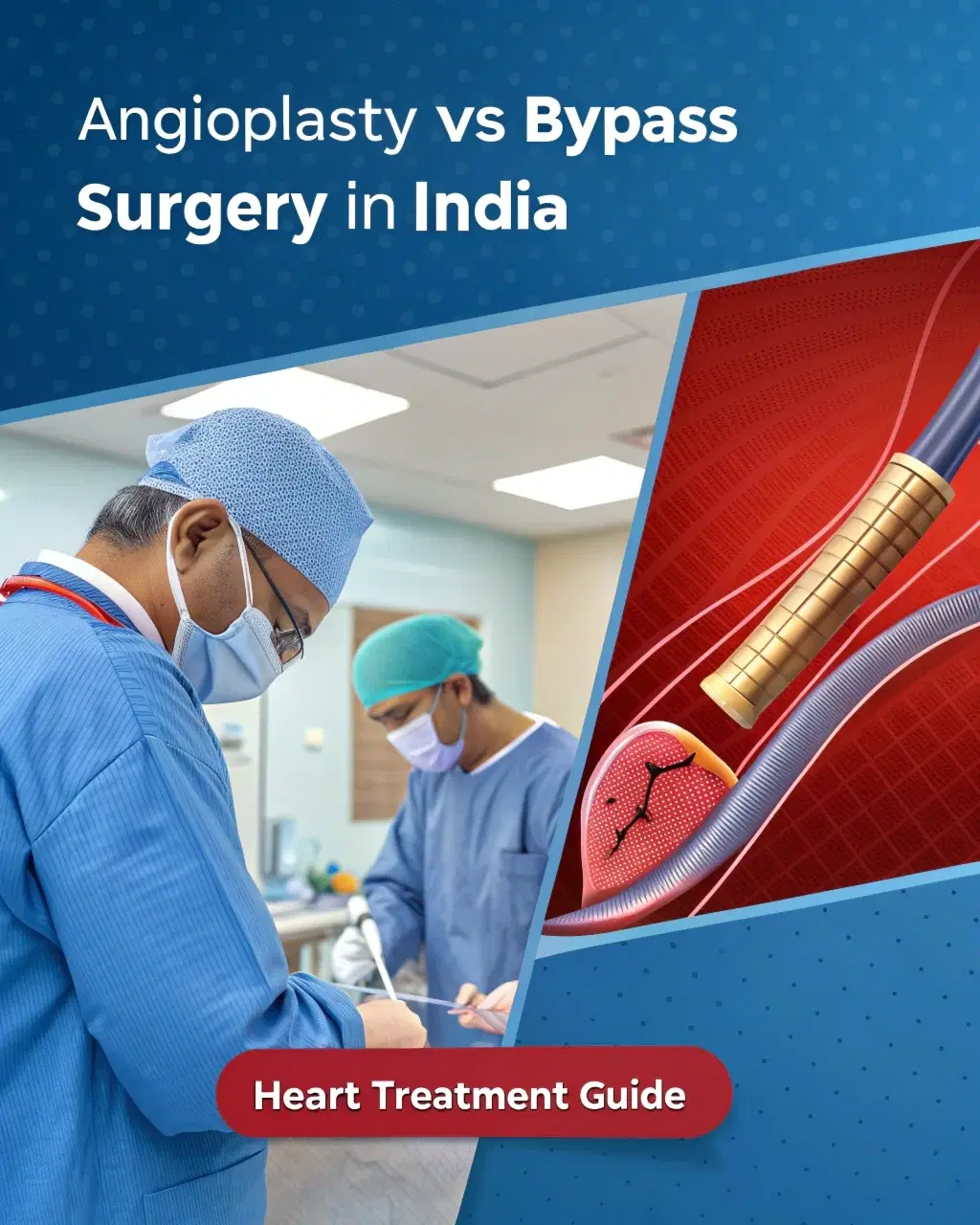
Angioplasty vs. Bypass Surgery Cost in India: A Complete Guide for International Patients (2025)
If you're comparing angioplasty vs bypass surgery cost in India, the UAE or the UK, you're likely trying to balance the right treatment with the right budget. Cardiac procedures can be expensive abroad—often costing ₹10–₹20 lakh in the UK or over AED 50,000 in the UAE—but in India, angioplasty starts from just ₹1.5 lakh, offering savings of up to 60–80% at internationally accredited hospitals.
However, cost is only one part of the decision. Choosing between angioplasty (a minimally invasive procedure) and bypass surgery (a more complex operation) depends on factors like the severity of blockage, overall health and long-term outcomes.
In this guide, you'll learn about cost comparisons, key differences, recovery time, risks and success rates—so you can make a confident and informed decision about your heart treatment.
What Is Angioplasty? What Is Bypass Surgery? (Quick Answers)

When doctors identify blocked coronary arteries, two primary procedures are typically considered: angioplasty (also called PCI or percutaneous coronary intervention) and heart bypass surgery (CABG Coronary Artery Bypass Graft). Both restore blood flow to the heart, but through very different approaches.
What is Coronary Angioplasty?
Coronary angioplasty is a minimally invasive procedure to open narrowed or blocked coronary arteries. A thin tube (catheter) with a small balloon at its tip is inserted through a blood vessel usually at the wrist or groin and guided to the blockage. The balloon inflates to compress the plaque and widen the artery. A stent (a tiny mesh tube) is often placed to keep the artery open. For acute heart attacks, emergency angioplasty is one of the fastest and most effective interventions available.
What is Heart Bypass Surgery (CABG)?
Heart bypass surgery is a more involved open-heart procedure. A cardiac surgeon creates new pathways using healthy blood vessels taken from your leg, arm or chest that route blood around blocked arteries. The procedure typically requires general anaesthesia and a hospital stay of 5–7 days. CABG is generally preferred when multiple arteries are severely blocked or when angioplasty is not technically feasible.
Key Differences: Procedure, Invasiveness and Recovery Time
The core distinction lies in approach and recovery. Angioplasty is less invasive, typically completed in 1–2 hours and most patients go home within 1–3 days. CABG is major surgery requiring a chest incision, a longer hospital stay (5–7 days) and a full recovery of 6–12 weeks. Both procedures aim to improve blood flow and quality of life.
Note: Most JCI-accredited hospitals in India include a mandatory 24-hour post-angioplasty observation in a cardiac ICU as standard this is included in the package, not charged separately.
Feature | Angioplasty (PCI) | Bypass Surgery (CABG) |
Invasiveness | Minimally invasive | Major open-heart surgery |
Hospital Stay | 1–3 days | 5–7 days |
Recovery | 1–2 weeks | 6–12 weeks |
Suitability | Single or few blockages, less complex | Multiple/complex blockages, severe disease |
Repeat Procedures | Higher chance of re-narrowing over time | Generally more durable for extensive disease |
Cost in India | ₹1,50,000–₹4,50,000 ($1,800–$5,400) | ₹2,50,000–₹6,00,000 ($3,000–$7,200) |
Sources: Apollo Hospitals, Fortis Healthcare, Max Healthcare
When is Angioplasty Recommended?
Angioplasty is generally the preferred option for single-vessel disease or less complex blockages. It is often chosen for patients who are not suitable for major surgery due to other health conditions and it is the standard emergency treatment for heart attacks (primary PCI). Your cardiologist will assess the location and severity of your blockages to determine suitability.
When is Bypass Surgery Recommended?
Bypass surgery is generally recommended for patients with multi-vessel disease significant blockages in three or more coronary arteries. It is also preferred for patients with diabetes who have extensive coronary artery disease (per ICMR guidelines), for complex blockages that angioplasty cannot effectively address or when a previous angioplasty has failed. Specialists at centres like Fortis Escorts Heart Institute or Apollo Hospitals will assess each case individually.
Is Angioplasty Safe? Risks, Benefits and What to Expect
Before looking at costs, international patients understandably want to know about safety. The short answer: both procedures are well-established and have strong safety profiles in accredited Indian hospitals.
Angioplasty: Benefits, Risks and Complications
Angioplasty offers a minimally invasive approach with a shorter hospital stay (1–3 days) and a quicker return to normal activities. According to the Indian Heart Journal (2023), the procedural success rate for PCI in major Indian hospitals exceeds 96%, comparable to global benchmarks published in the New England Journal of Medicine.
Risks include restenosis (re-narrowing of the treated artery, which occurs in roughly 5–10% of cases with modern drug-eluting stents), blood clot formation, and, rarely, artery damage. Angioplasty is generally less suitable for widespread or highly complex blockages across multiple vessels.
Bypass Surgery: Benefits, Risks and Complications
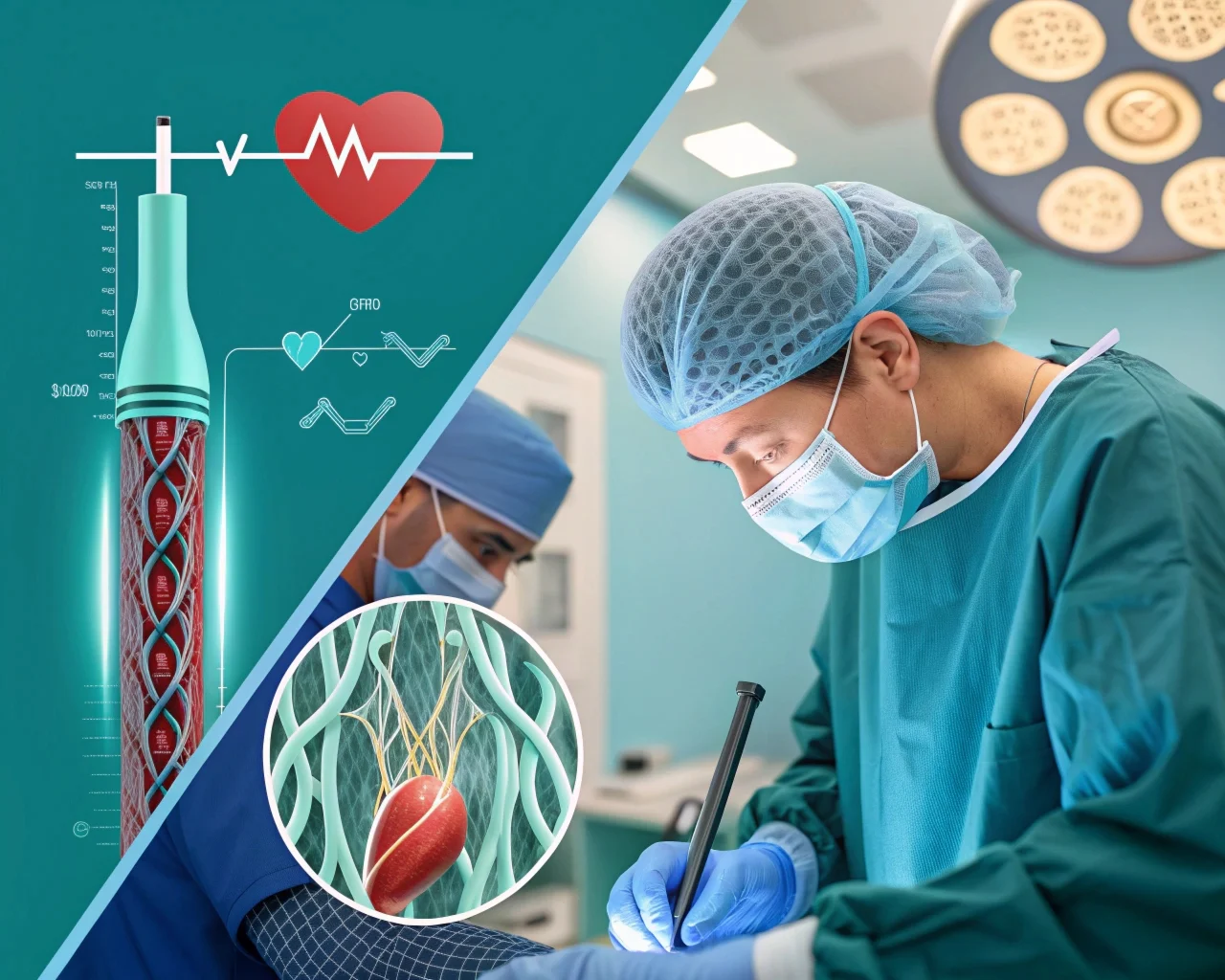
Bypass surgery provides a durable solution, especially for extensive coronary artery disease. It allows for complete revascularisation (restoring blood flow) of multiple blockages in a single procedure. Five-year graft patency rates meaning the bypass channels remain open exceed 85% in JCI-certified Indian centres.
Risks include infection, bleeding, stroke and the complications associated with any major surgery. Recovery is significantly longer (6–12 weeks) and the procedure requires general anaesthesia and time on a heart-lung machine. Hospitals like Fortis Hospital and Apollo Hospitals follow strict JCI-certified protocols for complex cardiac procedures.
Long-Term Effectiveness and Life Expectancy
Angioplasty excels for single or less complex blockages. Bypass surgery tends to provide more lasting relief for extensive multi-vessel disease, reducing the need for repeat procedures. According to research published in the Journal of the American College of Cardiology, patients who undergo CABG for multi-vessel disease show lower rates of major adverse cardiac events at 10 years compared to those treated with stenting alone. Both procedures significantly improve quality of life and life expectancy when combined with consistent post-procedure lifestyle changes.
Is Angioplasty Better Than Bypass Surgery?
There is no universal answer the right procedure depends entirely on your specific condition. Key factors include the number of blocked vessels, their location, your overall health and whether you have diabetes. Your cardiologist will weigh these carefully. For patients with single-vessel disease, angioplasty is often faster, less risky and equally effective. For three-vessel disease or left main artery blockage, CABG typically offers better long-term outcomes.
Angioplasty vs. Bypass Surgery Cost in India, UAE and UK (2025)
Here is a clear comparison of what you can expect to pay across India, the UAE and the UK for both procedures.
Procedure | India (₹ / USD) | UAE (AED / USD) | UK Private (£ / USD) |
Angioplasty (1 stent) | ₹1,50,000–₹4,50,000 $1,800–$5,400 | AED 40,000–75,000 $11,000–$20,000 | £10,000–£15,000 $12,000–$18,000 |
Heart Bypass Surgery (CABG) | ₹2,50,000–₹6,00,000 $3,000–$7,200 | AED 100,000–200,000 $27,000–$54,000 | £25,000–£40,000 $30,000–$48,000 |
Sources: Apollo Hospitals, Fortis Healthcare, Cleveland Clinic Abu Dhabi, King's College Hospital London
Average Angioplasty Cost in India (with stents)
India offers a highly cost-effective option for angioplasty. Patients typically have a choice of bare-metal stents (BMS) or drug-eluting stents (DES). DES are generally recommended government price capping has fixed DES at ₹45,000 per stent, significantly lower than in the UAE or UK. Quality of care in NABH-accredited facilities remains high despite the lower pricing.
Average Angioplasty Cost in the UAE
Costs in the UAE reflect higher operational expenses. Angioplasty with a single stent typically costs between AED 40,000 and AED 75,000. Many patients from the GCC region who seek treatment here consider travelling to India for the same procedure at roughly 80% less.
Average Angioplasty Cost in the UK
Private angioplasty in the UK is among the most expensive globally. Most citizens rely on the NHS, but those seeking immediate care or specific private facilities face costs of £10,000–£15,000. Many UK patients consult our team specifically because of how prohibitive private cardiac costs have become.
Average Heart Bypass Surgery Cost in India
Heart bypass surgery in India is a fraction of the cost in Western nations typically ₹2,50,000 to ₹6,00,000 depending on the hospital, city and number of grafts. India attracts a substantial number of international patients due to this affordability and the expertise of its JCI-certified cardiac surgeons.
Angioplasty Cost by City in India
The city where you receive treatment affects the final cost. Delhi and Mumbai tend to be on the higher end due to operating costs, while cities like Chennai and Ahmedabad offer excellent care at a slightly lower price point.
City | Angioplasty (1 stent) | Bypass Surgery (CABG) |
Delhi / NCR | ₹2,00,000–₹4,50,000 | ₹3,50,000–₹6,00,000 |
Mumbai | ₹2,00,000–₹4,50,000 | ₹3,00,000–₹6,00,000 |
Chennai | ₹1,50,000–₹3,50,000 | ₹2,50,000–₹5,00,000 |
Bangalore | ₹1,75,000–₹4,00,000 | ₹3,00,000–₹5,50,000 |
Pune | ₹1,50,000–₹3,50,000 | ₹2,50,000–₹5,00,000 |
Ahmedabad | ₹1,25,000–₹3,00,000 | ₹2,00,000–₹4,50,000 |
Source: Data compiled from Apollo Hospitals, Fortis Healthcare, Max Healthcare and National Health Authority estimates.
Detailed Cost Breakdown: What's Included and Excluded
The stated procedure cost in India typically includes the surgeon's fee, anaesthesiologist's fee, hospital stay (1–3 days for angioplasty, 5–7 days for bypass), ICU monitoring and initial medications. Most JCI-certified hospitals also include at least two post-operative follow-up consultations in the package.
Costs typically excluded: pre-travel consultations, international flights, accommodation for companions, extended physiotherapy and outpatient cardiac rehabilitation programmes. Always request an itemised quote from your hospital.
What Affects the Final Cost? Key Variables Explained
Type and Number of Stents (for Angioplasty)
Drug-eluting stents (DES) are more advanced and costlier than bare-metal stents (BMS) but they have a significantly lower restenosis rate (less than 5% versus 10–20% for BMS). Government price capping in India has fixed DES at ₹45,000 each. If you require multiple stents, the cost increases accordingly. Most initial angioplasty quotes assume one stent; clarify this upfront.
Hospital Selection and Facilities
JCI-certified or NABH-accredited facilities with modern cath labs and dedicated cardiac ICUs typically charge higher fees but offer superior infrastructure and safety protocols. Smaller private facilities can deliver quality care at a lower price point. Our team helps patients find the right balance between cost and quality.
Surgeon's Expertise and Experience
An experienced interventional cardiologist or cardiac surgeon commands higher professional fees. Specialists with proven track records in complex angioplasty or intricate bypass surgeries are often associated with better outcomes. We provide detailed surgeon profiles including training institutions, number of procedures performed and published outcomes for every recommended physician.
Procedure Complexity and Duration
A single-vessel angioplasty is less expensive than a multi-vessel bypass surgery or a complex angioplasty requiring rotational atherectomy (a technique for very calcified arteries). Cases requiring advanced techniques or extended operating room time incur higher charges.
Pre-operative Diagnostics and Post-operative Care
The total cost includes pre-operative evaluations, coronary angiogram, stress tests, blood work, echocardiogram and post-procedure medications. Some hospitals offer bundled packages; others quote procedure-only costs. Always ask specifically what is included. We advocate for transparent, bundled pricing to prevent surprises.
Geographic Location within India
Major metropolitan cities like Mumbai and Delhi generally have higher healthcare costs than cities like Pune, Chennai or Ahmedabad. For comparable quality of care, a Chennai hospital can save you 15–25% compared to a Delhi facility.
Why International Patients Choose India for Heart Surgery
World-Class Medical Infrastructure and Technology
India's leading hospitals are equipped with advanced cath labs, hybrid operating theatres and high-resolution diagnostic tools designed for complex cardiac care. This technology enables faster, more accurate diagnoses and a wider range of treatment options.
Highly Skilled and Internationally Certified Cardiac Surgeons
Indian cardiac surgeons are often trained at global institutions including those in the United States, United Kingdom and Germany and bring that expertise back to Indian hospitals. Many hold fellowships from recognised international cardiac societies. Our patients regularly comment on their surgeons' exceptional clinical skill and patient communication.
Unmatched Cost Savings Without Compromising Quality
Patients typically save 60–80% compared to equivalent procedures in the UK or UAE. An angioplasty that costs £12,000 privately in the UK can be performed at a JCI-accredited hospital in India for under ₹4,00,000 (approximately £3,800). The financial advantage allows many more patients to access life-saving treatments without the burden of debt.
High Success Rates and Positive Patient Outcomes
According to data published in the Indian Heart Journal (2023), the procedural success rate for PCI (angioplasty) in major Indian hospitals exceeds 96%, comparable to global benchmarks. For CABG, five-year graft patency rates in JCI-certified Indian centres consistently exceed 85%. India's combination of experienced specialists, modern technology and established clinical protocols drives these outcomes.
Internationally Accredited Hospitals and Standards
JCI (Joint Commission International) and NABH (National Accreditation Board for Hospitals and Healthcare Providers) accreditations are common across India's leading cardiac centres. These accreditations require hospitals to meet rigorous international benchmarks for patient safety, infection control and clinical outcomes giving international patients confidence in the quality of care they will receive.
Addressing Your Concerns: Safety, Quality and Communication Abroad
Unwavering Standards of Patient Safety
JCI-certified and NABH-accredited hospitals consistently meet international benchmarks for patient care, infection control and operational efficiency. Most major cardiac centres in India have dedicated international patient departments that handle appointment scheduling, airport transfers and post-discharge follow-ups.
James, 61, from Nairobi, underwent a triple bypass at Medanta The Medicity in Gurugram. He recalls being assigned a dedicated coordinator from arrival to discharge: 'Every step was explained, every question answered. The standard of care was better than I expected anywhere.'
Bridging Communication Gaps
India's leading hospitals provide multilingual staff, including interpreters for Arabic, Hindi, Swahili, Bengali and English. Your consultations will not feel rushed doctors take time to explain diagnoses and treatment options clearly. Our team also provides pre-travel briefings in your preferred language.
Understanding Patient Rights in Indian Hospitals
You always have the right to informed consent in India doctors must explain your condition, all treatment options, potential risks and expected outcomes before any procedure. Your medical information is confidential and transparent billing practices are standard in accredited facilities. We reinforce these rights throughout the process.
Recovery After Angioplasty vs. Bypass Surgery: A Realistic Timeline
Immediate Post-Operative Care and Hospital Stay
After angioplasty, patients typically spend 1–3 nights in hospital, including ICU monitoring for the first 24 hours. After bypass surgery, the hospital stay is 5–7 days, including initial time in the ICU. NABH-accredited hospitals in India provide excellent nursing care, patient education and dietary guidance during this period.
Recovery Timeframes: Angioplasty vs. Bypass Surgery
Angioplasty patients can typically resume light activities within one week and return to office work or normal routines within 2–4 weeks. Bypass surgery patients require a more gradual recovery 6–12 weeks before resuming most daily activities. Strenuous exercise and long-haul travel should be avoided for the first 4–6 weeks after angioplasty and 6–8 weeks after CABG.
Cardiac Rehabilitation and Lifestyle Changes
Cardiac rehabilitation after both procedures is highly recommended. It provides supervised exercise, nutrition education, stress management and emotional support. Leading Indian hospitals including Apollo Hospitals offer outpatient cardiac rehabilitation programmes costing approximately ₹10,000–₹30,000 ($120–$360) for a multi-week course. Remote rehabilitation guidance is also available through our partner network after you return home.
Returning to a Normal Life: Expectations and Possibilities
For angioplasty patients, most return to hobbies, travel and work within a month. Even after bypass surgery, the vast majority of patients successfully resume their previous quality of life often reporting greater energy and activity levels than before the procedure, thanks to restored blood flow. Consistent medication adherence and lifestyle changes are the most important factors for long-term success.
Strategies for Preventing Future Heart Problems
Prevention after either procedure involves: consistent use of prescribed medications (antiplatelet drugs, statins, beta-blockers), managing blood pressure and cholesterol, avoiding smoking, maintaining a heart-healthy diet and regular follow-up with your cardiologist. We arrange virtual follow-up appointments with your operating surgeon at 30 days, 90 days and 6 months post-discharge.
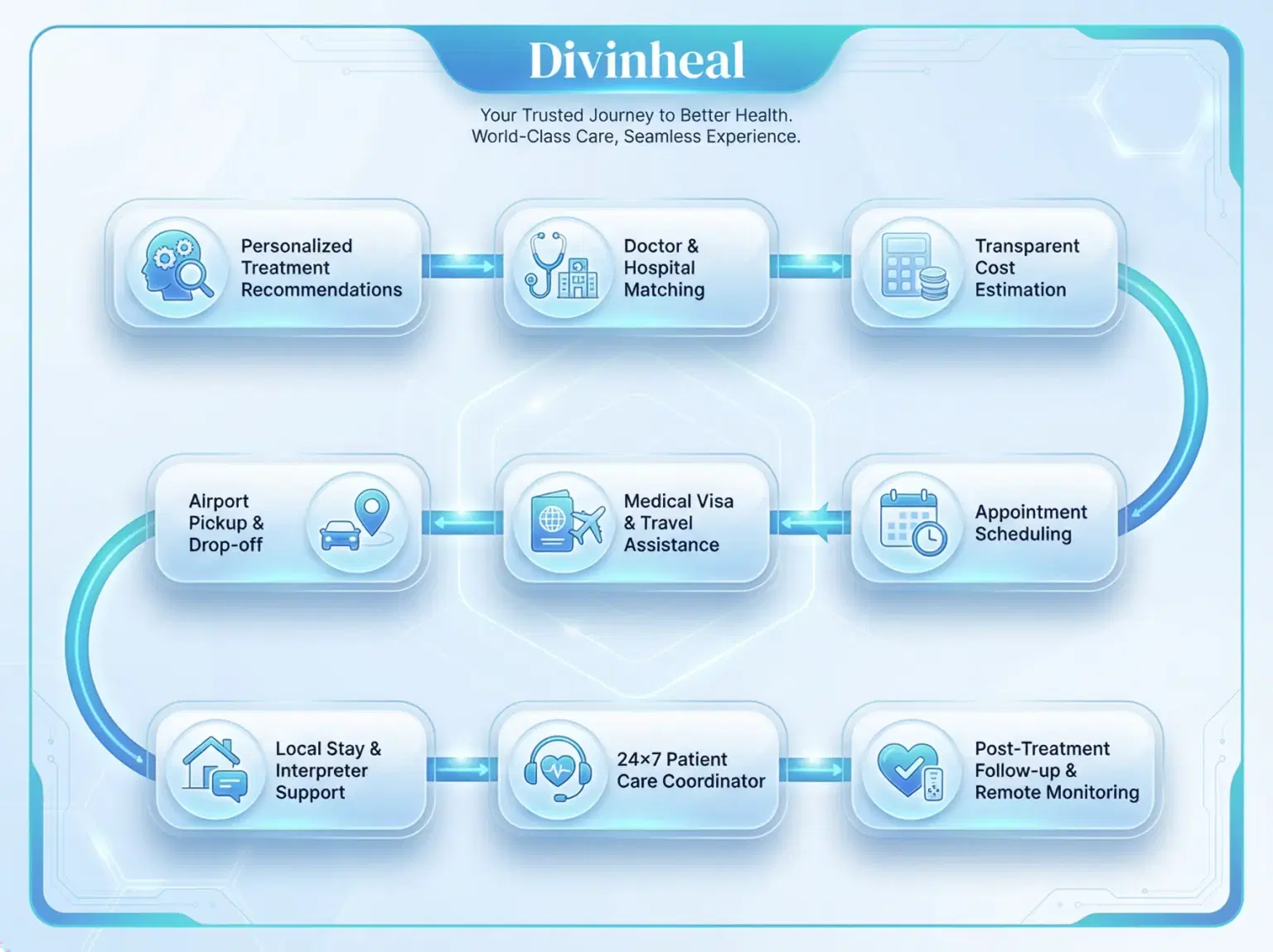
How Divinheal Supports Your Cardiac Journey to India
Travelling abroad for heart surgery is a significant decision. Divinheal exists to make that decision and every step that follows as smooth as possible.
Full Support: From Initial Consultation to Post-Recovery
Our process begins with a confidential remote consultation and expert review of your medical records. Patients securely share diagnostic reports, allowing our specialists to assess their condition and present a tailored treatment plan including a shortlist of recommended hospitals and surgeons with outcome data. Pre-travel cardiac consultations via video are arranged before you book your flights.
Visa, Travel and Accommodation Assistance
Navigating a medical visa for India can seem complex. We provide clear guidance on required documentation, compile all paperwork including the official hospital invitation letter and liaise with the embassy on your behalf. Processing typically takes 7–10 working days for applicants from the UAE or UK. Comfortable accommodation near your treatment hospital ranging from serviced apartments to premium hotels is arranged based on your preference and budget.
Dedicated Language Support and Local Concierge Services
Our dedicated interpreters and local concierge teams eliminate language barriers across every appointment. From the first consultation through discharge, you and your family will be accompanied by someone who speaks your language and understands your concerns.
Patient Stories: Real Savings, Real Outcomes
Mohammed Al-Rashidi, 54, from Dubai, was advised a double bypass by his cardiologist in the UAE. The quoted cost was AED 180,000. Through Divinheal, he travelled to Fortis Escorts Heart Institute in Delhi, underwent a successful CABG and returned home in 12 days. Total cost including travel and accommodation: approximately AED 38,000. He resumed his work as a school principal six weeks later.
Amara Osei, 47, from Accra, had been told her angioplasty cost in Ghana would be equivalent to $14,000 if she could access the procedure at all. We arranged treatment at a NABH-accredited hospital in Chennai for $2,100 including her stent. She flew home three days after the procedure.
Your Trusted Partner for International Medical Care
We serve as your advocate at every stage from hospital selection and surgeon matching to comfortable post-operative care and remote follow-up. This allows you to focus entirely on recovery, free from logistical planning and uncertainty.
Get a Free Cost Estimate for Your Heart Procedure
You have already taken the most important step: understanding your options. India offers high-quality angioplasty and bypass surgery at 60–80% less than what you would pay in the UAE or UK in JCI-accredited hospitals, with internationally trained surgeons and with comprehensive support from arrival to recovery.
Share your medical reports with Divinheal today and receive a personalised cost estimate, a shortlist of recommended hospitals and a free remote consultation with a specialist at no obligation.
Upload your angiogram, echo report or cardiologist's recommendation
Receive a personalised cost estimate within 48 hours
Book a free video consultation with a Divinheal cardiac specialist
Your heart health cannot wait. Reach out to us and let us help you take the next step with confidence.
Related Links
Booking With DIVINHEAL
Get a free consultation to understand your treatment options
Related Links
DivinHeal's Journey
Latest Articles



Hospitals Offering this treatment
India offers premium medical procedures at affordable prices. Discover our most popular treatments, delivered by the country's finest doctors.

Hisar Intercontinental Hospital
Saray Mah. Siteyolu Cad. No:7, Umraniye, 34768, Istanbul, Turkey
Hisar Intercontinental Hospital

Medical Park Group, Istanbul
Fahrettin Kerim Gokay Cad. Tıbbiye Cd., Kadikoy, Istanbul, Turkey
Medical Park Group, Istanbul

Emsey Hospital, Pendik, Istanbul
Çamlık, Selçuklu Cd. No:22, 34912 Pendik/İstanbul, Türkiye
Emsey Hospital, Pendik, Istanbul
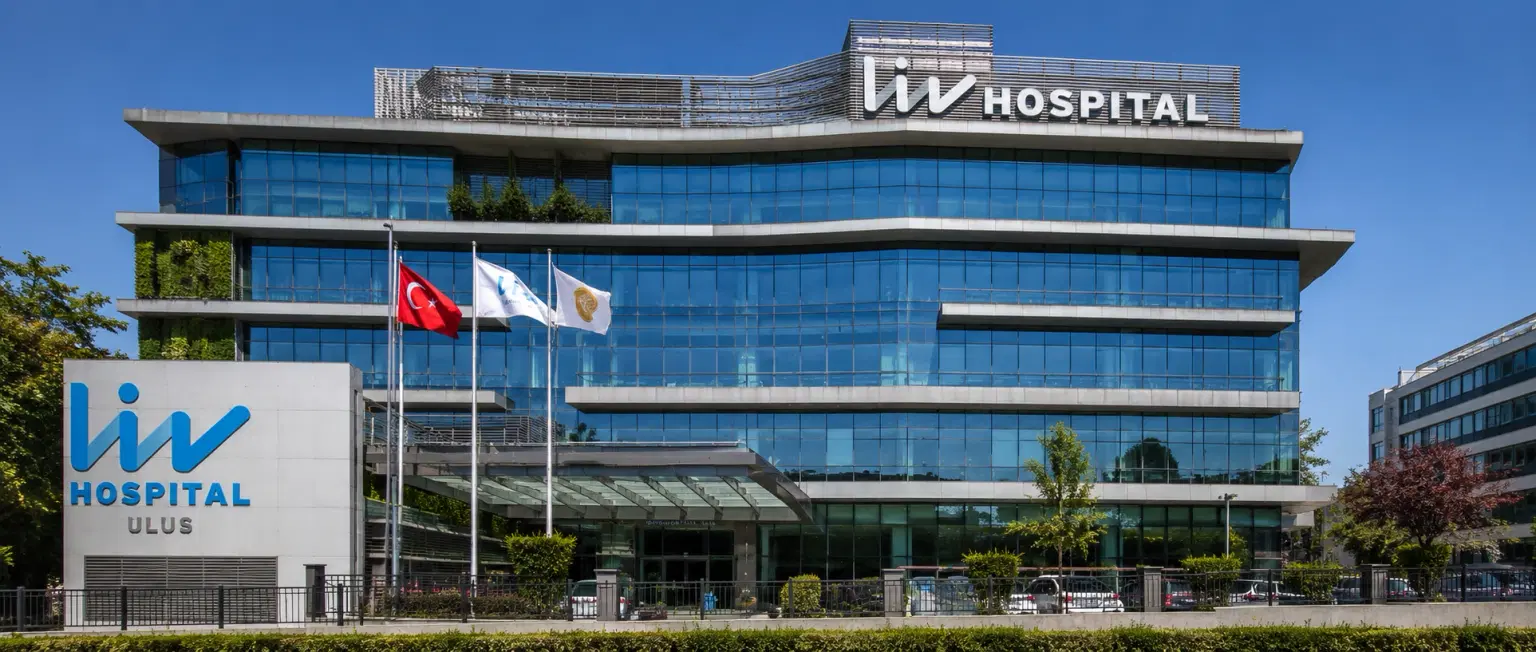

American Hospital, Istanbul
Guzelbahce Sk. No:20, 34365, Nisantasi, Istanbul, Turkey
American Hospital, Istanbul

Memorial Hospitals Group
Burhaniye, Nagehan Sokağı No:4/A D:1, 34676 Üsküdar/İstanbul, Türkiye
Memorial Hospitals Group

Florence Nightingale Hospital Istanbul
Abide-i Hürriyet Cd No:166, 34381 Sisli, Istanbul
Florence Nightingale Hospital Istanbul
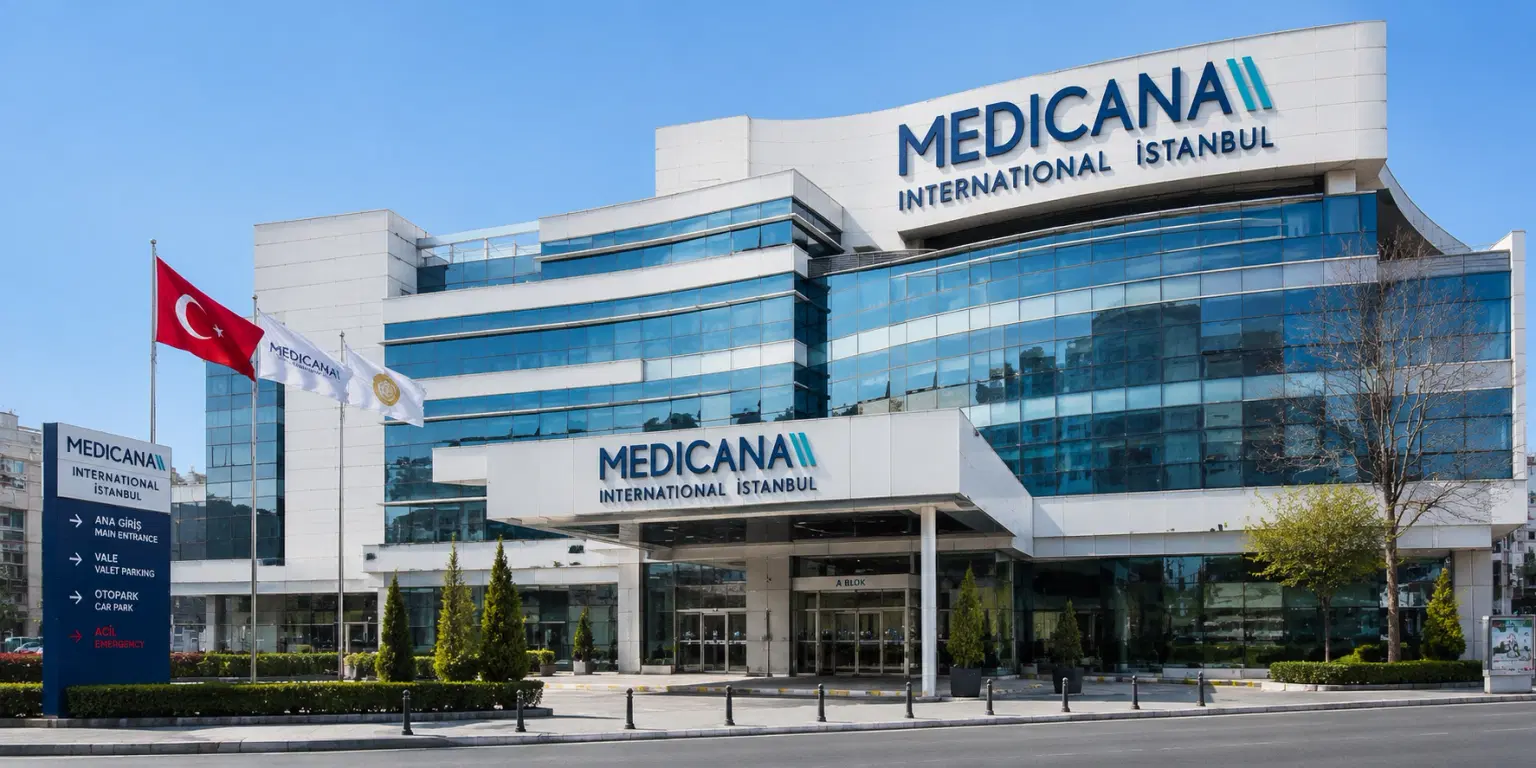
Medicana International Hospital, Istanbul
Halit Ziya Turkkani Mah. Medikal Park Cd. No:1, Beylikdüzü, İstanbul
Medicana International Hospital, Istanbul

Okan University Hospital Istanbul
Icmeler Mah. Aydınlıyolu Cd. No:2, 34947 Icmeler-Tuzla, Istanbul
Okan University Hospital Istanbul
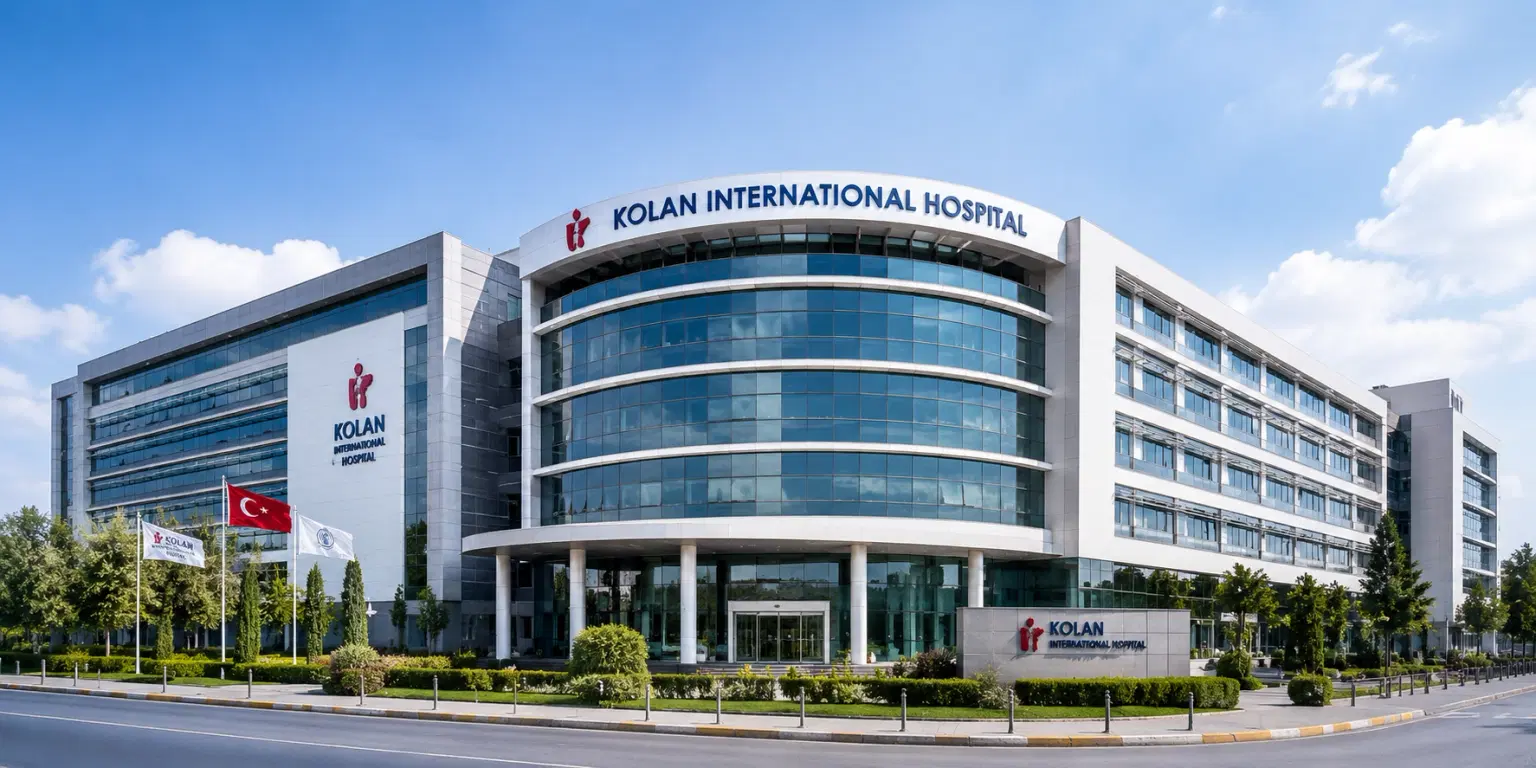
Kolan International Hospital, Istanbul
Kaptanpasa Mah. Okmeydan Kavsagi, Darulaceze Cd. No:14, 34384 Sisli, Istanbul
Kolan International Hospital, Istanbul
Frequently Asked Questions
Get answers to common questions about medical tourism, treatment procedures, and our comprehensive healthcare services.
Ready To Start Your Healing Journey?
Get Personalized Medical Treatment Options From India's Top Hospitals. Our Medical Experts Are Ready To Assist You Every Step Of The Way.