Frozen Embryo Transfer in India: Save 70%+

Frozen Embryo Transfer in India: Save 70%+

Written by DivinHeal Editorial Contributor, Rahul Kumar, Embryologist | Medically Reviewed by Dr Indu Priya, Gynecologist(MD) Published on: 2026-01-26
Frozen Embryo Transfer in India: Save 70%+ vs UAE, UK & Australia.
A frozen embryo transfer (FET) in India costs roughly 70% less than the same procedure in the UAE, UK, or Australia, where prices often top $3,000–$5,000. If you already have frozen embryos waiting, or you are planning your first transfer, this guide is for you. It covers what FET costs, which Indian clinics get the best results, and how to plan your trip.
India’s fertility clinics hold NABH accreditation. They are staffed by specialists trained at places like AIIMS and Apollo. They use the same vitrification (rapid-freeze) technology you would find in London or Dubai - but at a much lower price.
Plan My Journey
Tell us your condition and budget — our AI matches the right destination, hospital and doctor and visa pathway
What Is Frozen Embryo Transfer (FET)?
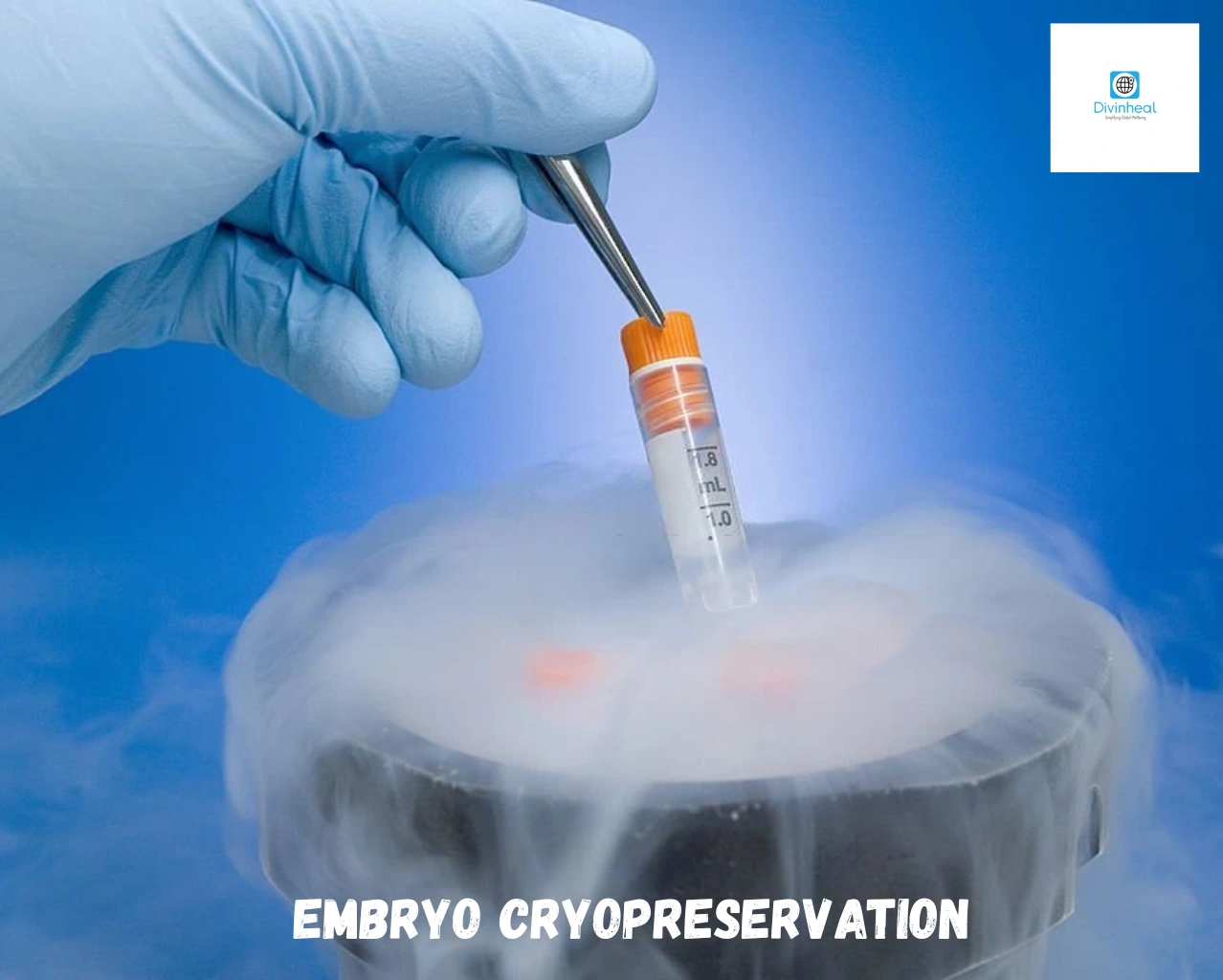
A frozen embryo transfer is when a doctor thaws a previously frozen embryo and places it into the womb. The embryo was made during an earlier IVF cycle. FET is one of the most common fertility treatments in the world. It is often the next step after a successful egg retrieval and fertilisation cycle.
How frozen embryo transfer works, step by step
Your doctor first prepares the womb lining using hormone medicines. Once the lining is thick enough - usually 8–10 mm - your frozen embryo is carefully thawed in the lab. The embryologist checks it is healthy. Then they place it into the womb through a thin, soft tube under ultrasound guidance. The whole transfer takes under 30 minutes. You do not need anaesthesia.
Modern clinics use vitrification - a flash-freeze method that turns the embryo into a glass-like state within milliseconds. This stops ice crystals from damaging the cells. Survival rates for vitrified embryos now exceed 95% at leading Indian centres, based on data from Nova IVF Fertility and Indira IVF.
Is frozen embryo transfer considered IVF?
Yes, FET is part of the IVF process, not a separate treatment. IVF covers the full cycle like; egg retrieval, fertilisation in the lab, embryo growth, and transfer. When embryos are frozen after fertilisation and used in a later cycle, that step is called an FET. It is the next step in your IVF journey, not a stand-alone procedure.
One useful advantage: FET lets you do a single embryo transfer (SET). This cuts the risk of twins or multiple pregnancies. It also lets you do genetic testing (PGT-A) before transfer to pick the healthiest embryo.
Embryo Cryopreservation: The Freezing Process Explained
Embryo cryopreservation means freezing fertilised eggs (embryos) for future use. It gives you options. You can freeze extra embryos from one IVF cycle and use them months or even years later. You do not need to go through another full cycle.
How the embryo freezing process works
After fertilisation, embryos are grown in the lab for 3 to 6 days. Most clinics now freeze at the blastocyst stage - day 5 or 6 - because blastocysts have better implantation rates. The embryologist loads each embryo into a cryoprotectant solution. This liquid replaces water inside the cells and stops ice from forming. The embryo is then placed into liquid nitrogen at −196°C.
This rapid-freeze method (vitrification) replaced the old slow-freeze method around 2012. Clinics that follow ICMR (Indian Council of Medical Research) rules use vitrification as the standard. Frozen embryos can be stored safely for 10 years or more with no real drop in quality.
How long does the embryo freezing process take?
The actual freezing in the lab is fast - each embryo takes just minutes. The time you spend at the clinic is mostly tied to the egg retrieval phase, not the freezing. Once your eggs are retrieved and fertilised, the lab works on its own over the next 5–6 days while you rest.
After that, the clinic handles long-term storage. You will usually pay a yearly fee - around ₹3,000–₹8,000 per year at Indian clinics. The clinic watches over your embryos the whole time.
At what age is it best to freeze embryos?
Egg and embryo quality falls with age, so earlier is generally better. Most fertility doctors suggest freezing embryos before age 35, when egg quality is at its best. In India, many patients freeze in their late 20s to early 30s - especially before chemotherapy or other treatments that affect fertility.
After 40, the number of healthy embryos per retrieval cycle drops a lot - though good results are still possible. Your doctor will check your ovarian reserve using an AMH blood test and antral follicle count to give you a clear picture.
Frozen vs Fresh Embryo Transfer: Success Rates Compared
One of the most common questions patients ask: is a frozen transfer actually more likely to work? Here’s what the data says.
Is frozen embryo transfer more successful than fresh?
Recent research is increasingly supporting frozen embryo transfer (FET) over fresh transfers. A 2023 study of meta-analysis in Human Reproduction found that frozen transfers had higher chances of live birth rates and fewer problems than fresh transfers in most patient groups. According to the UK's Human Fertilisation and Embryology Authority (HFEA) reports a live birth rate of approximately 24–38% per FET cycle depending on age. The best rates are in women under 35.
The likely reason is this. A fresh transfer happens right after ovarian stimulation. At that point, the womb lining may still be affected by the fertility drugs. A frozen transfer gives the body time to recover. This creates a more natural setting for the embryo to implant.
Factors that affect FET success rates
Embryo quality is the single biggest factor. Vitrified blastocysts - day-5 embryos - have better survival and implantation rates than day-3 embryos. Clinics that offer PGT-A - genetic testing that checks embryos for chromosome problems - report success rates 10–15% higher than untested cycles.
The womb lining matters just as much. Your endometrial lining needs to be at least 7–8 mm thick. It should also show a trilaminar (three-layer) pattern on ultrasound before transfer. Your doctor will check this with 2–3 scans during the prep phase.
Aspect | Fresh embryo transfer | Frozen embryo transfer |
Uterine environment | Possibly over-stimulated from IVF drugs | Natural, hormone-prepared - more receptive |
Stress & timing | Transfer happens straight after IVF | Flexible - allows full recovery and planning |
Genetic testing | Limited time for PGT-A before transfer | Full chance for PGT-A before transfer |
Cost per cycle | Higher (full IVF cycle) | Lower (transfer only, embryos already frozen) |
Live birth rate (HFEA 2022) | Varies; slightly lower in stimulated cycles | 24–38% per cycle depending on age |
Sources: HFEA Fertility Treatment Data 2022; Human Reproduction Update (Zhao et al., 2023); Nova IVF Fertility published outcomes
Risks and disadvantages of FET
FET is very safe. The main risks are mild cramping during the transfer and light spotting in the days after. There is also a small chance - under 2% - of ectopic pregnancy. That is when the embryo implants outside the womb. OHSS (ovarian hyperstimulation syndrome - bloating and discomfort from fertility medicines) is less common in FET than in fresh cycles. That is because the stimulation phase is already done.
FET also costs less than a full IVF cycle. The expensive retrieval and fertilisation steps are already complete. But if you need more than one transfer, costs can add up. Planning for 2–3 possible cycles is a smart approach.
Cost Comparison: FET in India vs UAE, UK & Australia.
Here’s the direct answer: a FET cycle in India typically costs ₹50,000–₹1,50,000 ($600–$1,800; £500–£1,500; AED 2,200–AED 6,600). This is the same range whether you look at Delhi, Mumbai, or Chennai. Compare that to what you’d pay at home.
What does FET cost in the UAE, UK, and Australia?
In the UAE, a single FET cycle typically costs AED 10,000–AED 20,000 ($2,700–$5,400; £2,200–£4,400). The UK generally charges £1,500–£3,000 ($1,900–$3,800; AED 7,000–AED 14,000), usually not including medicines. Australian clinics charge AUD 3,000–AUD 5,500 ($2,000–$3,700; £1,600–£3,000) for a FET cycle. None of these prices usually include fertility medicines. Medicines can add $500–$1,500 to the total.
How much does frozen embryo transfer cost in India?
A FET cycle in India costs ₹50,000–₹1,50,000 ($600–$1,800; £500–£1,500) at NABH-accredited clinics. This price is the same across top clinics in Delhi, Mumbai, Bangalore, and Chennai. You save 70% or more versus UAE and Australian prices, and 60%+ versus UK prices.
These figures cover the FET procedure itself. Embryo storage is extra - around ₹3,000–₹8,000/year. PGT-A genetic testing, if you choose it, adds roughly ₹25,000–₹60,000 per cycle.
Service | UAE | UK | Australia | India |
FET cycle | AED 5.5K–18K ($1,500–$4,900) | £1,500–3,000 ($1,900–$3,800) | AUD 3K–5.5K ($2,000–$3,700) | ₹50K–1L ($610–$1,200) |
Medications | Not included | Not included | Partially included | Basic meds included |
Monitoring scans | Included | Included | Included | Included |
Approx. savings vs India | - | - | - | 60–70%+ |
Sources: Apollo Hospitals patient pricing guide; Nova IVF Fertility; Fertility Associates Australia; HFEA fee surveys (2023–2024). All figures approximate and subject to change - request a written quote from your clinic.
What's included in an India FET package?
A standard FET package at a good Indian clinic usually includes everything you need to get started. This typically covers:
Initial consultation and medical record review.
Ultrasound monitoring (2–3 scans during preparation).
Embryo thawing and quality assessment.
The transfer procedure itself.
Basic hormone medicines (oestrogen and progesterone) for womb preparation.
Post-transfer support and a follow-up call.
What is usually extra: PGT-A genetic testing, additional medicines, embryo storage beyond the included period, and accommodation. Divinheal’s team will send you an itemised quote before you commit to anything.
Why is FET so much cheaper in India?
The lower cost in India is mainly due to operational expenses, not because of lower quality. Indian specialists here earn well according to local standards,but they earn far less in dollar terms than their UK or Australian peers. Clinic overheads, insurance, and admin costs are also much lower. India's government funds medical training. NABH accreditation keeps quality high regardless of the price.
The equipment is the same. Thermo Fisher cryostorage tanks, Origio catheters, and Esco IVF incubators are used in Delhi and London alike. The difference is the labour cost around their use.
Why Patients Choose India for Frozen Embryo Transfer
NABH-accredited clinics at a fraction of the cost
NABH stands for the National Accreditation Board for Hospitals & Healthcare Providers. It is India’s version of the UK’s CQC or Australia’s ACHS. NABH-accredited fertility clinics are checked by outside reviewers. They look at clinical rules, lab standards, infection control, and patient safety. Every clinic Divinheal recommends holds NABH accreditation as a minimum.
Many also hold JCI (Joint Commission International) accreditation. JCI is the gold standard for international patient safety. Apollo Fertility, Nova IVF Fertility, and Indira IVF are among the biggest networks. Together they have data from hundreds of thousands of cycles.
Experienced specialists and advanced lab technology
India trains more fertility specialists each year than most countries. Many senior embryologists and reproductive doctors have done fellowships in the UK, US, or Europe. They then come back to work in India. Clinics like Apollo Fertility Delhi and Nova IVF Mumbai have embryologists with 15+ years of experience in vitrification and blastocyst culture.
Full patient support and cultural comfort.
Divinheal gives each international patient a dedicated coordinator. They speak English and where needed, Arabic, Tamil, or Sinhala. They handle visa paperwork, airport pickups, clinic appointments, and accommodation. Most Delhi and Mumbai clinics also offer halal food, private prayer rooms, and culturally aware staff for patients from the UAE and Gulf countries.
Real patient stories
Aisha a 34 year old woman from Dubai shares her journey. "After going through two unsuccessful fresh transfers in Dubai, I was advised to consider donor eggs as the next step. That's when Divinheal helped me connect with a clinic in Delhi. There, my remaining frozen embryo was transferred after careful endometrial preparation. Today, I'm happily 24 weeks pregnant. The total cost including flights was still ½ what my failed cycles in Dubai cost."
James and Priya, Melbourne, Australia: “We had three frozen embryos from a cycle we did in Sydney two years ago. We transferred them to a NABH clinic in Mumbai through Divinheal. The process was smoother than anything we’d experienced in Australia - clearer communication, faster appointments, and the cost was about 30% of what we’d been quoted back home.”
Natalie, 38, from Manchester, UK, shares her experience: "I had been on the NHS waiting list for 18 months, which felt like a long and stressful wait. Through Divinheal, I was able to have my FET in Bangalore within six weeks of first contact. During my checkup, the doctor found a uterine polyp that had been missed earlier. After it was treated,my transfer was successful on the vey first attempt.
Stories are illustrative composites based on typical patient journeys. Names changed for privacy.
Preparing for Your Frozen Embryo Transfer: Timeline and Tips
Knowing what happens before the transfer date helps you feel in control. Here’s what to expect across the 3–4 weeks leading up to your procedure.
How the uterus is prepared for FET
Building up the womb lining - called the endometrium - to receive the embryo usually follows one of two plans.
Natural cycle protocol: Your doctor tracks your natural menstrual cycle using ultrasound and blood tests. The embryo is transferred around ovulation with no hormone medicines. This works best for women with regular cycles.
Hormone replacement cycle (HRT protocol): You take oestrogen tablets or patches for 10–14 days to thicken the lining. Then you add progesterone pessaries (vaginal suppositories) for 4–6 days before transfer. This is the most common plan used at Indian clinics for international patients. It gives the doctor more control over timing.
The target is a lining of 8–10 mm with a trilaminar pattern. You will have 2–3 monitoring scans. If the lining is not ready, the cycle is usually pushed back by a week. This is normal and not a reason to worry.
The FET timeline: from thawing to transfer
Week 1–2: Start oestrogen. First ultrasound scan around day 8–10 to check lining thickness.
Week 2–3: Second scan confirms the lining is ready. Progesterone begins, usually day 15–17 of the cycle. Your transfer date is set.
Transfer day: The embryologist thaws your embryo early in the morning and checks it under the microscope. A healthy blastocyst will show signs of re-expansion within 1–2 hours. Transfer takes about 10 minutes. You rest briefly at the clinic, then go back to your hotel. Most patients fly home after 3–5 days.
9–10 days after transfer: A blood test (beta-hCG) checks whether implantation happened.
How to improve your FET success: lifestyle tips
The evidence for lifestyle changes improving FET outcomes is limited. But healthy habits in the weeks before transfer are a good idea.
Stop smoking and cut out alcohol - both harm the womb lining
Aim for 7–8 hours of sleep per night
Eat a Mediterranean-style diet: lean protein, whole grains, plenty of vegetables, healthy fats like olive oil and nuts
Light exercise (walking, swimming, gentle yoga) is fine; avoid high-intensity training in the two weeks before transfer
Stay well hydrated - at least 2 litres of water daily
Stress matters too. The two-week wait after transfer is tough. Some patients find mindfulness apps, acupuncture, or a simple daily routine helpful. If anxiety feels severe, speak to your Divinheal coordinator. They can set up a call with a patient counsellor.
Your International FET Journey with Divinheal
Travelling to India for fertility treatment is more straightforward than many patients expect. Here’s how Divinheal handles the logistics.
Visa, flights, and accommodation
You will need an e-Medical Visa for India. It allows multiple entries and a stay of up to 60 days. Apply online at indianvisaonline.gov.in. Approval usually takes 3–5 business days. Apply at least 2–3 weeks before your travel date. Divinheal can give you the clinic invitation letter needed for the application.
For a standard FET cycle, you will usually need to stay in India for about 10–15 days. That covers 5–7 days for monitoring scans, the transfer, and a rest day, plus a few days as buffer. Some patients who live near an Indian city fly in for monitoring and go home between scans. They come back just for transfer day. Ask your Divinheal coordinator if that suits you.
Divinheal has agreed rates at partner hotels near the main fertility clinics in Delhi, Mumbai, Bangalore, and Chennai. Budget around $40–$100/night depending on your choice.
Local support and medical coordination
From the moment you sign up, your Divinheal coordinator becomes your main point of contact. They take care of everything- booking your clinic appointments, arrange airport pickups and drop-offs, handle medicine collection from local pharmacies, and stay on WhatsApp throughout your stay. If you need a translator for Mandarin, Arabic, or Tamil, one is arranged before you arrive.
Your coordinator also prepares a medical summary of your case. They turn your past IVF records into a format Indian doctors can read straight away. This saves time at your first appointment.
Post-transfer care: what to expect
After the transfer, you continue progesterone pessaries until at least 7–8 weeks of pregnancy, if confirmed. You may feel mild cramping or spotting in the first day or two. This is normal and not a sign of failure. Avoid hard exercise, but you do not need to lie flat or skip travel.
Most clinics include a same-day rest in a recovery room. Divinheal’s partner hotels are within 15 minutes of the clinic so you can rest before flying. Your doctor will send you the embryo photo and a transfer report on WhatsApp within 24 hours.
Once you are home, your Divinheal coordinator links you with a local GP or fertility nurse for hCG blood test checks. If your pregnancy is confirmed, Divinheal’s medical team does a handover call with your home doctor.
How Divinheal supports your journey
Divinheal is a medical tourism company, not a clinic. The treatment is done by your NABH-accredited partner clinic. Divinheal’s job is to make the whole process easy to manage from thousands of miles away.
Free first consultation to review your case and match you with the right clinic.
Clear, itemised pricing before you commit.
Visa support letter and travel advice.
Dedicated coordinator on WhatsApp 7 days a week.
Post-treatment follow-up and handover to your home medical team.
To start, fill in Divinheal’s brief medical history form on the website. A consultant will review it and get back to you within 24 hours with clinic options and an indicative cost breakdown.
Cost Calculator
I know my treatment — show me cost from 3 hospitals
Final Thoughts
If you have frozen embryos waiting, or you are planning a fresh cycle with a view to FET. India offers something clear: the same evidence-based fertility care as you’d get in the UK, UAE, or Australia, at roughly ₹50,000–₹1,50,000 ($600–$1,800) per transfer cycle - 60–70% less than home-country prices.
The clinics Divinheal works with are NABH-accredited. They use current vitrification methods. Their embryologists have international training. The process is managed from start to finish: visa, flights, monitoring appointments, the transfer, and post-care follow-up with your home doctor.
The first step is simply sending Divinheal your previous IVF records and a brief note about where you are in your fertility journey. A consultant will review your case and send you clinic options with itemised costs within 24 hours. There is no commitment until you decide to proceed.
Medical disclaimer: This blog is for informational purposes only and does not constitute medical advice. Fertility treatment outcomes vary by individual. Always consult a qualified fertility specialist before making treatment decisions.
Plan My Journey
Tell us your condition and budget — our AI matches the right destination, hospital and doctor and visa pathway
Cost Calculator
I know my treatment — show me cost from 3 hospitals
Recommended Article

Best In Vitro Fertilization (IVF) Doctors in Hyderabad
Doctors for Nephrology: Find Kidney Care Specialists
Doctors in Chennai: Find Medical Specialists in India
Best Embryo Freezing Hospitals in Hyderabad: Care Guide
Hospitals for reproductive surgery: Compare options
Hospitals in Gurugram: Guide to Quality Facilities
IVF Treatment in Haryana | Cost, Hospitals & Doctors
TAVR (Transcatheter Aortic Valve Replacement) cost in New Delhi
Tonsillectomy & Adenoidectomy Success Rate in Mumbai
Facelift & Anti-Aging Procedures in Chennai for Ethiopia Patients | Cost, Hospitals
Written by DivinHeal Editorial Contributor, Rahul Kumar, Embryologist | Medically Reviewed by Dr Indu Priya, Gynecologist(MD) Published on: 2026-01-26
Plan My Journey
Tell us your condition and budget — our AI matches the right destination, hospital and doctor and visa pathway
Cost Calculator
I know my treatment — show me cost from 3 hospitals
Booking With DIVINHEAL
Get a free consultation to understand your treatment options
Recommended Article
Best In Vitro Fertilization (IVF) Doctors in Hyderabad
Doctors for Nephrology: Find Kidney Care Specialists
Doctors in Chennai: Find Medical Specialists in India
Best Embryo Freezing Hospitals in Hyderabad: Care Guide
Hospitals for reproductive surgery: Compare options
Hospitals in Gurugram: Guide to Quality Facilities
IVF Treatment in Haryana | Cost, Hospitals & Doctors
TAVR (Transcatheter Aortic Valve Replacement) cost in New Delhi
Tonsillectomy & Adenoidectomy Success Rate in Mumbai
Facelift & Anti-Aging Procedures in Chennai for Ethiopia Patients | Cost, Hospitals
From Consultation to Recovery,
Step by Step
Expert Specialist Matching
Connecting you with the world's top-rated medical experts.
Accredited Hospital Network
Access to JCI & NABH certified healthcare facilities.
Complete Travel Coordination
Hassle-free visa, stay, and local transport assistance.
24/7 Personal Care
Dedicated patient advisors supporting you at every step.
Journey Guidance
Full guidance from start to end of the patient treatment journey.
Expert Specialist Matching
Connecting you with the world's top-rated medical experts.
Everything you
need to know today
Browse through these common inquiries to better understand our patient-focused medical platform.
A FET cycle in India costs ₹50,000–₹1,50,000 ($600–$1,800; £500–£1,500; AED 2,200–AED 6,600). This is the same across NABH-accredited clinics in Delhi, Mumbai, Bangalore, and Chennai. Compare this to AED 10,000–20,000 in the UAE, £1,500–3,000 in the UK, and AUD 3,000–5,500 in Australia. You save 60–70% for most patients.
In many cases, yes- FET can have similar or even slightly higher live birth rates compared to fresh transfers. According to HFEA data, this is especially true for women whose were overstimulated during IVF treatment. A 2023 meta-analysis in Human Reproduction Update found FET had better outcomes for both mother and baby. But individual results vary. Your specialist will review your specific history.
After a 5-day blastocyst transfer, you are counted as 2 weeks and 5 days pregnant on the day of transfer. Pregnancy is dated from the estimated day of ovulation or egg retrieval, not from the transfer date. So the clock started when your eggs were collected, not today. A pregnancy blood test is done 9–10 days after transfer to check hCG (human chorionic gonadotropin) levels.
The FET procedure is not painful. Most patients say it feels like a cervical smear - mild pressure and a brief cramp as the tube passes through the cervix. You do not need anaesthesia. You will lie down for about 10 minutes and can walk out after. Mild cramping or spotting in the next 24 hours is normal.
FET is a low-risk procedure. The main risks are a small chance of ectopic pregnancy (under 2%); mild OHSS (ovarian hyperstimulation syndrome - swelling and discomfort from fertility medicines, though less common in FET than fresh cycles); and embryo non-survival during thawing (rare with vitrification - survival rates exceed 90% at most accredited clinics). Your clinic will talk through your personal risk profile before treatment.
You will rest at the clinic for 20–30 minutes, then you are free to go. Continue all prescribed medicines - usually progesterone pessaries twice daily. Mild cramping and light spotting are normal in the first couple of days. Avoid heavy lifting and intense exercise. A short flight home (under 5–6 hours) is generally fine after a rest day, but check with your doctor.
Ideally,egg quality is the best before the age of 35, with its peak usually in the mid-to-late 20s.That said, many women successfully freeze and use embryos in their late 30s. After 40, egg quality falls more sharply. Fewer healthy embryos are typically retrieved per cycle. An AMH (anti-Müllerian hormone) blood test will give you a clearer picture of your current ovarian reserve before you decide.
For a standard FET cycle, you will usually need to stay in India for about 10–15 days. This time covers your pre-transfer monitoring scans (2–3 visits over 5–7 days), the transfer procedure, a day of rest, and a little extra time for travel. Some patients in the Gulf or Southeast Asia split the trip into two shorter stays: one for monitoring and one for transfer. Divinheal will plan your schedule around your clinic's protocol.
Divinheal’s team does a formal medical handover to your local GP or fertility clinic once you are back. You will have your transfer report, embryo photos, medicine list, and the Indian doctor’s contact details. If you have urgent symptoms - severe cramping, heavy bleeding, fever - go directly to your nearest hospital. For non-urgent questions, your Divinheal coordinator stays available for 4 weeks post-transfer.
Every clinic in Divinheal’s network is NABH-accredited, has published outcome data, and has been visited in person by Divinheal’s medical director. Clinics are reviewed each year and removed from the network if quality metrics drop. You will receive a clinic fact sheet before you choose - including live birth rates, lab certification, and the treating doctor’s qualifications.
Egg freezing stores unfertilised eggs - eggs that have not been mixed with sperm. Embryo freezing stores embryos that have already been fertilised. Egg freezing is used for single women or couples who are not ready to fertilise yet. Embryo freezing happens within an IVF cycle, after fertilisation has already occurred. Embryos generally have higher survival rates after thawing than unfertilised eggs.
The most important things you can control are taking all medicines exactly as prescribed and keeping yourself healthy in the 4–6 weeks before transfer. Try to avoid smoking, limit alcohol, eat a balanced diet, and get enough sleep. On the embryo side, ask your clinic about PGT-A genetic testing before transfer. This alone can lift success rates for women over 35 or those with past failed cycles.
Still have more questions?
Book a call with our friendly team to learn how DivineHeal simplifies your healthcare journey.