

Written by DivinHeal Editorial Contributor, Samrat Nilesh, Embryologist | Medically Reviewed by Dr Indu Priya, Gynecologist(MBBS,MD) Published on: 2026-01-25
IVF Success Rates in 2026: By Age, FET, PGT-A & India Cost for
Australian & UK Patients
Live delivery success rates range from 40-55% per transfer cycle for women
under 35 years old in the best NABH-certified IVF facilities in India. This is
on par with or above the success rates in Australian and British private
clinics, which offer 60-80% cheaper services. This is especially true for
Australians dealing with a minimum of 3 months to up to 6 months waiting time
for government hospitals.
This guide covers IVF success rates by age, FET outcomes,
PGT-A screening, and a direct cost comparison. It gives you what you need
before talking to a fertility specialist.
How IVF Success Rates Are
Measured — and What to Ask Your Clinic
Success
rate claims vary widely across clinics — often because they’re measuring
different things. Before comparing any figures, you need to know which metric
is being used.
Live Birth Rate vs Clinical
Pregnancy Rate: What’s the Difference?
Live birth rate
(LBR) refers to the proportion of transfers that lead to a live delivery. This
is the most important statistic from a patient perspective. Clinical pregnancy
rate (CPR) is the number of transfers resulting in a heartbeat at 6 to 8 weeks.
This figure is higher since it includes miscarriages. Some centers cite CPR as
a more attractive figure. You should always ask about LBR per embryo transfer
in your age bracket.
Two other
reporting variations matter. Success rate per cycle started is lower than per
transfer. It counts cancelled cycles — where stimulation produced no viable
embryos. Success rate per transfer is the figure most comparable across
clinics. At NABH-accredited hospitals — Apollo Chennai, Fortis Noida, Medanta
Gurgaon, and MAX — international patient reporting follows ICMR ART guidelines.
These standardise live birth rate per transfer.
IVF Success Rates by Age: The
Full Breakdown
Age proves to be the key determinant of the
success rate of IVF. Age affects the number and quality of eggs much more than
anything else within the IVF process. The following table presents the rate of
successful live births for various age groups.
|
Age Group |
Live Birth
Rate (India, top clinics) |
Live Birth
Rate (Australia avg.) |
Live Birth
Rate (UK — HFEA 2023) |
India
Advantage |
|
Under 35 |
40–55% |
30–40% |
32–38% |
+8–17 pp |
|
35–37 |
30–42% |
22–30% |
25–32% |
+5–12 pp |
|
38–40 |
20–32% |
14–22% |
15–22% |
+5–10 pp |
|
Over 40 (own
eggs) |
10–18% |
6–12% |
5–8% |
+4–10 pp |
|
Donor egg (any
age) |
55–70% |
45–55% |
40–55% |
Comparable |
Data Sources:
India – ICMR ART Registry database; India hospitals – Apollo Chennai, Fortis
Noida, Medanta Gurgaon, MAX. Australia – Monash IVF 2025 statistics. United
Kingdom – HFEA (Human Fertilisation and Embryology Authority) 2023 report. All
data is reported in terms of live births per embryo transfer.
India Advantage Note: According to ICMR data, India's best centers conduct more
than 50,000 IVF cycles per year. The number of cycles conducted improves the
skills of the embryologists and precision in the laboratory. The quality of the
embryologists and precision in the laboratory protocols improve due to higher
volumes.
What Is the Success Rate
of IVF on the First Try?
On
a first IVF cycle, live birth rates for women under 35 at well-equipped Indian
centres typically fall between 40–50%. CDC ART Data (2020) shows 55.1% live
birth rates per egg retrieval for women under 35 on their first attempt. This
is the most comprehensively reported ART dataset globally. India’s top clinics
are in this range.
The
critical nuance: ‘first try’ means different things. You may bank embryos on
the first retrieval, but you need two or three frozen transfers. Most
specialists still count that as ‘one retrieval cycle’ — not multiple failed
attempts. Planning for 2–3 frozen transfers from a single egg retrieval is
statistically common and does not mean IVF failed.
IVF Success Rate for Women Under
35 (and Under 30)
Women under 30
have the highest live birth rates of any age group. Typical rates are 45–55%
per transfer at well-resourced Indian fertility centres. This comes from higher
antral follicle counts, better egg quality, and fewer chromosomal abnormalities
per egg. More eggs are also retrieved per stimulation cycle.
For women aged
30–34, outcomes are similar but begin to taper slightly — live birth rates of
38–48% are typical. The drop from under-30 to early 30s is modest. The more
significant decline begins around 35, which is why the 35-year threshold
appears in most clinical guidelines.
At What Age Is IVF Most Successful?
IVF is most successful
under the age of 35, and specifically most successful for women in their
mid-to-late 20s. This reflects biological reality. A woman’s ovarian reserve
and egg quality are at their peak before 30. Both begin declining measurably
after 35. The decline is gradual between 30–35 and accelerates after 38. The
decline is gradual between 30–35 and accelerates after 38.
For patients over 40
using their own eggs, live birth rates at Indian fertility centres are 10–18%
per transfer. Donor egg IVF raises this to 55–70% regardless of the recipient’s
age. The outcome depends on the donor’s egg quality — not the recipient’s.
At What Age Are 90% of Your Eggs
Gone?
Research suggests
that by age 30, a woman has approximately 12% of her original egg supply
remaining. By 40, that figure falls to around 3%. The widely cited ‘90% gone by
30’ figure is broadly consistent with data in Human Reproduction (2010, Wallace
& Kelsey). Individual variation is significant. What matters clinically is
not total egg count. AMH (anti-Müllerian hormone) level and antral follicle
count are what directly predict your response to ovarian stimulation. Your
fertility specialist will measure these in the first consultation.
What Is PGT-A and How Does
It Improve IVF Success?
PGT-A
(Preimplantation Genetic Testing for Aneuploidy) is a procedure that screens
embryos for chromosomal abnormalities before transfer. Aneuploid embryos have
the wrong number of chromosomes. They are the primary cause of failed
implantation and early miscarriage. PGT-A identifies and excludes them, so only
chromosomally normal (euploid) embryos are transferred.
What Exactly Does PGT-A Test For?
PGT-A screens all 24
chromosome pairs (22 autosomal + X and Y) for extra or missing copies. Common
aneuploidies include trisomy 21 (Down syndrome), trisomy 18, trisomy 13, and
monosomy X (Turner syndrome). A few cells are biopsied from the embryo at the
blastocyst stage (day 5 or 6). These are then analysed via next-generation
sequencing (NGS). The embryo is frozen during testing; results take 1–2 weeks.
PGT-A also detects
segmental aneuploidies — partial chromosome duplications or deletions. It also
detects mosaicism: embryos with a mix of normal and abnormal cells. Mosaic
embryos require specialist counselling before transfer; many are still viable,
but with lower success rates than fully euploid embryos.
Does PGT-A Detect Down Syndrome?
Yes. PGT-A detects trisomy
21 (Down syndrome) alongside all other aneuploidies. It screens the entire
chromosome complement, not just specific conditions. This is what
differentiates PGT-A from older, targeted genetic tests. PGT-A does not detect
single-gene disorders such as cystic fibrosis or BRCA mutations. Those require
PGT-M (monogenic) testing — a separate and more complex procedure.
What Is the Difference Between
PGT and PGT-A?
PGT
(Preimplantation Genetic Testing) is the umbrella term for all forms of embryo
genetic screening. PGT-A is the specific subtype that screens for aneuploidy
(abnormal chromosome number). Other subtypes include PGT-M (screens for
inherited single-gene conditions) and PGT-SR (for patients who carry chromosomal
translocations). When fertility specialists say ‘PGT,’ they usually mean PGT-A
unless specified otherwise. At Apollo Hospitals Chennai and Medanta Gurgaon,
PGT-A is a standard IVF add-on. It follows ICMR ART guidelines.
PGT-A impact
on success rates: For women under 35, PGT-A typically increases
per-transfer live birth rates to 55–70% by ensuring only euploid embryos are
transferred. For women over 38, aneuploid embryos are far more common. The
benefit of PGT-A is even greater at this age. It reduces the number of failed
transfers and miscarriages before a successful pregnancy.
Frozen Embryo Transfer
Success Rates: What the Data Shows
The
procedure used in most large volume clinics around the world is frozen embryo
transfer (FET). Another name for this process is cryopreserved embryo transfer.
Research findings indicate that FET results are either equivalent to or
slightly superior to fresh embryo transfer.
Is IVF More Successful With
Frozen Embryos?
For most
patients, yes — particularly those who respond well to ovarian stimulation. The
key reason is uterine receptivity. During a fresh IVF cycle, the uterus is in a
hormonally elevated state from stimulation medications. This can reduce
implantation rates. A frozen cycle allows the uterus to be prepared separately,
in a more natural hormonal environment. This improves the chance of the embryo
attaching.
|
Factor |
Fresh
Transfer |
Frozen
Transfer (FET) |
Why It
Matters |
|
Timing |
3–5 days
post-retrieval |
Separate cycle
— weeks/months later |
FET allows body
to fully recover from stimulation |
|
Uterine
environment |
Impacted by
stimulation hormones |
Prepared
separately; optimal receptivity |
Better lining =
better implantation odds |
|
Live birth rate
(under 35) |
35–45% |
40–50% |
FET generally
outperforms in high-responders |
|
OHSS risk |
Present
(stimulation + transfer same cycle) |
Minimal
(stimulation already resolved) |
FET is safer
for patients who over-respond |
|
PGT-A
compatibility |
Limited —
timing too tight |
Standard —
embryos frozen during testing |
FET required
for PGT-A screened transfers |
Sources: Results
from Max Healthcare FET; Data from ART Registry by ICMR; Meta-analysis by Human
Reproduction Update comparing FET vs. fresh transfer results in which figures
represent live birth rates per transfer at recognized fertility centers in India.
How Can I Make My Frozen Embryo
Transfer Successful?
Adherence to
medication is the key point here. The intake of progesterone and estrogen helps
to prepare the uterus for implantation; any deviation will affect the result.
Apart from the medications, the following factors have evidence-based support:
•
Blastocyst (day-5) embryos have higher
implantation rates than day-3 embryos — ask your clinic what stage they plan to
freeze at
•
PGT-A screening before FET reduces the
likelihood of transferring an aneuploid embryo — the most common reason for
transfer failure
•
Endometrial receptivity assessment (ERA test) —
a biopsy that identifies the optimal day for transfer — is offered at Apollo
Chennai and Fortis Noida for patients with repeated FET failures
•
Avoid strenuous exercise and high-heat
environments for 7 days post-transfer
•
A diet adequate in protein and folic acid is
standard recommendation; there is no specific ‘implantation diet’ with strong
clinical evidence
When Do Most Embryo Transfers Fail?
Most failed transfers
occur in the first 7–10 days after the procedure — during the implantation
window. The embryo either fails to attach to the uterine lining or attaches
briefly and then stops developing. The most common cause is chromosomal
abnormalities in the embryo. These account for 60–70% of early failures per
reproductive biology literature. Inadequate uterine lining preparation and
suboptimal endometrial receptivity account for most of the rest.
If you have two or more
failed transfers with good-quality embryos, your specialist will typically
recommend investigation. This includes:
•
Hysteroscopy — to check for uterine
abnormalities
•
ERA testing
•
Sperm DNA fragmentation analysis
•
A review of your stimulation protocol. This is
standard practice at Medanta Gurgaon and MAX Hospitals for recurrent
implantation failure patients.
What Disqualifies Someone from
IVF?
Absolute
medical contraindications to IVF are rare. Most patients who want IVF can
access it, though the recommended protocol may vary. The conditions below either
prevent IVF or require it to be modified:
•
Severe uterine abnormalities that cannot be
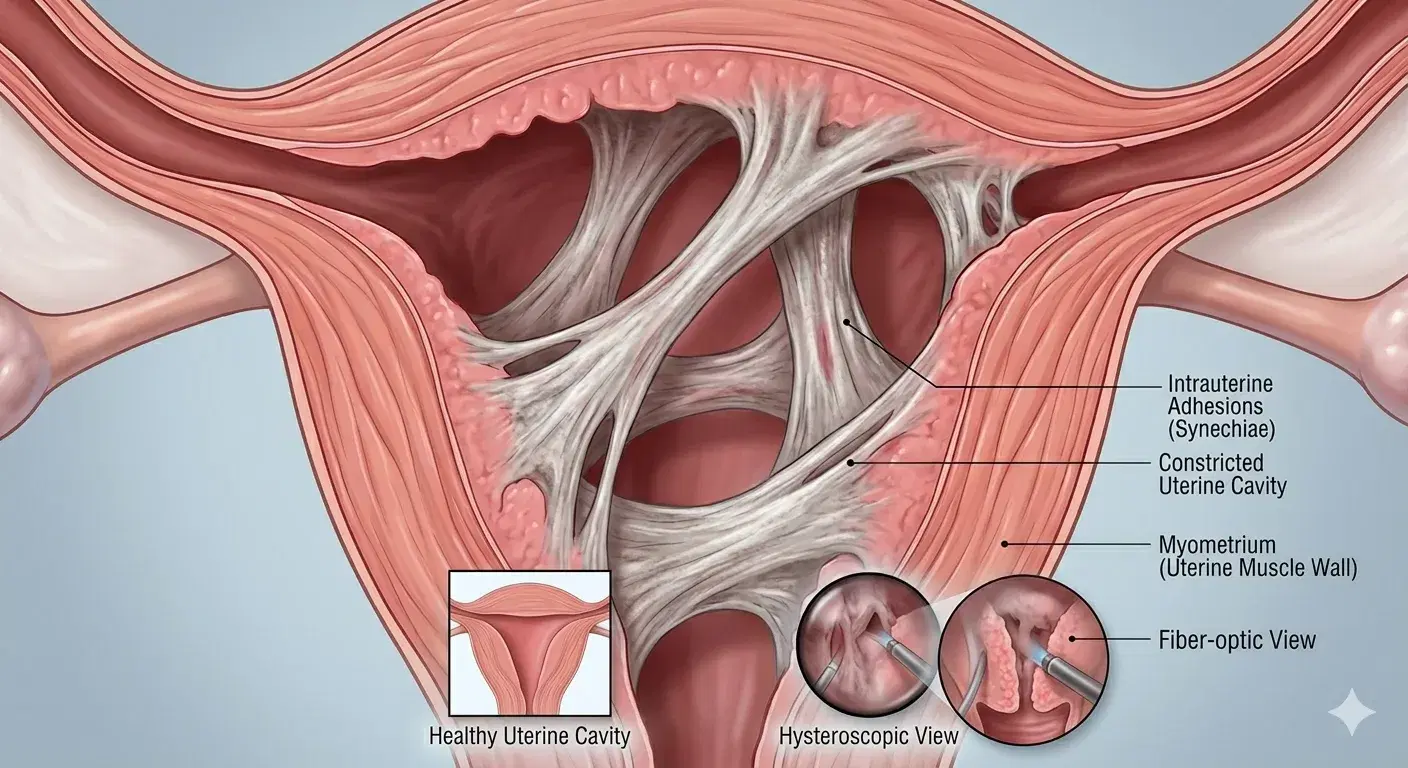
corrected — such as significant Asherman’s syndrome (severe uterine scarring)
or a uterus absent from birth. In these cases, gestational surrogacy may be the
alternative.
•
Active malignancy requiring immediate treatment
— cancer treatment often needs to start before IVF is feasible, though
fertility preservation (egg or embryo freezing) before chemotherapy may be
possible.
•
Uncontrolled systemic illness — poorly managed
diabetes, uncontrolled thyroid disease, or severe cardiac conditions needs to
be stabilised first.
•
Very low or absent ovarian reserve (AMH < 0.1
ng/mL) with no eggs retrieved after stimulation — donor egg IVF remains an
option in these cases.
Ageing
and poor ovarian reserves do not necessarily rule out treatment. They play an
important role in determining the proper course of treatment, as well as the
possibility of success using their own eggs; however, this option is still
available to them. The fertility evaluation will determine the course of action
for you.
IVF Cost in India vs
Australia vs UK (2026)
There is a significant disparity between the
prices charged in India and those charged in the West. This price disparity is
not due to any variation in the standard of care provided. The cost advantage
that India enjoys stems from low running costs, large patient numbers, and
competition in the private fertility market.
|
Country |
Cost
(1 IVF Cycle, incl. FET) |
Savings
vs India |
Notes |
|
India |
₹1,50,000–₹3,00,000
($1,591–$3,240) |
— |
NABH/JCI-accredited;
most medications included |
|
Australia |
AUD
10,000–17,000 ($6,500–$12,146) |
60–70%
less in India |
Out-of-pocket
after Medicare; 3–6 month public wait-lists |
|
UK |
£5,000–£8,500
($6,000–$11,472) |
65–80%
less in India |
NHS
covers very limited cases; private costs are above |
References:
Apollo Hospitals Chennai, Fortis Noida, Medanta Gurgaon, MAX Hospitals India.
Australia: Monash IVF 2025 prices. United Kingdom: Bourn Hall Clinic and HFEA
Private Clinic Cost Survey 2024. Figures are approximate prices for private
healthcare and prices may vary depending on individual protocols such as number of embryos, and additional services
such as PGT-A, ICSI, and ERA.
In this context, the significance of the
comparison for Australian patients is even more pronounced. After taking into
consideration the amount paid to Medicare, an individual IVF cycle would still
cost $5,000-$10,000 on average in Australia. In addition, there are long
wait-lists ranging from 3 to 6 months of public assisted reproductive health
programs offered by the government in different states.
For
UK patients, NHS IVF eligibility is narrow and varies by Clinical Commissioning
Group. Most NHS-ineligible patients pay £5,000–£10,000 per private cycle. PGT-A
in the UK adds £1,500–£3,000 to the cycle cost. In India, PGT-A is included or
available as a modest add-on — typically ₹40,000–₹80,000 per embryo tested
(approximately £380–£760).
How Divinheal Supports
Australian &** UK Patients Travelling to India for IVF**
Divinheal
matches patients to NABH-accredited hospitals based on diagnosis, age, embryo
banking plan, and required techniques — not just geography. For Australian and
UK patients, two patient stories illustrate what the journey typically looks
like.
Australian Patient: Sarah, 34,
Melbourne
Sarah had been on
Victoria’s public fertility programme for 9 months. Her GP confirmed she was
eligible for IVF but unlikely to be seen within 6 months. She contacted
Divinheal. Her coordinator matched her to Apollo Hospitals Chennai — chosen for
its blastocyst culture rates and PGT-A capability. Sarah completed her egg
retrieval, PGT-A screening, and first frozen transfer in a 26-day trip. Her
total India cost — including flights from Melbourne and a serviced apartment —
was AUD 7,200. Her private Australian quote had been AUD 12,800 for a single
cycle without PGT-A.
Stories are illustrative
composites based on typical patient journeys. Names changed for privacy.
UK Patient: James &** Priya, 37
****&**** 35, London**
James and Priya had
two failed NHS-funded IVF cycles. Their NHS trust declined a third funded
attempt. A private London clinic quoted £7,500 for a cycle with PGT-A.
Divinheal matched them to Medanta Gurgaon. Their fertility specialist there
held a DNB in Reproductive Medicine and had trained at a UK centre. Their
three-cycle PGT-A programme at Medanta costs £4,200 all-in — less than a single
UK cycle. Priya confirmed a viable pregnancy after the second frozen transfer.
Stories are
illustrative composites based on typical patient journeys. Names changed for
privacy.
What Divinheal Coordinates
Divinheal handles the full
medical journey to India. This includes:
•
Clinic matching based on your age, diagnosis,
required techniques (PGT-A, ICSI, donor egg, ERA), and budget
•
Hospital appointment booking at NABH-accredited
partner hospitals
•
Medical visa invitation letter for Australian
and UK nationals
•
Accommodation near the treatment clinic,
typically 1–2 km away
•
Airport transfers on arrival and departure
•
A WhatsApp-accessible patient coordinator
throughout your stay
•
Post-return telemedicine coordination with your
treating specialist
Divinheal does not charge a placement fee. Partner hospital rates are direct patient pricing — not marked up. You can request a second opinion from a different partner hospital before committing.
Final Thoughts
The IVF
success rates in question are realistic, quantifiable, and increasing. The best
Indian infertility clinics provide live birth rates of 40% to 55% for each
embryo transfer to women younger than 35 years old. This is comparable to what
one would get from the best clinics in the West but at a much more affordable
rate.
Contact
Divinheal for a free case evaluation. This includes a cost estimate, clinic
match, and consultation with a named fertility specialist. Bring your most
recent AMH result, antral follicle count, and semen analysis if available.
Disclaimer: All costs are only estimated for 2025-2026
private medical costs. Medical treatment must be discussed with a certified
physician. The success rates are general figures provided by the NABH certified
partner hospitals and published data registries; individual results may vary.
Case studies are fictionalized narratives; names have been altered for
confidentiality. All sources cited must be confirmed by the Divinheal medical
team prior to posting.
Related Links
International Patient Visiting India
- ivf in bengaluru for ethiopia
- ivf in pune for bangladesh
- ivf in india for bangladesh
- ivf in mumbai for bangladesh
- ivf in bengaluru for bangladesh
- ivf in pune for uae
- ivf in bengaluru for uae
- ivf in new delhi for uae
- ivf in hyderabad for uae
- ivf in chennai for bangladesh
- ivf in new delhi for iraq
- ivf in bengaluru for iraq
- ivf in mumbai for iraq
- ivf in chennai for iraq
- ivf in bengaluru for nigeria
- ivf in pune for nigeria
- ivf in hyderabad for nigeria
- ivf in india for nigeria
- ivf in india for ethiopia
- ivf in new delhi for ethiopia
Booking With DIVINHEAL
Get a free consultation to understand your treatment options
Related Links
International Patient Visiting India
- ivf in bengaluru for ethiopia
- ivf in pune for bangladesh
- ivf in india for bangladesh
- ivf in mumbai for bangladesh
- ivf in bengaluru for bangladesh
- ivf in pune for uae
- ivf in bengaluru for uae
- ivf in new delhi for uae
- ivf in hyderabad for uae
- ivf in chennai for bangladesh
- ivf in new delhi for iraq
- ivf in bengaluru for iraq
- ivf in mumbai for iraq
- ivf in chennai for iraq
- ivf in bengaluru for nigeria
- ivf in pune for nigeria
- ivf in hyderabad for nigeria
- ivf in india for nigeria
- ivf in india for ethiopia
- ivf in new delhi for ethiopia
Meet Our Doctors
Meet our team of highly qualified and experienced medical professionals dedicated to providing the best healthcare services.

Dr Aditi Dixit
Sr. Consultant – Women Imaging
Radiology
New Delhi
15+ Years
Experience
Artemis Hospital
Hospital
1500
Fees

Dr. Alka Gujral
Senior Consultant
Obstetrics and Gynaecology
New Delhi
24+ Years
Experience
Apolo Delhi
Hospital
1500
Fees

Dr. Anita K. Sharma
Senior Consultant - Obstetrics and Gynaecology
Obstetrics and Gynaecology
New Delhi
24+ Years
Experience
Apolo Delhi
Hospital
1500
Fees

Dr. Anjali Bhutani
Senior Consultant
Obstetrics & Gynaecology
New Delhi
22+ Years
Experience
Apolo Delhi
Hospital
1500
Fees
Dr. Aparna Dhar
Senior Consultant - Obstetrics & Gynaecology
Obstetrics & Gynaecology
New Delhi
23+ Years
Experience
Apolo Delhi
Hospital
1500
Fees

Dr. Babita Jain
Principal Director & HOD
Paediatrics (Ped)
New Delhi
30+ Years
Experience
Max Hospital,Gurgaon
Hospital
1500
Fees

Dr Chandrima Misra M
Co-Head Psychological Services
Mental Health and Behavioural Sciences
New Delhi
15+ Years
Experience
Artemis Hospital
Hospital
1500
Fees

Dr. Charu Garg
Principal Director - Radiation Oncology
Radiation Oncology
New Delhi
23+ Years
Experience
Max Hospital,Gurgaon
Hospital
1500
Fees

Dr. Gyanendra Agrawal
Director - Obstetrics & Gynaecology
Obstetrics & Gynaecology
New Delhi
18+ Years
Experience
Apolo Delhi
Hospital
1500
Fees

Dr. Kanika Gupta
Principal Director – Surgical Oncology (Gynae & Robotic Surgery)
Gynecologic Oncology, Robotic & Laparoscopic Surgery, Gynae Cancer Care, Surgical Oncology
New Delhi
39+ Years
Experience
Max Hospital,Gurgaon
Hospital
1500
Fees
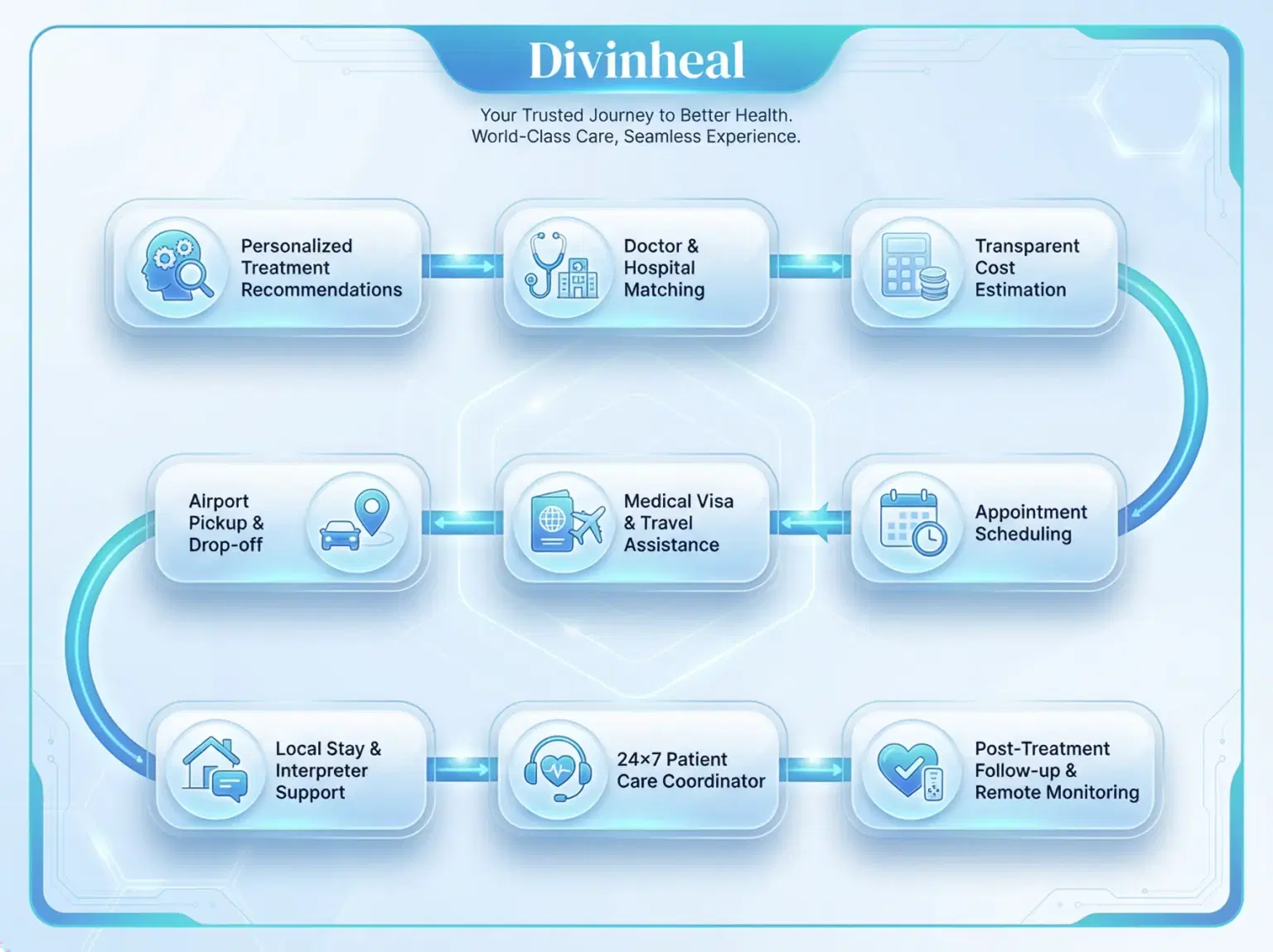
DivinHeal's Journey
Latest Articles



Hospitals Offering this treatment
India offers premium medical procedures at affordable prices. Discover our most popular treatments, delivered by the country's finest doctors.

Hisar Intercontinental Hospital
Saray Mah. Siteyolu Cad. No:7, Umraniye, 34768, Istanbul, Turkey
Hisar Intercontinental Hospital

Medical Park Group, Istanbul
Fahrettin Kerim Gokay Cad. Tıbbiye Cd., Kadikoy, Istanbul, Turkey
Medical Park Group, Istanbul

Emsey Hospital, Pendik, Istanbul
Çamlık, Selçuklu Cd. No:22, 34912 Pendik/İstanbul, Türkiye
Emsey Hospital, Pendik, Istanbul

American Hospital, Istanbul
Guzelbahce Sk. No:20, 34365, Nisantasi, Istanbul, Turkey
American Hospital, Istanbul

Memorial Hospitals Group
Burhaniye, Nagehan Sokağı No:4/A D:1, 34676 Üsküdar/İstanbul, Türkiye
Memorial Hospitals Group

Florence Nightingale Hospital Istanbul
Abide-i Hürriyet Cd No:166, 34381 Sisli, Istanbul
Florence Nightingale Hospital Istanbul

Medicana International Hospital, Istanbul
Halit Ziya Turkkani Mah. Medikal Park Cd. No:1, Beylikdüzü, İstanbul
Medicana International Hospital, Istanbul

Okan University Hospital Istanbul
Icmeler Mah. Aydınlıyolu Cd. No:2, 34947 Icmeler-Tuzla, Istanbul
Okan University Hospital Istanbul

Kolan International Hospital, Istanbul
Kaptanpasa Mah. Okmeydan Kavsagi, Darulaceze Cd. No:14, 34384 Sisli, Istanbul
Kolan International Hospital, Istanbul
Frequently Asked Questions
Get answers to common questions about medical tourism, treatment procedures, and our comprehensive healthcare services.
Ready To Start Your Healing Journey?
Get Personalized Medical Treatment Options From India's Top Hospitals. Our Medical Experts Are Ready To Assist You Every Step Of The Way.