
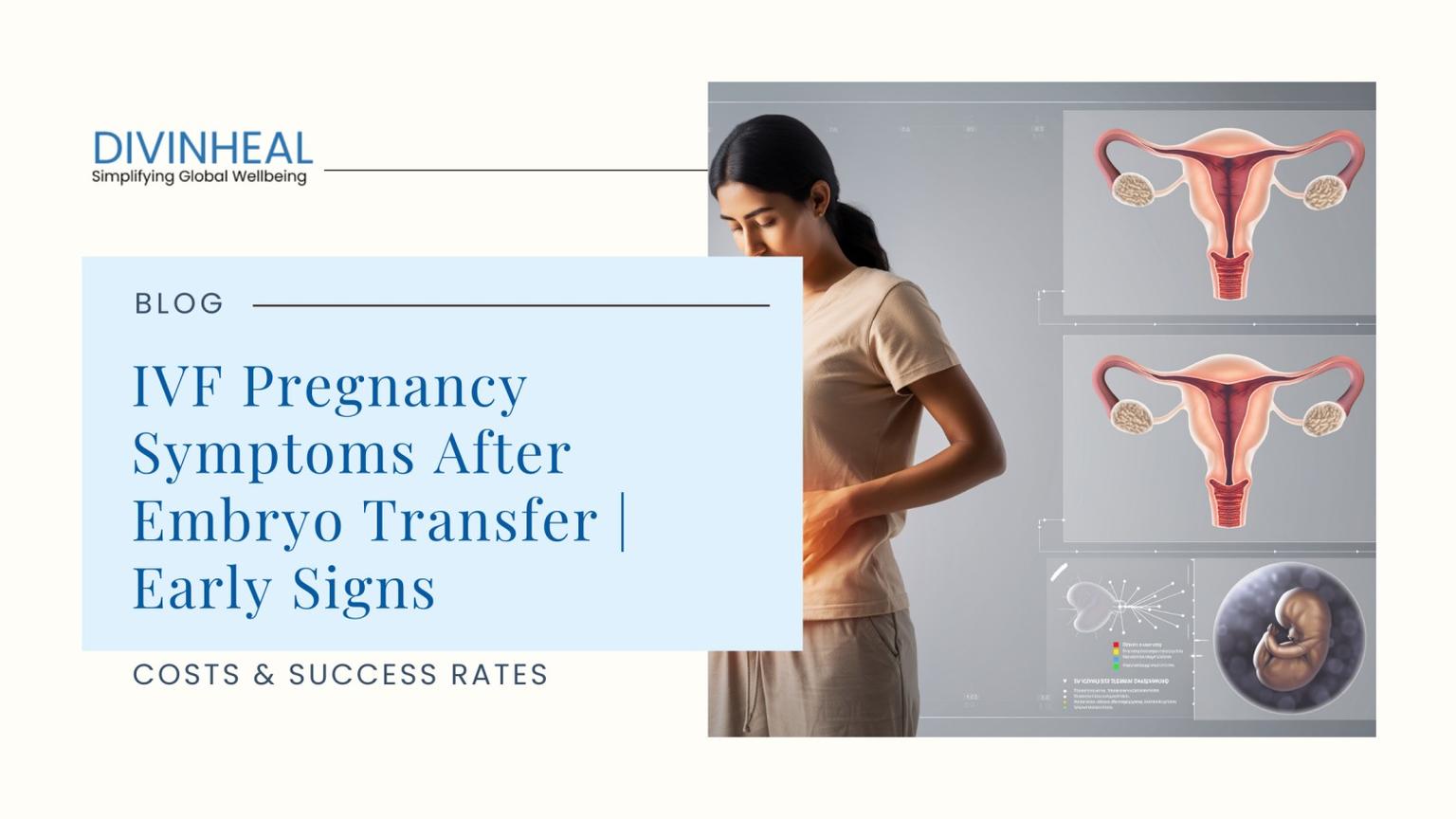
After Embryo Transfer Symptoms: Day-by-Day Signs

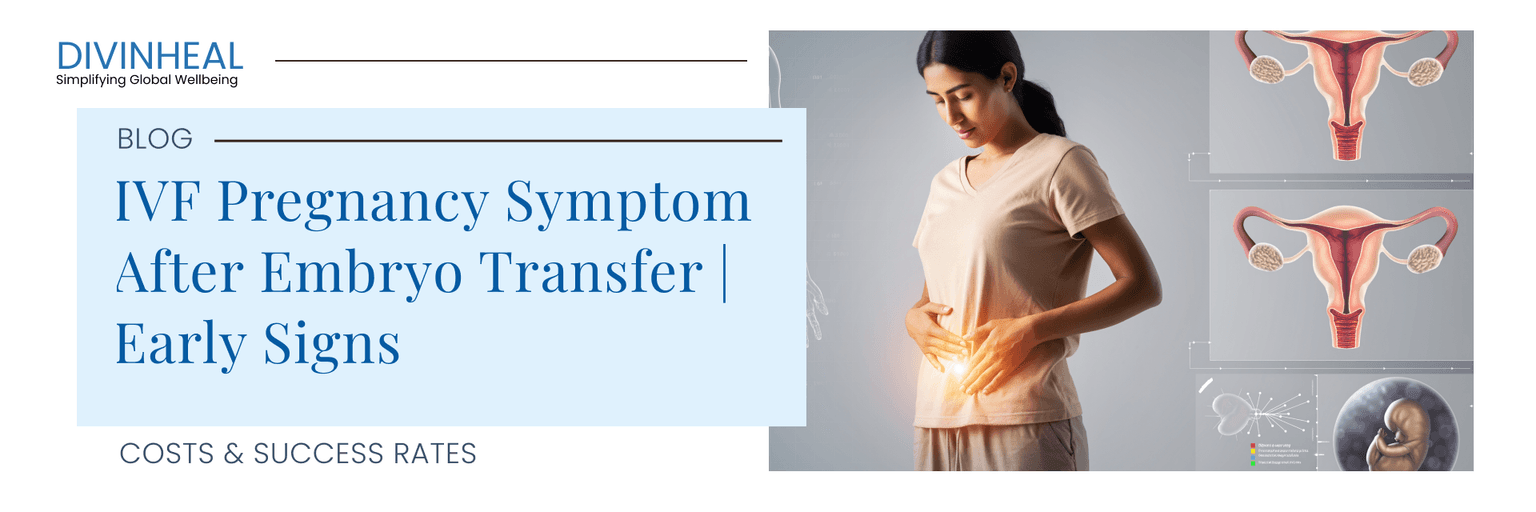
After Embryo Transfer Symptoms: Day-by-Day Signs

Written by DivinHeal Editorial Contributor, Rahul Kumar, Embryologist | Medically Reviewed by Dr Indu Priya, Gynecologist(MD) Published on: 2025-11-27
After Embryo Transfer Symptoms: What You’ll Feel Day by Day
After a frozen blastocyst transfer (FBT), most patients
notice the first signs of implantation between days 6 and 10 post-transfer.
These include light spotting, mild cramping, breast tenderness, and fatigue.
Many patients feel nothing at all — and that is equally normal. The absence of
symptoms does not predict the outcome.
This guide covers what to expect day by day after embryo
transfer. It explains when to take a pregnancy test and how to read the
results. It is written for patients planning IVF treatment in India with
Divinheal. That includes patients from the UAE, Australia, and the UK. It
answers the most common questions directly.
Plan My Journey
Tell us your condition and budget — our AI matches the right destination, hospital and doctor and visa pathway
What Happens Inside Your
Body After Embryo Transfer?
After
a frozen blastocyst transfer, the embryo is placed into a prepared uterine
lining and begins its journey toward implantation. The key events happen in the
first 1–10 days.
Days 1–5: Implantation Window and
Hormonal Shifts (FBT-Specific)
With a frozen
blastocyst (day-5 embryo), the implantation window opens earlier than with a
day-3 transfer. In the first 1–5 days post-FBT, the embryo hatches from its
shell and begins attaching to the uterine lining. Your clinic will prescribe progesterone
support during this window. This may be vaginal pessaries, injections, or gel.
During these
first days, your hormonal state is driven by the progesterone medication.
Pregnancy hormones have not kicked in yet. This means most sensations you feel
in days 1–5 come from the medication. They are not implantation signals.
Days 6–10: hCG Production and
Early Signals
If implantation
happens about 6 and 10 days after FBT, the embryo starts producing a harmone
called HCG (human chorionic gonadotropin). This is the hormone that pregnancy test detects. In a viable
pregnancy, HCG roughly doubles every 48–72 hours. As HCG rises, some patients
notice subtle changes: mild cramping, light spotting, breast tenderness, or fatigue.
Others notice nothing
The key clinical
point: neither the presence nor the absence of symptoms at this stage reliably
predicts whether implantation occurred. Only a blood hCG test confirms this.
Symptoms vs Medication Side
Effects: How to Tell the Difference
This is the
question most patients focus on during the two-week wait. The honest answer is
that you often cannot tell the difference without a blood test. Progesterone
causes bloating, breast tenderness, fatigue, and mood changes. These are the
same sensations as early pregnancy. Estrogen causes nausea and fluid retention.
Both medications are given to every FBT patient. So every patient will feel
something — whether or not implantation occurred.
The most reliable
approach is to track what you feel without interpreting it. Write it down if it
helps. But wait for the official test date your clinic gives you.
Positive Signs After
Embryo Transfer: A Day-by-Day Timeline
The
symptoms below are potential positive signs, not guarantees. They arise from a
combination of implantation activity and ongoing hormonal support. Every
individual’s response is different.
What Are the First Signs of
Pregnancy After Embryo Transfer?
|
Day Range (Post-FBT) |
Potential Experience |
Clinical Explanation |
|
Days 1–3 |
Mild bloating, heaviness |
Progesterone effect — not pregnancy-specific. Almost
universal in FBT patients. |
|
Days 3–5 |
Mild cramping, low abdominal pressure |
Uterine lining responding to the embryo's presence. Also a
medication side effect. |
|
Days 5–7 |
Light spotting (pink or brown), twinges |
Possible implantation bleeding — lighter than a period,
lasting hours to 2 days. Not present in all successful implantations. |
|
Days 6–10 |
Breast tenderness, fatigue, heightened sense of smell |
Rising hCG levels if implantation occurred, combined with
progesterone. Breast tenderness is one of the earlier hCG-driven signs. |
|
Days 10–14 |
Nausea, frequent urination, positive pregnancy test |
These symptoms emerge as hCG rises significantly. A blood
beta-hCG test is reliable from approximately day 10. |
What Does Implantation Feel Like
After IVF?
Implantation
itself is not usually a dramatic sensation. Patients who do notice something describe
it as:
- A brief, dull ache or pressure in the lower
abdomen — not sharp, not severe
- A faint pulling or tightening feeling, different
from typical period cramps
- Occasional twinges on one or both sides
These sensations
last minutes to hours, not days. They happen because the embryo is embedding
into the uterine wall. This triggers a localised tissue response. Not all
patients feel anything. One large study found fewer than 30% of IVF patients
reported any identifiable implantation sensations. Feeling nothing does not
mean implantation failed.
Is It Normal to Have No Symptoms
After Embryo Transfer?
Yes — and it’s
more common than most patients expect. Many women who go on to successful
pregnancies report no symptoms in the first 7–10 days post-transfer. The
uterine lining, the embryo’s attachment, and the early hormonal shifts happen
at a cellular level. Most bodies don’t register these changes as distinct
sensations.
Focusing
intensely on symptoms tends to amplify anxiety. If you feel nothing, that tells
you nothing about the outcome. Wait for your blood test.
When to Take a Pregnancy
Test After Embryo Transfer
How Soon After IVF Can You Tell
If You’re Pregnant?
A blood test that
measures beta-HCG is the most reliable way to confirm pregnancy. It is reliable
from approximately 10–12 days after a frozen blastocyst transfer. At
NABH-accredited hospitals in India, the standard is a blood test at day 12–14
post-FBT. This applies to Apollo Hospitals Chennai, Fortis Noida, and Medanta
Gurgaon. Your clinic will give you a specific date. Follow it precisely.
A home urine test can detect hCG from around
days 11–14. It depends on the brand. Home tests need hCG above 25 mIU/mL. Blood
tests detect from 10–25 mIU/mL. So blood tests confirm a pregnancy 1–2 days earlier,
with greater accuracy.
Blood Test vs Home Test: Which Is
More Accurate After IVF?
A blood beta-hCG
test is always more accurate after embryo transfer. Here is why: progesterone
supplementation can suppress the hormonal cues that trigger a period. So a
negative urine test at day 8 or 9 may simply mean hCG hasn’t hit the detection
threshold yet. It does not mean the cycle failed. Testing too early causes
unnecessary distress.
If you take a
home pregnany test before your official blood test date, use a sensitive
digital test (threshold 10–25 mIU/mL). Don't draw conclusions from a negative
result. Only the blood beta-hCG test is diagnostic.
Is a Faint Positive 12 Days After
Embryo Transfer a Good Sign?
A faint positive
at day 12 post-FBT is generally encouraging. In a healthy early pregnancy, hCG
at day 12 is typically between 50–300 mIU/mL. This is enough for most sensitive
home tests to show a faint line. Line intensity matters less than whether hCG
is rising. Your clinic will schedule a repeat blood test 48 hours later. This
confirms whether hCG is doubling as expected. A doubling hCG is a far better
indicator than line darkness.
A faint line that
doesn’t darken may indicate a biochemical pregnancy. So may a negative blood
test after a faint home positive. A biochemical pregnancy means an implantation
that began but did not develop further. Your clinical team will explain next
steps.
How Many Weeks Am I After Embryo
Transfer?
IVF weeks are
counted differently from natural conception. If you have had a frozen
blastocyst transfer (day-5 embryo), your clinical pregnancy is dated from the
egg retrieval. It is not dated from the transfer date. The embryo was already 5
days old when transferred. So at the point of transfer, you are already
approximately 2 weeks and 5 days pregnant in clinical terms. Here is how the
counting works:
- Transfer day (FBT, day-5 embryo): approximately
2 weeks + 5 days pregnant.
- Day 10 post-transfer (blood test day):
approximately 3 weeks + 1 day pregnant.
- Day 14 post-transfer: approximately 3 weeks + 5
days pregnant.
- First ultrasound (typically 5–6 weeks
post-transfer): pregnancy will show at approximately 7–8 weeks gestational age.
Your fertility
team will give you a gestational age and an estimated due date when your blood
test is positive. These calculations are standard across NABH-accredited
hospitals in India.
The Two-Week Wait After
Embryo Transfer: Do‘s, Don’ts, and Coping
What to Do (and Avoid) After a
Frozen Embryo Transfer
The two-week wait
(TWW) after a frozen embryo transfer is the most emotionally demanding part of
IVF. Knowing what actually helps — and what is just noise — makes it easier.
What your clinic
will recommend:
- Continue all prescribed medications exactly as instructed — progesterone, estrogen, and any supplements.
- Light walking is encouraged; it aids circulation
without mechanical stress on the uterus.
- A balanced diet — there’s no specific
implantation diet supported by strong evidence, but adequate protein and folate
are standard recommendations.
- Avoid: heavy lifting, strenuous exercise,
high-heat environments (saunas, hot baths), alcohol, and smoking.
- Avoid early home pregnancy testing — it
increases anxiety without providing reliable information.
At MAX Hospitals
and Fortis Noida, the standard post-FBT guidance recommends light activity from
day 2 onwards. Bed rest is not required unless your specialist specifically
instructs it.
Can Stress Cause an Embryo
Transfer to Fail?
This is one of
the most common questions during the TWW — and the evidence-based answer is reassuring.
Psychological stress alone does not cause implantation failure. Multiple
studies found no consistent association between stress levels and IVF
implantation or live birth rates. This includes a 2022 systematic review in
Fertility and Sterility. The body’s implantation mechanisms are robust. They
are not overridden by emotional state.
It is important to manage your anxiety matters
for your overall well-being, even if it doesn't directly impact the embryo.
Something like using mindfulness apps, doing light stretching, reading, or
talking with your Divinheal coordinator can help you stay calm and more
relaxed.
What doesn't
help:
- Googling symptoms obsessively
- Comparing notes with others on IVF forums
- Testing at home before your clinic’s scheduled
date
Red Flags After Embryo Transfer:
When to Call Your Clinic
Most sensations
after embryo transfer are normal and manageable. Call your clinic immediately
if you experience any of the following:
- Heavy vaginal bleeding — heavier than a normal
period, or passing clots
- Severe abdominal pain — sharp, cramping, or
one-sided pain that doesn’t ease
- Fever above 38°C (100.4°F) or chills
- Sudden severe bloating or feeling faint —
possible signs of ovarian hyperstimulation syndrome (OHSS), which can persist
after the transfer
- Shoulder tip pain — sometimes a referred pain
sign of internal bleeding
NABH-accredited
hospitals in India provide 24-hour patient helplines for international
patients. Divinheal’s patient coordinator remains contactable by WhatsApp
throughout your stay and for 30 days post-return.
IVF Cost in India for UAE,
Australia & UK Patients (2026).
International
patients typically save 50–70% on a full IVF cycle in India. This is compared
to private costs in the UAE, Australia, or the UK. For UK patients, savings can
reach up to 80% when comparing with private UK clinic pricing. Clinical
standards at JCI-accredited Indian hospitals are not compromised.
The
table below shows estimated costs for one full IVF cycle including the frozen
embryo transfer. Figures are based on 2025–2026 private-healthcare data.
|
Country |
Approx. Cost (1 Cycle) |
Vs India (USD) |
Savings vs India |
Notes |
|
India |
₹1,50,000–₹3,00,000 ($1,600–$3,190) |
$1,600–$3,190 |
— |
NABH/JCI-accredited; package includes most medications |
|
UAE |
AED 28,000–55,000 ($7,600–$14,980) |
$7,600–$14,980 |
60–72% less in India |
Premium Dubai/Abu Dhabi private hospitals |
|
Australia |
AUD 11,000–20,000 ($7,150–$13,000) |
$7,150–$13,000 |
60–70% less in India |
Out-of-pocket after Medicare; wait-lists common |
|
UK |
£4,500–£8,500 ($6,000–$11,900) |
$6,000–$11,900 |
70–80% less in India |
Private clinic cost; NHS covers very limited cases |
|
Nigeria (reference) |
NGN 1,800,000–3,500,000 ($1,330–$2,590) |
$1,330–$2,590 |
Comparable to India |
Limited specialist technique availability locally |
Sources:
Max Healthcare, Apollo Fertility, Fortis Healthcare (India); Monash IVF 2025
(Australia); CRGH 2025 (UK); Dubai private clinic benchmarks (UAE). All figures
are approximate private-healthcare ranges.
Why India Costs Less — Without
Lower Standards?
India’s cost
advantage comes from lower operating costs and larger patient volumes. Over
50,000 IVF cycles are performed annually per ICMR estimates. A competitive
private fertility market also keeps prices low. It does not come from cutting
corners on technology or protocols. NABH and JCI accreditation at partner
hospitals means independent verification of quality, safety, and ethical
standards. The same embryology equipment is standard at partner hospitals
including Apollo Hospitals Chennai, Fortis Noida, Medanta Gurgaon, and MAX
Hospitals. This includes time-lapse incubators, ICSI micromanipulation systems,
and cryopreservation vitrification technology.
For patients who
need two or three cycles — which is statistically common — the cost difference
adds up quickly. Two IVF cycles in India through Divinheal can cost less than a
single cycle at a private UK clinic.
How Divinheal Supports
International Patients During IVF
UAE Patients
Fatima and her husband from Dubai completed
their frozen embryo transfer at Apollo Hospitals Chennai. They had two
unsuccessful cycles at a Dubai clinic before this. Their Divinheal coordinator
arranged a direct consultation before travel. This included a 22-day stay
package with a service apartment and WhatsApp support through the two-week
wait. Fatima’s beta-hCG confirmed a viable pregnancy at day 12. Their total
India cost — including flights and accommodation — was approximately 55% less
than their previous UAE clinic quote.
Stories are illustrative composites based on
typical patient journeys. Names changed for privacy.
Australian Patients
James and Rachel from Melbourne had
been on a public fertility waiting list for 14 months. After a second opinion
at Medanta Gurgaon, arranged through Divinheal, they completed their frozen blastocyst
transfer within 6 weeks. Their fertility specialist at Medanta held Fellowship
training in reproductive medicine and had international publications in
embryology. The total cycle cost in India was AUD 7,400 all-in. This compared
with an AUD 14,000 private clinic quote at home.
Stories are illustrative composites
based on typical patient journeys. Names changed for privacy.
What Divinheal Handles — Start to
Finish
Divinheal
coordinates the full IVF journey to India. This includes:
Clinic matching based on your medical profile,
diagnosis, and required techniques (ICSI, PGT-A, donor egg, FBT).
- Hospital appointment booking at NABH-accredited
partner hospitals.
- Medical visa invitation letter for UAE,
Australian, and UK nationals.
- Accommodation close to your treatment clinic,
typically 1–2 km away.
- Airport transfers arranged for both arrival and departure.
- A dedicated WhatsApp-accessible patient
coordinator throughout your stay.
- Post-return telemedicine follow-up coordination
with your treating specialist.
Divinheal does not charge a placement fee. Partner hospital rates are Divinheal’s direct patient pricing — not marked up. Patients can also request a second opinion from a different partner hospital before committing.
Cost Calculator
I know my treatment — show me cost from 3 hospitals
Final Thoughts
After a
frozen blastocyst transfer, symptoms tell you very little. The two-week wait is
genuinely difficult. What helps is having accurate information, a clear test
date, and practical support. Many patients from the UAE, Australia, and the UK
have completed their IVF journey in India through Divinheal. They saved 50–80%
on treatment costs without compromising on clinical quality.
If you are ready
to explore your options, Divinheal will match you to the right NABH-accredited
fertility hospital. Divinheal will arrange every step of the trip and keep you
supported from first enquiry to final result. Request a free case evaluation
and written cost estimate at the link below.
Disclaimer: All
cost figures are approximate estimate for2025–2026 and are baed on private
healthcare. Individual costs depend on hospital tier, surgeon experience, and
protocol complexity. All Medical decisions should be made in consultation with
a qualified specialist. Patient stories are illustrative composites based on
typical journeys; names changed for privacy. Medical claims should be verified
by the Divinheal medical team before publication.
Plan My Journey
Tell us your condition and budget — our AI matches the right destination, hospital and doctor and visa pathway
Cost Calculator
I know my treatment — show me cost from 3 hospitals
Recommended Article

Best In Vitro Fertilization (IVF) Doctors in Hyderabad
Doctors for Nephrology: Find Kidney Care Specialists
Doctors in Chennai: Find Medical Specialists in India
Best Embryo Freezing Hospitals in Hyderabad: Care Guide
Hospitals for reproductive surgery: Compare options
Hospitals in Gurugram: Guide to Quality Facilities
IVF Treatment in Haryana | Cost, Hospitals & Doctors
TAVR (Transcatheter Aortic Valve Replacement) cost in New Delhi
Tonsillectomy & Adenoidectomy Success Rate in Mumbai
Facelift & Anti-Aging Procedures in Chennai for Ethiopia Patients | Cost, Hospitals
Written by DivinHeal Editorial Contributor, Rahul Kumar, Embryologist | Medically Reviewed by Dr Indu Priya, Gynecologist(MD) Published on: 2025-11-27
Plan My Journey
Tell us your condition and budget — our AI matches the right destination, hospital and doctor and visa pathway
Cost Calculator
I know my treatment — show me cost from 3 hospitals
Booking With DIVINHEAL
Get a free consultation to understand your treatment options
Recommended Article
Best In Vitro Fertilization (IVF) Doctors in Hyderabad
Doctors for Nephrology: Find Kidney Care Specialists
Doctors in Chennai: Find Medical Specialists in India
Best Embryo Freezing Hospitals in Hyderabad: Care Guide
Hospitals for reproductive surgery: Compare options
Hospitals in Gurugram: Guide to Quality Facilities
IVF Treatment in Haryana | Cost, Hospitals & Doctors
TAVR (Transcatheter Aortic Valve Replacement) cost in New Delhi
Tonsillectomy & Adenoidectomy Success Rate in Mumbai
Facelift & Anti-Aging Procedures in Chennai for Ethiopia Patients | Cost, Hospitals
From Consultation to Recovery,
Step by Step
Expert Specialist Matching
Connecting you with the world's top-rated medical experts.
Accredited Hospital Network
Access to JCI & NABH certified healthcare facilities.
Complete Travel Coordination
Hassle-free visa, stay, and local transport assistance.
24/7 Personal Care
Dedicated patient advisors supporting you at every step.
Journey Guidance
Full guidance from start to end of the patient treatment journey.
Expert Specialist Matching
Connecting you with the world's top-rated medical experts.
Everything you
need to know today
Browse through these common inquiries to better understand our patient-focused medical platform.
Light spotting or implantation bleeding, usually 5–10 days after-FBT, is often the earliest sign. Mild cramping, breast tenderness, and fatigue may also appear, but these can equally be progesterone medication side effects. Individual responses vary widely. Only a blood beta-hCG test confirms a pregnancy.
A blood beta-hCG test is reliable from approximately day 10–12 post-FBT. Home urine tests can show a positive from day 11–14. Accuracy is lower before day 14. Your clinic will give you a specific test date — follow it rather than testing early.
Yes. Progesterone and estrogen — both prescribed during FBT cycles — cause bloating, breast tenderness, fatigue, and mood changes. These are identical to early pregnancy symptoms. It is not possible to reliably distinguish medication effects from implantation signs without a blood test.
Yes — and it’s very common. Many successful pregnancies begin with no noticeable symptoms in the first 7–10 days. The absence of symptoms does not predict failure. Avoid symptom-checking as a measure of outcome; focus on your official test date.
The biological symptoms of early pregnancy are the same whether conception is natural or via IVF. The difference is that IVF patients are taking hormonal medications. These medications mimic many early pregnancy sensations. This makes the two weeks between transfer and test harder to interpret.
Avoid highly processed foods, raw or undercooked meat and fish, and high-mercury seafood (such as swordfish and king mackerel). Also avoid excessive caffeine — ICMR guidelines recommend under 200mg/day during fertility treatment. Focus on a balanced diet with adequate protein, folate, and hydration. There is no specific ‘implantation diet’ with strong clinical evidence.
A faint positive at day 12 post-FBT is generally positive news. In early pregnancy, hCG rises rapidly — doubling every 48–72 hours. A faint line that darkens in a repeat test 48 hours later is a strong indicator of a viable pregnancy. Your clinic will confirm with a blood beta-hCG and a repeat test to verify the rise.
A negative blood beta-hCG result on your official test date is the most reliable indicator. If implantation has not occurred, the test usually show no hCG or very low levels that non-rising hCG. Your fertility specialist will then discuss your case. This may include protocol adjustments, embryo quality review, or additional investigations before a subsequent cycle.
A frozen embryo transfer cycle usually takes around 7–12 days in India. Pre-transfer preparation including (lining checks, medication adjustment) typically takes 4–6 days. The transfer itself is a brief outpatient procedure. Most clinics recommend 2–3 days rest before travel. The official pregnancy test at day 12 can be done at a local lab in your home country. Results can be shared with your Divinheal team remotely.
Divinheal offers complete, end-to-end support throughout your treatment. This includes clinic matching, hospital appointment booking, medical visa invitation letters, accommodation near the treatment hospital, and airport transfers. A dedicated WhatsApp-accessible patient coordinator is available throughout your stay. Post-return, Divinheal coordinates telemedicine follow-ups with your treating specialist. Divinheal also helps connect you to local healthcare providers for ongoing monitoring.
Most fertility specialists recommend budgeting for one to three cycles. Cumulative live birth rates after three cycles are 51–68% for women under 38 (HFEA data). Frozen embryo transfers in India can cost 60–75% less than in the UAE, Australia, or the UK. So planning two cycles in India often costs less than a single cycle at home. Many patients also bank multiple embryos from a single egg retrieval to reduce future travel.
Still have more questions?
Book a call with our friendly team to learn how DivineHeal simplifies your healthcare journey.








