Symptoms of Higher Estrogen: Causes, Diagnosis & Treatment — Why UAE, UK & Nigerian Patients Choose India
Around 40% of women over 35 have some form of hormonal imbalance. That’s according to a 2023 ICMR report. For many, the symptoms of higher estrogen arrive quietly. Unexplained weight gain, breast tenderness, heavy periods, or mood swings can disrupt daily life before you even get a diagnosis.
If you’re reading this from Dubai, Lagos, or London, then here’s what matters. In India, specialist hormone care costs 50–80% less than you would pay at a private clinic in your home country. Apollo Hospitals Delhi and Fortis Healthcare Gurgaon are JCI-accredited hospitals. Their endocrinologists have fellowships from UK & USA internationally. NHS and UAE specialist waiting lists are generally 3-6 months. Most of the consultations coordinated by Divinheal in India are confirmed within 2 weeks.
This guide covers:
How to recognise symptoms of high and low estrogen
What causes estrogen dominance — and what makes it worse
Treatment options: estrogen-rich foods, estrogen gel therapy, and BHRT
A detailed cost comparison for UAE, UK, and Nigerian patients
How Divinheal coordinates your full treatment journey in India
Individual outcomes vary. Consult your specialist for personalised advice.
Plan My Journey
Tell us your condition and budget — our AI matches the right destination, hospital and doctor and visa pathway
What Are the Symptoms of Higher Estrogen?
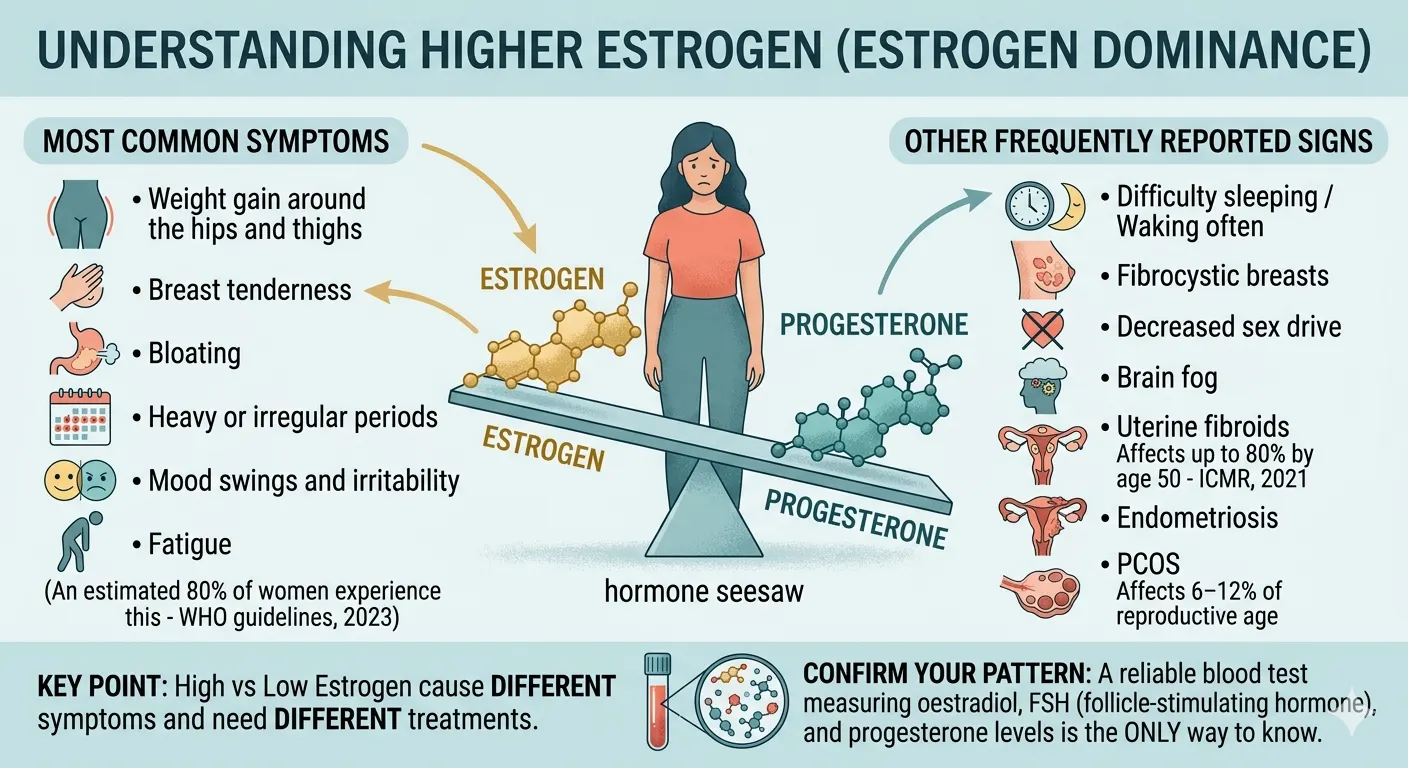
Symptoms of higher estrogen — also called estrogen dominance — happen when estrogen is high relative to progesterone. Think of these two hormones as a seesaw. When one goes up, the other must balance it out. An estimated 80% of women experience this pattern at some point in their lifetime (WHO general guidelines, 2023).
The most common symptoms are:
Weight gain around the hips and thighs
Breast tenderness
Bloating
Heavy or irregular periods
Mood swings and irritability
Fatigue
Other signs women frequently report:
Difficulty sleeping or waking often during the night
Fibrocystic breasts — lumpy, tender breast tissue that tracks the cycle
Decreased sex drive
Brain fog or difficulty focusing
Uterine fibroids — benign growths linked to estrogen; affect up to 80% of women by age 50 (ICMR, 2021)
Endometriosis — uterine-lining tissue growing outside the uterus, closely linked to estrogen dominance
PCOS — polycystic ovary syndrome, affecting 6–12% of women of reproductive age
Weight gain around the hips and thighs
Breast tenderness
Bloating
Heavy or irregular periods
Mood swings and irritability
Fatigue
Difficulty sleeping or waking often during the night
Fibrocystic breasts — lumpy, tender breast tissue that tracks the cycle
Decreased sex drive
Brain fog or difficulty focusing
Uterine fibroids — benign growths linked to estrogen; affect up to 80% of women by age 50 (ICMR, 2021)
Endometriosis — uterine-lining tissue growing outside the uterus, closely linked to estrogen dominance
PCOS — polycystic ovary syndrome, affecting 6–12% of women of reproductive age
Key point: high estrogen and low estrogen cause different symptoms and need different treatments. A blood test measuring oestradiol, FSH (follicle-stimulating hormone), and progesterone levels is the only reliable way to confirm which pattern you have.
How Do You Feel When Your Estrogen Is High?
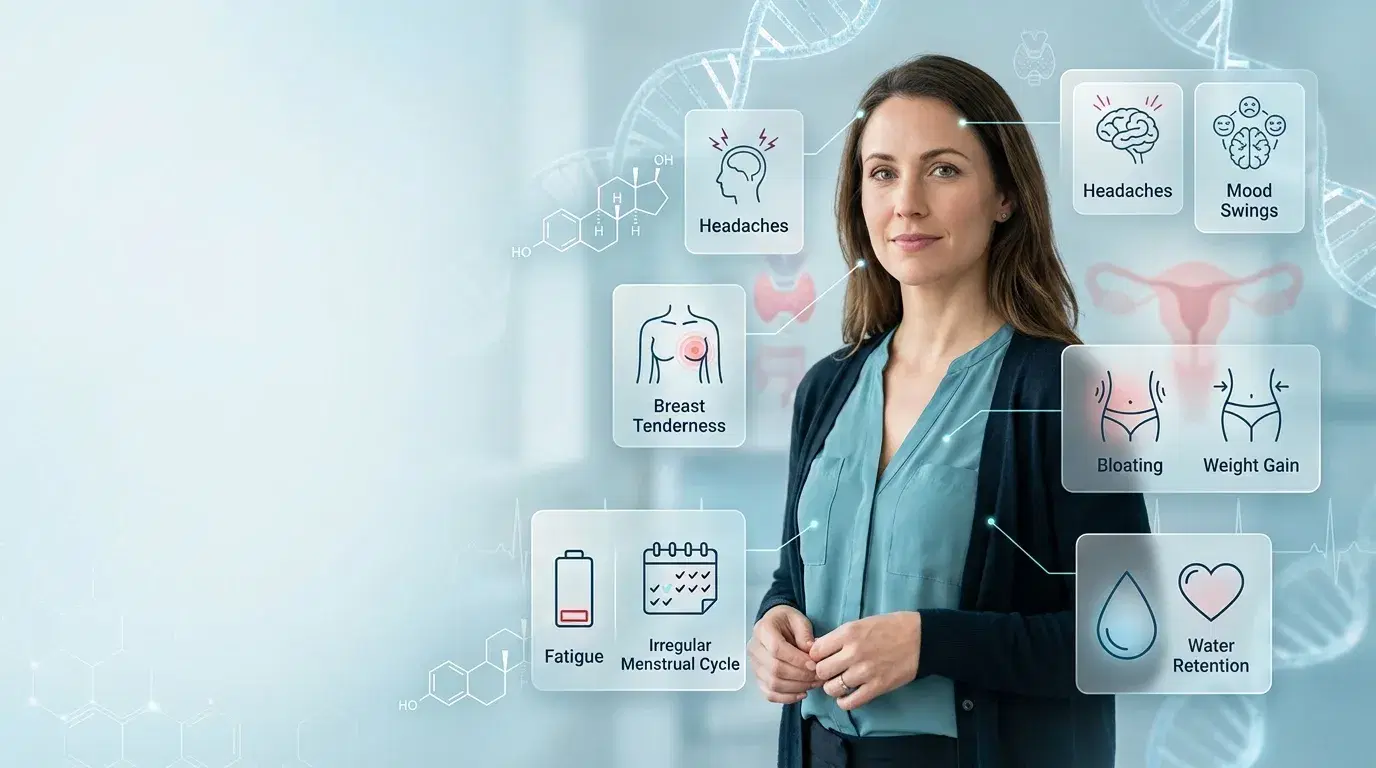
Women with high estrogen tend to feel more emotional than usual. You might feel more anxious, tearful before your period, or irritable in ways that feel out of proportion. Physically, your abdomen may bloat even without changes to your diet. Your breasts may swell and feel tender around your cycle.
Many women describe feeling out of control emotionally in the second half of their cycle — the luteal phase. That’s when progesterone should be balancing estrogen, but it isn’t producing enough.
Over time, unmanaged estrogen dominance can lead to PCOS, endometriosis, uterine polyps, and abnormal vaginal bleeding. A gynaecological endocrinologist at a JCI-accredited Indian hospital can diagnose and treat all of these.
What Does High Estrogen Look Like? (Physical Signs)
Common physical signs of elevated estrogen:
Weight gain around the hips, thighs, and lower abdomen
Breast enlargement, tenderness, or fibrocystic changes
Bloating that persists beyond your period
Heavy periods — soaking through protection more often than before
Painful cramping that has worsened from your previous baseline
Abnormal vaginal bleeding between periods or after menopause
Acne around the jawline
Facial puffiness and water retention are visible in the hands and feet
Uterine fibroids or polyps found on pelvic ultrasound
Mood changes — anxiety, low mood, or irritability that worsens cyclically
These signs can overlap with thyroid problems, which affect up to 10% of women globally (WHO). A full diagnostic panel — including TSH, T3, T4 alongside hormone levels — is essential before starting treatment.
Understanding Estrogen Dominance: What It Really Means
Estrogen dominance is not just about having too much estrogen. It means estrogen is high relative to progesterone — even when both levels are within their normal ranges on their own. The ratio between these two hormones matters more than either number alone.
Estrogen dominance is most common in three life phases:
Adolescence — early cycles are often anovulatory (no egg released), leaving progesterone low relative to estrogen. This explains heavy, painful periods and intense mood swings in teenage years.
Reproductive years (20s–40s) — PCOS, chronic stress, poor diet, and missed ovulation are the main drivers.
Perimenopause (mid-40s onward) — ovulation becomes irregular, progesterone drops, and estrogen fluctuates before eventually declining.
What Causes High Estrogen Levels?
The more common problem is not overproduction — it’s the body failing to clear estrogen properly. Key causes:
Xenoestrogen exposure — BPA in plastics, pesticide residues, and compounds in some personal care products mimic estrogen. They build up in body tissue over time.
Poor liver function — the liver breaks down used estrogen for removal. Alcohol, fatty liver, and some medications slow this process. That causes estrogen to recirculate.
Anovulation — missed ovulation (from PCOS, extreme exercise, or chronic stress) means no progesterone is made. This leaves estrogen unchecked.
Low dietary fibre — fibre binds to surplus estrogen in the gut; a low-fibre diet allows it to be reabsorbed
Chronic stress — high cortisol competes for the same building blocks as progesterone, cutting its production
Excess body fat — fat tissue produces oestrone, a form of estrogen. Extra body weight creates a second estrogen source. This tips the balance.
What Age Is Estrogen Highest?
Estrogen peaks in the late teens to late 20s during peak reproductive years. Levels start to fall in the early 30s. They drop more sharply during perimenopause, between ages 45 and 52. But estrogen dominance — high estrogen relative to progesterone — can happen at any age when ovulation is disrupted, or progesterone production is impaired.
Estrogen and Progesterone: How These Two Hormones Work Together
Estrogen and progesterone are the two main female sex hormones. They work as a pair throughout the menstrual cycle.
Estrogen drives the follicular phase (days 1–14). It builds the uterine lining and triggers ovulation with LH. It also supports mood, skin, and bone density. Progesterone takes over in the luteal phase (days 15–28). It stabilises the uterine lining for possible implantation. It calms the brain via GABA receptors. It also directly balances estrogen’s growth effects.
When progesterone drops — from missed ovulation, perimenopause, or stress — estrogen has no counterweight. That imbalance is estrogen dominance, even when estrogen itself is within the normal reference range.
What Is the Difference Between Estrogen and Progesterone?
Estrogen builds and stimulates. It thickens the uterine lining and drives the first half of your cycle. It also supports bone density, heart health, and serotonin. Progesterone calms and stabilises. It holds the uterine lining in the second half of the cycle. It supports early pregnancy, reduces inflammation, and calms the nervous system via GABA receptors.
You need both — and you need them in proportion.
What Happens When You Take Estrogen and Progesterone Together?
Doctors prescribe combined HRT (estrogen and progesterone) for women with an intact uterus during menopause, or for certain fertility conditions. The progesterone component protects the uterine lining from being overstimulated by estrogen. This prevents endometrial hyperplasia — abnormal thickening that raises uterine cancer risk.
Important: Research quoted from the site mymenoplan.org suggests that taking the two together may increase your chances of breast cancer more than using just estrogen. For this reason, you must have proper medical care when taking both hormones, including frequent checkups and annual breast scans. Never start or change combined HRT without specialist guidance.
Low Estrogen Symptoms: What Your Body Is Telling You
Low estrogen causes a different set of symptoms from estrogen dominance. Treating the wrong pattern can make your condition worse. This distinction matters before starting any hormone therapy.
Typical low estrogen symptoms:
Hot flushes and night sweats — affect around 80% of menopausal women (NHS, 2023)
Vaginal dryness and discomfort during intercourse
Irregular or absent periods
Mood changes — anxiety, low mood, and reduced motivation as estrogen’s serotonin-supporting effect drops
Bone density loss — WHO data shows 25–30% of post-menopausal women globally develop osteoporosis
Reduced skin elasticity, thinning hair, and hair loss
Fatigue, difficulty focusing, and reduced libido
Low estrogen can also result from:
Oophorectomy – surgical removal of the ovaries
Chemotherapy or radiotherapy to the pelvis region
Hypothalamic amenorrhea caused by intense exercise and/or low body fat
Specific cases of autoimmune diseases that impact ovarian function (NICE Guidelines, 2022)
Can Low Estrogen Cause Weight Gain?
Yes. Research from the University of Chicago Medicine explains that declining estrogen and progesterone trigger changes in metabolism. Muscle mass reduces and fewer calories are burned at rest. Fat builds up — especially around the abdomen — even without changes to diet or exercise. This abdominal weight gain is common among women in their 40s and 50s even when they keep up regular exercise and diet.
How to Increase Estrogen Levels Naturally — And When You Need Medical Help
Diet and lifestyle changes can support estrogen balance. But they are supportive measures, not treatments for clinically low estrogen.
Increase flaxseeds, soy products, legumes, and sesame seeds (phytoestrogen-rich foods)
Make sure you get enough Vitamin D and B vitamins, which support hormone production
Manage stress — high cortisol suppresses reproductive hormones
Keep a healthy body weight — very low body fat suppresses ovarian estrogen production
Aim for 7–9 hours of quality sleep — too little sleep reduces reproductive hormone production
Caution: If you already have symptoms of high estrogen, eating more phytoestrogens may worsen the imbalance. Get a blood test to confirm your hormonal pattern before making dietary changes.
If blood tests confirm clinically low estrogen — especially post-menopause — medical hormone therapy (estrogen gel, patches, or BHRT) will be needed. Dietary approaches alone are not enough for significant deficiencies.
Treatment Options: From Estrogen-Rich Foods to Estrogen Gel Therapy
Hormone imbalance treatment is personalised — there is no single protocol that works for everyone. Your specialist will design a treatment plan based on your blood results, symptoms, age, reproductive goals, and medical history. India’s JCI-accredited hospitals offer the full range: dietary and lifestyle guidance, pharmaceutical HRT, bioidentical hormone therapy (BHRT), and integrative support.
Estrogen-Rich Foods: What to Eat (and What to Avoid)
Phytoestrogens are plant-based chemicals that have mild estrogenic effects. According to Harvard Health (2021), phytoestrogens may help provide hormonal benefits, particularly to women who have low or waning estrogen levels:
Food | Phytoestrogen Type | Effect |
Flaxseeds | Lignans (highest of any food) | Gentle estrogen modulation, supports metabolism |
Soy (tofu, edamame, soy milk) | Isoflavones | Mild estrogenic activity; supports bone density |
Legumes (chickpeas, lentils) | Isoflavones, coumestans | Hormone balance support |
Sesame seeds | Lignans | Antioxidant + mild estrogenic effect |
Cruciferous vegetables (broccoli, kale) | Indole-3-carbinol (I3C) | Supports liver estrogen clearance — key for estrogen dominance |
Foods to limit if you have estrogen dominance or high estrogen:
Alcohol — slows the liver’s clearance of estrogen, causing it to recirculate and worsen dominance
Processed red meat — may contain synthetic hormones from some commercial farming practices
Excess caffeine — linked to altered estrogen metabolism in some population studies
High-saturated-fat foods — can disrupt hormonal signalling
What drink supports estrogen levels? Soy-based drinks (soy milk, edamame smoothies) provide isoflavones with mild phytoestrogenic activity. Some herbal teas — red clover and sage — also have documented phytoestrogenic properties. Note: alcohol can raise estrogen by harming the liver’s clearance function, but this is a harmful effect, not a benefit.
What Is Estrogen Gel, What Is It Used For, and How Should It Be Applied?
Estrogen gel (such as Oestrogel) is a transdermal HRT absorbed directly through the skin into the bloodstream. It bypasses the liver. This makes it better tolerated than oral estrogen tablets for women with elevated clotting risk or liver sensitivity.
What estrogen gel is prescribed for:
Menopausal symptoms — hot flushes, night sweats, vaginal dryness
Surgical menopause after oophorectomy (removal of ovaries)
Osteoporosis prevention after menopause
Premature ovarian insufficiency in younger women
How to apply: Apply daily to clean, dry, intact skin on the outer arm from the shoulder to the elbow or inner thigh. Spread out in a thin layer over a large area. One dose from a metered pump, once daily. Do not use on breasts or near genitals. Rotate sites to avoid localised skin irritation (NHS guidelines).
How quickly does estrogen gel work? Most women see improvement in hot flushes and sleep within 2–4 weeks. Full relief — including mood and vaginal symptoms — typically takes 2–3 months.
Side Effects of Estrogen Gel
Common side effects include: localised skin irritation at the application site, breast tenderness (especially in the first 1–3 months), mild headaches, and occasional nausea. Serious but rare: signs of blood clots — sudden leg swelling, chest pain, or shortness of breath. These need immediate medical attention.
Does estrogen gel cause weight gain? NHS guidance states that most HRT types do not directly cause weight gain. Menopausal weight changes are driven by age-related muscle loss and a slower metabolism — not by the medication. Regular exercise and a balanced diet are the main tools for managing menopausal weight.
Bioidentical Hormone Therapy (BHRT) Available in India
BHRT uses hormones that are chemically identical to those your body produces. They are usually made from plant sources (yams or soy) and individually compounded based on your blood test results. Hospitals like Artemis Hospital, Gurugram and Apollo Hospitals Delhi offer full BHRT programmes:
Full blood panels: oestradiol, progesterone, FSH, LH, testosterone, DHEA-S, and thyroid panel
Individual dosing based on test results — not standardised prescriptions
Follow-up monitoring every 3–6 months with dose adjustments
Available as creams, gels, patches, or pellets depending on your clinical assessment
Important: BHRT is a highly effective medical intervention that requires professional administration and monitoring. The dangers involved include improper dosage, the possibility of worsening one’s hormonal imbalances, and an increased risk of developing cancer for certain formulations.
Cost of Hormone Imbalance Treatment in India vs. UAE, UK & Nigeria
Hormone imbalance treatment in India costs INR 35,000 to INR 1,50,000 ($420 to $1,800) for the initial treatment phase — covering specialist consultation, full blood panels, diagnosis, and first prescription. This is 50–80% less than comparable private care in the UAE, UK, or Nigeria.
Country | Initial Treatment Cost | Approx. USD | Savings vs India |
India (leading hospitals) | ₹35,000 – ₹1,50,000 | $420 – $1,800 | — |
UAE (private clinic) | AED 9,000 – AED 22,000 | $2,450 – $5,990 | ~70% |
UK (private clinic) | £2,500 – £6,000 | $3,150 – $7,560 | ~75% |
Nigeria (specialist care) | NGN 1,500,000 – NGN 4,000,000 | $980 – $2,600 | ~50% |
Cost estimates represent approximate rates at which private healthcare providers operate during the first-stage treatment period. The costs will vary based on the hospital level, medical issue severity, treatment option, whether HRT or BHRT is used, and length of treatment period. Costs source: Divinheal partner hospitals’ rate list, 2025. All figures are private-pay, not insurance-reimbursed.
For UAE Patients — 60–75% Savings vs Dubai Private Clinics
Apollo Hospitals Delhi and Fortis Healthcare Gurgaon both have dedicated international patient teams with Arabic-speaking coordinators and English-fluent clinical staff. Direct flights from Dubai or Abu Dhabi to Delhi take 3–3.5 hours. UAE patients save approximately AED 5,500–AED 16,000 on their initial treatment compared to Dubai private clinics. JCI accreditation at these Indian hospitals meets the same clinical quality standard that UAE patients expect at home. Halal meal options and Arabic-language patient support are available.
For UK Patients — NHS Wait-List Escape with 70–80% Savings
NHS referral waiting times for endocrinology commonly run 3–6 months for non-urgent cases. Divinheal-coordinated consultations in India are typically confirmed within 2 weeks. UK patients save approximately £2,100–£4,200 on their initial treatment compared to private London or regional clinics. Many senior endocrinologists at Divinheal partner hospitals hold postgraduate UK or USA fellowships — the same training standard UK patients are used to.
For Nigerian Patients — Capability, Affordability & Full Logistics Support
Advanced hormonal diagnostics — full blood panels, precise BHRT compounding, and specialist gynaecological endocrinology — are available in India at a level that may not be accessible in Nigeria at the same quality or cost. Nigerian patients save approximately NGN 520,000–NGN 1,400,000 on their initial treatment compared to private Lagos or Abuja specialist care. Divinheal provides step-by-step support for the Indian medical visa application process, with a reported 90%+ success rate for supported applicants.
How Hormone Imbalance Affects Mood, Sleep, and Daily Life
Estrogen and progesterone directly affect brain chemistry — not just reproductive function. Estrogen boosts serotonin and dopamine. Progesterone activates GABA receptors in the brain — the same receptors targeted by anti-anxiety medications — producing a calming, stabilising effect. When these hormones are out of balance, mood, sleep quality, and mental sharpness are directly disrupted.
Common emotional and cognitive symptoms of estrogen imbalance:
Anxiety or panic attacks — especially in the luteal phase (second half of cycle)
Persistent low mood or depression that doesn’t respond to standard therapy alone
Brain fog — poor short-term memory, difficulty maintaining concentration
Disrupted sleep — difficulty falling asleep or waking repeatedly between 2–4 am
Irritability that feels out of proportion to what triggered it
Fatima, 39, from Abu Dhabi had 18 months of unexplained anxiety and weight gain that her local doctors hadn’t linked to hormonal causes. Within 3 months of starting a personalised BHRT plan at Apollo Hospitals Delhi — coordinated by Divinheal — she reported significant improvement in sleep quality and daytime mood stability. Adaeze, 44, from Lagos had severe PMS-related mood swings and heavy bleeding that disrupted her work life. A diagnosis of estrogen dominance and targeted progesterone support resolved her heavy bleeding within two cycles.
Stories are illustrative composites based on typical patient journeys. Names changed for privacy. Individual outcomes vary. Consult your specialist for personalised advice.
Common Myths About Estrogen Therapy — Fact-Checked
Misinformation around hormone therapy is widespread — and stops women from getting treatment that could improve their quality of life.
Myth 1: Hormone imbalances only happen around menopause.
Fact: Estrogen-progesterone imbalances occur at every life stage — from teenage anovulatory cycles to PCOS in the 20s–30s to perimenopause in the 40s. Around 15–20% of women experience clinically significant hormonal disruptions before age 40, requiring professional evaluation (clinical consensus, ICMR 2022).
Myth 2: Natural supplements can fully correct a hormone imbalance.
Fact: Phytoestrogens and supplements such as DIM and magnesium may assist in achieving hormone balance as one of many strategies. However, they cannot serve as an alternative to clinical treatment where a hormone imbalance is medically diagnosed. Although BHRT is considered natural due to its similarities to natural hormones, it is still a very strong drug.
Myth 3: HRT always causes weight gain.
Fact: According to NHS guidelines, the majority of hormone replacement therapy treatments don’t cause weight gain. The menopausal weight changes occur due to ageing and metabolic shifts, but not due to medications.
Myth 4: Indian hospitals offer lower quality care than Western or UAE clinics.
Fact: India has over 40 JCI-certified hospitals (Joint Commission International, 2025) – an internationally recognized certification system that is followed by the United Arab Emirates, the US, and Europe. Most of the Indian endocrinologists have received their training either in the UK or the USA. Apollo Hospitals and Fortis Healthcare publish outcome data benchmarked against global standards.
Top Indian Hospitals for Hormone Imbalance Treatment
In India, 40+ hospitals are accredited by the Joint Commission International (JCI, 2025), and some have endocrinology and gynaecological endocrinology departments. The hospitals and specialists recommended by Divinheal are pre-screened before being recommended.
Hospital | City | Accreditation | Specialty Strength |
Apollo Hospitals | Delhi, Chennai, Hyderabad | JCI + NABH | Endocrinology, BHRT, women’s health |
Fortis Healthcare | Gurgaon, Mumbai | JCI + NABH | Gynaecological endocrinology, hormone panels |
BLK-Max Hospital | Delhi | NABH | Women’s health, hormonal diagnostics |
Artemis Hospital | Gurugram | NABH | BHRT, personalised hormone therapy |
Aster Medcity | Kochi | JCI + NABH | Endocrinology, fertility-hormone link |
Specialist credentials to look for: DM (Endocrinology) — the highest Indian postgraduate endocrinology qualification; FRCP (UK); fellowship from USA or UK institutions. Divinheal provides verifiable specialist profiles and credentials for every recommended doctor.
How Divinheal Coordinates Your Hormone Health Journey
Divinheal connects patients from the UAE, UK, Nigeria, and other countries to accredited hospitals and verified specialists in India. Support covers every step — from your first enquiry to post-return follow-up care.
What Divinheal provides:
Virtual pre-consultation with your chosen specialist before you travel — treatment plan ready on arrival
Medical record review and translation, if needed
Hospital selection matched to your budget, condition, and preferred Indian city
Indian medical visa application guidance — step-by-step, from documents to submission
Airport transfers, accommodation (budget to premium), and local transport
Dedicated in-country patient coordinator — English-speaking; Arabic available for UAE and GCC patients
Post-return teleconsultation support — most follow-up care is managed remotely without a return trip
Duration of stay for initial hormone treatment in India: 7-14 days. This includes consultation, blood tests, diagnosis, prescription, and monitoring at the outset. Follow-up treatment can be managed through telemedicine.
Ready to explore your options? Contact Divinheal’s patient care team for a personalised cost estimate and treatment plan matched to your case.
Cost Calculator
I know my treatment — show me cost from 3 hospitals
Long-Term Hormonal Balance: Recovery Plans and Lifestyle Guidance
Hormone therapy works best as part of a structured lifestyle plan. Divinheal partner hospital specialists provide personalised guidance that goes well beyond your India visit.
Diet and Nutrition for Sustained Hormonal Balance
A high fibre, anti-inflammatory diet promotes estrogen metabolism and elimination. The principles are:
Eat more cruciferous vegetables (broccoli, kale, Brussels sprouts). They are rich in indole-3-carbinol (I3C), a compound that actively promotes the removal of estrogen from the liver.
Avoid alcohol, processed foods, and too much caffeine.
Eat foods high in phytoestrogens if your estrogen level is low; otherwise, limit these foods if you are estrogen dominant.
Clinical data (ICMR 2022) suggests patients who combine dietary changes with medical treatment show up to 20% better long-term hormonal stability than those relying on medication alone.
Exercise, Sleep, and Stress Reduction
Exercise: Aerobic exercise 3 to 5 days weekly aids in regulating cortisol levels and body weight. The presence of excess adipose tissue releases estrogen that may lead to dominance. Be careful not to engage in vigorous workouts, as they inhibit estrogen production.
Sleep: Sleep problems increase cortisol levels and affect progesterone levels. Ensuring that you get 7-9 hours of sleep can be one of the most impactful changes in terms of balancing hormones (NICE guidelines, 2022).
Stress management: Stress is known to affect the HPA (hypothalamus-pituitary-adrenal) axis since high cortisol inhibits the production of progesterone. If stress is managed consistently for 2 to 3 months, it may show hormonal improvements.
Supplements That Support Hormone Balance (Always Consult Your Doctor)
DIM (Diindolylmethane) — supports estrogen metabolism via the liver; promotes less potent estrogen metabolites
Calcium D-glucarate — supports liver clearance of excess estrogen and reduces recirculation
Magnesium — supports progesterone production and GABA activity; reduces PMS anxiety and sleep disruption
Vitamin B6 — supports progesterone production; reduces luteal-phase mood symptoms
Omega-3 fatty acids — reduce inflammatory signals that disrupt hormonal balance
Always consult your specialist before starting supplements — some interact with medications or can worsen certain hormonal patterns.
Individual outcomes vary. Consult your specialist for personalised advice.
Quick Answer — Symptoms of Higher Estrogen at a Glance
Skim this section if you’re short on time.
Symptoms of Higher Estrogen — Summary The most common symptoms of higher estrogen include: unexplained weight gain around the hips and abdomen, breast tenderness, bloating, heavy or irregular periods, mood swings, anxiety, and fatigue. These occur when estrogen is elevated relative to progesterone — a pattern called estrogen dominance. Diagnosis requires a blood test measuring oestradiol, FSH, and progesterone levels. Treatment ranges from dietary changes (flaxseeds, soy, fibre-rich foods) to estrogen gel therapy or bioidentical hormone replacement (BHRT), prescribed and monitored by a specialist. Cost in India (2025): The full initial hormone treatment costs INR 35,000 – INR 1,50,000 ($420 – $1,800), up to 75% less than in private UK or UAE clinics. Divinheal provides expert care to women from Dubai, Lagos, and London through JCI-accredited hospitals in India, including the entire journey from visa support to accommodation and teleconsultations on return. |
Last reviewed: 2026. Medical information may change. Always consult with a qualified specialist before starting or changing any hormone therapy.
Plan My Journey
Tell us your condition and budget — our AI matches the right destination, hospital and doctor and visa pathway
Cost Calculator
I know my treatment — show me cost from 3 hospitals
Booking With DIVINHEAL
Get a free consultation to understand your treatment options
From Consultation to Recovery,
Step by Step
Expert Specialist Matching
Connecting you with the world's top-rated medical experts.
Accredited Hospital Network
Access to JCI & NABH certified healthcare facilities.
Complete Travel Coordination
Hassle-free visa, stay, and local transport assistance.
24/7 Personal Care
Dedicated patient advisors supporting you at every step.
Journey Guidance
Full guidance from start to end of the patient treatment journey.
Expert Specialist Matching
Connecting you with the world's top-rated medical experts.
Everything you
need to know today
Browse through these common inquiries to better understand our patient-focused medical platform.
Women with high estrogen tend to feel more emotional than usual. You may feel more anxious, tearful, or irritable, with symptoms getting worse in the second half of your cycle (the luteal phase). Physically, expect breast tenderness, bloating, and clothes feeling tight around the hips and abdomen. These symptoms are cyclical — they improve after your period, then build again.
While there isn’t one set presentation, some of the most common signs are an increase in weight on the hips, thighs, and lower abdomen, breast enlargement or tenderness that occurs cyclically, and bloating regardless of any dietary changes made (Journal of Clinical Endocrinology). Another sign is usually acne on the chin area, along with facial and hand swelling from fluid retention due to estrogen.
Estrogen builds and stimulates — it thickens the uterine lining, drives the first half of your cycle, supports bone density, and boosts serotonin. Progesterone calms and stabilises — it holds the uterine lining in the second half of the cycle, has a calming effect on the nervous system via GABA receptors, and directly balances estrogen’s stimulating effects. The two must be in proportion. When progesterone drops — from missed ovulation, perimenopause, or stress — estrogen-dominance symptoms emerge even with normal estrogen levels.
The dual HRT helps shield the uterus from excessive stimulation by estrogen. Progesterone acts as a safeguard against endometrial hyperplasia, a condition characterized by excessive thickening, as well as cancer of the uterus. According to studies on mymenoplan.org, the risk of developing breast cancer increases slightly with the use of the dual HRT as compared to that of estrogen alone. This calls for regular monitoring by specialists. Never start or change combined HRT without a specialist consultation.
Estrogen gel (such as Oestrogel) treats menopausal symptoms — hot flushes, night sweats, vaginal dryness — and prevents post-menopausal bone loss. Apply it daily to clean, dry skin on the outer arm from shoulder to elbow, or the inner thigh. Do not apply near the breasts or genital area. One metered pump dose per site, once daily. Most women see improvement in hot flushes within 2–4 weeks. Full relief takes 2–3 months.
The outer arm from the shoulder down to the elbow, or the inner thigh — are both areas of thin skin with good blood supply for absorption through the skin. Spread in a thin layer over a large surface area (not a concentrated spot). Rotate sites to reduce localised skin irritation. One pump dose per application site, once daily, as directed by your specialist.
NHS guidance states most HRT types — including estrogen gel — don’t directly cause weight gain. Menopausal weight changes are driven by age-related muscle loss, a slower metabolism, and fat redistribution — not by the medication. Regular moderate exercise and a balanced diet are the main tools for managing menopausal weight, whether or not you’re on HRT.
Flaxseeds have the highest phytoestrogen concentration of any commonly eaten food, especially rich in lignans. Other high-phytoestrogen foods: soy products (tofu, edamame, soy milk — rich in isoflavones), sesame seeds, chickpeas, lentils, and dried fruits, including apricots and dates. These offer mild estrogenic effects — not as strong as pharmaceutical estrogen therapy, but useful dietary support for women with low or declining estrogen.
Soy-based drinks — soy milk and blended edamame — provide isoflavones that can mildly support estrogen activity. Some herbal teas (red clover, sage) have documented phytoestrogenic properties. Avoid using alcohol to raise estrogen — alcohol raises estrogen by impairing liver clearance, a harmful effect that worsens long-term hormonal health.
Yes. University of Chicago Medicine research explains that declining estrogen and progesterone during menopause reduce muscle mass and the calories burned at rest. Fat builds up — especially around the abdomen — even without changes to diet. This is why post-menopausal weight gain is common and hard to shift with diet alone. Hormone therapy combined with exercise and dietary support is more effective than diet alone.
The average number of days required by the patient in India for the first visit will be from 7-14 days, including the initial visit for the consultation, complete blood testing, diagnosis, and initiating the treatment process. The follow-up treatment will then take place through teleconsultation with no more visits required in most cases. Divinheal coordinates accommodation (budget to premium), airport transfers, and in-country support throughout your stay.
Yes. Apollo Hospitals Delhi, Fortis Healthcare Gurgaon, and several other Divinheal partner hospitals have dedicated international patient departments with Arabic-speaking coordinators and interpreters. Halal meal options are available at most partner facilities. UAE patients typically fly direct from Dubai or Abu Dhabi to Delhi — a 3 to 3.5 hour journey.
Still have more questions?
Book a call with our friendly team to learn how DivineHeal simplifies your healthcare journey.