Preimplantation Genetic Testing (PGT)
5K+ International Patients Treated
40+ Source Countries Served
500+ Accredited Partner Hospitals
98% Patient Satisfaction
80% Average Savings vs USA
10K+ Doctors
NABH, JCI Accredited Hospitals
Free Treatment Plan
Free Consultation with Doctor
5+ Destinations Covered
About Preimplantation Genetic Testing (PGT)
Preimplantation Genetic Testing (PGT): Procedure, Cost & Success Rates
Understanding Preimplantation Genetic Testing (PGT)
Preimplantation Genetic Testing (PGT) represents a groundbreaking advancement in reproductive medicine, offering hope to countless couples worldwide. As an essential adjunct to In Vitro Fertilization (IVF), PGT screens embryos for genetic and chromosomal abnormalities before they are transferred to the uterus. This sophisticated diagnostic tool is vital for preventing the transmission of inherited diseases, reducing the risk of miscarriage, and significantly improving the success rates of IVF cycles. DivinHeal is dedicated to connecting you with accredited fertility hospitals and advanced genetic laboratories, ensuring access to the latest PGT techniques and expert care.
Types of Preimplantation Genetic Testing (PGT)
Types of PGT Tests
Preimplantation Genetic Testing is categorized into different types, each targeting specific genetic concerns:
- PGT-A (for Aneuploidy): Formerly known as PGS, PGT-A screens embryos for an incorrect number of chromosomes (aneuploidy). This is particularly beneficial for women of advanced maternal age, those with a history of recurrent miscarriages, or previous failed IVF cycles, as aneuploidy is a leading cause of these issues. Identifying euploid (chromosomally normal) embryos dramatically enhances the chances of a successful pregnancy.
- PGT-M (for Monogenic/Single-Gene Disorders): Formerly known as PGD, PGT-M is utilized when one or both parents are known carriers of a specific single-gene disorder (e.g., Cystic Fibrosis, Thalassemia, Sickle Cell Anemia, Huntington's Disease). This test identifies embryos that have inherited the specific gene mutation, allowing parents to select unaffected embryos for transfer.
- PGT-SR (for Structural Rearrangements): PGT-SR is designed for individuals who carry chromosomal structural rearrangements, such as translocations or inversions. While carriers often show no symptoms, they have an increased risk of producing embryos with an unbalanced set of chromosomes, leading to infertility, recurrent miscarriages, or children born with severe health issues. PGT-SR helps select embryos with a normal or balanced chromosomal complement.
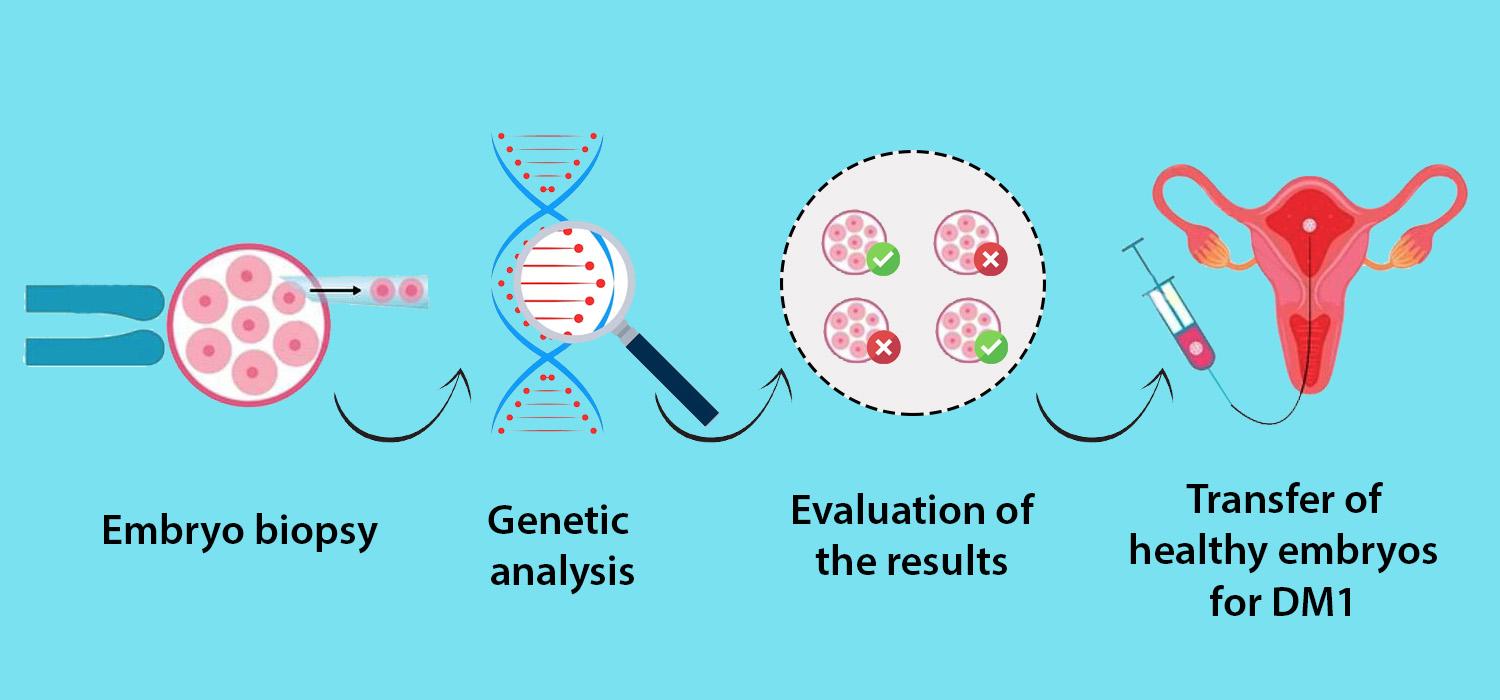
The PGT Process in IVF
PGT is seamlessly integrated into the IVF journey, ensuring a comprehensive approach to fertility treatment:
- IVF Cycle: The process begins with a standard IVF cycle, including ovarian stimulation, egg retrieval, and fertilization to create embryos.
- Embryo Culture: Embryos are cultured in the laboratory for 5 to 7 days until they reach the blastocyst stage.
- Embryo Biopsy: A highly skilled embryologist delicately performs a biopsy, removing a few cells from the trophectoderm (the outer layer of the blastocyst that will form the placenta). The inner cell mass, which forms the fetus, remains undisturbed.
- Genetic Analysis: The biopsied cells are sent to a specialized genetics laboratory for analysis, which typically takes 1-2 weeks.
- Embryo Selection and Cryopreservation: Based on the PGT results, genetically normal (euploid or unaffected) embryos are identified and carefully selected. These embryos are then cryopreserved (frozen) while awaiting the optimal time for transfer.
- Frozen Embryo Transfer (FET): A subsequent cycle is planned to prepare the uterus for an optimal implantation environment, and the selected embryo(s) are thawed and transferred.
PGT Cost Comparison: Why Patients Choose India for Fertility Treatments
Globally, the cost of advanced fertility treatments like PGT can be a significant barrier. However, India has emerged as a leader in affordable, high-quality healthcare, particularly in reproductive medicine. Patients worldwide are increasingly choosing India for PGT due to its compelling cost advantage, often realizing savings of up to 70% compared to Western countries, without any compromise on medical standards, technology, or expertise. DivinHeal ensures complete transparency in cost breakdowns, connecting you with top-tier fertility clinics that offer competitive and comprehensive PGT packages.
| Country | Average PGT Cost (USD) |
|---|---|
| India | $2,000 - $4,000 |
| United States | $4,000 - $8,000 |
| United Kingdom | $4,000 - $7,500 |
| Singapore | $3,700 - $7,000 |
| UAE | $4,000 - $7,800 |
DivinHeal’s Comprehensive Support for Your Fertility Journey
At DivinHeal, we understand that embarking on a fertility journey, especially one involving PGT, can be complex and emotionally taxing. That's why we offer AI-driven, end-to-end care coordination, acting as your trusted partner every step of the way. Our services include:
- Expert Clinic Matching: AI-powered algorithms connect you with the best fertility specialists and PGT labs in India, tailored to your specific needs and genetic concerns.
- Transparent Costing: We provide detailed, upfront cost breakdowns for PGT and associated IVF procedures, ensuring no hidden charges and helping you plan your finances effectively.
- Travel and Logistics: From visa assistance and flight booking to accommodation and local transport, we handle all logistical arrangements for your medical travel.
- Dedicated Care Coordinator: A personal care coordinator will be your single point of contact, guiding you from initial consultation through your PGT cycle and post-treatment follow-up, offering emotional support and practical assistance.
- Language and Cultural Support: We bridge communication gaps and ensure your comfort throughout your stay.
Recovery and Journey After PGT-Assisted IVF
The beauty of Preimplantation Genetic Testing is that it is a laboratory procedure, meaning there's no direct 'recovery' from the PGT itself. The recovery process is primarily linked to the IVF cycle it's part of, particularly after egg retrieval and after the eventual embryo transfer.
- Post-Egg Retrieval: After egg retrieval, most women experience mild cramping, bloating, and light spotting for a day or two. Rest is recommended, and normal light activities can usually be resumed within 24-48 hours. Strenuous exercise is typically advised against for about a week.
- Post-Embryo Transfer: The embryo transfer itself is a quick and generally painless procedure. Patients usually rest for a short period at the clinic. While physical recovery is minimal, the 'two-week wait' before a pregnancy test can be emotionally intense. DivinHeal provides robust support, including access to counseling and resources, to help manage stress and anxiety during this crucial period.
- Long-Term Wellness: Should a PGT-assisted IVF cycle result in a successful pregnancy, DivinHeal continues to support your journey with guidance on prenatal care, nutrition, and emotional well-being. Our goal is not just a successful treatment but a healthy, joyful family life.
Booking With DIVINHEAL
Get a free consultation to understand your treatment options
Cost Calculator
I know my treatment — show me cost from 3 hospitals
Plan My Journey
Tell us your condition and budget — our AI matches the right destination, hospital and doctor and visa pathway
Recommended Article

Best In Vitro Fertilization (IVF) Doctors in Hyderabad
Doctors for Nephrology: Find Kidney Care Specialists
Doctors in Chennai: Find Medical Specialists in India
Best Embryo Freezing Hospitals in Hyderabad: Care Guide
Hospitals for reproductive surgery: Compare options
Hospitals in Gurugram: Guide to Quality Facilities
IVF Treatment in Haryana | Cost, Hospitals & Doctors
TAVR (Transcatheter Aortic Valve Replacement) cost in New Delhi
Tonsillectomy & Adenoidectomy Success Rate in Mumbai
Facelift & Anti-Aging Procedures in Chennai for Ethiopia Patients | Cost, Hospitals
Booking With DIVINHEAL
Get a free consultation to understand your treatment options
Cost Calculator
I know my treatment — show me cost from 3 hospitals
Plan My Journey
Tell us your condition and budget — our AI matches the right destination, hospital and doctor and visa pathway
Recommended Article
Best In Vitro Fertilization (IVF) Doctors in Hyderabad
Doctors for Nephrology: Find Kidney Care Specialists
Doctors in Chennai: Find Medical Specialists in India
Best Embryo Freezing Hospitals in Hyderabad: Care Guide
Hospitals for reproductive surgery: Compare options
Hospitals in Gurugram: Guide to Quality Facilities
IVF Treatment in Haryana | Cost, Hospitals & Doctors
TAVR (Transcatheter Aortic Valve Replacement) cost in New Delhi
Tonsillectomy & Adenoidectomy Success Rate in Mumbai
Facelift & Anti-Aging Procedures in Chennai for Ethiopia Patients | Cost, Hospitals
Our Speciality and Treatments
Genetic Disorder Diagnosis & Counselling
Pediatric Laparoscopic Surgery
Pediatric Kidney Transplant
Pediatric Cardiac Surgery
Down Syndrome Comprehensive Care
Vaccination Program
Newborn Care Package
Pediatric Intensive Care (PICU)
Pediatric Urology (incl. Hypospadias)
Pediatric Orthopedics
Pediatric Gastroenterology
Pediatric Pulmonology
Pediatric Endocrinology
Pediatric Cardiology (non-surgical)
Pediatric Oncology
Neonatal Intensive Care (NICU)
pediatric neurosurgery


Meet Our Medical Specialists




Sr. Consultant - Urology & Kidney Transplant Program (Unit I)
Dr. Abhinandan Mukhopadhyay
MBBS, MD
India

Sr. Consultant - Urology & Kidney Transplant Program (Unit I)
Dr. Abhinandan Mukhopadhyay
MBBS, MD
India
Hospitals
NABH & JCI Accredited Hospitals in India,Turkey, Thailand & UAE.

Artemis Hospital
Sector 51, Gurugram, Haryana, India

Lokmanya Hospitals
Not Specified

White Lotus Hospital
766, SFS 3145, SFS Road, 7th Sector, HSR Layout, Bengaluru, Karnataka 560102, India

Institute of Brain and Spine (IBS Hospital)
Not Specified
How DivinHeal Helps
We simplify your medical journey by providing comprehensive support and access to world-class healthcare.
Expert Specialist Matching
Connecting you with the world's top-rated medical experts.
Accredited Hospital Network
Access to JCI & NABH certified healthcare facilities.
Complete Travel Coordination
Hassle-free visa, stay, and local transport assistance.
24/7 Personal Care
Dedicated patient advisors supporting you at every step.
Journey Guidance
Full guidance from start to end of the patient treatment journey.
Expert Specialist Matching
Connecting you with the world's top-rated medical experts.
Everything you
need to know today
Browse through these common inquiries to better understand our patient-focused medical platform.
Yes, we work with a variety of insurance providers. Contact our team to verify your coverage.
Yes, we provide secure online consultations with experienced specialists.
Our care coordinators help match you with the most suitable specialist.
Absolutely. Your medical information is protected according to healthcare privacy standards.
Look at six things: accreditation (JCI or NABH), specialty depth, doctor credentials and experience, procedure-specific success rates, international patient support, and technology. DivinHeal's AI-driven matching evaluates every hospital in our accredited partner network on these dimensions and shortlists the best-fit options for your condition, budget, and country.
JCI (Joint Commission International) is the US-based global gold standard for hospital quality, recognised worldwide. NABH is India's national accreditation — accredited by ISQua, the same body that accredits JCI. Both signal independently verified safety and quality. Most of India's leading hospitals hold both.
Yes. All three welcome international patients through structured medical visa programs. India is the most established, treating patients from Africa, the Middle East, and South Asia at 60–80% lower cost. Thailand leads in cosmetic and dental care. The UAE is emerging in oncology and reproductive medicine.
Most patients save 50–80% on treatment costs. Heart bypass costs US $7,000–9,000 in India compared to $70,000–150,000 in the US. IVF costs $3,000–4,500 compared to $12,000–20,000 in the UK. Even after flights, visa, and accommodation, total savings remain 60–70%.
DivinHeal manages your entire non-medical journey: visa invitation letters, medical visa guidance, doctor appointments, teleconsultations, airport pickup, hospital-vetted accommodation for you and your attendant, language interpreters, local transport, cuisine preferences, and post-treatment follow-up — one dedicated coordinator from first enquiry to final follow-up.
You need a valid passport (6+ months validity), a medical visa (M-Visa for India — DivinHeal provides the hospital invitation letter), return flight tickets, recent medical reports and a doctor's referral, current prescription list, and proof of financial means. Any accompanying attendant needs their own passport and MX-Visa.
Still have more questions?
Book a call with our friendly team to learn how DivineHeal simplifies your healthcare journey.