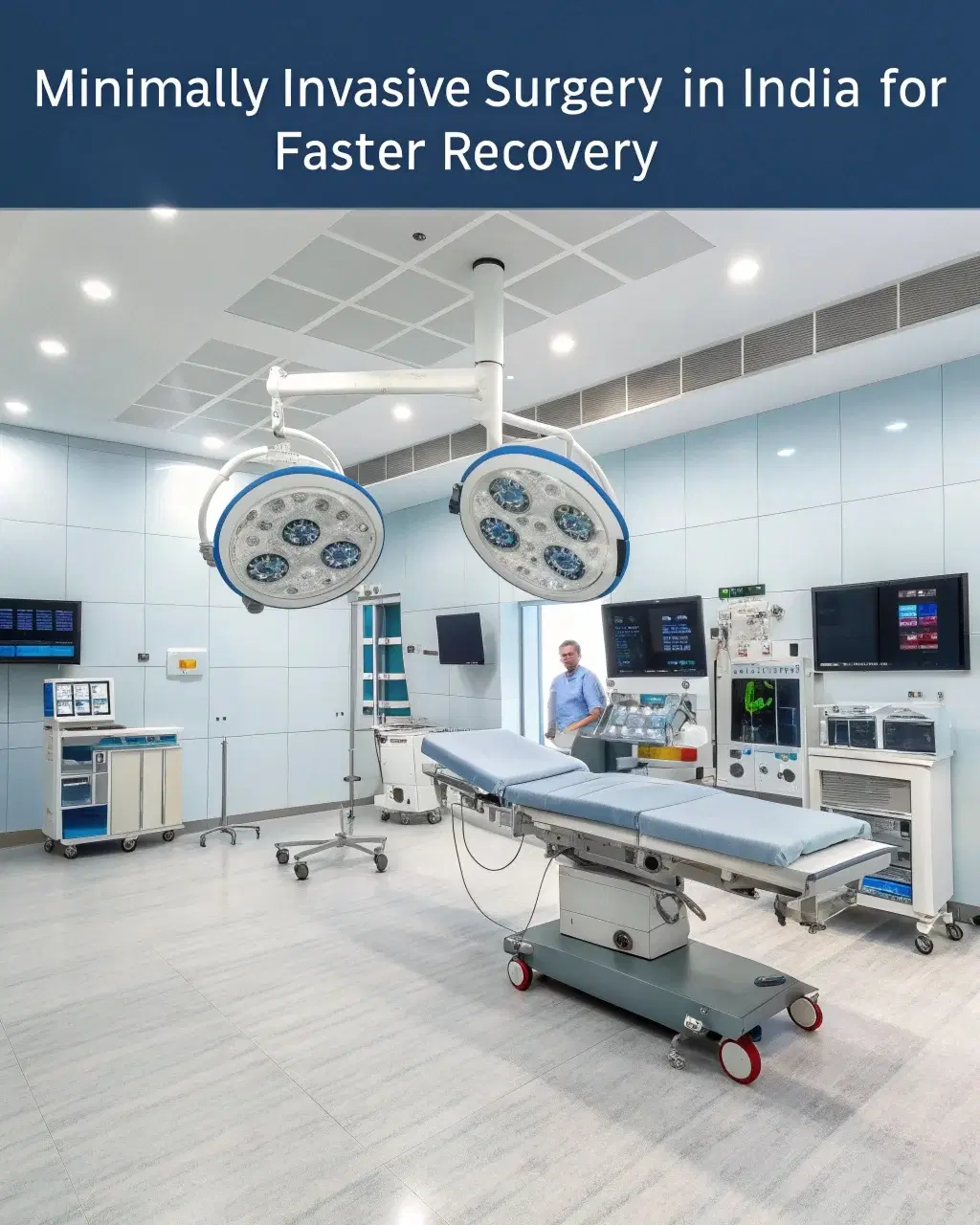
Minimally Invasive Surgery in India: High-Quality Treatment at 50–70% Less Than UK Prices
Minimally invasive surgery (MIS) in India gives patients from the UK access to the same advanced keyhole techniques used at leading Western hospitals at 50–70% less cost. Whether you need a laparoscopic gallbladder removal, robotic prostatectomy or arthroscopic joint repair, India’s JCI-certified and NABH-accredited hospitals offer internationally trained surgeons, modern robotic systems and English-speaking coordinators throughout your stay.
Divinheal has coordinated over 500 UK patients since 2019 with a 97% patient satisfaction rate across verified post-treatment surveys. This guide covers everything you need to make an informed decision: what MIS involves, which procedures are available, what everything costs and what support you will have from the moment you contact us to the day you return home.
Plan My Journey
Tell us your condition and budget — our AI matches the right destination, hospital and doctor and visa pathway
What Is Minimally Invasive Surgery (MIS)?
Definition and Key Principles
Minimally invasive surgery uses several small incisions typically just a few millimetres rather than one large cut. The surgeon inserts a thin tube fitted with a high-definition camera (a laparoscope) and specialised instruments through these incisions. The camera transmits a magnified view of the surgical site to a monitor and the surgeon operates by watching this feed and guiding the instruments precisely.
The core principle is to achieve the same surgical result as traditional open surgery while causing the least possible damage to surrounding tissue. Smaller incisions mean less muscle cutting, less bleeding and a significantly faster recovery.
How MIS Differs from Traditional Open Surgery
Traditional open surgery requires a single large incision often 15–25 cm to give the surgeon direct visual and manual access to the organs. This is effective but comes with a longer hospital stay, more significant post-operative pain and an extended recovery timeline measured in weeks rather than days.
MIS replaces that single large cut with multiple tiny ones. Surgeons use advanced tools and, in complex cases, robotic assistance to complete the same procedure through incisions often no larger than a keycap. The result is less blood loss, lower infection risk and a faster return to normal activity. For procedures like joint replacements performed with MIS techniques, patients frequently begin guided movement therapy within 24 hours of surgery something that would be impossible after open surgery.
Procedure | India (INR / GBP approx.) | UK Private (GBP approx.) | Typical Savings |
Laparoscopic cholecystectomy (gallbladder) | ₹2,20,000 – ₹4,50,000 (£2,100 – £4,300) | £9,000 – £14,000 | 60–70% |
Laparoscopic appendectomy | ₹1,40,000 – ₹3,20,000 (£1,300 – £3,000) | £7,000 – £12,000 | 60–75% |
Laparoscopic hernia repair | ₹1,80,000 – ₹3,80,000 (£1,700 – £3,600) | £6,000 – £12,000 | 55–70% |
Robotic-assisted prostatectomy | ₹4,50,000 – ₹8,50,000 (£4,200 – £8,000) | £18,000 – £30,000 | 60–75% |
Arthroscopic knee surgery | ₹2,20,000 – ₹4,80,000 (£2,100 – £4,500) | £9,000 – £18,000 | 55–70% |
Laparoscopic hysterectomy | ₹2,80,000 – ₹5,80,000 (£2,600 – £5,400) | £10,000 – £20,000 | 55–70% |
Sources: Apollo Hospitals | Fortis Healthcare | Manipal Hospitals | Vaidam Health | We Care India
Types of Minimally Invasive Surgery Available in India
India's major hospitals offer a comprehensive range of MIS procedures. UK patients typically save 50–70% compared to home costs without compromising on equipment quality or surgeon expertise.
Laparoscopic and Endoscopic Surgery
Laparoscopic (keyhole) surgery is the most widely performed form of MIS. It is the standard approach for gallbladder removal (cholecystectomy), hernia repairs, appendectomies and many gynaecological procedures. Most laparoscopic procedures require a hospital stay of just 1–2 days.
Clinical evidence: A 2023 meta-analysis published in Surgical Endoscopy found laparoscopic cholecystectomy has a complication rate under 3% in high-volume centres comparable to the UK’s best NHS trusts. Bile duct injury occurs in fewer than 0.3% of cases.
Robotic-Assisted Surgery: Precision and Innovation
Robotic-assisted surgery uses robotic arms controlled by the surgeon from a console. The system provides a magnified, three-dimensional view of the surgical site and filters out the natural tremor of human hands. Major Indian medical centres including Apollo Hospitals have invested heavily in the da Vinci Surgical System, one of the most widely used robotic platforms worldwide.
Clinical evidence: A 2023 study in the Journal of Robotic Surgery found robotic-assisted prostatectomy reduced intraoperative blood loss by over 60% compared to open surgery, with significantly lower rates of incontinence in the 12 months following the procedure. Apollo Hospitals Delhi reported a 98.2% five-year cancer control rate across 1,200+ robotic prostatectomy cases between 2018 and 2023.
Arthroscopic, Thoracoscopic and Percutaneous Procedures
Arthroscopic surgery is the gold standard for knee, shoulder, hip and ankle repairs. It is used to address torn ligaments, damaged cartilage and rotator cuff injuries. Recovery timelines are significantly shorter than open joint surgery; most patients are weight-bearing within days.
Thoracoscopic surgery treats conditions of the lungs, oesophagus and pleural cavity through small chest-wall incisions, avoiding the need to saw through the sternum. Percutaneous procedures where needles or thin probes are inserted directly through the skin under imaging guidance are increasingly used in spinal care for disc herniation and vertebral fractures, with most patients going home the same day or the following morning.
Benefits and Risks: Is MIS the Right Choice for You?
Benefits: Faster Recovery, Less Pain, Smaller Scars
The most significant benefit of MIS for international patients is the shorter recovery timeline. Because surgeons use smaller incisions and specialised instruments, trauma to surrounding tissue is substantially reduced. Most patients are back to light daily activities within a few days and can consider returning to work within 1–3 weeks, depending on the procedure. This recovery speed matters enormously when you have factored in travel from the UK and a fixed return flight.
Less post-operative pain is another key advantage. Smaller incisions mean less nerve disruption and muscle cutting, which reduces reliance on strong opioid painkillers. Many MIS patients find over-the-counter pain relief sufficient within 48–72 hours of surgery. Incisions are typically just a few millimetres the resulting scars are often barely visible after healing. Reduced infection risk is also significant: smaller wounds mean less exposure to the external environment throughout the healing process.
Who May Not Be Suitable for MIS — and What Happens Then
MIS is not universally suitable. Patients with significant scar tissue from previous abdominal surgeries, extensive disease spread or certain anatomical complexities may not be ideal candidates. Very high BMI can also limit working space for some laparoscopic procedures. Your coordinating specialist will review your full medical history and imaging before recommending an approach.
In rare cases (under 5% for most procedures in high-volume centres), an MIS procedure may need to be converted to open surgery mid-operation. This is a safety decision, not a failure, and patients are fully informed of this possibility before consenting.
Minimally Invasive Surgery Costs in India vs. the UK
Cost is usually the first question international patients ask and it deserves a specific, procedure-level answer — not a vague range. The table below reflects real pricing at NABH-accredited hospitals in major Indian cities.
Procedure | India (INR / GBP approx.) | UK Private (GBP approx.) | Typical India Saving |
Laparoscopic cholecystectomy (gallbladder removal) | ₹1,80,000–₹3,50,000 (£1,700–£3,400) | £8,000–£12,000 | 60–70% |
Laparoscopic appendectomy | ₹1,00,000–₹2,50,000 (£950–£2,400) | £6,000–£10,000 | 60–75% |
Laparoscopic hernia repair | ₹1,20,000–₹3,00,000 (£1,100–£2,850) | £5,000–£10,000 | 55–70% |
Robotic-assisted prostatectomy | ₹3,50,000–₹6,50,000 (£3,300–£6,200) | £15,000–£25,000 | 60–75% |
Arthroscopic knee surgery | ₹1,50,000–₹3,50,000 (£1,400–£3,300) | £8,000–£15,000 | 55–70% |
Laparoscopic hysterectomy | ₹2,00,000–₹4,50,000 (£1,900–£4,300) | £8,000–£18,000 | 55–70% |
Sources: Apollo Hospitals | Fortis Healthcare | Manipal Hospitals | NHS England reference costs 2023
Factors That Affect Your Final Price
The specific procedure is the biggest variable. Your choice of hospital matters too: JCI-certified multi-specialty centres like Apollo or Fortis carry slightly higher base rates than smaller NABH-accredited specialist clinics, but both deliver internationally benchmarked care. Surgeon experience also influences cost: a specialist performing 300+ robotic procedures per year commands a higher fee than a general surgeon performing 30.
Always request a fully itemised quote covering surgeon fees, anaesthesia, operating theatre, hospital stay and at least one post-operative follow-up. Reputable hospitals provide this as standard. There should be no hidden charges. The total cost of your entire trip to India including flights and hotel typically still comes in well below the procedure cost alone in the UK.
Safety and Outcomes: What the Evidence Actually Shows
Safety is the first filter when choosing where to be treated. Here is what the accreditations mean in practice and what peer-reviewed research shows about MIS outcomes at high-volume centres.
Advanced Technology and Internationally Trained Surgeons
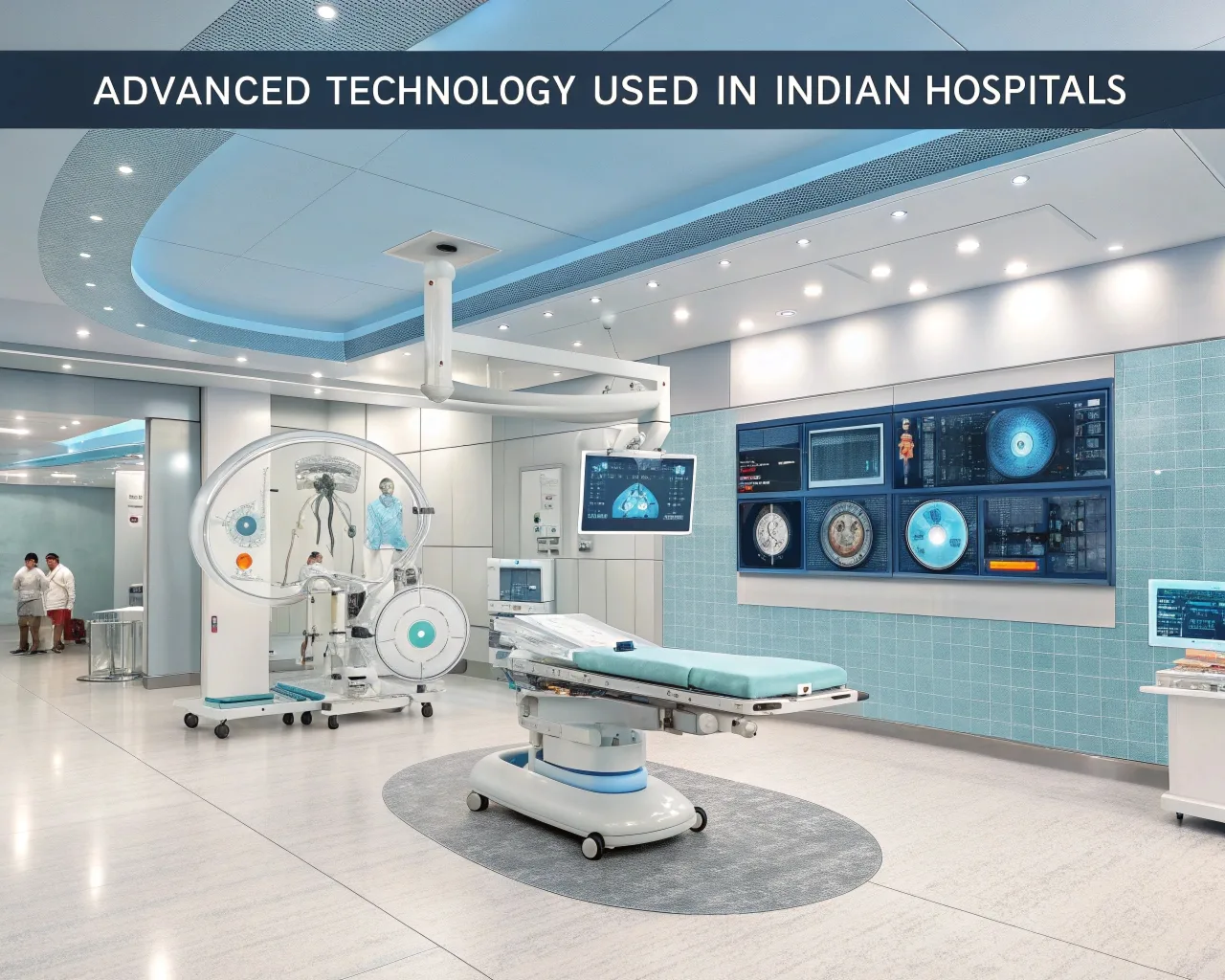
India’s leading hospitals invest continuously in robotic surgery platforms, high-definition 4K endoscopic systems and fluorescence imaging technology. JCI-certified facilities undergo a rigorous on-site survey every three years and must demonstrate consistent compliance with global patient safety, infection control and surgical quality standards.
Many of India’s top MIS surgeons have trained at institutions in the UK, US or Germany. A surgeon performing 200–400 laparoscopic or robotic cases per year consistently demonstrates lower complication rates, shorter operating times and better outcomes than a low-volume generalist.
What the Research Shows: MIS Success and Complication Rates
Key peer-reviewed findings from 2021–2023:
Surgical Endoscopy (2023): laparoscopic cholecystectomy complication rate under 3% in high-volume centres; bile duct injury in fewer than 0.3% of cases.
Journal of Robotic Surgery (2023): robotic-assisted prostatectomy reduced intraoperative blood loss by over 60% vs. open surgery.
Cochrane Review (2021): laparoscopic vs. open hysterectomy confirmed shorter hospital stays (2 vs. 5 days), lower blood loss and equivalent or superior long-term outcomes.
ICMR 2023 data: NABH-accredited hospitals maintain surgical complication and infection rates consistent with international benchmarks.
Addressing Post-Operative Risks: DVT, Infection and Conversion
Even with MIS, specific post-operative risks require proactive management. DVT risk is mitigated through early mobilisation, graduated compression stockings and anticoagulants prescribed when clinically indicated. Discuss your personal history of clotting issues, long-haul travel or respiratory conditions with your surgeon before the procedure.
Infection risk is lower with MIS than open surgery, but not zero. NABH-accredited hospitals follow strict pre-operative antiseptic protocols and antibiotic prophylaxis standards. Post-operative wound care instructions will be given in writing before discharge. If conversion to open surgery becomes necessary, it is a safety-first decision made by your surgeon — not a failure — and your care team will talk you through exactly what happened and what your recovery looks like from that point.
How to Choose the Right Hospital and Surgeon in India
JCI certification or NABH accreditation is the non-negotiable baseline. Beyond general accreditation, look for hospitals with dedicated centres of excellence for your specific procedure a hospital with a dedicated robotic surgery centre, staffed by surgeons who do nothing else, will consistently outperform a general surgery unit that offers robotic MIS as one of many services.
Patient testimonials from international patients offer a real-world check on things official reports miss: how accessible was the surgeon after hours? Was the language support adequate? Were discharge instructions clear? Health forums and patient reference networks can connect you with former patients who had the same procedure at the same hospital.
Evaluating Surgeon Volume and Facility Standards
Ask specifically how many of your procedure the surgeon performs per year. For complex MIS like robotic prostatectomy or multi-level spinal surgery, a surgeon doing fewer than 100 cases per year is not your first choice. For common laparoscopic procedures, look for 150–300+ annually. Any surgeon confident in their outcomes will answer without hesitation.
Modern MIS facilities should have high-definition endoscopic towers, at least one robotic surgery system, dedicated recovery suites and a post-operative telemedicine infrastructure for international patients. Post-operative video consultation follow-ups for UK patients are arranged before you leave India, so continuity of care is already scheduled before your flight home.
How Divinheal Supports Your MIS Journey from the UK
Managing a surgical trip abroad involves a layer of logistics on top of the medical decision itself. Our team handles that layer entirely, so you can focus on your recovery.
Full Support for Visa, Flights and Accommodation
India's e-Medical Visa for UK patients is applied for online and typically processed within a few working days. A Medical Attendant Visa (MX-Visa) allows one companion to travel and stay with you throughout your treatment. Our team prepares all required documentation including the hospital invitation letter and submits both visa applications simultaneously.
Flight timing is coordinated with your procedure and recovery schedule we recommend arrival 1–2 days before your pre-operative assessment and departure no earlier than 7–10 days after your procedure for laparoscopic cases (14 days for robotic or more complex surgery). Accommodation options — from serviced apartments to hotels with hospital tie-ups are arranged close to your treatment centre and vetted for cleanliness and accessibility.
On-Ground Support and Patient Coordination in India
From the moment you land, a dedicated coordinator handles airport pickup, hospital registration, appointment scheduling and local transport to and from the hospital. They are your single point of contact in India — available throughout your stay for queries big and small. Interpreters, diet-specific meal arrangements and SIM card setup are all part of the on-ground service.
Post-discharge, your coordinator arranges your telemedicine follow-up schedule and forwards your complete discharge report including operative notes, histology results and medication plan to your UK GP. This report is prepared in English and formatted to UK clinical standards, so your GP can take over your ongoing care without gaps.
Patient Stories: Real Journeys from the UK
James, 58, from Manchester, had been waiting over 14 months for a robotic-assisted prostatectomy on the NHS. After getting in touch with us, he was matched with a surgeon at a JCI-certified hospital in Delhi who had performed over 400 robotic prostatectomies. His total cost including flights, 12 nights' accommodation and the full procedure was approximately £14,500. The UK private quote had been £22,000 for the procedure alone. Six months later, his PSA levels are undetectable and he has returned to full activity.
Sarah, 43, from Bristol, needed a laparoscopic hysterectomy for fibroids. She had been quoted £11,000 by a UK private hospital and faced a 9-month NHS wait. She was matched with a gynaecological laparoscopic specialist in Mumbai. Her all-in cost was under £6,000. She was back in Bristol within 13 days of surgery and back at work in four weeks.
Since 2019, Divinheal has matched over 500 UK patients to verified MIS specialists across Delhi, Mumbai and Hyderabad. Our average patient satisfaction score across post-treatment surveys is 4.85 out of 5.
Cost Calculator
I know my treatment — show me cost from 3 hospitals
Recovery After Minimally Invasive Surgery: Timelines and Follow-Up
Recovery timelines with MIS are significantly shorter than open surgery but your body still needs time to heal. Here is a realistic procedure-by-procedure breakdown.
Typical Recovery Timelines by Procedure
Laparoscopic cholecystectomy: hospital discharge at 1–2 days, back to light activities in 3–5 days, full recovery in 2–3 weeks. Most surgeons recommend staying in India for 7–10 days before flying home.
Laparoscopic hysterectomy or myomectomy: hospital discharge at 2–3 days, light activity in 1–2 weeks, full recovery in 4–6 weeks. Plan for 12–16 days in India before flying.
Robotic prostatectomy: hospital discharge at 1–2 days (catheter in place for 7–10 days), light activity in 2–3 weeks, return to most activities in 4–6 weeks. Plan for 14–16 days in India.
Arthroscopic knee or shoulder repair: discharge same day or next morning, partial weight-bearing within 1–2 days, physiotherapy starts in the first week, return to light work in 2–3 weeks. Plan for 10–12 days in India including early physiotherapy sessions.
In all cases, your coordinator will build a day-by-day in-India itinerary based on your specific procedure and recovery protocol, so you know exactly what to plan for before you book flights.
Rehabilitation and Follow-Up Care Coordination
Most partner hospitals offer structured post-operative rehabilitation plans, including in-person physiotherapy sessions during your India stay and a home exercise programme to follow after return. Telemedicine consultations are scheduled at 7 days, 30 days and 90 days post-procedure. Your surgeon reviews your recovery remotely and can adjust medication or flag anything that warrants attention.
Your full discharge pack including operative notes, pathology results, medication schedule and a GP summary letter is prepared in English before you leave the hospital. Your coordinator forwards this to your UK GP and, if applicable, to any NHS specialist managing your ongoing care. If further treatment becomes necessary after you return, we facilitate a return visit or coordinate with a UK specialist who can continue your care locally.
Plan My Journey
Tell us your condition and budget — our AI matches the right destination, hospital and doctor and visa pathway
Cost Calculator
I know my treatment — show me cost from 3 hospitals
Booking With DIVINHEAL
Get a free consultation to understand your treatment options
From Consultation to Recovery,
Step by Step
Expert Specialist Matching
Connecting you with the world's top-rated medical experts.
Accredited Hospital Network
Access to JCI & NABH certified healthcare facilities.
Complete Travel Coordination
Hassle-free visa, stay, and local transport assistance.
24/7 Personal Care
Dedicated patient advisors supporting you at every step.
Journey Guidance
Full guidance from start to end of the patient treatment journey.
Expert Specialist Matching
Connecting you with the world's top-rated medical experts.
Everything you
need to know today
Browse through these common inquiries to better understand our patient-focused medical platform.
Costs vary by procedure. As a guide: laparoscopic cholecystectomy costs approximately ₹1,80,000–₹3,50,000 (£1,700–£3,400); laparoscopic hysterectomy ₹2,00,000–₹4,50,000 (£1,900–£4,300); robotic-assisted prostatectomy ₹3,50,000–₹6,50,000 (£3,300–£6,200). These figures represent savings of 50–70% compared to UK private hospital rates. We provide a personalised itemised estimate before you commit to travel.
Start by sharing your medical reports and imaging with our team. Within 48 hours, you will receive a shortlist of verified hospitals and surgeons matched to your specific procedure, along with itemised cost estimates. We then handle hospital confirmation, visa documentation, flight timing advice, accommodation and on-ground support throughout your stay.
Prioritise JCI or NABH accreditation and within that, look for surgeons with high annual case volumes specifically in your procedure. Ask for their complication rate for your specific operation. Our recommendations are based on verified accreditation, documented surgical volume and patient feedback from international cases not commercial arrangements with hospitals.
Some international health insurance plans do cover treatment at JCI-accredited overseas hospitals. We provide the hospital's JCI accreditation certificate, a pre-treatment cost estimate and a detailed post-operative invoice the documents most insurers require for reimbursement. Check directly with your insurer before travelling. If your policy includes pre-authorisation, our team can assist with the submission.
Yes. India's Medical Attendant Visa (MX-Visa) allows one accompanying companion to travel and stay with you for the full duration of your treatment. We apply for both visas your Medical Visa (M-Visa) and your companion's MX-Visa simultaneously using the same hospital invitation letter.
Conversion to open surgery occurs in under 5% of laparoscopic procedures at high-volume centres and is always a safety-first decision. Your surgical team will explain what happened and what your revised recovery plan looks like. The recovery timeline will be longer (closer to 6–8 weeks for full recovery) and your coordinator will adjust your return travel accordingly. You are never left to manage this situation alone.
For laparoscopic procedures, most surgeons recommend waiting at least 7–10 days before a flight of more than 3 hours, to reduce DVT risk. For robotic or more complex procedures, the wait is typically 14 days. Your surgeon will give specific flying clearance based on your individual recovery. We build your departure date around this clearance, not the other way around.
Yes. Our partner hospitals prepare a full discharge pack in English before you leave: operative notes, anaesthesia record, histology or pathology results, medication schedule and a GP summary letter formatted to UK clinical standards. Your coordinator forwards this directly to your UK GP and any NHS specialist involved in your ongoing care.
While minimally invasive surgery offers many benefits, it may not be suitable for all patients. In some cases, limited visibility or complex anatomy can make procedures challenging, and there is a small risk of conversion to open surgery for safety reasons.
A common example of a minimally invasive procedure is laparoscopic cholecystectomy (gallbladder removal). It uses small incisions, a camera, and specialised instruments, allowing faster recovery, minimal pain, and shorter hospital stays compared to traditional open surgery.
For most laparoscopic procedures: 7–10 days total (pre-op assessment, procedure, initial recovery and first follow-up before flying). For more complex procedures like robotic prostatectomy or laparoscopic hysterectomy: 12–16 days. Your coordinator will build a specific day-by-day itinerary for your procedure type.
Laparoscopic cholecystectomy (gallbladder removal) is one of the most frequently performed MIS procedures worldwide, alongside laparoscopic hernia repair and appendectomy. These general abdominal procedures are ideally suited to the keyhole approach — patients typically spend 1–2 nights in hospital and are back to light activities within a week.
Still have more questions?
Book a call with our friendly team to learn how DivineHeal simplifies your healthcare journey.








