
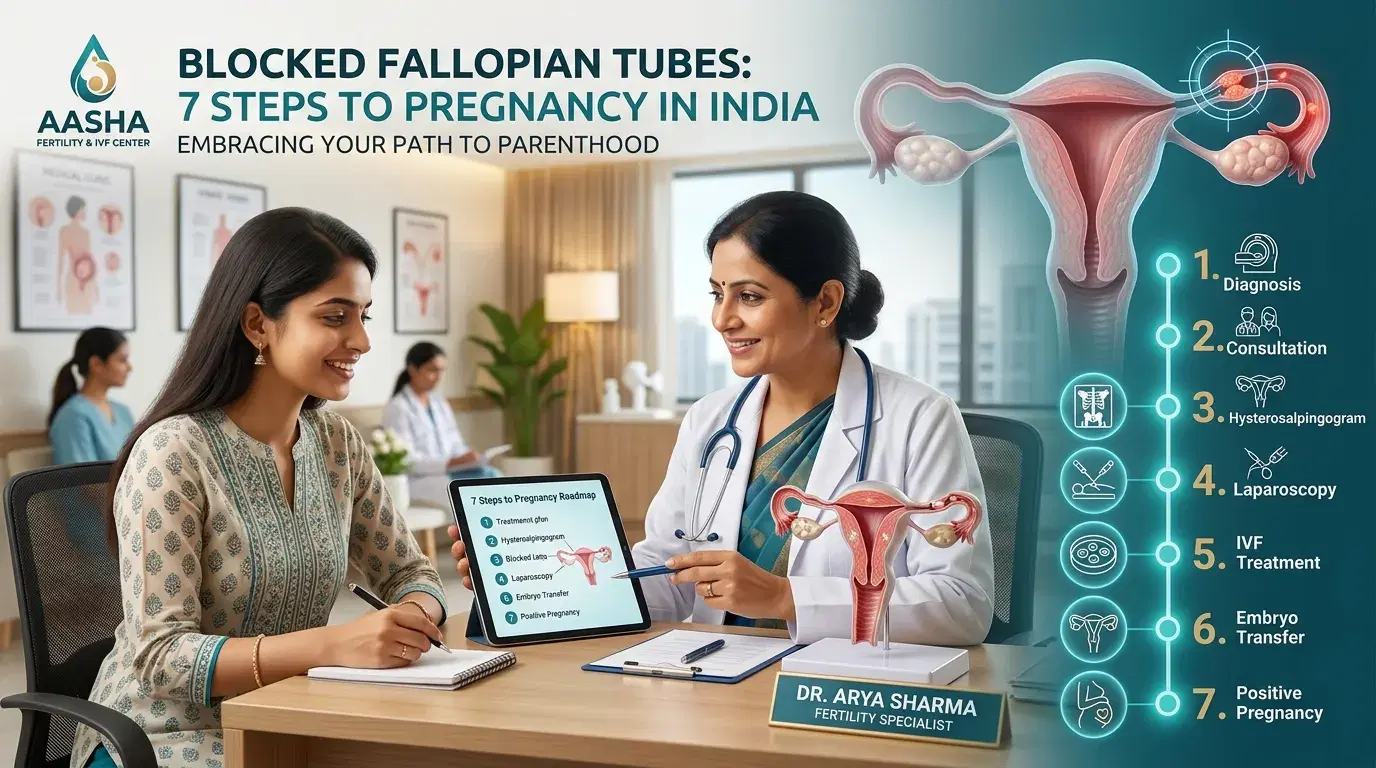
Blocked Fallopian Tubes: 7 Steps to Pregnancy in India

Blocked Fallopian Tubes: 7 Steps to Pregnancy in India

Written by DivinHeal Editorial Contributor, Rahul Kumar, Embryologist | Medically Reviewed by Dr Indu Priya, Gynecologist(MD) Published on: 2026-05-26
Blocked Fallopian Tubes: Symptoms, Causes & 7 Steps to Getting Pregnant in India (2026)
Blocked fallopian tubes cause 25–30% of infertility in women worldwide. Many women only find out after months of trying to get pregnant. The good news: treatment works well. And for patients from the UAE, UK, and Nigeria, world-class fertility care in India costs 50–70% less than at home.
This guide covers what you need to know. You will learn the earliest signs to watch for. You will also learn the 7 steps that can lead to a healthy pregnancy. Whether you are thinking about surgery, IVF, or both, this will help you prepare for your specialist visit.
Medical disclaimer: This article is for information only. Results vary by person. Always consult a qualified fertility specialist for advice that fits your situation.
Plan My Journey
Tell us your condition and budget — our AI matches the right destination, hospital and doctor and visa pathway
What Are Fallopian Tubes and How Do They Work?
Fallopian tubes (also called uterine tubes or oviducts) are two narrow, muscular channels. They connect your ovaries to your uterus. Each tube is roughly 10–13 cm long. Every month, during ovulation, finger-like projections called fimbriae sweep a released egg into the nearest tube. Fertilisation almost always happens inside this tube — not in the ovary, not in the uterus. The embryo then travels along the tube. Tiny hair-like cilia help move it along. It reaches the uterine wall and implants there about 6–10 days later.
Without at least one open, working fallopian tube, this chain breaks. The egg cannot meet the sperm. Or a fertilised egg can get stuck inside the tube. This is called an ectopic pregnancy, and it is dangerous. That is why tubal health matters so much in any fertility check.
What Happens When Fallopian Tube Function Is Compromised?
When a tube is blocked or damaged, eggs and sperm cannot move freely. Conception becomes very unlikely — or impossible. This depends on how bad the blockage is. Common results include:
Complete inability to conceive naturally (bilateral blockage)
Significantly reduced conception chances (unilateral blockage — one tube open)
Pregnancy may occur outside the uterus if the obstruction is partial.
There is an accumulation of fluid in the blocked tube (hydrosalpinx) which affects fertility treatments like IVF.
Tubal factor infertility is responsible for about 20–30% of all infertility cases in women (ICMR, 2023). Early detection and planning the treatment will produce the best outcome.
Stories below are illustrative composites based on typical patient journeys. Names changed for privacy.
Blocked Fallopian Tube Symptoms: What to Watch For
Most women with blocked fallopian tubes have no symptoms at all. The blockage rarely hurts unless fluid builds up inside the tube. That is why the most common sign is simply not getting pregnant. This usually means after 12 months of trying (or 6 months if you are over 35).
When symptoms do appear, they usually come from the underlying cause. That cause is often an infection or endometriosis — not the blockage itself.
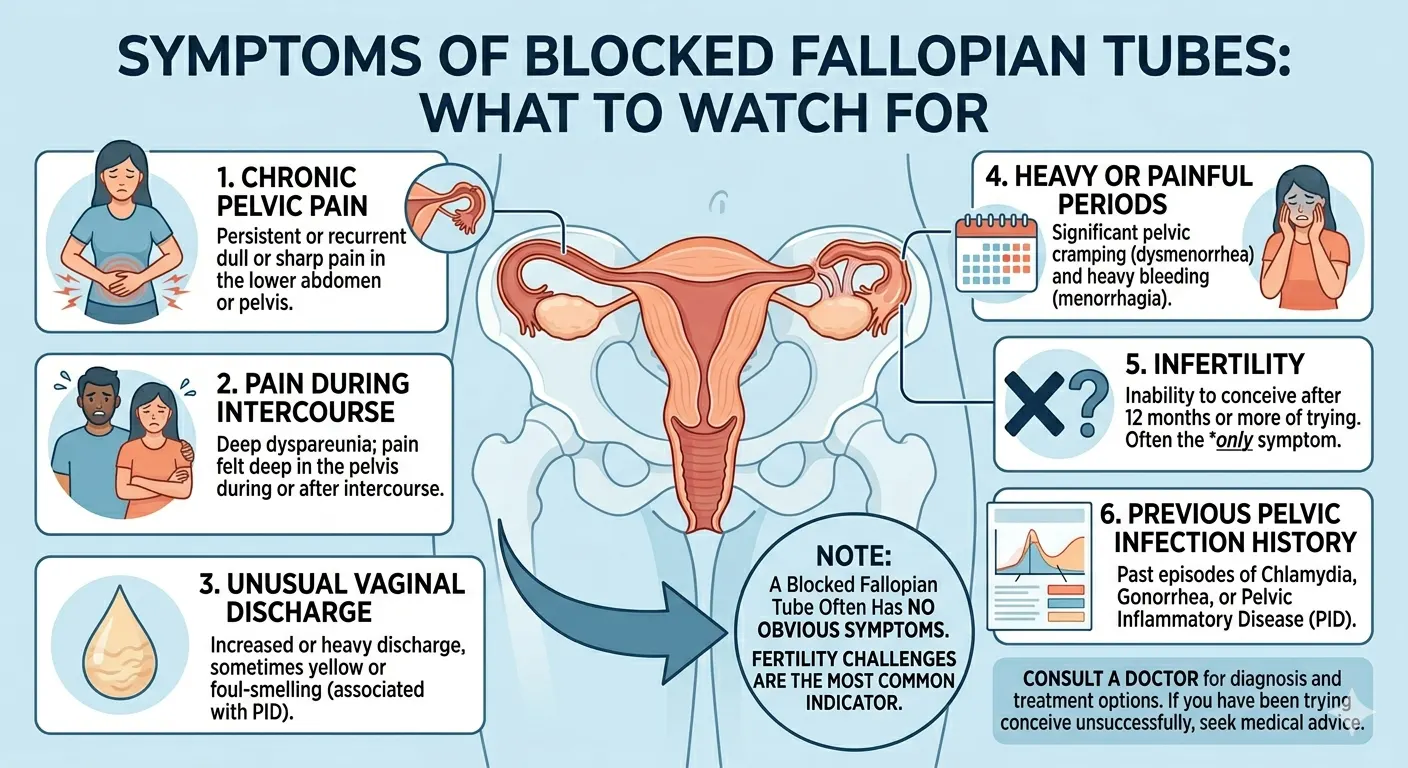
Possible Signs That May Indicate a Blocked Tube
Persistent pelvic or lower abdominal pain (dull ache, often one-sided)
Painful periods with heavy flow — particularly associated with endometriosis
Unusual or foul-smelling vaginal discharge — may indicate an active infection like PID
Pain or discomfort during sexual intercourse
Fever (if an active pelvic infection is present)
Unexplained difficulty conceiving after regular unprotected intercourse
None of these symptoms confirms a blockage on its own. They overlap with other conditions such as fibroids, ovarian cysts, and endometriosis. Only a specialist test (described below) can tell you for sure.
Why Symptoms Are Often Absent: The Silent Blockage
A hydrosalpinx occurs when a fallopian tube fills with fluid and swells. It can cause a dull ache on one side of the pelvis. But completely blocked tubes can exist with no symptoms at all. Fatima, a 32-year-old from Dubai, tried to conceive for 14 months. A specialist then found bilateral tubal blockage. It came from an old chlamydia infection she never knew she had. She had felt no pain, no unusual discharge, nothing.
If you have been trying to conceive for over 12 months with no success, request a hysterosalpingogram (HSG). Don’t wait for pain to tell you something is wrong — it often won’t.
What Causes Blocked Fallopian Tubes?
Fallopian tube blockage happens when adhesions (bands of scar tissue), infection, or abnormal tissue growth block one or both tubes. The most common causes are:
Pelvic Inflammatory Disease (PID)
PID — an infection of the female reproductive organs — is the top single cause of tubal blockage. It most often starts with untreated sexually transmitted infections (STIs). The most common STIs involved are chlamydia and gonorrhoea. Chlamydia alone causes roughly 25–50% of PID cases (WHO). The infection leaves scars inside the tubes. Over time, this narrows or closes them. Many women do not know they had a past infection until a fertility check reveals the damage.
Endometriosis
Endometriosis is a condition where tissue similar to the uterine lining grows outside the uterus. It can grow on the ovaries, behind the uterus, or around the fallopian tubes. This tissue bleeds with each menstrual cycle. That causes swelling and, over time, adhesions. These adhesions can wrap around and damage the tubes. Women with endometriosis often have severe period pain — but not always. Endometriosis causes roughly 30–40% of tubal factor infertility cases (multiple peer-reviewed gynaecological studies).
Previous Pelvic or Abdominal Surgery
Any surgery in the pelvic or abdominal region can leave scar tissue around the fallopian tubes. This includes a caesarean section, appendectomy, ovarian cystectomy, or surgery for an ectopic pregnancy. More surgeries mean a higher risk of adhesions. Fertility specialists at Apollo Hospitals, Chennai and Fortis Healthcare, Delhi often treat international patients. Many of these patients developed tubal adhesions after pelvic surgery at home.
Unilateral vs Bilateral Blockage — and Hydrosalpinx
A unilateral blockage affects one tube only. Natural conception is reduced but still possible. The other tube can pick up eggs from both ovaries. A bilateral blockage (both tubes) makes a natural pregnancy extremely unlikely. Hydrosalpinx — where a blocked tube fills with fluid and swells — is especially risky. The fluid is toxic to embryos. It can cut IVF success rates by up to 50% if the tubes are not removed first (NICE guidelines, 2020). Knowing your blockage type shapes every treatment decision.
How Do Doctors Diagnose Blocked Fallopian Tubes?
Symptoms are often absent, so diagnosis depends on imaging and direct visualisation tests. The three most used are:
HSG (Hysterosalpingography) — First-Line Test
HSG is an X-ray test. A small amount of dye is injected through the cervix. The dye flows into the uterus and along the fallopian tubes. If both tubes are open, the dye spills out of their ends. The X-ray shows free flow. If a tube is blocked, the dye stops. HSG takes 15–30 minutes as an outpatient procedure. Its accuracy for detecting whether tubes are open is roughly 80–90% (WHO diagnostic guidance). UK patients face long NHS wait times. JCI-accredited hospitals in India — including Apollo, Fortis, and Max Healthcare — often provide HSG within 24–48 hours of arrival.
Sonohysterography (Saline Infusion Sonography — SIS)
SIS involves injecting sterile saline into the uterus during an ultrasound scan. It is better at checking the uterine cavity — for polyps or fibroids — than at confirming tubal blockage. But it can show problems near the tube openings. It is often used alongside HSG for a fuller picture.
Diagnostic Laparoscopy — The Gold Standard
Laparoscopy is a minimally invasive keyhole surgery. A tiny camera goes in through a small cut near the navel. It gives a direct view of the tubes, ovaries, and uterus. Accuracy is near 100%. Any treatable blockage can often be fixed in the same session. Skilled surgeons at JCI-accredited hospitals in India perform hundreds of these procedures every year. UAE patients who choose Divinheal partner hospitals have Arabic-speaking coordinators throughout. Nigerian patients get a full medical visa and logistics support through Divinheal.
Individual outcomes vary. Consult a qualified fertility specialist before proceeding with any diagnostic or treatment plan.
7 Steps to Getting Pregnant with Blocked Fallopian Tubes
If your fallopian tubes are blocked, a clear plan gives you the best chance of a healthy pregnancy. Here are the 7 clinical steps — from confirmed diagnosis through to monitoring a healthy conception.
Step 1: Confirm Your Diagnosis and Understand the Blockage Type
The fertility process is always initiated by an accurate diagnosis. The HSG will reveal the presence of unilateral or bilateral tubal occlusions. This also reveals the position – whether the tubal obstruction is proximal (near the uterus) or distal (near the ovary). Proximal occlusions can be corrected using a non-surgical process referred to as tubal cannulation. The distal blockages, on the other hand, are best dealt with through surgery and even in vitro fertilisation in some cases. In cases where HSG does not provide an accurate picture, there is a need for a laparoscopy. Knowing whether you have a unilateral or bilateral blockage matters. Knowing if hydrosalpinx is present matters too. Both shape every decision that follows.
Step 2: Explore Surgical Options (Tubal Cannulation, Salpingostomy, Adhesiolysis)
Depending on your diagnosis, your specialist will look at whether surgery can restore tube function:
Tubal cannulation: a narrow catheter is guided through the cervix into the blocked tube to clear a proximal obstruction. Often done hysteroscopically (no incisions). Best results when blockage is scar tissue only, not severe damage.
Adhesiolysis: laparoscopic removal of adhesions (bands of scar tissue) that are constricting the tubes from the outside. A highly skilled procedure that Divinheal partner surgeons at Apollo Chennai and Fortis Delhi perform routinely.
Salpingostomy: creating a new opening in a tube that is blocked at its far end. Useful when the tube itself is mostly healthy, but the end is sealed.
Fimbrioplasty: reconstructing the delicate fimbriae (finger-like projections that collect the egg) when they are partially blocked or fused.
Surgical success depends on how badly the tube is damaged. Live birth rates after tubal ligation surgery range from 15–30% per attempt, per peer-reviewed reproductive medicine literature. Higher when damage is mild. Lower when tubes are badly scarred. Amaka, 34, from Lagos, had adhesiolysis at Fortis Healthcare, Gurugram. One tube was clear after surgery. She conceived naturally 8 months later. Her total cost in India — including flights and accommodation — was roughly 40% of what surgery would have cost in Lagos. She also had access to technology and expertise not available at home.
Step 3: Understand IVF as the Primary Route for Many Patients
Think of IVF as Your Best Bet
In cases where the tube damage is moderate to severe, IVF avoids using the tubes altogether. The specialist retrieves the eggs from your ovaries. Then, in the laboratory, the eggs are fertilized using the sperms. Next, the embryos are placed inside your womb. IVF is the most effective treatment for blocked fallopian tubes.. IVF is the most effective treatment for blocked fallopian tubes.
IVF success rates at leading Indian fertility centres range from 35–45% per cycle for women under 35. For women aged 35–40, the range is 20–30% (ICMR fertility outcome data, 2023). These results are in line with major fertility clinics in the UAE and UK.
For UK patients, a single IVF cycle at a Divinheal partner hospital in India costs ₹2,00,000 – ₹3,50,000 (roughly £1,900 – £3,300). The same at a private UK fertility clinic runs £5,000 – £8,000 per cycle. That is a saving of 50–60% per attempt. Many couples use these saving to fund a second or third cycle if needed. Sarah from Birmingham had been on the NHS IVF waiting list for 22 months. She flew to Max Healthcare, Gurugram. She finished her cycle in 17 days and returned home with two viable frozen embryos. She spent less than the price of one UK private cycle — flights and a service apartment included.
Fertility Treatment Cost Comparison: India vs UAE, UK &** Nigeria**
Treatment | India (INR / USD) | UAE (AED / USD) | Nigeria | UK (GBP / USD) |
Adhesiolysis Surgery | ₹1,50,000 – ₹3,00,000 ($1,800 – $3,600) | AED 22,000 – 40,000 ($6,000 – $10,900) | Locally available; India recommended for complex cases & higher success rates | £8,000 – £14,000 ($10,100 – $17,600) |
IVF Cycle (per cycle) | ₹2,00,000 – ₹3,50,000 ($2,400 – $4,200) | AED 35,000 – 60,000 ($9,500 – $16,300) | Advanced technology & higher success rates vs. local options; full logistics support | £5,000 – £8,000 ($6,300 – $10,100) |
Diagnostic Laparoscopy | ₹60,000 – ₹1,20,000 ($720 – $1,450) | AED 10,000 – 20,000 ($2,720 – $5,450) | Gold-standard diagnostic; often unavailable at this quality level locally | £3,000 – £6,000 ($3,780 – $7,560) |
Costs are approximate and vary by hospital, surgeon seniority, medications, and case complexity. Exchange rates as of 2026. For Nigerian patients, India is recommended for access to advanced technology and higher IVF success rates rather than cost savings alone.
Step 4: Address Hydrosalpinx — Including Fallopian Tube Removal If Needed
If you have a hydrosalpinx (a blocked tube swollen with fluid), your specialist will likely recommend removing the tube. This procedure is called salpingectomy. Research in NICE guidelines (2020) shows hydrosalpinx fluid reduces IVF implantation rates by up to 50%. Removing the tube gets rid of this risk. It also improves IVF results.
Salpingectomy sounds scary. But the remaining healthy tube keeps working normally if it is intact. If both tubes need removal (bilateral salpingectomy), IVF becomes the permanent route to pregnancy. IVF remains highly effective. Divinheal’s partner hospitals perform salpingectomy by laparoscopy. That means small incisions, a 1–2 day hospital stay, and 1–2 weeks of recovery. After that, you are fit to fly home.
Step 5: Optimise Your Overall Health Before Treatment
No fertility treatment works on its own. Your general health directly affects egg quality and hormone balance. It also affects your ability to carry a healthy pregnancy. Key areas to address before starting IVF or surgery:
Reach and maintain a healthy BMI (18.5–25). Both underweight and overweight status impair ovarian response and embryo implantation rates.
Manage thyroid function: subclinical hypothyroidism is common and significantly reduces IVF success rates if untreated. Ask for a full thyroid panel.
Folic acid 400–800 mcg daily, started at least 3 months before any fertility treatment.
Stop smoking. Smoking is associated with lower ovarian reserve, poorer egg quality, and higher miscarriage rates.
Reduce alcohol to minimal or zero — especially during stimulation and the two-week wait.
Manage stress actively. Chronic stress affects cortisol, which in turn disrupts reproductive hormones. Evidence-based approaches include guided mindfulness and moderate exercise.
Step 6: What Can Actually Help — and What Doesn’t (Natural Methods)
Searching online for ‘how to unblock fallopian tubes naturally’ brings up thousands of results. These include herbal remedies, castor oil packs, turmeric, and vitamin C. None of these has clinical proof behind it for clearing a structural blockage. Scar tissue and adhesions do not dissolve with diet or supplements.
What does genuinely help:
An antioxidant diet (fruits, vegetables, nuts) improves egg quality, not tubal patency, but is important for success in fertility treatments
Vitamin C might decrease inflammation during an active infection, but it does not dissolve the existing adhesions
Anti-inflammatory foods may ease endometriosis-related pain, improving comfort while you pursue treatment
Stopping NSAIDs like ibuprofen during fertility treatment, as they can interfere with ovulation
The honest answer: if you have blocked tubes because of adhesions, you can take advantage of surgery and IVF. These two methods are medically proven to work, along with the suggestions in Step 5. Natural remedies do not replace them.
Step 7: Work Closely with Experienced Fertility Specialists and Monitor Progress
The last and ongoing step is picking the right specialist team. You also need close follow-up throughout. For international patients, this means choosing a JCI-accredited fertility centre in India. Look for one with a strong track record in tubal factor infertility. Good options include Apollo Hospitals (Chennai/Delhi), Fortis Healthcare (Gurugram), Max Healthcare (Delhi), and Artemis Hospital (Gurugram).
Divinheal checks each partner hospital on JCI/NABH accreditation. It reviews IVF success rates for tubal factor cases. It also looks at international patient support — visa help, language help, telemedicine follow-up, and surgeon credentials (DNB, MCh, or international fellowship). You get doctor profiles and real success-rate data. You can ask questions before you book any flights.
Post-treatment, Divinheal will facilitate telemedicine follow-ups with your specialist from India. This care doesn't stop at the airport. UK patients receive a full treatment report to share with their GPs, and UAE patients can continue monitoring their health with their specialists in Dubai.
Individual outcomes vary. Costs are approximate and depend on hospital, surgeon seniority, and case complexity.
Can You Get Pregnant with One Blocked Fallopian Tube?
Yes. If you have a unilateral blockage ( one tube is blocked, one is open ), your chances of natural conception are reduced. But it won’t end them. The open tube can receive eggs released from either ovary. The uterus is a little mobile. So an egg can still get to the working tube from the other ovary.
Research shows that the probability of conceiving with one fallopian tube is estimated at 40-60% of normal. Depending on individual circumstances and age, the success rate varies. Closely monitoring the time of ovulation is recommended. Having intercourse during fertile days increases the chances. Most fertility specialists will advise trying naturally for 6-12 months first.
If natural attempts do not work, IVF is a highly effective next step. The same is true if the open tube is also damaged. IVF success rates of 35–45% per cycle (women under 35) apply whether you have one blocked tube or two.
Individual outcomes vary. Consult a qualified fertility specialist for personalised advice.
Fallopian Tube Removal: What Happens and What to Expect
Salpingectomy is the surgical removal of one or both fallopian tubes. It is recommended for severe tubal damage, repeated ectopic pregnancy, or hydrosalpinx before IVF. A surgeon does this under general anaesthesia via laparoscopy (keyhole surgery). They use 2–3 small incisions of around 5–10 mm.
What Happens During Salpingectomy?
The surgeon finds the affected tube. They clamp and seal the blood supply, then remove the tube. The ovary is left completely intact. Salpingectomy does not affect ovarian function or hormone production. A unilateral salpingectomy (one tube removed) takes 30–60 minutes. Bilateral (both tubes) takes 60–90 minutes. Most patients go home within 24–48 hours and are fit to fly within 10–14 days.
Long-Term Effects of Fallopian Tube Removal
Menstrual cycle: your periods continue unchanged — the tubes are not involved in hormonal regulation. Your ovaries still produce oestrogen and progesterone normally.
Pregnancy after unilateral removal: if the other tube is healthy, natural conception remains possible. IVF is also available.
Pregnancy after bilateral removal: natural conception is not possible. IVF is the route to pregnancy, and it is highly effective when both tubes are absent.
Ovarian function: None. The condition of menopause will not be induced through salpingectomy.
Long-term health: According to certain studies, the procedure may have a minimal effect on reducing the risk of developing ovarian cancer due to its origin from the fallopian tube.
Post-Surgery Recovery in India
Post-operative recovery after a Laparoscopic Salpingectomy procedure at one of our Divinheal partner hospitals in India involves experiencing slight pain in the abdomen and shoulders for 2 to 5 days, which is effectively controlled with standard pain management methods. Full meals can be consumed within the first 24 hours of surgery. After 10 to 14 days post-surgery, you will be allowed to travel. Hospitals provide digital discharge summaries for smooth handover to your home specialist — whether in Dubai, London, or Lagos.
Individual outcomes vary. Consult your specialist before making any surgical decisions.
How to Choose the Right Fertility Hospital in India
Not every fertility centre in India is right for international patients. Choosing well means looking at four factors:
1. JCI or NABH Accreditation
The international standard for patient safety is the accreditation by JCI (Joint Commission International). The same accreditation standard that is applied to hospitals in Dubai and London is also applied in India. However, this accreditation is available only to some Indian hospitals. The partner hospitals of Divinheal have been accredited by JCI, and these include Apollo Hospitals (Chennai and Delhi), Fortis Healthcare (Gurugram and Delhi), Max Healthcare (Delhi) and Artemis Hospital (Gurugram).
2. Specialist Fertility Technology
Top Indian IVF facilities have well-equipped labs equipped with the latest (corrected: advanced) technology for embryology. Such labs have time-lapse embryo observation, Preimplantation Genetic Testing, vitrification, and ICSI. All these methods directly contribute to the success of an IVF treatment program. Most fertility clinics in India release their annual statistics. Be sure to check out the numbers before joining any such program.
3. Surgeon Credentials
Search for surgeons with the degrees MCh (Reproductive Medicine) or DNB (OB-GYN), or other highly specialized international fellowships such as MRCOG or FRCOG. If you need complex operations like adhesiolysis or salpingostomy, find out how many times the doctor performs such procedures annually, since 150 is much more productive than 20.
4. International Patient Infrastructure
For UAE patients, Divinheal refers you to hospitals where the coordinators speak Arabic and offer food according to your culture. For Nigerian patients, Divinheal takes care of everything related to the Indian Medical Visa application process. These include an invitation letter from the hospital, advice on booking an appointment at the embassy, and a checklist for all your documents. The flight will go through either Dubai, Addis Ababa, or Nairobi. For patients from the UK, minimizing the total time taken for the whole trip is the priority.
Cost Calculator
I know my treatment — show me cost from 3 hospitals
Your Journey to India: What Divinheal Arranges for You
Divinheal acts as your single point of contact. This covers everything from your first enquiry through post-treatment follow-up. Here is what that looks like for each patient group:
For Patients from the UAE
e-Medical Visa for India will take up to 3-5 working days. Travel time from Dubai to Delhi/Chennai by flights operated by Emirates, Air India, and IndiGo can be about 3-4 hours. Divinheal provides pick up from the airport, booking a 4-5 star hotel or a service apartment, an Arabic-speaking executive, and telemedicine support upon return to Dubai. In-country stay duration for IVF cycle: 14-17 days..
For Patients from Nigeria
For an Indian Medical Visa application by citizens of Nigeria, there is a requirement for additional documentation. The experts at Divinheal cover all processes. This includes hospital invitation, embassy appointments, and a list of required documents. The most common air travel routes from Lagos involve stops in Dubai, Addis Ababa, or Nairobi. Flight time: between 9 to 13 hours. Accommodation varies from decent guesthouses (starting from INR 12,000/ ~USD 145 per week) to fully serviced apartments.
For Patients from the UK
The Indian e-Medical Visa is easy for UK passport holders as it is approved in just 72 hours online. The direct flights from London Heathrow to Delhi will take nine hours with British Airways or Air India. Your medical consultation, initiation of the IVF treatment, and the required monitoring are scheduled by Divinheal to minimize your absence from work. Following your arrival back home, the Indian specialist provides you with the detailed clinical report, which is sent to your UK GP. Two-week wait and early pregnancy telemedicine follow-ups can be organized if required. Accommodation near top-notch hospitals in Delhi/Gurugram costs about ₹18,000 – ₹45,000 ($215-$540/£170-£425) per week.
Skim this if you’re short on time.Blocked fallopian tubes affect 25–30% of infertile women worldwide and are diagnosed via HSG, sonohysterography, or laparoscopy — often with no prior symptoms. Treatment follows 7 steps: confirm diagnosis → explore surgery (adhesiolysis, cannulation) → consider IVF → address hydrosalpinx (tube removal if needed) → optimise health → skip unproven natural remedies → partner with a specialist. IVF at JCI-accredited hospitals in India costs ₹2,00,000 – ₹3,50,000 per cycle — 50–70% less than private clinics in the UAE or UK — with success rates of 35–45% per cycle for women under 35.7 Steps — At-a-Glance Checklist:Step 1: Verify your diagnosis via HSG or laparoscopy — detect the type of blockage and where it is located
Step 2: Surgery consideration: Tubal cannulation, adhesiolysis, and salpingostomy (if the blockage is mild to moderate)
Step 3: IVF may be recommended if you suffer from moderate or severe tubal blockages
Step 4: Hydrosalpinx: Operate on the fallopian tubes to improve the odds of conception by 50%
Step 5: Prepare yourself for the pregnancy: maintain a healthy body weight, take folic acid, thyroid test, and stop smoking
Step 6: Avoid unproven natural treatments — adhesions need clinical treatment, not dietary adjustments
Step 7: Collaborate with qualified specialists, and keep close supervision on all accountsWant to proceed further? Get in touch with Divinheal to request a no-cost consultation, along with an individualized quote on the procedure — including assistance with visas, hospital, and treatment plans.
Plan My Journey
Tell us your condition and budget — our AI matches the right destination, hospital and doctor and visa pathway
Cost Calculator
I know my treatment — show me cost from 3 hospitals
Recommended Article

Best In Vitro Fertilization (IVF) Doctors in Hyderabad
Doctors for Nephrology: Find Kidney Care Specialists
Doctors in Chennai: Find Medical Specialists in India
Best Embryo Freezing Hospitals in Hyderabad: Care Guide
Hospitals for reproductive surgery: Compare options
Hospitals in Gurugram: Guide to Quality Facilities
IVF Treatment in Haryana | Cost, Hospitals & Doctors
TAVR (Transcatheter Aortic Valve Replacement) cost in New Delhi
Tonsillectomy & Adenoidectomy Success Rate in Mumbai
Facelift & Anti-Aging Procedures in Chennai for Ethiopia Patients | Cost, Hospitals
Written by DivinHeal Editorial Contributor, Rahul Kumar, Embryologist | Medically Reviewed by Dr Indu Priya, Gynecologist(MD) Published on: 2026-05-26
Plan My Journey
Tell us your condition and budget — our AI matches the right destination, hospital and doctor and visa pathway
Cost Calculator
I know my treatment — show me cost from 3 hospitals
Booking With DIVINHEAL
Get a free consultation to understand your treatment options
Recommended Article
Best In Vitro Fertilization (IVF) Doctors in Hyderabad
Doctors for Nephrology: Find Kidney Care Specialists
Doctors in Chennai: Find Medical Specialists in India
Best Embryo Freezing Hospitals in Hyderabad: Care Guide
Hospitals for reproductive surgery: Compare options
Hospitals in Gurugram: Guide to Quality Facilities
IVF Treatment in Haryana | Cost, Hospitals & Doctors
TAVR (Transcatheter Aortic Valve Replacement) cost in New Delhi
Tonsillectomy & Adenoidectomy Success Rate in Mumbai
Facelift & Anti-Aging Procedures in Chennai for Ethiopia Patients | Cost, Hospitals
From Consultation to Recovery,
Step by Step
Expert Specialist Matching
Connecting you with the world's top-rated medical experts.
Accredited Hospital Network
Access to JCI & NABH certified healthcare facilities.
Complete Travel Coordination
Hassle-free visa, stay, and local transport assistance.
24/7 Personal Care
Dedicated patient advisors supporting you at every step.
Journey Guidance
Full guidance from start to end of the patient treatment journey.
Expert Specialist Matching
Connecting you with the world's top-rated medical experts.
Everything you
need to know today
Browse through these common inquiries to better understand our patient-focused medical platform.
Blocked tubes completely prevent conception naturally. There is no fertilization because the sperm and eggs fail to meet each other. In case there is only one tube left open, the probability reduces to 40-60% of what it normally is. However, in case both are blocked, IVF is the most successful treatment method available.
No, though it is the most reliably effective. Depending on the blockage type and how bad it is, surgery may restore natural tube function. Options include tubal cannulation, adhesiolysis, salpingostomy, or fimbrioplasty. Mild proximal blockages respond well to surgery. Severely damaged tubes or hydrosalpinx cases are better served by IVF directly. Your fertility specialist will advise based on your HSG and laparoscopy results.
Yes, through IVF. A doctor takes eggs directly from the ovaries via a minimally invasive needle procedure. A lab fertilises them. The resulting embryo goes directly into the uterus. No fallopian tube is needed at any stage. Bilateral salpingectomy (removal of both tubes) does not affect ovarian function or egg quality.
Eggs released during ovulation cannot travel to the uterus or meet sperm. They are reabsorbed by the body over time. If a tube is partly blocked, an egg may be fertilised. But it cannot reach the uterus. It implants inside the tube instead. This is an ectopic pregnancy — a medical emergency that needs urgent treatment.
Yes. Hormonal signals from the ovaries and brain control your menstrual cycle — not the fallopian tubes. Blocked tubes have no effect on your periods. You will continue to ovulate, and your uterus will continue its monthly cycle regardless of tubal patency.
Well, there can be some difference. Some ladies conceive naturally within 3 to 6 months after their tubal ligation. It depends on the fact that of how mildly affected their fallopian tubes were. For others, it might take more time than this, or even it is possible that after clearing out the blockages, new blockages develop.
Salpingectomy is performed under general anaesthesia — you feel nothing during the procedure. Afterwards, mild abdominal and shoulder pain (from surgical gas) lasts 2–5 days. Standard pain relief manages this well. Most patients feel well enough to travel home within 10–14 days. Long-term: your periods continue normally, ovarian hormone production is unaffected, and if one tube remains, natural conception is still possible. Both tubes removed means natural conception is not possible, but IVF success rates are unaffected by the absence of tubes.
A surgeon detaches the tube from the ovary and uterus by laparoscopy and removes it. The ovary stays intact and keeps working normally — producing eggs and hormones. Your uterus is also unaffected. Monthly periods continue. If one tube is removed, the other tube can still pick up eggs from both ovaries. If both are removed, IVF is used to achieve pregnancy by placing embryos directly into the uterus.
There is no clinically proven method for the natural unblocking of the fallopian tubes via diet or dietary supplements. The scar tissue will not dissolve on its own. An anti-inflammatory diet can help reduce inflammation caused by endometriosis, as well as increase the quality of eggs. However, it will not dissolve the blockages that have occurred.
Yes, particularly with partial blockages. A partial obstruction may let sperm through to fertilise an egg. But the tube is too narrow for the embryo to reach the uterus, so it implants inside the tube. This is an ectopic pregnancy. It is a medical emergency that needs immediate treatment. Completely blocked tubes actually prevent ectopic pregnancy (nothing can pass at all), but IVF is then necessary to achieve pregnancy. Always discuss ectopic pregnancy risk with your specialist before any fertility treatment.
IVF in India costs approximately ₹2,00,000 – ₹3,50,000 ($2,400 – $4,200) per cycle. In the UAE, the same runs AED 35,000 – 60,000 ($9,500 – $16,300). In the UK, it costs £5,000 – £8,000 ($6,300 – $10,100). UAE and UK patients typically save 50–70% by treating in India. Nigerian patients gain access to advanced IVF technology and higher clinical success rates. Divinheal provides all-inclusive package estimates tailored to your case.
In case of a diagnostic laparoscopy or adhesiolysis procedure: stay in the country for 7-10 days (2 days in the hospital and 5-8 days post-op before flying). In case of an entire IVF cycle: 14-21 days will be required, including ovulation induction, monitoring, egg collection, fertilisation, and embryo implantation. If you decide to do a freeze-all protocol, you will have the option to go back home after egg collection and then fly back for the frozen embryo transfer (FET) cycle, which only takes 5-7 days.
Still have more questions?
Book a call with our friendly team to learn how DivineHeal simplifies your healthcare journey.








