

Best Age for Egg Freezing in India: Save 60%

Best Age for Egg Freezing in India: Save 60%

Written by DivinHeal Editorial Contributor, Rahul Kumar, Embryologist | Medically Reviewed by Dr Indu Priya, Gynecologist(MD) Published on: 2026-01-29
Best Age for Egg Freezing in India: What Actually Drives Your Success
By age 30, a woman has already lost nearly 90% of her eggs. That fact alone explains why timing matters for egg freezing. It's also why thousands of women from the UK, Australia, and the UAE now travel to India to preserve their fertility. The cost is a fraction of what they'd pay at home.
A full egg freezing cycle in India costs ₹1,00,000–₹2,50,000 (approximately £950–£2,400 / AED 4,400–11,000 / AUD 1,800–4,500). That's 60–70% less than in the UK or Australia. The same NABH-accredited clinics. The same vitrification technology — ultra-rapid flash-freezing is used worldwide.
This guide breaks down the science behind timing. It gives you age-by-age success data. It explains what egg freezing costs in India. And it tells you how Divinheal handles your journey from first consultation to clinic check-in.
Plan My Journey
Tell us your condition and budget — our AI matches the right destination, hospital and doctor and visa pathway
Why Women Are Freezing Their Eggs — And Why Timing Is Everything
What Is Social Egg Freezing — And Who Is It For?
Social egg freezing means preserving your eggs to give yourself more time, not for a medical reason. You might be focused on your career, waiting for the right partner, or simply not ready yet. The procedure is exactly the same as medical egg freezing. The only difference is the reason.
Three primary patient groups are seen by fertility doctors in India. First, when the quality of eggs is at its peak, women in their late 20s bank them. Second, women between the ages of 32 and 37 who have recently changed careers or relationships. Third, women over 38 who wish to learn about their alternatives before it's too late.
Common Reasons Women Choose to Freeze Their Eggs
Career plans or education that make parenthood feel premature right now
No current partner, or a partner who isn't ready yet
Medical reasons — upcoming cancer treatment, surgery affecting the ovaries, or autoimmune conditions
PCOS (polycystic ovary syndrome) or endometriosis affects natural fertility
Family history of early menopause
What Is Oocyte Cryopreservation? How Egg Freezing Actually Works
The Science Behind Freezing Your Fertility
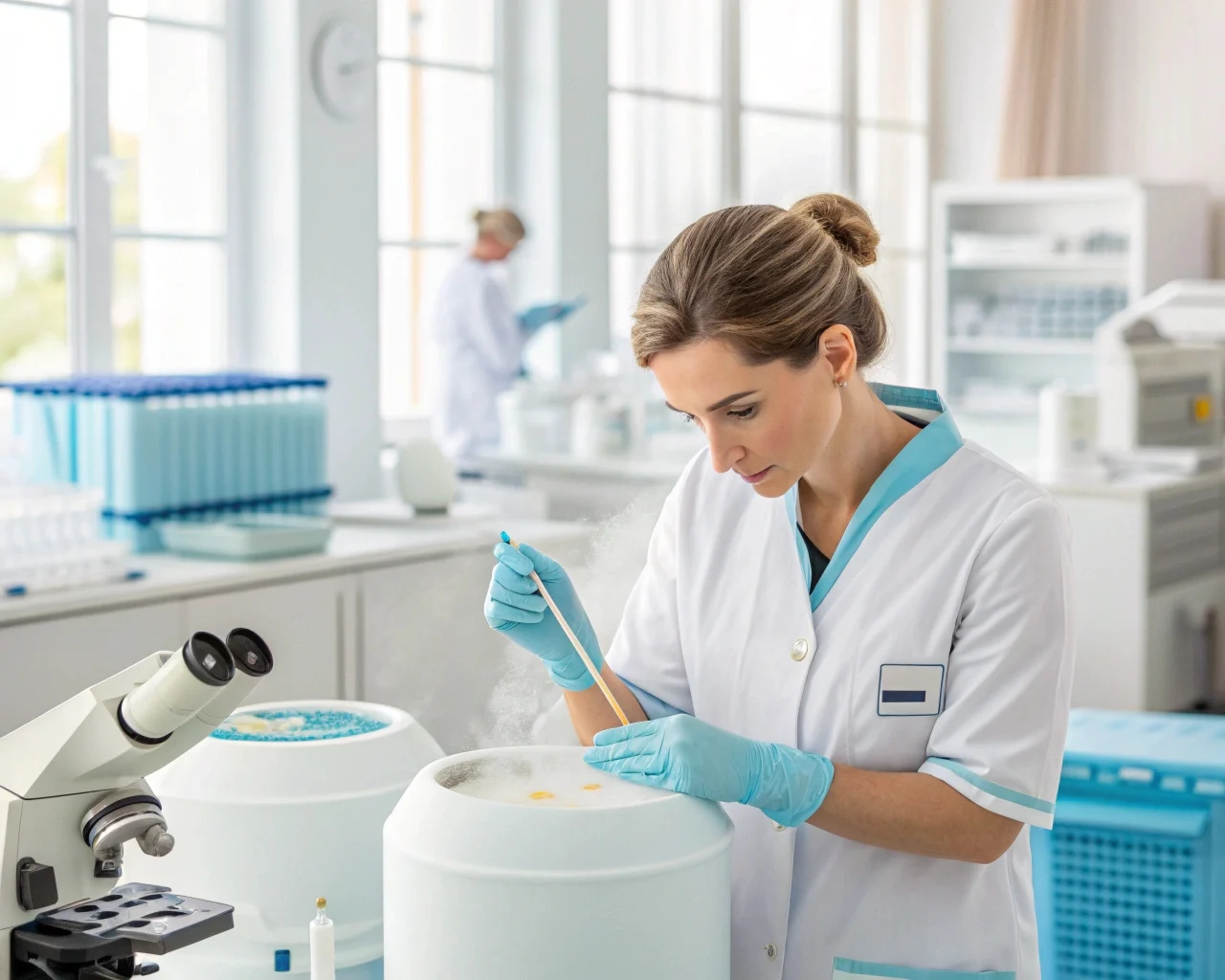
Oocyte cryopreservation is the medical term for egg freezing. 'Oocyte' means an detailed unfertilised egg. 'Cryopreservation' means preservation by freezing. It's a three-step process. First, your ovaries are stimulated. Second, mature eggs are retrieved. Third, they're flash-frozen. Then they're stored until you need them.
The key advance that made egg freezing reliable was vitrification. It was developed in the late 2000s. The older slow-freeze method caused ice crystals to form inside the egg. Vitrification drops the egg to -196°C in milliseconds. This prevents ice crystals from forming and damaging the cell. Egg survival rates after thawing now exceed 90% at leading Indian clinics (Goldman et al., Fertility and Sterility, 2017).
The Egg Freezing Process: Step by Step
The process runs over approximately 14–18 days and has four main stages:
Fertility assessment: Blood tests to check AMH (anti-Müllerian hormone, a marker of your remaining egg supply), AFC (antral follicle count via ultrasound), and baseline hormone levels. Done at a clinic in your home country or by Divinheal's partner diagnostics lab before you travel.
Ovarian stimulation: You inject hormone medication daily for 10–14 days to encourage multiple follicles to mature at once. You'll have 2–4 monitoring scans to track follicle growth and adjust the dose.
Egg retrieval: A 20–30 minute outpatient procedure under light sedation. A specialist uses an ultrasound-guided needle through the vaginal wall to collect the eggs from each follicle. You go home the same day.
Vitrification and storage: Mature eggs are frozen within hours of retrieval and stored in liquid nitrogen. Initial storage is typically included for the first year; annual storage fees apply after that.
What's the Best Age for Egg Freezing? The Data Is Clear
Age and Fertility: The Declining Ovarian Reserve
You're born with roughly 1–2 million eggs. By puberty, that number has dropped to 300,000–500,000. After that, the decline is steady — and it speeds up. After age 37, egg quantity and quality drop more steeply. The mid-thirties is a critical window for fertility preservation decisions.
At What Age Are 90% of Your Eggs Gone?
By the time a woman reaches 30, she has lost roughly 90% of her lifetime supply of eggs, according to Research in Human Reproduction. By the time a woman reaches 40 years of age, only about 3% of those eggs remain. At those ages, it is still possible to be pregnant. But the matriculation becomes a gamble, and egg freezing becomes increasingly more challenging and less precise.
This is the biological reality behind the 'best age' question. It's not about social preference. It's about fewer eggs per stimulation cycle. And it's about more chromosomal abnormalities as eggs age.
The Ideal Window: Freezing Eggs in Your Late 20s to Mid-30s
The ideal time to freeze your eggs is between your late 20s and mid-30s. You have a strong ovarian reserve during this window. Egg quality is highest. One retrieval cycle is most likely to produce 10–15 mature eggs — the typical goal for one child.
Plus, it’s a one-and-done approach; freezing in your 20s gives you better quality eggs and usually takes only one cycle. All is not lost — freezing at 30–34 yields good results. Freezing at 35–38 is still possible, but it might take you two cycles to retrieve enough eggs.
Is It Too Late at 35, 37, or 40? Here's What the Research Says
A large study in Fertility and Sterility found women who froze eggs before 35 had live birth rates of about 50–60% when they later used them. For women freezing at 36–39, the rate was 30–40%. Over 40, success rates drop a lot, though they don't fall to zero.
At 37, you can still get a good outcome. Your specialist will likely recommend banking more eggs per cycle — 15–20 mature eggs rather than 10–15. They may also suggest two retrieval cycles. Divinheal's coordinators can help you understand what's realistic for your AMH and AFC results before you travel.
How Many Eggs Should You Freeze? A Guide by Age
The number of eggs you need depends on your age at freezing and your target family size. These are general targets — your actual protocol will be based on your AMH test result:
Age at freezing | Target mature eggs (1 child) | Typical cycles needed |
Under 35 | 10–15 | 1 |
35–37 | 15–20 | 1–2 |
38–40 | 20–30 | 2–3 |
Over 40 | 30+ (discuss with specialist) | Multiple |
Sources: Apollo Fertility, Nova IVF Fertility, Shadygrove Fertility data (Seifer et al.)
How Many Eggs Should You Freeze for Two Children?
If you want two children, most fertility specialists recommend banking 20–30 mature eggs. That may mean two retrieval cycles, especially if you're over 35. Not every egg survives thawing. Not every thawed egg fertilises. And not every embryo implants. More eggs in storage means more attempts — without repeating the full stimulation process.
Beyond Age: Lifestyle and Medical Factors That Affect Egg Quality
Age is the biggest factor — but not the only one. These factors can also reduce egg quality or quantity:
Smoking: associated with a reduced ovarian reserve and earlier menopause
Excessive alcohol: disrupts hormonal signalling involved in egg maturation
BMI above 30 or below 18.5: affects hormonal balance and stimulation response
High chronic stress: elevates cortisol, which can suppress reproductive hormones
Endometriosis: can reduce ovarian reserve, sometimes significantly, even in younger women
PCOS: typically preserves quantity of eggs while potentially affecting quality; stimulation protocols must be tailored
Your pre-freeze fertility assessment will flag any of these concerns, allowing the clinic to customize your protocol accordingly.
Egg Freezing Success Rates by Age: What the Numbers Really Tell You
Interpreting Live Birth Rates Per Frozen Egg and Cycle
The most meaningful statistic isn't the egg survival rate or the fertilisation rate. It's the live birth rate per thawed egg. This accounts for all the steps where things can go wrong. Some eggs don't survive thawing. Some don't fertilise. Some embryos don't develop. And some transfers don't implant.
Clinics in India follow ICMR (Indian Council of Medical Research) protocols. They are required to report outcomes openly. Always ask for the live birth rate per egg thawed. Ask for this broken down by patient age group — not just the overall clinic success rate.
Success Rates by Age: How India's Clinics Compare Globally
Age at freezing | Egg survival after thaw | Live birth rate per egg | Cumulative rate (15–20 eggs) |
Under 35 | 80–90% | 5–10% | 50–60% |
35–37 | 75–85% | 4–8% | 40–50% |
38–40 | 70–80% | 3–6% | 30–40% |
Over 40 | 60–75% | 1–3% | 15–25% |
Sources: Goldman et al., Fertility and Sterility 2017; Nova IVF Fertility outcomes data; ART Fertility Clinics India
Why Vitrification Technology Matters for Your Egg Survival Rate
Vitrification has transformed egg freezing outcomes. Before 2012, slow-freeze methods produced egg survival rates of only 50–60%. Most NABH-accredited clinics in India now report survival rates above 90%. That's on par with the best clinics in the UK and Australia.
When checking a clinic, ask whether they use vitrification — not slow-freeze. Ask for their per-age survival rate for the past 12 months. Reputable clinics will share this without hesitation.
What You Can Do Before Retrieval to Improve Egg Quality
You can't reverse age-related egg decline — but you can give your eggs the best possible environment in the 90 days before retrieval (the time it takes for a follicle to mature):
Eat a Mediterranean-style diet high in antioxidants, omega-3s, and leafy greens
Take CoQ10 (Coenzyme Q10) — some fertility specialists recommend 400–600mg daily; discuss with your doctor
Stop smoking immediately — even one cycle of abstinence can improve outcomes
Cap alcohol at 1–2 units per week during stimulation
Aim for 7–8 hours of sleep and manage high-stress periods where possible
Egg Freezing Cost in India vs UK, Australia & UAE: Full Comparison
Why India? Cost, Quality, and NABH-Accredited Clinics Explained
India's fertility clinics match international treatment standards. Costs are lower because running costs are lower — not because standards are lower. NABH is India's top hospital quality body. It's similar to the UK's CQC or Australia's RTAC. All three require the same patient safety, lab quality, and clinical standards.
Apollo Fertility, Nova IVF, Indira IVF, and ART Fertility are some of the best fertility clinics in India. Many of their experts received their training in Australia, the United States, or the United Kingdom. Some have fellowships at prestigious universities. Numerous studies have been published in peer-reviewed journals.
Cost Comparison: India vs UAE, Australia, and the UK
Country | Procedure cost (1 cycle) | Medication | Annual storage | Typical total (year 1) |
India (via Divinheal) | ₹1,00,000–₹2,50,000 (£950–£2,400 / AED 4,400–11,000) | ₹30,000–₹80,000 | ₹10,000–₹20,000 | ₹1,40,000–₹3,50,000 (£1,300–£3,300) |
United Kingdom | £3,000–£5,000 | £1,000–£1,500 | £300–£500/yr | £4,300–£6,500 |
Australia | AUD 5,000–8,000 | AUD 2,000–3,000 | AUD 500–1,000/yr | AUD 7,500–12,000 |
UAE (Dubai) | AED 12,000–20,000 | AED 4,000–8,000 | AED 2,000–3,000/yr | AED 18,000–31,000 |
Note: costs are approximate ranges. Medication costs vary by protocol. Verify current pricing with your clinic before booking.
Is Egg Freezing Worth It? A Realistic Benefit vs Cost View
Egg freezing isn't a guarantee of pregnancy — it's an insurance policy. Whether it's worth it depends on your age and your circumstances. For women under 35 with a good AMH, a single cycle in India for ₹1.5–2.5 lakh (£1,400–2,400) gives a cumulative pregnancy chance of 50–60% when those eggs are later used. That's a meaningful insurance policy at a price roughly equal to a weekend holiday.
The situation is different for women over 38. You might require two or three cycles. There is a decreased chance of a live birth per cycle. Additionally, the overall cost increases. Before you commit, your fertility doctor should go over your unique AMH and AFC numbers with you.
Is Egg Freezing Legal in India? ART Act 2021 Explained Simply
What the ART (Regulation) Act 2021 Means for You as a Patient
Yes — egg freezing is fully legal in India. It's regulated by the Assisted Reproductive Technology (Regulation) Act, 2021. This law covers all ART procedures. These include IVF, egg donation, and gamete (egg or sperm) storage for personal use.
Clinics are required by the Act to register with the National Registry of ART Banks and Clinics of India. The clinic you visit has been approved by the government. It must adhere to basic laboratory requirements. Patient records must be kept up to date. As personal biological material, your eggs are legally protected.
Eligibility and Consent: What You Need to Know Before You Start
In India, every woman over 21 is able to freeze her eggs. This holds true for social as well as medical reasons. The law does not specify an upper age limit. However, clinics will discuss reasonable expectations with elderly patients.
Before any retrieval, you'll sign a detailed informed consent. This covers the number of retrieval cycles. It covers how long eggs will be stored — typically renewable in 10-year blocks. It covers what happens to your eggs if you don't use them. And it covers your wishes if you can no longer make decisions. The consent process usually spans 2–3 counselling sessions.
Patient Safety Standards at NABH-Accredited Fertility Clinics
NABH stands for the National Accreditation Board for Hospitals. NABH-accredited clinics are checked against 600+ quality and safety criteria. This is close in scope to the UK's CQC framework. Each clinic must meet IVF lab quality controls. They must have qualified embryologists. They must follow safe medication storage and patient data privacy rules. And they must report any adverse events.
Apollo Fertility, Nova IVF, and ART Fertility Clinics are among the NABH-accredited facilities Divinheal works with. JCI (Joint Commission International) certification, held by some Apollo hospitals, additionally meets US and international hospital safety standards.
Real Patient Journeys: What It's Like to Freeze Eggs in India
Three Women, Three Countries, One Decision
Sophie, 34, London: Sophie had been putting off the decision for two years. When her AMH came back borderline low at her London NHS referral, she decided to act. Through Divinheal, she had her fertility assessment done at a London partner lab, then travelled to Chennai for her retrieval cycle at ART Fertility Clinics. "The monitoring appointments in Chennai were better organised than anything I'd experienced at home. I was in and out within 25 minutes each time." She retrieved 11 mature eggs in a single cycle and was back in London within six days.
Priya, 29, Melbourne: Priya wasn't sure she wanted children yet — but she knew she wanted the option. With egg freezing in Melbourne costing AUD 8,500+, she looked at India after a friend's recommendation. Divinheal arranged her entire trip to Hyderabad: accommodation near Apollo Fertility, airport transfers, and a coordinator who spoke to her daily during stimulation. She retrieved 15 eggs and saved approximately AUD 5,500 compared to her Melbourne quote.
Fatima, 36, Dubai: Fatima had been married for three years but wasn't ready to start a family. She froze embryos rather than eggs (using donor sperm is not permitted under Indian law, so she froze eggs instead), retrieving 12 mature eggs at a Mumbai NABH-accredited clinic. Her total cost, including flights from Dubai, was less than the procedure-only price at her local Dubai fertility centre.
Stories are illustrative composites based on typical patient journeys. Names changed for privacy.
How to Choose the Right Fertility Clinic in India
Key Criteria: Expertise, Technology, and Patient-Centric Approach
The right clinic for egg freezing isn't just the cheapest or the most advertised. Look for these five things:
NABH accreditation or JCI certification — verifiable on the accreditation body's website
Specialist with a fellowship or advanced training in reproductive endocrinology, not just general OB/GYN
On-site embryology lab with ISO 7 or 8 clean-room classification
Reported egg survival rate above 85% using vitrification
Dedicated international patient coordinator — not just a general hospital helpdesk
Why India's Top Fertility Clinics Excel in Patient Care
Most clinics in the UK or Australia, the leading fertility chains in India, including Apollo Fertility, Nova IVF, Indira IVF, and ART Fertility Clinics, treat far more patients. When combined with strong quality standards, increased volume promotes procedural skill. These organizations also invest heavily in infrastructure for overseas patients, including specific international patient lounges at flagship locations, bilingual coordinators, and WhatsApp consultation.
Accreditation, Quality Standards, and Success Track Record
Verify accreditation immediately at all times. All hospitals that are currently accredited are included in NABH's public registry (nabh.co). You can check your JCI accreditation at jointcommissioninternational.org. Request cycle outcome data, split down by patient age category, from the clinic. It's a warning sign if they refuse to disclose it.
How Divinheal Supports Your Egg Freezing Journey from Abroad
Personalised Treatment Plans and Dedicated Patient Coordination
Divinheal isn't a clinic — it's a medical tourism coordinator. You get a dedicated coordinator from your first inquiry through to your post-procedure follow-up. Your coordinator handles: matching you to the right clinic based on your fertility test results and budget, arranging pre-travel diagnostics in your home city, scheduling all appointments in India, and being your point of contact if anything changes mid-cycle.
This matters more than it sounds. Egg freezing cycles are time-sensitive. If your monitoring scan shows your follicles are ready two days earlier than planned, your coordinator will reschedule your retrieval — not leave you navigating a foreign hospital system alone at 7am.
Full Medical Tourism Support: Visa, Travel, and Accommodation
Divinheal helps with your medical visa application, which requires a letter from the treating hospital. Most patients from the UK, Australia, and UAE receive Indian medical visas within 5–10 business days. We provides the hospital invitation letter and guides you through the online application.
Partner hotels provide discounted rates for lodging close to your treating clinic. The majority of clinic campuses in Delhi, Mumbai, Chennai, and Hyderabad have partner hotels within ten minutes. Including monitoring, retrieval, and two to three days of recuperation before flight, the average overall trip time in India is 14 to 18 days.
Patient Stories: Real Journeys from UK, Australia & UAE
See the patient journeys section above. Divinheal works with patients from all four of its target markets (UK, Australia, UAE, and India) and can connect you with a former patient from your country for a peer-to-peer conversation before you commit.
Recovery After Egg Retrieval: What to Expect and When to Call Your Doctor
What to Expect Immediately After Egg Retrieval
Recovery from egg retrieval is typically straightforward. You'll spend 2–4 hours in the clinic recovery room. Mild cramping — similar to period pain — and light spotting are normal. Most patients feel well enough to walk around the same evening. Most can travel by the second or third day after retrieval.
You'll receive a follow-up call or WhatsApp message from your clinic team with your egg count — how many mature eggs were retrieved and how many were successfully vitrified. This call is important: it confirms your result and allows you to ask questions before you leave India.
OHSS and Other Side Effects: Recognising Warning Signs
OHSS stands for ovarian hyperstimulation syndrome. It is a rare but serious side effect. It happens when the ovaries over-respond to hormone injections. Fluid leaks from blood vessels. Mild OHSS — bloating and mild discomfort — affects roughly 10–20% of patients and goes away on its own. Severe OHSS affects less than 1% of patients and needs medical attention.
Call your doctor right away if you notice any of these signs. Severe abdominal pain or bloating. Sudden weight gain of 1kg+ in a day. Reduced urination. Shortness of breath. Or a fever above 38°C. Your Divinheal coordinator stays reachable by WhatsApp throughout your stay in India and for 30 days after you return home.
Long-Term Well-being and Preparing for Future Use
Once your eggs are frozen, they're in storage. The vitrification process halts all biological ageing. A 32-year-old's eggs frozen today remain 32-year-old eggs when thawed at 40. Annual storage fees in India are typically ₹10,000–₹20,000 per year (roughly £95–£190).
When you're ready to use your eggs, the next step is IVF. The eggs are thawed and fertilised with sperm — your partner's or donor sperm. Embryos develop in the lab. Then the best embryo is transferred. This can be done in India or at a clinic in your home country. Divinheal can coordinate either option.
Cost Calculator
I know my treatment — show me cost from 3 hospitals
Final Thoughts
The best age for egg freezing is as soon as you know you want the option. Biologically, that means your late 20s to mid-30s. Practically, it means whenever your circumstances align. Doing it in India through Divinheal means that cost is no longer what stands in the way.
A single cycle in India costs ₹1,00,000–₹2,50,000 (£950–£2,400), versus £4,000–6,500 in the UK or AUD 7,500–12,000 in Australia. The same NABH-accredited clinics. The same vitrification technology. Sixty to seventy percent less.
If you're from the UK, Australia, or UAE and want to understand what's realistic for you — based on your age, AMH levels, and family goals — speak to a Divinheal coordinator. There's no obligation and no hard sell. Just a clear picture of your options.
Plan My Journey
Tell us your condition and budget — our AI matches the right destination, hospital and doctor and visa pathway
Cost Calculator
I know my treatment — show me cost from 3 hospitals
Recommended Article

Best In Vitro Fertilization (IVF) Doctors in Hyderabad
Doctors for Nephrology: Find Kidney Care Specialists
Doctors in Chennai: Find Medical Specialists in India
Best Embryo Freezing Hospitals in Hyderabad: Care Guide
Hospitals for reproductive surgery: Compare options
Hospitals in Gurugram: Guide to Quality Facilities
IVF Treatment in Haryana | Cost, Hospitals & Doctors
TAVR (Transcatheter Aortic Valve Replacement) cost in New Delhi
Tonsillectomy & Adenoidectomy Success Rate in Mumbai
Facelift & Anti-Aging Procedures in Chennai for Ethiopia Patients | Cost, Hospitals
Written by DivinHeal Editorial Contributor, Rahul Kumar, Embryologist | Medically Reviewed by Dr Indu Priya, Gynecologist(MD) Published on: 2026-01-29
Plan My Journey
Tell us your condition and budget — our AI matches the right destination, hospital and doctor and visa pathway
Cost Calculator
I know my treatment — show me cost from 3 hospitals
Booking With DIVINHEAL
Get a free consultation to understand your treatment options
Recommended Article
Best In Vitro Fertilization (IVF) Doctors in Hyderabad
Doctors for Nephrology: Find Kidney Care Specialists
Doctors in Chennai: Find Medical Specialists in India
Best Embryo Freezing Hospitals in Hyderabad: Care Guide
Hospitals for reproductive surgery: Compare options
Hospitals in Gurugram: Guide to Quality Facilities
IVF Treatment in Haryana | Cost, Hospitals & Doctors
TAVR (Transcatheter Aortic Valve Replacement) cost in New Delhi
Tonsillectomy & Adenoidectomy Success Rate in Mumbai
Facelift & Anti-Aging Procedures in Chennai for Ethiopia Patients | Cost, Hospitals
From Consultation to Recovery,
Step by Step
Expert Specialist Matching
Connecting you with the world's top-rated medical experts.
Accredited Hospital Network
Access to JCI & NABH certified healthcare facilities.
Complete Travel Coordination
Hassle-free visa, stay, and local transport assistance.
24/7 Personal Care
Dedicated patient advisors supporting you at every step.
Journey Guidance
Full guidance from start to end of the patient treatment journey.
Expert Specialist Matching
Connecting you with the world's top-rated medical experts.
Everything you
need to know today
Browse through these common inquiries to better understand our patient-focused medical platform.
No. Current evidence, including WHO guidance and data from over 10,000 births from frozen eggs, shows no increased risk of birth defects, chromosomal abnormalities, or developmental issues in children born from frozen eggs. The egg retrieval process does not reduce your remaining ovarian reserve in a meaningful way — only the eggs that were already maturing for that cycle are collected.
The most modifiable factors, quitting smoking, reducing back on alcohol to 1-2 units per week, eating an antioxidant-rich Mediterranean diet, managing chronic stress, and maintaining a healthy BMI, means cost is no longer what stands in the way. A single cycle in India costs ₹1,00, are the most significant improvements made in the 90 days prior to retrieval. CoQ10 supplementation is also advised by many professionals; talk to your doctor about the dosage.
Pre-travel fertility testing at a partner lab in your home city, NABH-accredited clinic matching based on your test results and budget, medical visa application support, lodging and airport transfers in India, daily communication during your stimulation and monitoring phase, and post-procedure follow-up for 30 days after you return home are all handled by a dedicated coordinator assigned by Divinheal. Your coordinator serves as your only point of contact for the duration of the trip.
Serious complications from egg freezing are rare (severe OHSS affects under 1% of patients), but Divinheal stays in contact for 30 days post-procedure. Your Divinheal coordinator can connect you with a local GP or fertility specialist who is familiar with your India treatment records. The treating clinic in India will also provide a full discharge summary and medication report for any local doctor to review.
Divinheal only partners with NABH-accredited facilities. Before partnering with any clinic, Divinheal's team visits the facility, reviews accreditation certificates, checks the lead specialist's qualifications and publications, and reviews patient outcome data. Accreditation is re-verified annually. You can request the accreditation certificate for any clinic before booking.
Research published in Human Reproduction found that by age 30, a woman has typically lost around 90% of her original egg supply. By 40, only roughly 3% remain. These are averages — individual variation is significant. An AMH blood test gives you a much more accurate picture of your personal ovarian reserve than age alone.
The ideal age for egg freezing is your late 20s to early 30s. That's when egg quality and quantity are highest. Freezing before 35 gives the best chance of a live birth later — about 50–60% cumulative live birth rate with 15–20 mature eggs. That said, 35–37 is still a very viable window. Many women get good results. The key is acting rather than waiting.
Most fertility specialists recommend 10–15 mature eggs for one child if you're under 35. If you're 35–37, the target is 15–20 eggs. These targets account for the fact that not every egg survives thawing, fertilisation, and embryo development. A study in Fertility and Sterility (Goldman et al., 2017) found that 15–20 mature eggs give roughly a 70–80% chance of at least one live birth for women under 38.
Plan for 20–30 mature eggs if you want two children. This may require two retrieval cycles, especially if you're over 35. Your AMH test result is the best guide — it predicts how many eggs you're likely to produce per stimulation cycle. Divinheal's coordinators can give you a realistic target based on your actual test results before you travel.
Based on published data from Fertility and Sterility and leading Indian clinics, under 35, the cumulative live birth rate with 15–20 eggs is approximately 50–60%; at 35–37, it's 40–50%; at 38–40, it's 30–40%; and over 40, it drops to 15–25%. These are averages — individual clinic quality and your specific AMH levels will affect your personal estimate.
In India, the average cost of a single egg freezing cycle is between ₹1,00,000 - ₹2,50,000 (about £950–£2,400/AED 4,400–11,000/AUD 1,800–4,500). Medication costs between ₹30,000 - ₹80,000, while storage costs between ₹10,000 and ₹20,000 annually. That is 60–70% less than a similar cycle in Australia (usually AUD 7,500–12,000 all-in) or the UK (about £4,000–6,500 all-in).
No. 37 is within the viable window for egg freezing. You may need 1–2 cycles to collect enough eggs (15–20 mature eggs is the typical target at this age), and your live birth rate per egg will be lower than at 32. But many women freeze successfully at 37 and go on to have babies using those eggs. The key is acting now rather than waiting another year or two.
Under India's ART Act 2021, eggs can be stored and consent renewed in 10-year cycles. In practice, eggs can be stored indefinitely as long as consent is renewed and storage fees are paid. The vitrification process halts biological ageing — eggs frozen at 32 are still biologically 32-year-old eggs when used at 40.
A valid passport, an initial fertility test result (AMH and AFC), and a medical visa (Divinheal supplies the hospital letter for your application) are required. A doctor's letter attesting to the absence of hormone stimulation contraindications is also required by the majority of clinics. A comprehensive pre-travel checklist customized for your home country will be provided by Divinheal's organizer.
Still have more questions?
Book a call with our friendly team to learn how DivineHeal simplifies your healthcare journey.








