
Written by DivinHeal Editorial Contributor, Rahul Kumar, Embryologist | Medically Reviewed by Dr Indu Priya, Gynecologist(MD) Published on: 2026-05-27
Male & Female Fertility Tests in India: 2026 Guide for UAE, UK & Nigeria Patients
About 1 in 6 couples worldwide struggle to conceive. A single fertility test is often the first step that changes everything. India’s JCI-accredited hospitals offer fertility testing at 60–80% below UAE and UK private clinic prices. The quality of care stays the same.
This guide is for patients from the UAE, UK, and Nigeria. It covers male and female fertility tests. It explains Letrozole, fertility pills, and twin risk. It also covers the 7 best foods to boost fertility naturally. All prices are from 2026.
Plan My Journey
Tell us your condition and budget — our AI matches the right destination, hospital and doctor and visa pathway
Male Fertility Test: What to Expect and What It Costs
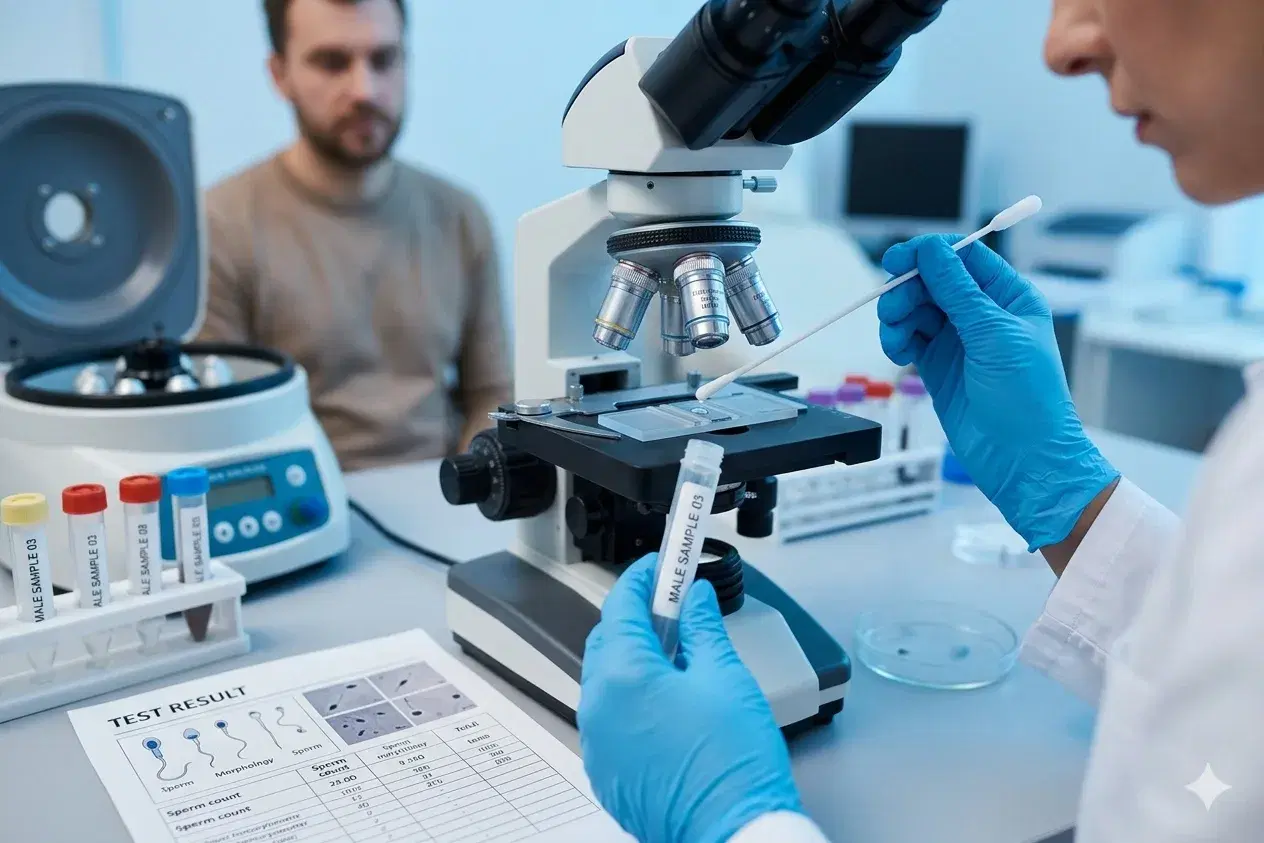
A male fertility test starts with a semen analysis. This lab test measures sperm count, motility, and morphology. Most men get results within 24–48 hours. If the test raises questions, your doctor will order more tests. India’s labs use WHO standards. Costs are far lower than those in UAE and UK private clinics.
How Can a Man Check His Fertility?
The first step is a semen analysis. You provide a sample after 2–5 days of sexual abstinence. That timing window matters for accuracy. The lab checks three values:
Sperm count: normal threshold is ≥15 million sperm per ml (WHO, 2021)
Motility: at least 40% of sperm should be actively moving
Morphology: at least 4% should have a normal shape (Kruger strict criteria)
If any value falls short, your specialist will order hormone blood tests. These check FSH (follicle-stimulating hormone), LH (luteinising hormone), and testosterone to find out why.
The Best Male Fertility Test Options: Advanced Diagnostics
A standard semen analysis covers most cases. If results are unclear, hospitals like Apollo Fertility India, Cloudnine Fertility, and Nova IVF Fertility offer advanced tests:
Sperm DNA Fragmentation Index (DFI): measures genetic damage inside sperm cells. Fragmentation above 25% is linked to poor embryo development and recurrent miscarriage.
Sperm Chromatin Structure Assay (SCSA): evaluates how tightly the DNA is packaged — poorly packaged DNA is more vulnerable to damage.
Post-ejaculatory urinalysis: detects retrograde ejaculation, where sperm travel into the bladder instead of exiting the body.
Testicular biopsy: performed when no sperm appear in the ejaculate (azoospermia).
Y-chromosome microdeletion analysis: recommended for men with very low or absent sperm counts.
Karyotyping: checks for chromosomal abnormalities that affect sperm production.
What Are the First Signs of Male Infertility?
Male infertility is often silent — no obvious symptoms. This is why testing is essential, not optional. Watch for these signs:
Difficulty with ejaculation or low sexual desire
Pain, swelling, or a lump in the testicles
Reduced facial or body hair (a hormonal signal)
A history of mumps orchitis, varicocele, or surgery near the groin
If you and your partner have been trying for 12 months without success — or 6 months if either of you is over 35 — book a semen analysis. It’s quick, non-invasive, and inexpensive.
Why Wait 2–5 Days Before a Sperm Test?
Delaying for 2-5 days before providing the specimen has an impact on the accuracy of the test results. Less than 2 days results in an underestimation of the total sperm count. On the other hand, more than 5 days leads to high percentages of aged and sluggish sperm that have poor motility and abnormal morphology (WHO, 2021). Your fertility clinic will advise on this. Indian fertility clinics usually accept specimens taken on-site — a private room is standard at JCI-accredited hospitals.
Male Fertility Test | India (INR) | India (USD) | UAE (AED) | UK (GBP) | Nigeria (NGN) |
Semen Analysis | ₹800–₹2,500 | $10–$30 | AED 35–110 | £8–£25 | NGN 7,000–25,000 |
Hormone Blood Tests | ₹3,000–₹8,000 | $35–$95 | AED 130–350 | £30–£80 | NGN 30,000–80,000 |
Sperm DNA Fragmentation | ₹8,000–₹15,000 | $95–$180 | AED 350–650 | £80–£150 | NGN 80,000–150,000 |
Full Advanced Panel | ₹30,000–₹50,000 | $360–$600 | AED 1,320–2,200 | £295–£485 | NGN 290,000–490,000 |
Costs are approximate. Prices vary by hospital, city, and case complexity. Last reviewed: 2026.
Fertility Test for Women: Hormonal, Structural & Ovarian Reserve Tests
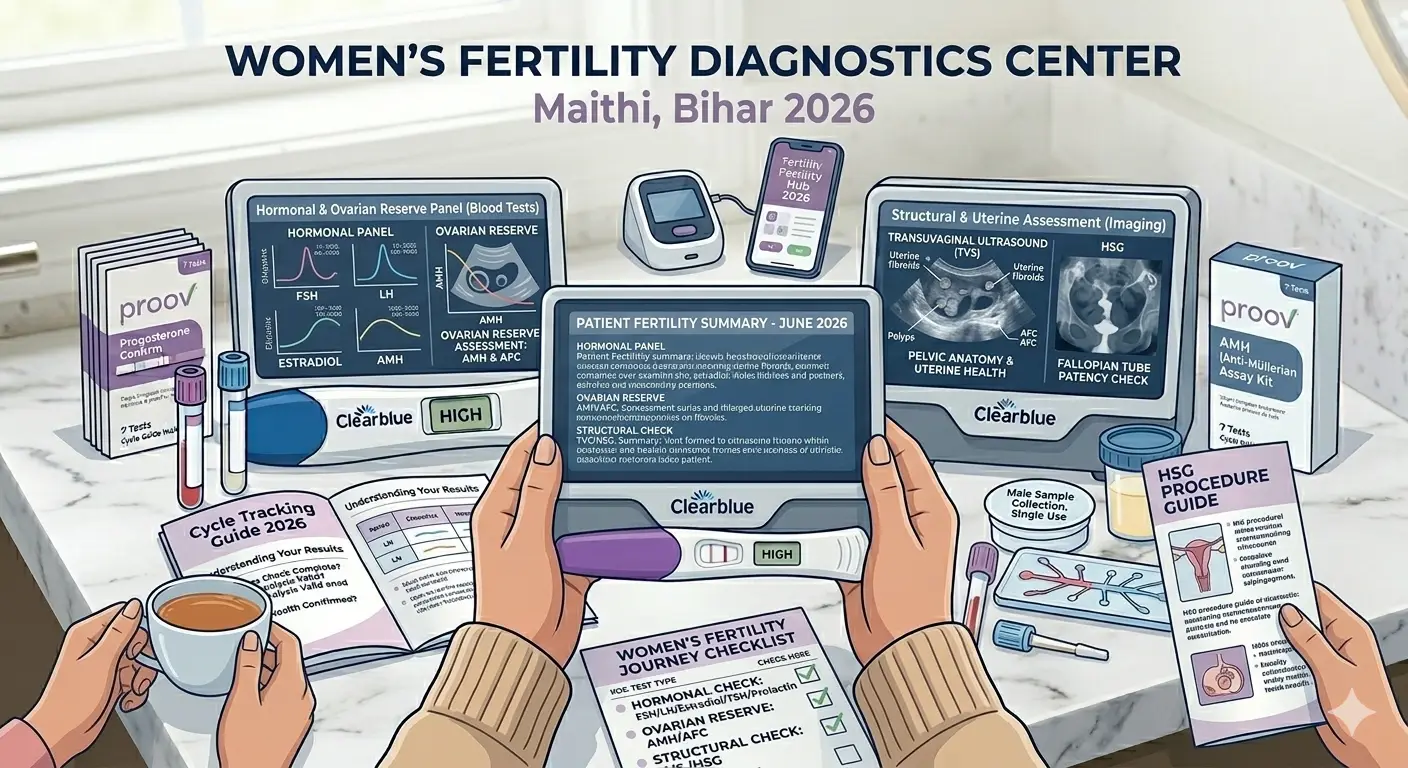
Female fertility testing covers three areas: hormonal tests, structural tests, and ovarian reserve tests. They tell your specialist whether you ovulate regularly. They show whether your fallopian tubes are open. They also show how much of your egg supply remains. Centres like Nova IVF Fertility (Delhi/Chennai), Manipal Hospitals, and Cloudnine Fertility complete most panels within 3–5 days.
What Tests Check Female Fertility?
Hormonal tests involve blood draws that check key reproductive hormones:
FSH (follicle-stimulating hormone) and LH (luteinising hormone): assess ovarian function
Oestrogen (estradiol): supports the uterine lining and egg development
Progesterone (day-21 test): confirms whether ovulation occurred that cycle
Ovarian reserve tests check the quantity and quality of your remaining eggs:
AMH test (Anti-Müllerian Hormone): a score below 1.0 ng/mL suggests low ovarian reserve. One of the most informative single markers available.
AFC (Antral Follicle Count): a transvaginal ultrasound counts small follicles visible in the ovaries. Fewer than 5–7 follicles total may indicate diminished reserve.
Day-3 FSH: FSH above 10 IU/L on the third day of your cycle can also signal reduced reserve (NICE Guidelines, 2023).
Structural tests examine the physical reproductive organs:
Transvaginal ultrasound: checks the uterus and ovaries for fibroids, polyps, or cysts.
HSG (hysterosalpingography): an X-ray procedure that confirms whether the fallopian tubes are open. Blocked tubes are a common, treatable cause of infertility.
How Can a Female Check If She Is Fertile? At-Home vs Clinical Testing
At-home tests are a great first step. Ovulation Predictor Tests check for the LH surge just before ovulation. BBT, or basal body temperature, charting is used to understand your pattern during your menstrual cycle over several weeks. Neither will be able to detect any hormonal or anatomical issues. However, both can show if there is ovulation.
Clinical testing is needed for a full diagnosis. A full female fertility panel in India costs ₹15,000–₹25,000 ($180–$300). In the UAE, similar tests cost AED 800–1,500. In Nigeria, the same tests cost around NGN 150,000–250,000. UK patients pay £145–£290 at private clinics — or wait months on the NHS.
Feature | At-Home Testing | Clinical Testing (India) |
Methods | OPKs, BBT charting | Blood tests, ultrasound, HSG |
Accuracy | Good for ovulation prediction | Comprehensive; specialist-interpreted |
Cost | Low (AED 50–200 / NGN 5,000–20,000) | ₹15,000–₹25,000 ($180–$300) |
Insights | Basic cycle tracking | Hormonal balance, structural issues, ovarian reserve |
Professional input | None | Specialist consultation and treatment plan |
Understanding Progesterone and Its Role in Fertility
Progesterone is the hormone that prepares the uterine lining for implantation. This happens after ovulation. After the egg is released, the ruptured follicle turns into the corpus luteum. The corpus luteum produces progesterone. This thickens the endometrium and makes it ready for a fertilised egg. If conception occurs, progesterone levels stay high. This supports early pregnancy and prevents uterine contractions.
Low progesterone can stop implantation. It can also raise the risk of early pregnancy loss (American Society for Reproductive Medicine, 2020). Your specialist will check progesterone around day 21 of your cycle, especially if you’re in treatment. Extra progesterone is available if your levels are too low.
Female Fertility Test | India (INR) | India (USD) | UAE (AED) | UK (GBP) | Nigeria (NGN) |
Initial Consultation + Basic Tests | ₹15,000–₹30,000 | $180–$360 | AED 660–1,320 | £145–£290 | NGN 145,000–290,000 |
AMH + Hormonal Panel | ₹4,000–₹8,000 | $50–$100 | AED 180–370 | £40–£80 | NGN 40,000–80,000 |
Transvaginal Ultrasound | ₹2,000–₹5,000 | $25–$60 | AED 90–220 | £25–£60 | NGN 20,000–50,000 |
HSG (Fallopian Tube X-Ray) | ₹8,000–₹15,000 | $95–$180 | AED 350–660 | £75–£145 | NGN 75,000–145,000 |
Costs are approximate. Prices vary by hospital, city, and case complexity. Last reviewed: 2026.
Infertility and Letrozole: How This Medication Helps You Conceive
Letrozole — an oral aromatase inhibitor — is now the first-choice medication for ovulation induction. It is used for women with PCOS or unexplained infertility. Both NICE (NG220, 2023) and the American Society for Reproductive Medicine (2022) recommend it ahead of Clomid (clomiphene citrate). You take it as a tablet for 5 days per cycle, usually early in your period. Leading JCI-accredited hospitals in India — including Cloudnine Fertility and Manipal Hospitals — offer full Letrozole protocols with ultrasound monitoring. The cost is 60–70% below that of UK private clinics.
Why Is Letrozole Given in Infertility?
Letrozole temporarily blocks an enzyme called aromatase. Aromatase normally turns androgens into oestrogen. When oestrogen drops, the pituitary gland releases more FSH. More FSH tells the ovaries to grow and release a mature egg. This is called ovulation (Ali et al., PubMed, 2021). For women with PCOS, high androgen levels often prevent regular ovulation. Letrozole is also useful in unexplained infertility and for women who did not respond to Clomid.
How Long Should You Take Letrozole to Get Pregnant?
The standard dose is 2.5 mg/day for 5 days, starting on day 2 or 3 of your cycle. Your specialist may raise the dose to 5 mg or 7.5 mg if there’s no response after 1–2 cycles. Most fertility doctors suggest up to 6 treatment cycles before changing the plan.
Around 70 percent of women will ovulate if they take Letrozole. Approximately 40 percent of women will conceive in 6 cycles (NHS Wales Ovulation Induction Protocol). The use of Letrozole to improve fertility in the United Kingdom has been approved by the NICE NG220 (2023). This medicine is usually obtainable from NHS fertility services. Ultrasound checks during treatment track follicle growth and confirm ovulation.
Can Letrozole Help You Conceive Twins?
Letrozole can slightly raise the chance of twins. This is because it sometimes causes more than one follicle to grow and release an egg. The twin pregnancy rate with Letrozole is about 5–10% per cycle, compared to about 1% with natural conception (ICMR, 2022). This is lower than the twin rate with Clomid or injectable gonadotropins (FSH injections).
Multiple pregnancy is one of the side effects that will have to be dealt with, but it is not among the aims to be achieved by the fertility specialist through the stimulation process. The fertility specialist monitors your follicular growth via an ultrasound every month. If three or more mature follicles are detected, the cycle may be cancelled or changed to IVF to reduce the risk of a multiple birth.
Individual outcomes vary. Always follow your specialist’s instructions. This guide does not replace medical advice.
Fertility Pills for Twins: What You Need to Know
Fertility medications make the ovaries produce more eggs in one cycle. This can raise the chance of twins — but it also raises health risks for the mother and babies. Here is a clear breakdown of what’s available and what to expect.
Which Fertility Pills Can Increase the Chance of Twins?
Three types of medication are used for ovulation induction. Each has a different twin rate:
Clomiphene citrate (Clomid): an oral tablet taken for 5 days per cycle. Stimulates ovulation by blocking oestrogen receptors. Twin rate approximately 8–10%. Often, the first drug tried before Letrozole.
Letrozole (Femara): an aromatase inhibitor (see section above). Twin rate approximately 5–10%, lower than Clomid.
Injectable gonadotropins (Gonal-F, Follistim, Menopur): FSH injections that stimulate the ovaries more powerfully than oral tablets. Used in IUI and IVF protocols. Multiple-pregnancy rates are higher; strict monitoring is essential.
Taking pills does not guarantee that twins will be born. There are risks associated with carrying multiple pregnancies, such as premature delivery and underweight babies. The pills have been recommended as a solution for conception, but not to produce multiples.
How Long Does It Take for Fertility Pills to Work?
Most women who respond to Letrozole or Clomid do so within the first 1–3 cycles. If ovulation doesn’t happen after 3 cycles at the maximum dose, your doctor will reassess. They may move to injectable gonadotropins or IVF. Doctors usually allow a treatment window of 3–6 months before deciding that oral ovulation induction alone is not enough.
For injectable gonadotropins, stimulation takes 8–14 days per cycle. Blood tests and ultrasound scans during this time let the team adjust your dose daily for the safest and most effective response.
7 Best Foods to Increase Fertility Naturally
Your dietary habits influence reproductive hormones, ova quality, and spermatogenesis. In addition, diet influences inflammation. All of these factors influence your chance of conception. There is no single food that can guarantee your pregnancy. However, dietary improvements have their role to play. They also support the effectiveness of fertility treatments.
1. Leafy Greens and Colourful Fruits
Spinach, kale, broccoli, and colourful berries are rich in two fertility essentials: folate and antioxidants. Folate is a B vitamin. It supports healthy egg and sperm DNA. It is also critical for preventing neural tube defects in early pregnancy. The WHO recommends 400 mcg of folate daily for women planning pregnancy. Antioxidants — including vitamins C and E — reduce oxidative stress. Oxidative stress damages reproductive cells and lowers egg and sperm quality.
2. Whole Grains
Brown rice, oats, quinoa, and whole wheat bread help stabilise blood sugar and insulin. Insulin resistance is central to PCOS. It disrupts the hormonal signals that trigger ovulation. A Harvard School of Public Health study (Chavarro et al., 2007) found that women eating the most whole grains had up to a 20% lower risk of ovulatory infertility. This is compared to women eating mainly refined carbohydrates.
3. Healthy Fats — Avocado, Nuts, Seeds, Oily Fish
The sources of monounsaturated fat and omega-3 fatty acids are avocado, olive oil, walnuts, flaxseeds, salmon, mackerel, and sardines. Not only are they precursors to reproductive hormones, but they also help decrease inflammation in the body, which is associated with the development of PCOS, endometriosis, and low sperm motility. Try consuming 20%-30% of your total calorie intake as healthy fat with at least two servings of oily fish each week. Men with higher omega-3 intake show better sperm morphology in research.
4. Lean Proteins — Fish, Eggs, Legumes
Protein gives the body amino acids for hormone synthesis, egg development, and sperm production. Iron from lean meat reduces the risk of iron-deficiency anaemia, which can interfere with ovulation. A Nurses’ Health Study found women eating more plant-based protein (legumes, eggs) had over 50% lower risk of ovulatory infertility. This was compared to those eating mainly animal protein. Chickpeas, lentils, eggs, and fish are good daily choices.
5. Full-Fat Dairy
Research published in Human Reproduction found that women eating more full-fat dairy (whole milk, full-fat yoghurt, cheese) had a lower risk of ovulatory infertility. Full-fat dairy provides fat-soluble vitamins A, D, E, and K2. These support hormone synthesis and reproductive cell health. Low-fat dairy does not appear to carry the same benefit. One to two servings of full-fat dairy per day is a good target.
6. Oysters and Shellfish — Zinc and Selenium
Oysters have the highest zinc content on a gram basis of most foods. It could provide you with more than 100% of your daily value of zinc in one portion. Zinc is required for the manufacture of testosterone, spermatogenesis, and ovulation. Selenium, which occurs in shellfish and Brazil nuts, is an antioxidant that protects the DNA of sperm and eggs. Men who have low zinc tend to have lower numbers and motility of sperm. A targeted dietary increase or supplement (after testing) can produce measurable improvements in 3 months.
7. Maca Root and Other Supportive Superfoods
Maca root is a Peruvian root vegetable. It has been used for a long time to support libido and hormonal balance. Small randomised studies suggest it may improve sperm quality and count in men with low counts. Other useful additions include: turmeric (anti-inflammatory), pomegranate juice (antioxidant-rich, may improve uterine lining blood flow), Brazil nuts (selenium), and walnuts (omega-3). Before adding any supplement to your routine, check with your fertility specialist — some interact with fertility medications.
Individual outcomes vary. Consult your specialist for personalised dietary advice.
Lifestyle Factors That Affect Fertility
Your diet is one part of the fertility picture. Four other lifestyle areas have strong clinical evidence behind them. Each one is within your direct control.
Hydration: aim for 2-3 litres of water a day. Hydration ensures that the body produces healthy cervical mucus, making it easier for the sperm to get to the egg. Dehydration decreases the volume and motility of sperm in men. Avoid excess caffeine and sugary beverages. Consumption of more than 2 cups of coffee a day lowers female fertility, according to WHO statistics.
Exercise: Moderate activity, such as brisk walking, swimming, or yoga, for 150 minutes each week, helps improve circulation and decrease inflammation. Moderate exercise helps maintain a healthy body weight (WHO, 2020). However, excessive high-intensity exercise affects the ovulation cycle of women and testosterone levels of men.
Sleep: 7 to 9 hours of good sleep controls leptin and ghrelin hormones. They are hormones that indirectly influence ovulation and sperm production. Sleep deprivation increases cortisol levels, which inhibit FSH and LH hormones.
Stress management: Increased cortisol due to chronic stress results in decreased LH pulse frequency, which impairs ovulation. Techniques that decrease cortisol include mindfulness meditation, yoga, and walks for about 15 minutes per day. A review published in the journal "Fertility and Sterility" showed that stress programs improved IVF outcomes.
Cost Calculator
I know my treatment — show me cost from 3 hospitals
Fertility Testing & Treatment in India: Why UAE, UK & Nigeria Patients Choose Divinheal
The top fertility clinics in India are accredited through the JCI and certified by the NABL. The surgeons have either MCh, DNB, or FRCS certification. It is cheaper by 60%-80% than fertility clinics in UAE and UK private clinics with similar testing standards.
For UAE Patients
Patient coordinators who speak Arabic are provided in hospitals in Delhi, Mumbai, and Chennai. The flight duration from Dubai to Delhi is around three hours. Fertility test panels require 2 to 3 days for results. Letrozole tests usually take 4 to 6 weeks. Apollo Fertility India and Nova IVF Fertility have a proven patient track record from the UAE.
For UK Patients
The cost of an all-female fertility test in India is £40 – £290, compared to £145 – £500 at private clinics in the UK. Waiting time at the NHS for a fertility referral is 6 – 18 months. Doctors at Indian fertility clinics have similar qualifications, and their studies are published in peer-reviewed journals. You will receive full medical records and a continuity-of-care letter for your UK GP on return.
For Nigerian Patients
Divinheal arranges full support for Nigerian patients. This includes visa assistance (India e-Medical Visa, usually approved in 3–5 business days). It also includes flights from Lagos and Abuja, accommodation near your treatment centre, and a coordinator throughout. A full fertility panel in India costs NGN 40,000–290,000 — much less than many advanced procedures available locally.
Divinheal provides a connection with certified fertility clinics. They will take care of booking, airport pick up, and accommodation as well. For more information and a free personalised diagnosis, please visit Divinheal's website.
Quick Answer — At a Glance
Skim this if you’re short on time.
Fertility test costs in India vs UAE, UK, and Nigeria (2026):
Test
India (USD)
UAE (USD)
UK (GBP)
Nigeria (NGN)
Semen Analysis
$10–$30
$10–$30
£8–£25
NGN 7,000–25,000
AMH + Hormonal Panel
$50–$100
$95–$200
£40–£80
NGN 40,000–80,000
Sperm DNA Fragmentation
$95–$180
$150–$270
£80–£150
NGN 80,000–150,000
Full Female Panel
$180–$300
$400–$600
£145–£290
NGN 145,000–290,000
India’s JCI-accredited fertility hospitals — including Apollo Fertility, Cloudnine Fertility, and Nova IVF — deliver male and female fertility testing at 60–80% less than UAE or UK private-clinic prices. Letrozole ovulation induction cycles are available with full ultrasound monitoring. Divinheal connects UAE, UK, and Nigeria patients to verified centres with English and Arabic-speaking coordinators.
.
Written by DivinHeal Editorial Contributor, Rahul Kumar, Embryologist | Medically Reviewed by Dr Indu Priya, Gynecologist(MD) Published on: 2026-05-27
Plan My Journey
Tell us your condition and budget — our AI matches the right destination, hospital and doctor and visa pathway
Cost Calculator
I know my treatment — show me cost from 3 hospitals
Booking With DIVINHEAL
Get a free consultation to understand your treatment options
From Consultation to Recovery,
Step by Step
Expert Specialist Matching
Connecting you with the world's top-rated medical experts.
Accredited Hospital Network
Access to JCI & NABH certified healthcare facilities.
Complete Travel Coordination
Hassle-free visa, stay, and local transport assistance.
24/7 Personal Care
Dedicated patient advisors supporting you at every step.
Journey Guidance
Full guidance from start to end of the patient treatment journey.
Expert Specialist Matching
Connecting you with the world's top-rated medical experts.
Everything you
need to know today
Browse through these common inquiries to better understand our patient-focused medical platform.
Female fertility tests (AMH, hormonal analysis through blood test, ultrasound scan) in India will set you back ₹15,000 to ₹25,000 ($180-$300). Similar tests in the UAE would cost AED 800 to 1,500. In Nigeria, the cost is NGN 150,000 to 250,000. The same test accuracy in JCI-certified labs in India will be delivered at 60–80% lower cost. Divinheal can connect you with accredited fertility labs in Delhi, Mumbai, or Chennai.
Do a semen analysis to begin with. This will measure the number of sperm per unit volume (must be ≥15M/ml), motility, and morphology of sperm. Semen analysis costs between ₹800–₹2,500 ($10-$30) in India. In case there are marginal results in any of these analyses, you may undergo further hormone blood tests and a sperm DNA fragmentation test. Together, these give a full picture of male reproductive health.
Letrozole leads to temporary reduction in the levels of estrogen. As a result, the pituitary gland starts producing FSH in larger quantities. Increased FSH leads to ovulation. The drug works well in the case of women having polycystic ovarian syndrome (PCOS) or abnormal ovulation. It is recommended by both NICE (NG220, 2023) and ASRM (2022).
Letrozole is expected to induce ovulation in about 7 out of 10 women undergoing the treatment, while pregnancy occurs in around 4 out of 10 women within 6 cycles of treatment (NHS Wales Ovulation Induction Protocol). The effects are best observed among patients suffering from polycystic ovarian syndrome or abnormal ovulation. Your specialist checks your response with ultrasound scans each cycle to confirm ovulation and adjust the dose.
Both Clomid and Letrozole induce ovulation. The medications may result in multiple eggs being released, increasing the likelihood of having twins from 8-10% in the case of Clomid or 5-10% in the case of Letrozole. Multiple pregnancies are a possible side effect of taking the medicines rather than their intended use and come with additional health risks. These These medications should only be used under specialist supervision with ultrasound monitoring.
Yes, the medication can increase the likelihood of conceiving twins to about 5-10% each month, as opposed to 1% in the case of conception in natural cycles (ICMR, 2022). This occurs since more than one follicle matures. Your healthcare provider will conduct an ultrasound scan of the number of your follicles each month. If multiple large follicles appear, the cycle may be cancelled or the dose reduced to lower the risk.
Most women who respond to Letrozole or Clomid do so within the first 1–3 cycles. If ovulation doesn’t happen after 3 cycles at the maximum recommended dose, your specialist will reassess. They may move to injectable gonadotropins or IVF. Doctors usually allow a total window of 3–6 months before deciding that oral ovulation induction alone is not enough.
Fertility is not achieved by any single food item. Folate-rich vegetables, whole grains, fatty fish, and full-fat dairy foods work well in women. As for men, zinc and selenium-rich seafood such as oysters provide good results. The Mediterranean-type diet proves to have beneficial effects on fertility.
Semen analysis costs ₹800–₹2,500 (US$10–30) in India. A full advanced panel will cost anywhere between ₹30,000 and ₹50,000 ($360 and $600). In the UAE, similar tests range from AED 35 to 2,200. In Nigeria, they are NGN 7,000–490,000. For DNA fragmentation as well as genetic screening, India has the best mix of advanced diagnostics and affordability.
Divinheal helps you access certified fertility clinics in Delhi, Mumbai, and Chennai that have accreditation by the JCI. They take care of all logistics, including your appointments, airport transfer, and accommodation. For Nigerian couples, visa processing is also included in their services. You can begin by booking a free initial consultation online at www.divinheal.com to get a personalised diagnostic and cost plan.
Nigerian patients apply for an Indian e-Medical Visa online at indianvisaonline.gov.in. You’ll need a confirmed appointment letter from your Indian hospital. You also need a valid passport, a recent photograph, and the visa fee. Approvals usually take 3–5 business days. Divinheal provides the hospital invitation letter and guides you step-by-step through the application.
Yes. Leading centres, including Apollo Fertility Delhi and Cloudnine Fertility, provide Arabic-speaking patient coordinators. They help UAE and GCC patients from the first enquiry through to discharge. Hospitals in Delhi and Chennai are most accessible for Gulf patients. Direct flights from Dubai take about 3 hours. Several hospitals also provide halal meal options on request.
Still have more questions?
Book a call with our friendly team to learn how DivineHeal simplifies your healthcare journey.








