
Written by DivinHeal Editorial Contributor, Samrat Nilesh, Embryologist | Medically Reviewed by Dr Indu Priya, Gynecologist(MBBS,MD) Published on: 2026-05-17
Chemical Miscarriage & Threatened Miscarriage:
Symptoms, Stress, Risk Calculators & Expert Care in India
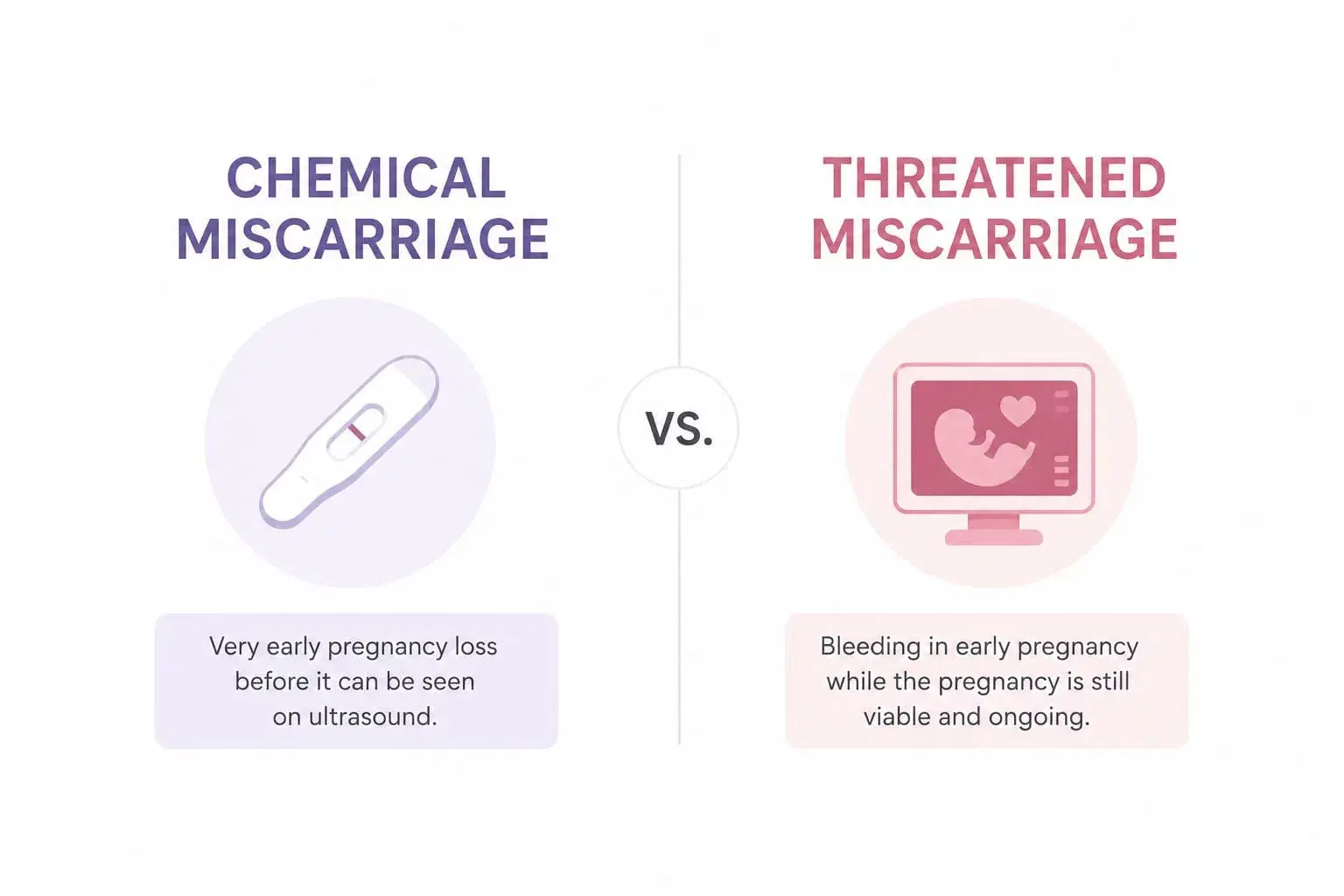
A chemical miscarriage — also called a
biochemical pregnancy — is a very early pregnancy loss. It happens in the first
five weeks. At that stage, an ultrasound can’t yet detect the pregnancy. It
accounts for 50–75% of all miscarriages, according to the American College of
Obstetricians and Gynecologists (ACOG, 2023). Most women who have one go on to
have a healthy pregnancy.
You’re not alone if you’re searching for
answers about stress and miscarriage. This guide answers your questions
clearly, with evidence. It also explains how expert care in India’s
JCI-accredited hospitals can help. Women from Australia, the UK, and Nigeria
can get specialist support at a fraction of local costs.
Medically reviewed by a specialist gynaecologist and
obstetrician | Updated 2026. Every patient’s situation is unique, so treatment
and recovery can vary. Please consult a qualified healthcare professional for
personalised medical advice.
What Is a
Chemical Miscarriage? Symptoms and Causes Explained
A chemical miscarriage happens when a fertilised egg implants in the
uterus but stops growing almost right away. The embryo never forms. It never
shows up on an ultrasound. Your body makes enough hCG (human chorionic
gonadotropin — the pregnancy hormone) to give a positive home test. Then hCG
levels drop quickly as the pregnancy ends.
Chemical
Miscarriage Symptoms: What Does the Bleeding Look Like?
Chemical
miscarriage symptoms are easy to miss. They look a lot like a late or heavy
period. The most common signs include:
•
A positive home pregnancy test
that turns negative within days
•
Vaginal bleeding — light to
moderately heavy — arriving around the time your period was expected, or a week
late
•
Mild abdominal cramping,
similar to period pain
•
A fall in hCG levels confirmed
by a blood test — your doctor may detect this if you’ve already had an early
pregnancy confirmed
•
No pregnancy symptoms
progressing (no nausea, no breast tenderness)
Many
women only find out they had a chemical pregnancy because they tested early. If
you weren’t tracking your cycle, it can feel like a late or unusual period.
This is normal. It doesn’t mean anything was wrong with you.
How Long Does a
Chemical Pregnancy Last and What Causes It?
Bleeding
usually lasts 5–7 days — like a normal period. Your body resolves it on its
own. No medical treatment is usually needed. The most common cause is a
chromosomal abnormality in the embryo. Think of it as a random error that stops
normal growth. It is not something you caused. Other causes include:
•
Hormonal imbalances,
particularly low progesterone
•
Uterine abnormalities affecting
implantation (e.g., fibroids, polyps, septum)
•
Polycystic ovarian syndrome
(PCOS)
•
Advanced maternal age — risk
rises sharply from age 35 onwards
•
Untreated thyroid disorders or
uncontrolled diabetes
If
you have two or more chemical pregnancies in a row, see a specialist. Hospitals
like Apollo Fertility, Chennai, and Max Healthcare, Delhi are skilled at
finding hidden causes. They use genetic, hormonal, and uterine screening.
Can
Stress Cause a Miscarriage? What the Evidence Actually Says
The short answer: stress does not cause miscarriage. Clinical
research confirms this. This includes guidance from SANDS Australia and views
from fertility specialists Dr Devora Lieberman and Dr Joseph Sgroi (Mamamia,
2025). Every day stress — even major life events — does not cause a healthy
pregnancy to fail.
Dr Lieberman treats recurrent miscarriages in Sydney. She has stated
clearly: ‘Stress can cause miscarriage. Miscarriages are emotionally stressful.
They can cause stress, but stress does not cause miscarriage.’ In around 75% of
cases, the cause is a chromosomal abnormality in the embryo. That is beyond
anyone’s control.
What Type of
Stress Might Raise Miscarriage Risk?
The
Mayo Clinic says severe, long-term stress may theoretically affect your
hormones. Examples include financial crisis, losing your home, or bereavement.
But the evidence is not strong enough to prove it causes miscarriage. Women in
war zones — under extreme stress every day — still conceive and carry babies to
term. So stress almost certainly did not cause your miscarriage.
Stress
can still affect your health. It can disrupt your sleep, raise cortisol, and
upset your cycle. These things matter when you’re trying to conceive. Managing
stress through exercise, counselling, or mindfulness is good for you. But it
will not stop a normal pregnancy from ending early.
How to Manage
Stress During Pregnancy
If anxiety or fear
around pregnancy loss is affecting your everyday life, these supportive,
evidence-based strategies may help (March of Dimes, 2024):
•
Prenatal yoga or meditation — can help
you feel calmer, reduce stress, and sleep better
•
Childbirth education classes —
reduce uncertainty, a key driver of anxiety
•
Talking to a counsellor or
psychologist — especially after a previous pregnancy loss
•
Moderate exercise — walking 30
minutes daily supports mood and circulation
•
Connecting with support groups
(SANDS Australia: 1300 072 637; Tommy’s UK miscarriage support line)
Counselling
and psychological support are part of every care pathway at Divinheal’s
JCI-accredited partner hospitals. This includes Artemis Hospital, Gurugram and
Fortis Healthcare, Mumbai.
What Is a
Threatened Miscarriage, and Can Your Baby Survive?
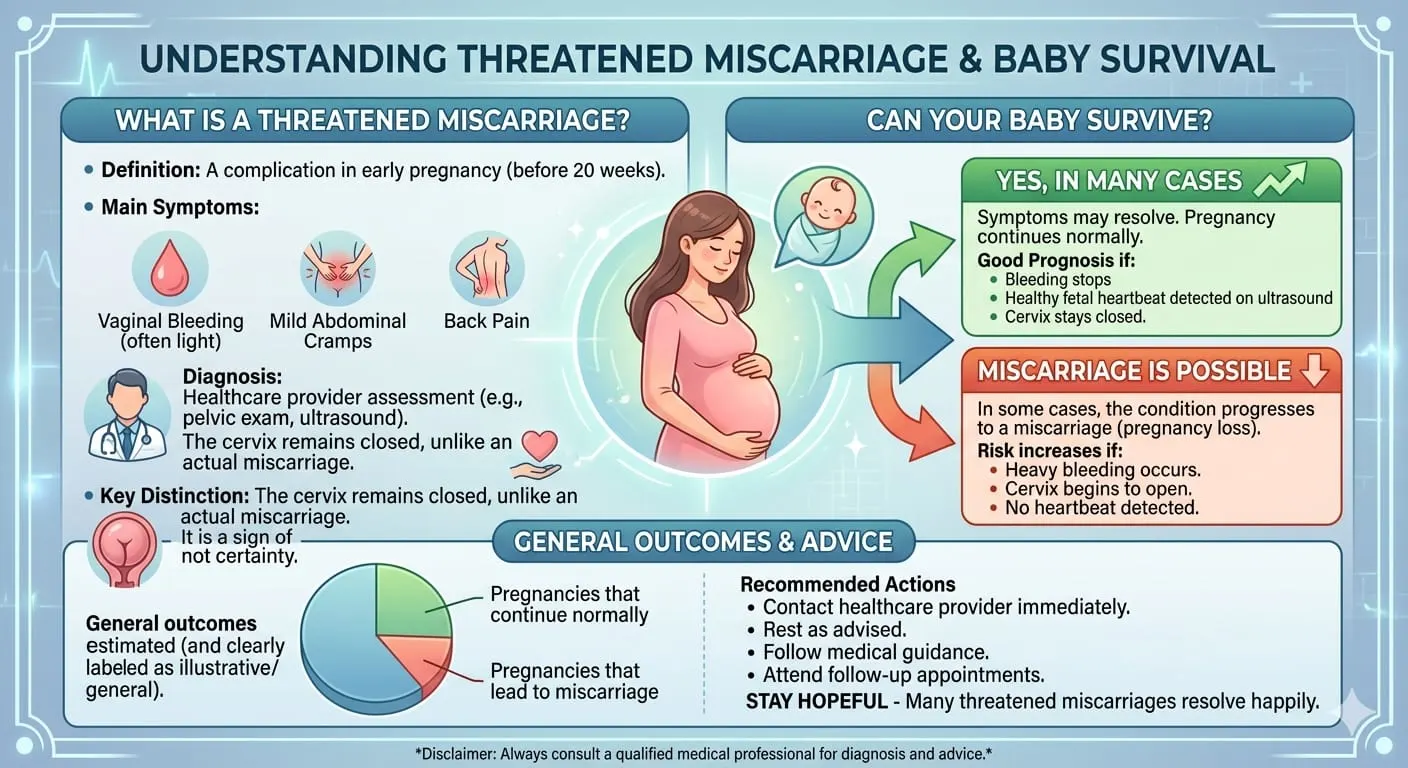
A threatened miscarriage is when you bleed in the first 20 weeks of pregnancy. Your cervix stays closed, and the baby still has a heartbeat. It does not mean a miscarriage will happen. According to the NHS, around 20–30% of pregnancies have some bleeding in the first trimester. Most of those continue to a healthy birth.
Threatened Miscarriage Symptoms and Diagnosis
You may notice spotting or light-to-moderate vaginal bleeding. You may also have lower abdominal cramps — often milder than a period — and lower back pain. Most importantly, your cervix stays closed. This is what tells a threatened miscarriage apart from an inevitable one. Your doctor will check with:
•
Transvaginal ultrasound — to
confirm foetal heartbeat and position
•
Serial hCG blood tests — to
check if pregnancy hormone levels are rising appropriately
•
Pelvic examination — to confirm
the cervix is closed (per NCBI / StatPearls, 2023)
Survival Rates and What to
Do
If the cervix is
closed and a heartbeat is seen on the scan, the outlook is often reassuring.
NHS guidance suggests there’s around an 83% chance the pregnancy will continue
normally in this situation. A 2022 review in the Journal of Obstetrics &
Gynaecology also found that many women with a threatened miscarriage go on to
have a healthy pregnancy and live birth with appropriate medical care.
Treatment
usually means rest. You should avoid heavy exercise and sex until bleeding
stops. Your doctor will also monitor you with repeat ultrasounds.
FRCS-qualified gynaecologists at Apollo Hospitals Chennai and Fortis Healthcare
Mumbai are experienced at managing threatened pregnancies. Once bleeding
settles, these pregnancies are no longer classed as high-risk. They don’t need
intensive follow-up (PMC, 2013).
Emma from
Melbourne had two episodes of threatened miscarriage before 10 weeks. Her local
public hospital had a 6-week wait for a specialist. Through Divinheal, she got
serial hCG monitoring and a transvaginal ultrasound at Apollo Hospital Chennai,
within 48 hours. The total cost was ₹25,000 ($260/ AUD 364) — vs an estimated
AUD 1,200 privately in Melbourne. Her pregnancy continued to a healthy birth at
38 weeks.
These stories
reflect typical patient experiences and are shared for illustrative purposes
only. Names and personal details have been changed to maintain privacy.
Miscarriage
Risk Calculators: How They Work and What Your Score Means
A
miscarriage risk calculator is an online tool that estimates the chance of
pregnancy loss. It considers factors like your age, how many weeks pregnant you
are, whether a heartbeat has been seen on scan, and your pregnancy history. One
of the most widely used is the Tommy’s miscarriage support calculator in the
UK, which correctly predicts outcomes in about 7 out of 10 pregnancies
(Tommy’s, 2024). These tools can be helpful for guidance and reassurance, but
they can’t give definite answers or replace medical advice.
Which Weeks
Carry the Highest Miscarriage Risk?
Miscarriage risk
is usually highest in the early weeks of pregnancy and gradually decreases as
the pregnancy progresses. Most miscarriages happen before 12 weeks. Based on
population data, the risk typically changes week by week like this (March of
Dimes, 2024; My Fertility Center, 2024):
|
Pregnancy Stage |
Approximate Miscarriage Risk |
Key Milestone |
|
Weeks 1–4 (chemical pregnancy zone) |
30–50% of all conceptions |
Positive test, no ultrasound yet |
|
Weeks 5–6 |
15–20% of known pregnancies |
Early gestational sac visible |
|
Week 8 (heartbeat seen) |
~5% |
Fetal heartbeat confirmed on ultrasound |
|
Week 10 |
~2–3% |
Risk drops sharply after 10 weeks |
|
Week 13+ |
~1% |
Into second trimester — risk is index for male partnervery low |
|
Age 30–35 |
15–20% baseline |
— |
|
Age 40 |
~50% |
Chromosome error rate increases with age |
|
Age 45+ |
~90% |
Most conceptions chromosomally abnormal |
Source:
March of Dimes (2024); My Fertility Center (2024). These are general population
estimates, and your individual risk may be higher or lower depending on your
specific situation and health factors.
How to Use a
Miscarriage Risk Calculator Effectively
Some commonly used
tools include Tommy’s Support Tool (UK) and expanded calculators like
Pregnalyze. They estimate risk using factors such as your age, how far along
the pregnancy is, whether a heartbeat is seen, and your pregnancy history. If
the result shows a higher-risk range (for example, above 20%), it’s usually a
prompt to get a specialist opinion — not a prediction of the final outcome.
Fatima from Lagos
used a risk calculator after her second chemical pregnancy. Because of her age
(38) and previous losses, she was flagged as higher risk. Through Divinheal,
she went for an evaluation at Max Healthcare in Delhi, where tests found an
undiagnosed Factor V Leiden mutation. With the right anticoagulant support in
her next pregnancy, she later had a healthy daughter. The total cost was about
₹75,000 ($781 / NGN 1,072,000), compared with roughly NGN 5,000,000+ for
similar testing in Lagos, where it wasn’t easily available locally.
Stories are illustrative composites based on typical patient
journeys. Names changed for privacy.
Common
Causes of Early Pregnancy Loss (Beyond Stress)
Most early miscarriages happen for reasons outside your control.
This includes chemical pregnancies and threatened miscarriages. Knowing the
real causes can ease the guilt many women feel after a loss.
•
Chromosomal abnormalities — present in ~75% of all early miscarriages. A random error in cell
division produces an embryo that cannot develop. This becomes more common with
age.
•
Blighted ovum (anembryonic
pregnancy) — a fertilised egg implants and forms a
gestational sac, but no embryo develops inside it. The sac grows initially,
which can cause pregnancy symptoms, but the pregnancy eventually ends.
•
Hormonal imbalances — low progesterone, thyroid dysfunction (hypothyroidism or
hyperthyroidism), or uncontrolled diabetes can prevent the uterine environment
from sustaining a pregnancy.
•
Uterine abnormalities — a uterine septum, fibroids inside the cavity, or polyps can
disrupt implantation or early development.
•
Autoimmune conditions — antiphospholipid syndrome (APS) causes the immune system to
produce antibodies that attack pregnancy-supporting proteins. It’s one of the
few treatable causes of recurrent miscarriage.
•
Thrombophilia disorders — inherited clotting disorders (like Factor V Leiden) can affect
placental blood flow.
•
Male factor issues — sperm with significant DNA fragmentation can contribute to early
embryo failure. Antioxidant therapy for sperm DNA damage has shown benefit in
studies (Indian Journal of Medical Research, 2022).
When to
Seek Expert Help: Recurrent Miscarriage Diagnosis in India
Recurrent miscarriage means two or more pregnancy losses before 20
weeks. This is per the updated 2025 guidelines from Miscarriage Australia and
the Australasian CREI Consensus Panel. Around 1–2% of Australian women
experience recurrent miscarriage. If this is you, a structured investigation is
strongly recommended — not optional.
What the
Diagnostic Workup Covers at JCI-Accredited Indian Hospitals
The
standard recurrent miscarriage workup at Divinheal’s partner hospitals includes
the following. These hospitals are Apollo Fertility Centres (Chennai, Mumbai,
Delhi), Max Healthcare (Delhi), and Fortis Healthcare (Mumbai):
•
Genetic karyotyping for both partners —
checks for any chromosome issues that could affect pregnancy
•
Uterine assessment (3D ultrasound +
hysteroscopy) — to look for any structural problems in the uterus
•
Hormonal profile — includes thyroid
tests (TSH, T3, T4), progesterone, AMH, FSH, LH, and prolactin to assess
hormone balance
•
Antiphospholipid antibody panel —
screens for autoimmune clotting issues (lupus anticoagulant, anticardiolipin,
anti-β2 glycoprotein I)
•
Thrombophilia screen (Factor V
Leiden, Prothrombin G20210A, Protein C, Protein S)
•
Sperm DNA fragmentation index
for the male partner
•
Preimplantation Genetic Testing
(PGT-A), if IVF is planned — screens embryos for chromosomal abnormalities
before transfer
Treatment Options and
Success Rates
Treatment depends
on the underlying cause. Antiphospholipid syndrome is usually treated with low
molecular weight heparin (LMWH) and low-dose aspirin. Hormonal issues like
luteal phase deficiency may be managed with progesterone support. If there are
structural problems in the uterus, hysteroscopic surgery can often correct
them, and in some IVF cases, PGT-A may help improve outcomes in recurrent
miscarriage. Overall, the outlook is still reassuring — about 85% of women have
a successful pregnancy after one miscarriage, and even after repeated losses,
many still go on to have good outcomes with proper evaluation and treatment
(NICE guidelines, 2021).
Claire
from London had three first-trimester losses. Her NHS referral wait was 14
months. Divinheal arranged a full recurrent miscarriage workup at Apollo
Hospitals, Chennai — done in 8 days. Antiphospholipid syndrome was found. She
was put on heparin + aspirin in her next pregnancy and had a healthy boy at
term. Total cost: ₹1,60,000 ($1,667 / £1,250) — vs. an estimated £8,000+
privately in London.
These stories are
based on real patient journeys and are shared to help illustrate typical
experiences. Names and identifying details have been changed to protect
privacy.
Miscarriage
Care Costs: India vs. Australia, UK, and Nigeria (2026)
Miscarriage
care at JCI-accredited hospitals in India is typically 70–90% less expensive
than private care in Australia or the UK, and about 60–80% lower than private
hospitals in Nigeria. Even with these cost differences, care is provided by
qualified specialists and follows international standards. These are 2025–2026
estimates, and actual costs can vary depending on individual needs — so it’s
best to confirm details with Divinheal.
|
Service |
India (INR / USD) |
Australia (AUD) |
UK (GBP) |
Nigeria (NGN) |
|
Specialist Consultation |
₹2,000–₹5,000 / $21–$52 |
AUD 200–400 |
£200–350 |
NGN 20,000–70,000 |
|
Early Pregnancy Ultrasound |
₹1,000–₹2,500 / $10–$26 |
AUD 150–350 |
£50–200 |
NGN 10,000–30,000 |
|
Serial hCG Blood Tests (×3) |
₹1,500–₹4,000 / $15–$42 |
AUD 100–250 |
£150–300 |
NGN 30,000–80,000 |
|
Dilation & Curettage (D&C) |
₹25,000–₹40,000 / $260–$417 |
AUD 1,500–4,000 |
£2,000–3,500 |
NGN 150,000–500,000 |
|
Medical Management (tablets) |
₹5,000–₹20,000 / 52–$209 |
AUD 500–1,500 |
£500–2,000 |
NGN 50,000–100,000 |
|
Recurrent Miscarriage Workup |
₹20,000–₹60,000 / $209–$626 |
AUD 1,000–4,000 |
£1,000–3,000 |
NGN 250,000–900,000 |
|
Advanced Treatment (e.g., immunotherapy) |
₹1,50,000–₹4,50,000 / $1,563–$4,689 |
AUD 8,000–15,000 |
£5,000–12,000 |
NGN 5,00,000–3,000,000 |
Costs are approximate 2025–2026 estimates and depend on hospital
tier, surgeon seniority, and case complexity. Individual outcomes vary. Consult
Divinheal for a personalised cost estimate.
How
India’s JCI-Accredited Hospitals Support International Patients
India has more JCI-accredited hospitals than any country outside the
US. JCI (Joint Commission International) accreditation is the global gold
standard for patient safety and quality. It is the same standard used in
leading hospitals in Australia and the UK. Divinheal’s partner network
includes:
•
Apollo Hospitals, Chennai and Mumbai —
one of India’s largest hospital groups, JCI-accredited, with dedicated women’s
health and fertility centres led by experienced gynaecologists with FRCS and
DNB qualifications
•
Fortis Healthcare, Mumbai and Delhi —
JCI-accredited, offering advanced reproductive medicine units and
round-the-clock English-speaking patient support for international patients
•
Max Healthcare, Delhi — NABH and
JCI-accredited, specialising in high-risk obstetrics and recurrent pregnancy
loss care
•
Artemis Hospital, Gurugram —
JCI-accredited, known for FRCS-qualified surgeons and strong experience with
patients from the UK and Australia
All
Divinheal partner hospitals provide care in English. They also give written
clinical reports and discharge summaries that can be shared with your home GP,
so your care stays well coordinated when you return home.
Getting
to India from Australia, UK, and Nigeria: Visa, Travel & Logistics
Divinheal
takes care of the full travel and treatment logistics for international
patients, including visa support, airport pick-up, hotel stays near the
hospital, and ongoing on-ground assistance throughout your visit. Here’s what
patients from each country need to know:
Australia:
Escaping Medicare Wait-Lists
Australian
patients can apply for an Indian e-Medical Visa, which is usually approved in
about 3–5 working days (Ministry of Home Affairs, India). It’s valid for 60
days and allows two entries. Flights from Sydney or Melbourne to Delhi or
Mumbai take around 12–14 hours. In many cases, patients save around 75–90%
compared to private healthcare costs in Australia.
United Kingdom:
NHS Alternative Without the Wait
UK patients can
travel to India for treatment under the e-Medical Visa scheme, which is usually
processed within 3–5 working days and allows stays of up to 180 days. Direct
flights from London Heathrow to Delhi (Indira Gandhi International) take around
8–9 hours. In many cases, patients save about 60–75% compared to private
healthcare costs in the UK.
Nigeria:
Step-by-Step Visa and Logistics Support
Divinheal
gives Nigerian patients hospital invitation letters from Max Healthcare or
Apollo Hospitals to support their Indian medical visa application. The High
Commission of India in Abuja approves medical visas within 5–7 working days.
Direct flights from Lagos to Delhi take around 10–12 hours. Savings for
Nigerian patients vs. local private care: 60–80%. Some tests are not
available in Nigeria — such as PGT-A, thrombophilia panels, or immunotherapy
protocols. For these, India is often the only realistic option.
|
Country |
Visa Type |
Processing Time |
Flight Time |
Savings vs. Local Private |
|
Australia |
Indian e-Medical Visa |
3–5 working days |
12–14 hours |
75–90% |
|
UK |
Indian e-Medical Visa |
3–5 working days |
8–9 hours |
60–75% |
|
Nigeria |
Indian Medical Visa |
5–7 working days |
10–12 hours |
60–80% |
Visa
timelines are approximate. Divinheal also provides full documentation support
for patients in all three countries. Costs are indicative and can vary
depending on the individual case and treatment plan.
Emotional
Recovery After Pregnancy Loss: What to Expect
Physical recovery after a chemical miscarriage or D&C procedure
usually takes 3–6 weeks. Emotional recovery is personal. It takes longer for
many women. The grief is real — even for a loss that happened very early.
Anita Guyett, SANDS General Manager of Bereavement Care, has noted
that miscarriage grief is ‘kept behind closed doors’. She says lifting the
taboo is essential. Fear about the next pregnancy is normal. It is often the
hardest feeling to carry. For many women, it lasts until the baby is born.
Divinheal’s partner hospitals include access to counselling,
multilingual coordinators, and support group referrals. Australian patients can
call SANDS Australia (1300 072 637). Miscarriage Australia — funded by the
Australian Research Council and Monash University — also offers professional
support. UK patients can contact Tommy’s miscarriage support line. Nigerian
patients can speak with Divinheal’s Nigeria-based coordinator, who can point them
to trusted local resources.
When can you try again? Most doctors say to wait for at least one
normal period after a chemical miscarriage. This is mainly to help date a new
pregnancy — not because your body needs more time to heal. After a D&C,
your specialist will advise you. Waiting one to two cycles is typical. Around 85%
of women have a successful pregnancy after a single miscarriage (NICE
guidelines, 2021).
Why
International Patients Choose Divinheal for Miscarriage Care
Divinheal
is a medical tourism company that connects patients from Australia, the UK,
Nigeria, and other countries with JCI-accredited hospitals in India for
specialist care. For miscarriage and recurrent pregnancy loss, Divinheal helps
with:
•
Vetted partner hospitals — only JCI- or
NABH-accredited hospitals with strong experience in women’s health
•
Specialist matching — access to
experienced gynaecologists (FRCS and DNB qualified) who regularly manage
recurrent miscarriage cases
•
Free initial consultation — share your
reports and get a specialist review within 48 hours, along with a personalised
treatment plan and clear cost estimate
•
End-to-end support — help with medical
visa paperwork, airport transfers, hotel stays near the hospital, and on-ground
assistance throughout your treatment
•
Post-treatment continuity —
written clinical reports, GP handover letters, and follow-up coordination for
your home doctor
•
No waiting lists — urgent cases
are often seen within days of booking
A recurrent miscarriage evaluation typically takes 7–10 days.
Miscarriage management (D&C + recovery) usually takes 5–7 days. Both are
far faster than the wait times most patients face in Australia or the UK.
Start
Your Care Plan Today — Free Consultation with Divinheal
Have you had a chemical miscarriage, a threatened miscarriage, or
two or more unexplained losses? You don’t have to wait months for answers.
Share your medical reports with Divinheal. A specialist gynaecologist at one of
our JCI-accredited partner hospitals will review them for free. You’ll get a
personalised treatment proposal — with clear costs, expected stay, and
recommended tests — before you commit to anything.
Contact Divinheal today to begin your path to expert miscarriage
care in India.
Related Links
International Patient Visiting India
- ivf in bengaluru for ethiopia
- ivf in pune for bangladesh
- ivf in india for bangladesh
- ivf in mumbai for bangladesh
- ivf in bengaluru for bangladesh
- ivf in pune for uae
- ivf in bengaluru for uae
- ivf in new delhi for uae
- ivf in hyderabad for uae
- ivf in chennai for bangladesh
- ivf in new delhi for iraq
- ivf in bengaluru for iraq
- ivf in mumbai for iraq
- ivf in chennai for iraq
- ivf in bengaluru for nigeria
- ivf in pune for nigeria
- ivf in hyderabad for nigeria
- ivf in india for nigeria
- ivf in india for ethiopia
- ivf in new delhi for ethiopia
Booking With DIVINHEAL
Get a free consultation to understand your treatment options
Related Links
International Patient Visiting India
- ivf in bengaluru for ethiopia
- ivf in pune for bangladesh
- ivf in india for bangladesh
- ivf in mumbai for bangladesh
- ivf in bengaluru for bangladesh
- ivf in pune for uae
- ivf in bengaluru for uae
- ivf in new delhi for uae
- ivf in hyderabad for uae
- ivf in chennai for bangladesh
- ivf in new delhi for iraq
- ivf in bengaluru for iraq
- ivf in mumbai for iraq
- ivf in chennai for iraq
- ivf in bengaluru for nigeria
- ivf in pune for nigeria
- ivf in hyderabad for nigeria
- ivf in india for nigeria
- ivf in india for ethiopia
- ivf in new delhi for ethiopia
Meet Our Doctors
Meet our team of highly qualified and experienced medical professionals dedicated to providing the best healthcare services.
Dr Aditi Dixit
Sr. Consultant – Women Imaging
Radiology
New Delhi
15+ Years
Experience
Artemis Hospital
Hospital
1500
Fees

Dr. Alka Gujral
Senior Consultant
Obstetrics and Gynaecology
New Delhi
24+ Years
Experience
Apolo Delhi
Hospital
1500
Fees
Dr. Anita K. Sharma
Senior Consultant - Obstetrics and Gynaecology
Obstetrics and Gynaecology
New Delhi
24+ Years
Experience
Apolo Delhi
Hospital
1500
Fees

Dr. Anjali Bhutani
Senior Consultant
Obstetrics & Gynaecology
New Delhi
22+ Years
Experience
Apolo Delhi
Hospital
1500
Fees
Dr. Aparna Dhar
Senior Consultant - Obstetrics & Gynaecology
Obstetrics & Gynaecology
New Delhi
23+ Years
Experience
Apolo Delhi
Hospital
1500
Fees

Dr. Babita Jain
Principal Director & HOD
Paediatrics (Ped)
New Delhi
30+ Years
Experience
Max Hospital,Gurgaon
Hospital
1500
Fees

Dr Chandrima Misra M
Co-Head Psychological Services
Mental Health and Behavioural Sciences
New Delhi
15+ Years
Experience
Artemis Hospital
Hospital
1500
Fees

Dr. Charu Garg
Principal Director - Radiation Oncology
Radiation Oncology
New Delhi
23+ Years
Experience
Max Hospital,Gurgaon
Hospital
1500
Fees
Dr. Gyanendra Agrawal
Director - Obstetrics & Gynaecology
Obstetrics & Gynaecology
New Delhi
18+ Years
Experience
Apolo Delhi
Hospital
1500
Fees

Dr. Kanika Gupta
Principal Director – Surgical Oncology (Gynae & Robotic Surgery)
Gynecologic Oncology, Robotic & Laparoscopic Surgery, Gynae Cancer Care, Surgical Oncology
New Delhi
39+ Years
Experience
Max Hospital,Gurgaon
Hospital
1500
Fees
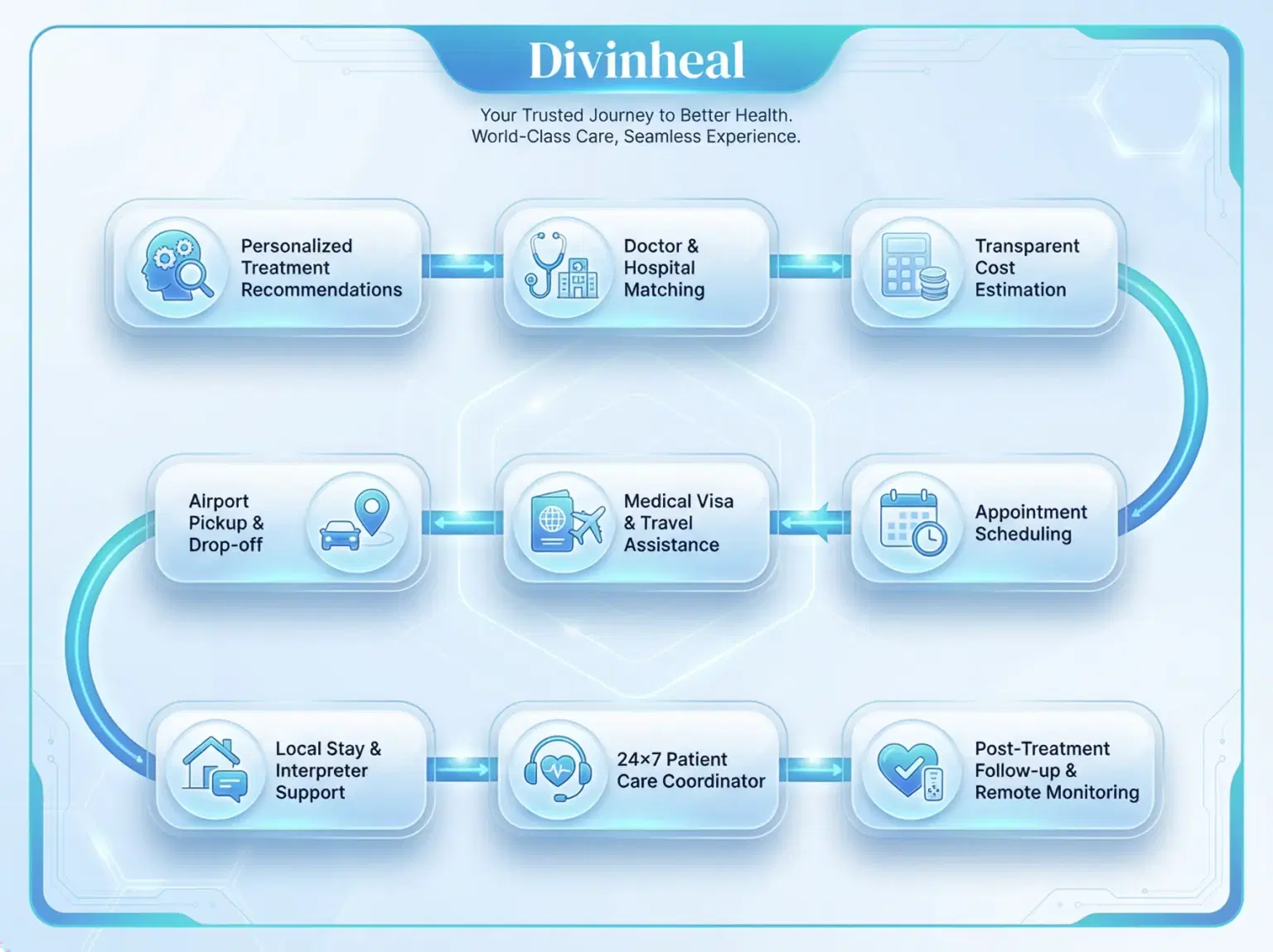
DivinHeal's Journey
Latest Articles





Hospitals Offering this treatment
India offers premium medical procedures at affordable prices. Discover our most popular treatments, delivered by the country's finest doctors.

Hisar Intercontinental Hospital
Saray Mah. Siteyolu Cad. No:7, Umraniye, 34768, Istanbul, Turkey
Hisar Intercontinental Hospital

Medical Park Group, Istanbul
Fahrettin Kerim Gokay Cad. Tıbbiye Cd., Kadikoy, Istanbul, Turkey
Medical Park Group, Istanbul

Emsey Hospital, Pendik, Istanbul
Çamlık, Selçuklu Cd. No:22, 34912 Pendik/İstanbul, Türkiye
Emsey Hospital, Pendik, Istanbul

American Hospital, Istanbul
Guzelbahce Sk. No:20, 34365, Nisantasi, Istanbul, Turkey
American Hospital, Istanbul

Memorial Hospitals Group
Burhaniye, Nagehan Sokağı No:4/A D:1, 34676 Üsküdar/İstanbul, Türkiye
Memorial Hospitals Group

Florence Nightingale Hospital Istanbul
Abide-i Hürriyet Cd No:166, 34381 Sisli, Istanbul
Florence Nightingale Hospital Istanbul
Medicana International Hospital, Istanbul
Halit Ziya Turkkani Mah. Medikal Park Cd. No:1, Beylikdüzü, İstanbul
Medicana International Hospital, Istanbul

Okan University Hospital Istanbul
Icmeler Mah. Aydınlıyolu Cd. No:2, 34947 Icmeler-Tuzla, Istanbul
Okan University Hospital Istanbul

Kolan International Hospital, Istanbul
Kaptanpasa Mah. Okmeydan Kavsagi, Darulaceze Cd. No:14, 34384 Sisli, Istanbul
Kolan International Hospital, Istanbul
Frequently Asked Questions
Get answers to common questions about medical tourism, treatment procedures, and our comprehensive healthcare services.
Ready To Start Your Healing Journey?
Get Personalized Medical Treatment Options From India's Top Hospitals. Our Medical Experts Are Ready To Assist You Every Step Of The Way.