
Written by DivinHeal Editorial Contributor, Rahul Kumar, Embryologist | Medically Reviewed by Dr Indu Priya, Gynecologist(MD) Published on: 2026-05-23
Utrogestan and Low Progesterone: How to Increase
Progesterone Naturally and Medically
Fatima, 34, from Dubai, had been trying to conceive for 18 months. Her mid-luteal progesterone was 6 ng/mL. That is well below the 10 ng/mL threshold. She was tested at Apollo Hospitals in Chennai. After two months of vaginal Utrogestan, her level rose to 18 ng/mL. Her treatment cost was ₹62,000. That is 76% less than the same private clinic care in Dubai.
Low progesterone can quietly affect many parts of a woman’s health, from irregular periods and fertility issues to mood swings and poor sleep. It’s more common than most people realize, yet many women don’t know the symptoms are hormone-related. This guide covers the signs of low progesterone, simple ways to support hormone balance naturally, when Utrogestan may be recommended, how progesterone cream works, and treatment costs in India, the UAE, the UK, and Australia.
Plan My Journey
Tell us your condition and budget — our AI matches the right destination, hospital and doctor and visa pathway
What Is
Low Progesterone and How Do You Know You Have It?
Low progesterone is more
common than many women realize. When the body doesn’t make enough progesterone,
it can affect the menstrual cycle, fertility, sleep, and mood. Some women
notice irregular periods or trouble conceiving, while others simply feel emotionally
and physically out of balance without knowing why.
The Role of
Progesterone in Your Body
Progesterone
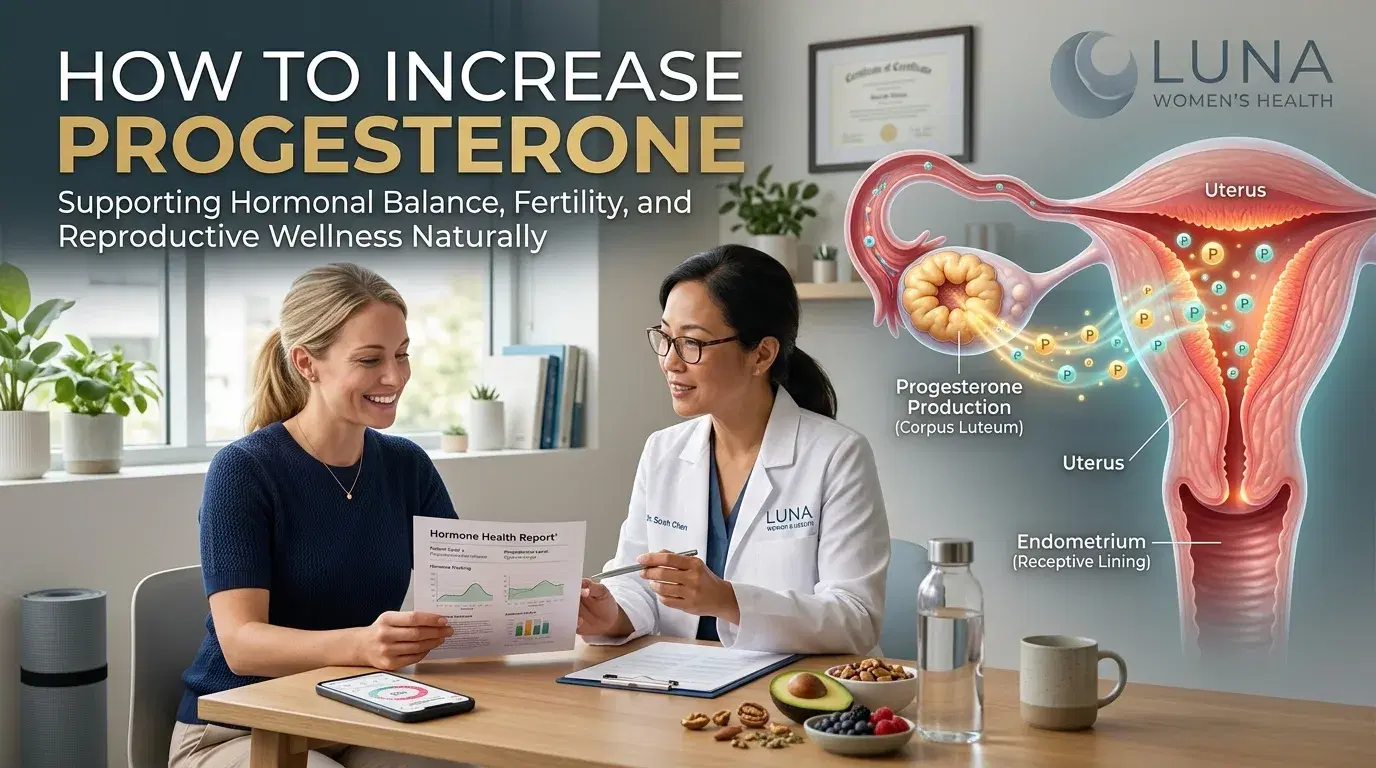
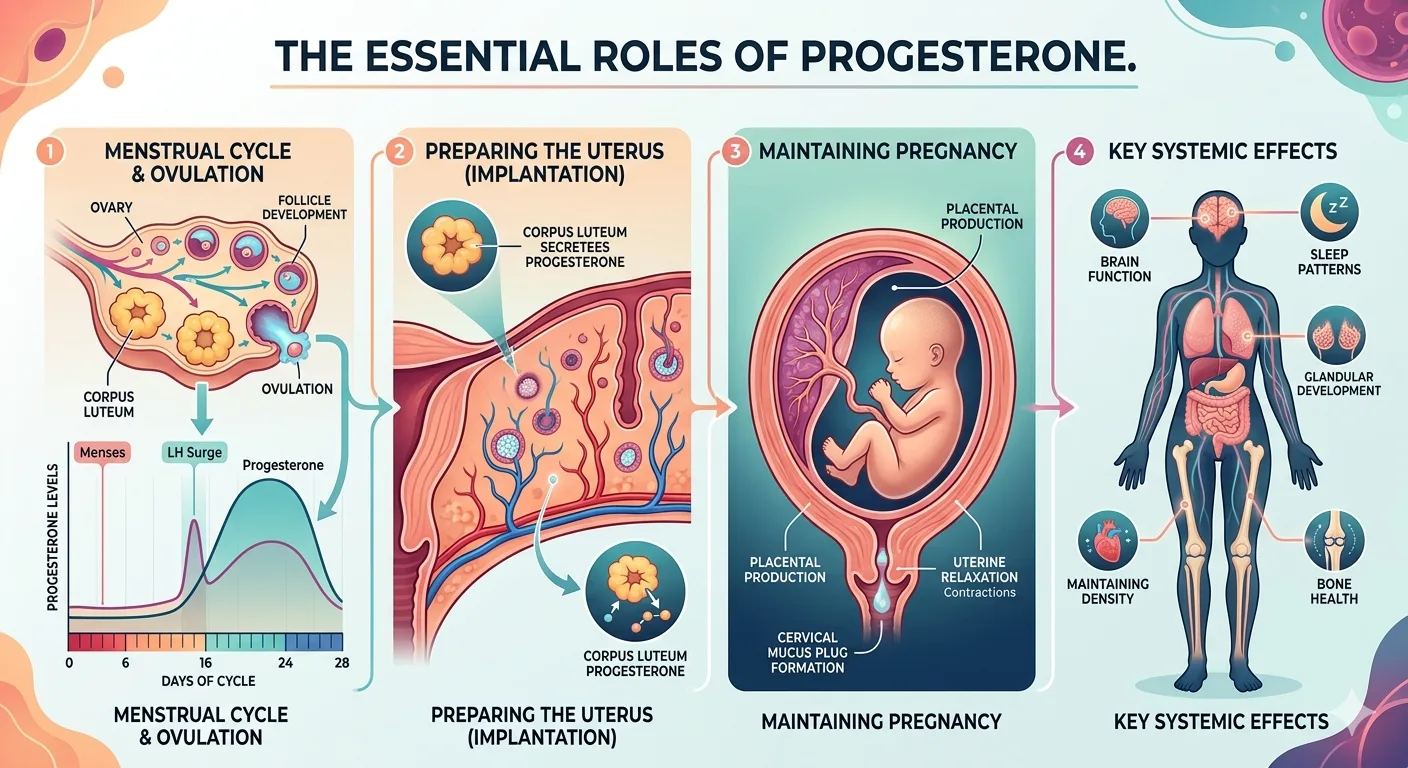
is a hormone made mainly by the corpus luteum. The corpus luteum is a temporary
gland. It forms in the ovary after an egg is released. Progesterone rises
sharply after ovulation. It peaks around day 21 of a standard 28-day cycle. It
prepares the uterine lining for a possible embryo. It also helps maintain an early
pregnancy.
Beyond
reproduction, progesterone acts on the brain as a calming agent. It works on
GABA receptors — the same system that anti-anxiety medicines target. When
progesterone is low, GABA activity falls and anxiety rises. A 2021 study in
Neuropsychopharmacology found that low progesterone was linked to higher
anxiety and worse sleep in women of reproductive age.
Common Low
Progesterone Symptoms to Watch For
Low
progesterone produces a recognisable pattern. Most women experience several of
these:
• Irregular or short menstrual
cycles (fewer than 24 days between periods)
• Light periods or spotting
between cycles
• Heavy or prolonged bleeding
• Mood swings, anxiety, or low
mood — especially in the week before your period
• Difficulty conceiving or
recurrent early miscarriages
• Trouble sleeping in the second
half of your cycle
• Breast tenderness, headaches,
and bloating
Not
all women have all symptoms. Up to 60% of women with hormonal imbalances report
significant mood problems (ICMR, 2020). This makes progesterone deficiency one
of the more emotionally disruptive hormone conditions.
Does Low
Progesterone Cause Light Periods?
Yes.
When progesterone is low during the luteal phase, the uterine lining does not
fully develop. There is less to shed. The result is often a thinner, lighter,
or shorter period. Sometimes it is just spotting. A luteal phase shorter than
10 days is a strong indicator of low progesterone.
How Is Low Progesterone
Diagnosed?
Low
progesterone is diagnosed with a blood test. Take it 5–7 days after ovulation —
around day 21 in a standard 28-day cycle. A mid-luteal progesterone level below
10 ng/mL typically indicates deficiency. Some specialists use 16 ng/mL as the
lower limit for a cycle likely to result in pregnancy.
At
JCI-accredited hospitals in India — such as Apollo Hospitals, Chennai, and
Fortis Healthcare, Gurugram — hormone panels use mass spectrometry. This is the
gold-standard technology used in UK and Australian reference labs too. Results
come back in 24–48 hours.
How to
Increase Progesterone Naturally: Foods, Lifestyle & Supplements
Healthy food, good sleep,
and managing stress can all help support natural progesterone production. For
some women, these changes are enough to improve a mild hormone imbalance. But
when progesterone levels are very low, lifestyle changes alone may not fully
correct the problem, and medical treatment may also be needed.
Which Foods Help
Increase Progesterone Levels?
No
food contains progesterone directly. But certain nutrients are essential for
the corpus luteum to produce it. A whole-foods diet rich in the following can
support progesterone production:
• Vitamin B6: chicken, salmon, bananas,
sunflower seeds, and pistachios can support hormone balance
• Zinc: pumpkin seeds, lentils,
chickpeas, shellfish, and beef help support reproductive health
• Magnesium: leafy greens, almonds, black
beans, and dark chocolate are good everyday sources that support overall
hormone function
• Vitamin C: bell peppers, kiwi, guava, citrus fruits — the corpus luteum has a
high Vitamin C concentration and uses it for hormone production
Which Drinks Can
Support Progesterone Production?
No
drink raises progesterone directly. But drinks high in Vitamin C can help —
fresh orange juice, kiwi water, or lemon water. A study in Human Reproduction
(2003) found that women with higher Vitamin C intake had better luteal phase
progesterone levels.
What Vitamin
Deficiency Causes Low Progesterone?
Vitamin
B6 deficiency is most directly linked to low progesterone. B6 is essential for
corpus luteum development. Without enough B6, the corpus luteum does not form
fully and progesterone output falls. Zinc and Magnesium are also important. Ask
your doctor to check all three alongside your hormone panel.
Lifestyle
Changes That Support Progesterone Production
Chronic
stress is one of the biggest drivers of low progesterone. Cortisol and
progesterone are both made from the same raw material — pregnenolone. Under
sustained stress, the body uses more pregnenolone to make cortisol. Less is
left over for progesterone. This is called the “pregnenolone steal.”
To
reduce cortisol and support progesterone:
• Getting enough sleep each night helps
the body produce and regulate hormones properly.
• Gentle, regular exercise like walking,
swimming, or yoga can support a healthier menstrual cycle and overall hormone
balance.
• Managing stress is equally important,
as long-term stress can affect the hormones involved in ovulation and
progesterone production.
• Keeping a healthy body weight also helps support regular ovulation and
stable hormone levels.
• ovulation and progesterone production.
How Long Does It
Take to Increase Progesterone Naturally?
Natural
changes take time. You need 2–3 complete menstrual cycles — that is 6–12 weeks
— to see measurable improvement in mid-luteal progesterone levels. Progesterone
production is tied to ovulation. You need several ovulatory cycles for
nutritional improvements to show up. Track your levels with a day-21 blood test
each cycle.
How to Increase
Progesterone in PCOS
Polycystic
Ovary Syndrome (PCOS) affects approximately 1 in 10 women globally (WHO, 2020).
It causes irregular or absent ovulation. When there is no ovulation, the corpus
luteum does not form. Progesterone stays low.
To
support progesterone in PCOS naturally:
• If insulin resistance or PCOS is
present, eating balanced meals with whole grains, protein, and vegetables—and
reducing sugar and processed foods—can help support more regular ovulation and
healthier hormone balance over time
• Exercise regularly: Moderate-intensity
exercise improves insulin sensitivity and ovulation regularity.
• Consider Chasteberry (Vitex
agnus-castus): recognised by the European Medicines Agency (2018) for luteal
phase support and progesterone promotion in mild
hormonal imbalance.
If natural methods are not enough to
improve ovulation after a few months, a doctor may suggest treatments like
Clomiphene, Letrozole, or Utrogestan to help support hormone balance and the
menstrual cycle. divinheal.com can also connect women with fertility
specialists in India for proper assessment and personalised care.
Medical
Progesterone Treatment: When Do You Need It?
Medical treatment becomes necessary in several situations. These
include: progesterone levels that stay low despite lifestyle changes, ongoing
fertility treatment, a history of recurrent miscarriage, or PMDD and
perimenopausal symptoms that significantly affect your life.
Signs You Need
Medical Help for Low Progesterone
See
a specialist if you have any of the following:
• A mid-luteal progesterone level
below 10 ng/mL on repeated testing
• Three or more unexplained
miscarriages
• Trouble with implantation during IVF treatment
• Periods that stay irregular for months at a time
• Strong PMS or PMDD symptoms that make daily life emotionally difficult
• Perimenopause symptoms like hot flushes, night sweats, or disturbed
sleep
Before
recommending treatment, a doctor will usually check your hormone levels with a
blood test and talk through your periods, symptoms, and overall health. They
may also look for things like PCOS or thyroid imbalance, as these can sometimes
affect ovulation and progesterone.
Prescription
Progesterone Options: Oral, Vaginal, and Injectable
The
right form of progesterone depends on your diagnosis, how well you absorb each
form, and your daily routine. A full cycle of progesterone supplementation —
medication plus monitoring, approximately 2–3 weeks — in India costs ₹15,000 –
₹40,000 ($155 – $415 / AUD 218 – 582 / AED 570 – 1,521). This is 65–80% less
than the same private care in the UAE, Australia, or the UK.
Utrogestan
(Micronised Progesterone): Uses, Dosage, and Side Effects
Utrogestan
is a progesterone medicine that closely matches the hormone naturally made by
the body. Doctors use it for conditions like hormone imbalance, fertility
support, irregular periods, and menopause symptoms. It is commonly prescribed
in major hospitals across India, including Apollo Hospitals, Fortis Healthcare,
and Max Healthcare.
What Does Utrogestan Do?
Utrogestan
supplements your body’s natural progesterone to support three main functions:
• Uterine preparation: thickens the endometrium to create the right environment for embryo
implantation.
• Pregnancy maintenance: suppresses uterine contractions that could lead to miscarriage or
preterm labour.
• Hormonal balance in HRT: combined with oestrogen in menopause therapy, it protects the
uterine lining from over-thickening (endometrial hyperplasia).
Its micronised
form absorbs more efficiently than older synthetic progestins. It also carries
a lower risk of side effects linked to non-bioidentical versions (NICE, 2023).
Why Is
Utrogestan Given in Fertility, Pregnancy, and HRT?
In IVF, Utrogestan
is usually started around egg retrieval or embryo transfer to support the
uterus and early pregnancy. If pregnancy happens, doctors may continue it for a
short period as needed.
It can also be
given during pregnancy in women who are at higher risk of early delivery, such
as those with a short cervix or a previous preterm birth, to help support the
pregnancy.
During menopause treatment or HRT,
Utrogestan is commonly taken with oestrogen to help keep the uterine lining
healthy and support overall hormone balance.
How to Take
Utrogestan: Dosage, Timing, and Why at Night
Utrogestan may be taken by mouth or
inserted vaginally, depending on what your doctor feels is most suitable for
your condition. The dosage is personalised based on your hormone levels,
symptoms, and treatment goals:
• Luteal phase support (IVF): During IVF treatment, it is often
used vaginally throughout the day to help support the uterine lining and early
pregnancy
• In some pregnancies, doctors may prescribe it at night to help lower the
risk of miscarriage or preterm birth
• For menopause or hormone replacement therapy (HRT), it is usually taken
by mouth in the evening alongside oestrogen treatment
Utrogestan is often taken at night
because it can make some people feel sleepy or relaxed. Taking it before bed
usually helps avoid daytime drowsiness and may even improve sleep for some women. Doctors also often recommend taking it on
an empty stomach, as food can sometimes make the sleepy feeling stronger.
Through divinheal.com partner hospitals, patients are guided through each step
of treatment with regular follow-ups and clear instructions from their medical
team.
Utrogestan Side
Effects: What to Expect and How Long They Last
Common
Utrogestan side effects include:
• Drowsiness or dizziness — most
common with oral use; taking it at bedtime significantly reduces the impact
• Breast tenderness
• Vaginal spotting or irregular
bleeding — particularly in the first 1–3 months of HRT use
• Mild abdominal bloating or
discomfort
Spotting and
bloating often settle down after a few months of starting HRT. If drowsiness is
an issue, some women feel better when switching oral or vaginal use of
Utrogestan.
Serious side
effects are rare, but it’s important to be aware of warning signs like sudden
leg pain, chest pain, breathing problems, or vision changes, and to seek
medical help if they happen. Doctors usually also keep regular follow-ups to
make sure the treatment is working well and safely.
Can I Get Pregnant
While on Utrogestan?
Utrogestan is not
a birth control medicine. Even if you are taking it as part of HRT, pregnancy
is still possible because it does not consistently stop ovulation. Women who
are still in the menopausal transition may therefore still need contraception
for a period of time after their last natural period, depending on their age
and medical advice.
If
you are taking Utrogestan as part of a fertility or IVF programme, pregnancy is
the intended goal. Your specialist will monitor blood hCG and progesterone
levels at regular intervals throughout.
Do You Gain Weight
With Utrogestan?
Utrogestan helps
support hormone balance, but it is not a method of birth control. Even during
HRT, ovulation may still happen, so pregnancy can still occur. For this reason,
women in the menopausal transition are often advised to continue contraception for
some time after their last period, based on age and their doctor’s advice.
Progesterone
Cream: How It Works and Whether It’s Right for You
Progesterone
cream is a hormone cream applied to the skin to help support progesterone
levels. Some women prefer it for milder symptoms linked to PMS, perimenopause,
or menopause because it feels simpler and less invasive than tablets or vaginal
treatment. Depending on a woman’s symptoms and hormone levels, doctors may
recommend either progesterone cream or prescription options like Utrogestan.
Through divinheal.com,
patients can speak with specialists in India to understand which approach may
suit them best.
What Is Progesterone
Cream Used For?
Progesterone
cream is most commonly used to relieve menopausal or perimenopausal symptoms.
These include hot flushes, night sweats, mood swings, and sleep disruption. It
can also manage PMS symptoms in the luteal phase, and support mild hormonal
imbalance. Some women use it in early pregnancy under medical guidance — though
prescription vaginal or oral progesterone is the preferred option for confirmed
deficiency.
The effectiveness
of over-the-counter progesterone creams can vary from person to person. Since
different products contain different amounts of progesterone and may absorb
differently through the skin, results are not always consistent. For this
reason, doctors often prefer prescription progesterone when more reliable
hormone support is needed, especially for women who are also using oestrogen
therapy.
Where and How to
Apply Progesterone Cream
Progesterone cream
is usually applied to softer areas of the body where the skin is thinner, as
this can help the hormone absorb more effectively:
• The inner thighs
• Around the neck or upper chest
• The stomach area or lower abdomen
To help the cream
absorb properly, it’s best to apply it to different areas of the body instead
of using the same spot every day. Most treatment plans use a small amount once
or twice daily, depending on individual needs. Doctors or hormone specialists usually
explain the correct way to apply it and may adjust the routine over time if
needed.
What Are the
Downsides of Progesterone Cream?
Variable
absorption is the main limitation. Skin thickness, blood flow, and the application
site all affect how much progesterone enters the bloodstream. This makes
blood-level control harder than with oral or vaginal forms. Cream alone may not
adequately protect the uterine lining if you are also taking oestrogen HRT —
oral or vaginal progesterone is necessary for that level of protection.
Side
effects include localised skin irritation, breast tenderness, acne, or mood
changes in some users. A 2021 study in the Journal of Women’s Health found that
fewer than 10% of users report significant side effects. Most were mild and
temporary.
Progesterone
Cream vs. Oral Progesterone: Which Is Better?
Oral
progesterone (Utrogestan) is the medically preferred option for most women.
This is the case when you need reliable hormone replacement or fertility
support. Progesterone cream is a reasonable option for mild symptom relief. But
it should not replace prescription progesterone for fertility treatment or full
HRT endometrial protection.
How Low
Progesterone Affects Your Mood, Anxiety, and Mental Health
Low progesterone is one of the most common — and least-discussed —
causes of anxiety, mood swings, and depression in women. Progesterone works
directly on GABA receptors in the brain. These are the same calming receptors
that benzodiazepine medicines target. When progesterone drops, GABA activity
falls and anxiety rises. This is not psychological; it is biochemical.
Lena, 38, from Birmingham, saw two GPs before a specialist at Max Healthcare in Delhi identified low progesterone (7 ng/mL) as the driver of her severe premenstrual anxiety and chronic sleep disruption. Within two months of starting vaginal Utrogestan at bedtime, her mood stabilised and she was sleeping through the night. Her total treatment cost with Divinheal: ₹58,000.
For UAE
patients: Many leading hospitals in India offer Arabic-speaking coordinators to
help women feel more comfortable during consultations, treatment, and
follow-ups. Hospitals such as Apollo Hospitals and Fortis Healthcare also
provide halal meals and other support services for international patients.
For UK
patients: Many patients from the UK look for treatment abroad because
specialist gynaecology appointments can sometimes involve long waiting periods.
Through divinheal.com,
consultations with experienced specialists in India can often be arranged
within days, helping patients access care and treatment much sooner.
For
Australian patients: In Australia, Medicare generally does not cover private
fertility or hormone specialist consultations, and waiting times in major
cities can sometimes be several months. Through divinheal.com, patients often
choose to travel to India, where consultations at JCI-accredited hospitals can usually be arranged much
sooner, often within a few weeks.
Progesterone
Treatment Cost in India vs UAE, Australia, and the UK
India offers the same JCI-accredited, specialist-led progesterone
treatment as UAE private clinics, Australian private healthcare, and UK private
hospitals — at 65–80% less. The difference is operational cost, not medical
quality.
Cost Comparison:
India vs Source Countries
These are
approximate private healthcare costs for 2026 and may vary depending on the
hospital, treatment plan, and duration of care. In the UK and Australia, some
treatments may be covered by the NHS or Medicare, but patients may also face
longer waiting times.
Why Is
Progesterone Treatment More Affordable in India?
India’s
cost advantage comes from lower operational and property costs, not lower
quality. A high volume of cases also drives deep clinical expertise. A robust
domestic pharmaceutical industry keeps medication costs significantly lower
than in Western markets. JCI accreditation — held by over 40 Indian hospitals
as of 2026 — confirms international safety standards. Many fertility
specialists at partner hospitals hold FRCS qualifications or have fellowship
training in the UK, Australia, or the US.
What Does a
Progesterone Treatment Package in India Include?
Cost Calculator
I know my treatment — show me cost from 3 hospitals
Why
Choose India for Progesterone Treatment? Hospitals, Credentials &
Accreditation
India’s leading hospitals combine genuine clinical expertise with
international safety accreditation. Costs are accessible for patients from the
UAE, UK, and Australia.
Key
hospitals for progesterone treatment and fertility:
• Apollo Hospitals, Chennai —
JCI-accredited, through Apollo Fertility, it offers IVF care along with hormone
and reproductive support
• Fortis Healthcare (Fortis Bloom IVF
Centre), Delhi — JCI-accredited; provides fertility treatment with specialist
reproductive medicine care
• Max Healthcare, Delhi — JCI-accredited,
offers women’s health services including fertility and hormone management
• Aster DM Healthcare (Aster CMI Hospital), Bengaluru — NABH and JCI-accredited; provides IVF and hormonal treatment with international patient
Key
accreditations to look for are Joint Commission International (JCI) and NABH.
These are widely trusted standards that show a hospital follows strong safety
practices, good infection control, and proper monitoring of patient care and
outcomes, similar to top private hospitals globally.
Hormone
testing technology: Leading Indian hospitals use mass
spectrometry for hormone panels — the same technology as UK and Australian
reference labs — with results in 24–48 hours.
Stories are illustrative composites based on typical patient journeys. Names changed for privacy. Individual outcomes vary. Consult your specialist for personalised advice. Costs are approximate and depend on hospital, surgeon seniority, and case complexity.
Written by DivinHeal Editorial Contributor, Rahul Kumar, Embryologist | Medically Reviewed by Dr Indu Priya, Gynecologist(MD) Published on: 2026-05-23
Plan My Journey
Tell us your condition and budget — our AI matches the right destination, hospital and doctor and visa pathway
Cost Calculator
I know my treatment — show me cost from 3 hospitals
Booking With DIVINHEAL
Get a free consultation to understand your treatment options
From Consultation to Recovery,
Step by Step
Expert Specialist Matching
Connecting you with the world's top-rated medical experts.
Accredited Hospital Network
Access to JCI & NABH certified healthcare facilities.
Complete Travel Coordination
Hassle-free visa, stay, and local transport assistance.
24/7 Personal Care
Dedicated patient advisors supporting you at every step.
Journey Guidance
Full guidance from start to end of the patient treatment journey.
Expert Specialist Matching
Connecting you with the world's top-rated medical experts.
Everything you
need to know today
Browse through these common inquiries to better understand our patient-focused medical platform.
A full cycle of progesterone treatment in India — including medication and monitoring — costs ₹15,000 – ₹40,000 ($155 – $415). This is 65–78% less than the UAE (AED 3,000 – 8,000), 60–72% less than Australia (AUD 1,000 – 4,000), and 60–70% less than UK private healthcare (GBP 500 – 2,500). Divinheal partners exclusively with JCI-accredited facilities that match the standard of care in all three countries.
Prescription Utrogestan (micronised progesterone) raises blood levels within 2–4 hours of the first dose. Vaginal administration acts faster for uterine effects. Naturally, progesterone rises only after ovulation. So the fastest sustainable natural route is supporting ovulation through lifestyle changes — reducing stress, improving sleep, addressing PCOS. No supplement raises progesterone as rapidly or reliably as prescribed micronised progesterone.
Utrogestan produces a sedating effect through its metabolite allopregnanolone (THP). THP binds to GABA receptors and promotes drowsiness. Taking it at bedtime means you sleep through the effect rather than experiencing it during the day (Dr Louise Newson, 2024). It should also be taken on an empty stomach — food significantly increases absorption and can intensify sedation.
Most initial side effects — including spotting, bloating, and breast tenderness — settle within 3–6 months of starting HRT (Dr Louise Newson, 2024). Drowsiness typically reduces within the first few weeks as your body adjusts. Switching from oral to vaginal Utrogestan significantly reduces drowsiness if it remains a problem. If side effects persist beyond 3 months, your doctor may adjust the dose or route of administration.
Vitamin B6 is important for normal hormone balance and supports the body’s natural progesterone production after ovulation. Zinc and magnesium also play a role in keeping hormonal processes working properly.If progesterone levels are low, doctors may sometimes check overall nutrient levels along with hormone tests to see if any deficiencies could be contributing.
Low progesterone prevents the uterine lining from developing adequately. This reduces the chance of embryo implantation. In early pregnancy, insufficient progesterone increases the risk of miscarriage. The hormone suppresses uterine contractions and maintains the endometrium throughout the first trimester. Utrogestan is routinely prescribed in IVF cycles and for women with a history of recurrent miscarriage for this reason (RCOG, 2019).
Mild temporary bloating can occur in the first month, particularly with oral use. However, Utrogestan does not cause significant weight gain in most women. Unlike older synthetic progestins, micronised progesterone has minimal androgenic effects — it does not promote fat storage or appetite increase. Persistent weight change after the first month should be discussed with your doctor.
Absorption from progesterone cream can vary from person to person. It depends on factors like skin type, blood flow, and where it is applied, which can make hormone levels less consistent compared to oral or vaginal treatments. Because of this, cream may help some women with mild symptoms, but it is not always strong or reliable enough on its own for fertility treatment or to fully protect the uterine lining when oestrogen is also being used.
Yes. Utrogestan is not a contraceptive. If you are taking it as HRT and are under 50, continue contraception for 2 years after your last period. Over 50, for 1 year (NHS, 2024). If you are taking it as part of a fertility or IVF programme, pregnancy is the intended goal and your specialist monitors progress with regular blood tests.
Yes. When progesterone is low during the luteal phase, the uterine lining does not fully develop — so there is less to shed. The result is often a lighter, shorter period or just spotting. A short luteal phase (fewer than 10 days between ovulation and your period) typically accompanies this pattern. A day-21 blood test will confirm whether low progesterone is the cause.
For an initial diagnostic workup and starting Utrogestan, a 5–7 day stay is typically sufficient. If you are combining progesterone therapy with IVF, the stay extends to 3–4 weeks for a full cycle. Divinheal’s case managers help you plan your visit to minimise time away from home while ensuring proper monitoring, follow-up consultations, and a written care plan for your home physician.
Yes. Many fertility specialists and endocrinologists at India’s leading hospitals hold FRCS (Fellow of the Royal College of Surgeons, UK), MD, or DNB qualifications with fellowship training in the UK, US, or Australia. JCI accreditation independently verifies that clinical protocols, safety standards, and patient-care practices meet international benchmarks equivalent to any JCI-certified hospital in the UK or Australia.
Still have more questions?
Book a call with our friendly team to learn how DivineHeal simplifies your healthcare journey.








